

 プリントを購入
 シェアする
シェアする シェアする
シェアする
 詳細を見る
詳細を見る

 ダウンロード
 似ている作品
 スライドショー
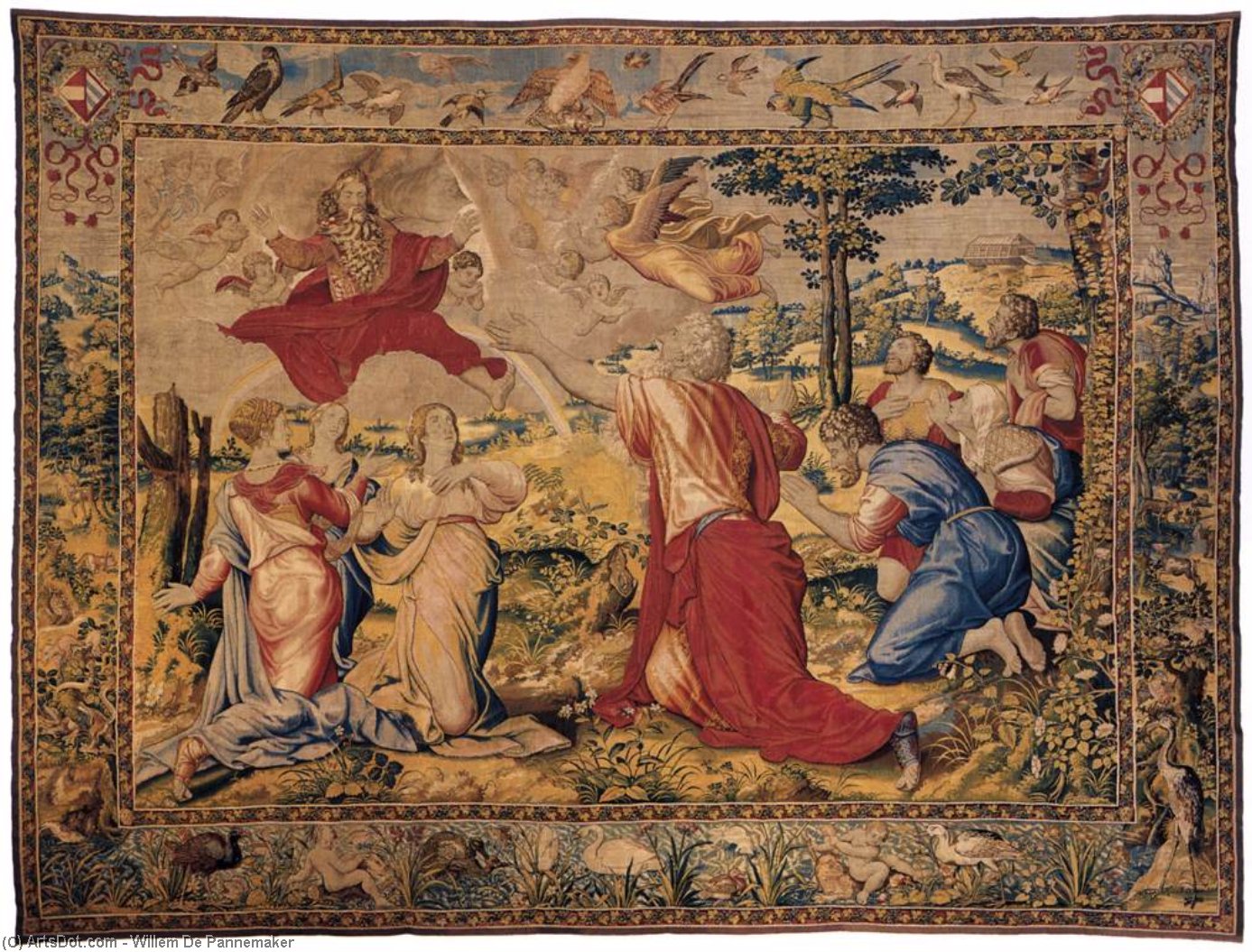
God the Father Establishing His Covenant with Noah
 Tapestry
- Textile
- Renaissance
 1567
1567- Renaissance
 430.0 x 560.0 cm
 国立美術館 (Rijksmuseum)
 詳細を見る
詳細を見る




































作品のオリジナル比率に合わせた、当店の規定サイズからお選びください。

特定のフレームやスペースに合わせて、ご希望のサイズをご入力いただけます。選択されたサイズが元の画像の比率と異なる場合、アートワークをトリミングするか、手描きで要素を追加して絵画を拡張いたします。デジタルモックアップ を制作し、制作開始前にご確認(承認)をいただきます。
画面上のプレビューは、実際のトリミングや拡張を正確に反映しているものではありません。最終的な構図は、モックアップによってのみ正確にご確認いただけます。
カスタムサイズもご利用いただけますが、元の比率を維持するためには、あらかじめ用意されたリストからサイズを選択することをお勧めいたします。
ご注文後、ArtsDot.com チームより詳細な指示をお送りするとともに、仕上がりイメージ(モックアップ)をご提供いたします。


 ガラスオプションは、110cm未満のサイズでのみご利用いただけます。

God the Father Establishing His Covenant with Noah
複製技法
複製画のサイズ
-


合計金額
$ 263
作品解説
A Divine Pact Etched in Time: God Establishing His Covenant with Noah
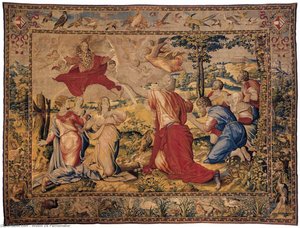
To stand before this monumental depiction of God the Father Establishing His Covenant with Noah is to be enveloped by an atmosphere thick with divine promise and profound human vulnerability. This canvas captures not merely a scene, but a pivotal moment in theological narrative—the instant grace descends upon humanity after the cataclysm. The composition draws the eye immediately to the central interaction: God’s outstretched hand gently touching Noah's head, a gesture that speaks volumes of mercy overcoming judgment. In His other hand, the dove, an eternal symbol of peace and renewal, completes this tableau of divine reassurance. Surrounding this core exchange are figures—witnesses to history—and the subtle inclusion of life itself, represented by the bird in the upper corner, all contributing to a sense of sacred drama unfolding before our very eyes.
The Masterful Hand of Willem de Pannemaker
This work is attributed to Willem de Pannemaker, an artist whose career was deeply rooted in the rich traditions of Flemish craftsmanship. While his biography speaks of him as a titan associated with tapestry, this painting showcases his mastery across various mediums, allowing us to appreciate the enduring quality of his vision. The style reflects the grand sweep of Renaissance influence filtering through Northern European art—a period where meticulous detail met burgeoning emotional depth. One can almost feel the dedication in every brushstroke, an inheritance from the rigorous standards set within the Pannemaker workshop. His ability to imbue religious subject matter with such palpable human emotion elevates this piece beyond mere illustration; it becomes a meditation on faith.
Symbolism and Spiritual Resonance
The symbolism woven throughout the scene is rich and deeply resonant for the art connoisseur. The covenant itself represents a fresh start, a promise of enduring life following ultimate destruction. The dove is perhaps the most potent symbol here, universally understood as the cessation of storm and the return of hope. Observing the grouping of figures—the solemnity on the far left, the attentive presence near the center, and the quiet witness on the right—we are invited to contemplate our own place within cycles of trial and redemption. It is a visual sermon, urging the viewer toward contemplation of enduring covenants in their own lives.
Bringing Sacred Grandeur Home
For those seeking to integrate such profound artistic weight into a contemporary space, this reproduction offers an unparalleled opportunity. The sheer scale of the original work—a commanding 430 x 560 cm—suggests its intended placement in a grand hall or chapel setting. Owning a high-quality hand-painted reproduction allows one to harness that monumental feeling of sacred grandeur without the logistical constraints. It serves not just as decoration, but as a focal point for contemplation, transforming any room into a space imbued with historical reverence and enduring spiritual calm.
関連作品

アーティストの略歴
The Titan of Flemish Tapestry: The Life and Legacy of Willem de Pannemaker
In the vibrant, industrious heart of sixteenth-century Brussels, a golden age of textile artistry unfolded, driven by the unparalleled mastery of Willem de Pannemaker. Born around 1510, likely in the burgeoning artistic hub of Beverwijk or within the bustling streets of Brussels itself, Willem was destined for greatness through the lineage of his craft. He was the scion of the prestigious Pannemaker workshop, led by his father, Pieter, a man whose reputation for excellence laid the foundation upon which Willem would build his monumental career. To study under Pieter was to undergo a rigorous apprenticeship in the very soul of Flemish craftsmanship—learning not merely the mechanics of the loom, but the delicate alchemy of dyeing fine wool and silk, and the complex geometry required to translate grand artistic visions into woven reality.
As Willem matured, he did not merely inherit a tradition; he elevated it to heights previously unimagined in Northern Europe. His talent caught the eye of the most powerful figures of the Renaissance, most notably Charles V, Holy Roman Emperor. This divine patronage transformed the Pannemaker workshop from a respected local institution into the premier atelier for the Habsburg court. Through these royal commissions, Willem became a bridge between the meticulous, detailed traditions of the Low Countries and the sweeping, classical grandeur emerging from Italy. His work began to breathe with the influence of masters like Raphael, integrating a new sense of anatomical precision and dynamic composition into the heavy, luxurious medium of tapestry.
A Symphony of Thread and Symbolism
The artistry of Willem de Pannemaker is defined by a breathtaking synthesis of realism and decorative splendor. He possessed a rare ability to render the tactile world—the sheen of silk, the weight of velvet, and the subtle textures of natural landscapes—with such precision that his tapestries often felt like windows into another realm. His compositions were never static; they pulsed with an emotional intensity that drew the viewer into the sacred and the heroic alike. Whether depicting a biblical covenant or a contemporary military conquest, Willem utilized a bold color palette to guide the eye through intricate narratives of grace, struggle, and triumph.
His most celebrated achievements remain some of the most significant treasures of the Renaissance era:
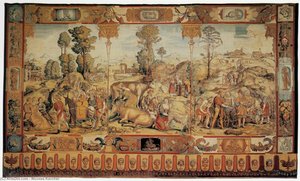
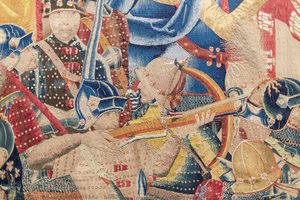
- The Conquest of Tunis: A monumental eight-part series created between 1548 and 1554, based on designs by Jan Cornelisz Vermeyen. This work is historically profound, not only for its depiction of imperial power but for its remarkable inclusion of one of the earliest European artistic renderings of a tornado, showcasing Willem's eye for naturalistic drama.
- The Wedding of Mercury: A rare and exquisite series that serves as a vital visual record of Ovid’s Metamorphoses, depicting the myth of Mercury and Herse in a way that remains unparalleled in surviving textile art.
- The Months of Lucas: A charming and sophisticated series attributed to the influence of Lucas van Leyden, which captures the rhythmic cycle of seasonal life among both the nobility and the peasantry, blending genre painting with high-art weaving.
Historical Significance and Enduring Influence
Willem de Pannemaker’s career represents the zenith of the Brussels tapestry industry. He was more than a weaver; he was a visual storyteller for the most influential dynasty in Europe. By successfully merging the Northern European preoccupation with minute detail and symbolic depth with the Italian Renaissance's focus on classical proportion and movement, he helped define the aesthetic language of his age. His workshop became a crucible of innovation, where the boundaries between fine art and decorative craft were blurred, creating works that functioned as both political propaganda for the Habsburgs and timeless masterpieces of human expression.
Though he passed away in 1581, leaving behind a legacy etched in silk and gold thread, the impact of his work continues to resonate. To look upon a Pannemaker tapestry is to witness the moment when the Flemish tradition reached its most magnificent crescendo, capturing the grandeur of an empire and the delicate nuances of the human spirit within the enduring embrace of woven art.
willem de pannemaker
1513 - 1581
基本情報
- Artistic Movement Or Style: Renaissance Tapestry Art
- Artists Or Movements Influenced By This Artist: ['Charles V']
- Artists Who Influenced This Artist: ['Jan Cornelisz Vermeyen']
- Date Of Birth: circa 1510
- Date Of Death: 1581
- Full Name: Willem de Pannemaker
- Nationality: Flemish
- Notable Artworks:
- Conquest of Tunis
- The Wedding of Mercury
- Christ Appearing to Mary Magdalene
- Place Of Birth: Brussels
関連記事
高級デザインにおけるフレスコ画の隆盛:壁画芸術の再興と新たな表現
ホテルデザインを格上げするフレスコ画の魅力とは?古代から現代までの歴史、技法、デザインプロセスを解説。ArtsDot.comでカスタムオーダーも可能です。空間を彩る壁画芸術の世界をご体験ください。

Transforming Spaces: A Comprehensive Exploration of Wall Decor Through Art History & Contemporary Practice
Explore the art of transforming spaces with our comprehensive guide to wall decor. From historical movements to contemporary trends, discover how to curate impactful interiors and commission bespoke artwork for a truly personalized aesthetic.

Illuminating Faith: Biblical Narrative & Artistic Expression Through the Ages
Explore the rich history of biblical art from Giotto to the Renaissance masters with ArtsDot. Discover symbolism, techniques & enduring legacies. Museum-quality reproductions & expert insights.
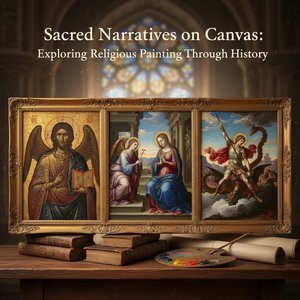
Sacred Narratives on Canvas: Exploring Religious Painting Through History
Explore the rich history of religious painting with ArtsDot.com! Discover iconic artworks, symbolism & techniques from antiquity to the Renaissance. Enhance your art appreciation today.
Sacred Narratives Embodied: A Comprehensive Exploration of Religious Iconography in Art History
Explore the rich history of religious iconography in art! Discover symbolism, movements & masterpieces from Byzantine to Renaissance periods. Expert insights for collectors and enthusiasts at ArtsDot.

