

 プレビュー
プレビュー
 プリントを購入
 シェアする
シェアする シェアする
シェアする
 詳細を見る
詳細を見る

 ダウンロード
 似ている作品
 X線調査
X線調査 スライドショー
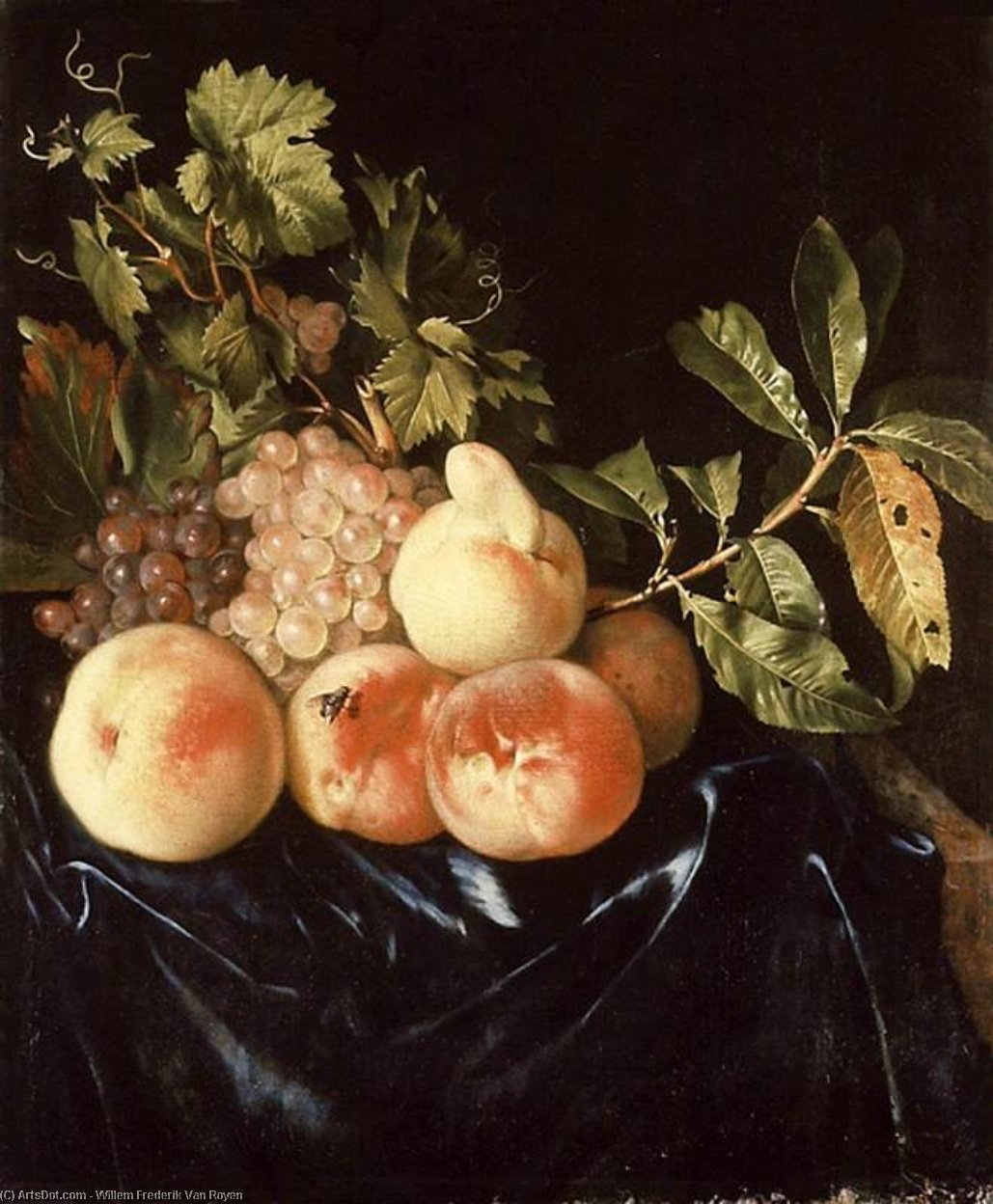
Still-Life of Peaches and Grapes
 Baroque
 1705
1705 46.0 x 39.0 cm
 アシュモリアン美術館
 詳細を見る
詳細を見る




































作品のオリジナル比率に合わせた、当店の規定サイズからお選びください。

特定のフレームやスペースに合わせて、ご希望のサイズをご入力いただけます。選択されたサイズが元の画像の比率と異なる場合、アートワークをトリミングするか、手描きで要素を追加して絵画を拡張いたします。デジタルモックアップ を制作し、制作開始前にご確認(承認)をいただきます。
画面上のプレビューは、実際のトリミングや拡張を正確に反映しているものではありません。最終的な構図は、モックアップによってのみ正確にご確認いただけます。
カスタムサイズもご利用いただけますが、元の比率を維持するためには、あらかじめ用意されたリストからサイズを選択することをお勧めいたします。
ご注文後、ArtsDot.com チームより詳細な指示をお送りするとともに、仕上がりイメージ(モックアップ)をご提供いたします。


 ガラスオプションは、110cm未満のサイズでのみご利用いただけます。

Still-Life of Peaches and Grapes
複製技法
複製画のサイズ
-


合計金額
$ 263
関連作品

アーティストの略歴
The Botanical Legacy of Willem Frederik van Royen
In the golden twilight of the Dutch Golden Age, few artists captured the ephemeral splendor of nature with as much precision and grace as Willem Frederiksz van Royen. Born around 1645 in the vibrant artistic hub of Haarlem, Netherlands, Van Royen was a painter whose life story is as richly layered as the petals in his celebrated floral compositions. His early years were steeped in the prestigious traditions of his homeland, where he sought mastery under the guidance of Arnold van Ravesteyn, a respected figure known for his landscapes and portraits. This formative period, which likely extended to The Hague between 1661 and 1668, provided him with a rigorous foundation in the meticulous observation required to transform simple botanical subjects into profound works of art.
While his initial artistic pursuits leaned toward the structured world of portraiture—a popular pursuit for ambitious painters of the era—Van Royen soon found himself captivated by a different kind of subject. He turned his gaze away from the human visage and toward the intricate, fleeting beauty of the natural world. This transition from portraitist to specialist in flower painting and still life marked the beginning of a legendary career defined by an almost scientific devotion to detail. His brushwork began to mirror the complexity of the flora he studied, capturing not just the color of a bloom, but the delicate texture of its velvet petals and the translucent shimmer of morning dew.
A Journey from Haarlem to the Prussian Court
The trajectory of Van Royen’s life took a monumental turn in 1669 when he moved to Berlin. This migration was far more than a change of scenery; it was a professional ascent that placed him at the very heart of European cultural development. Upon his arrival, he stepped into the prestigious role of court painter to Frederick William, Elector of Brandenburg, succeeding the flower painter Adriaen van der Spelt. This appointment provided Van Royen with unparalleled patronage and a platform to showcase his mastery to the highest echelons of Prussian society.
His time in Berlin and Potsdam was characterized by intense creativity and significant institutional contributions. Beyond his individual canvases, Van Royen played a vital role in the intellectual fabric of the era as one of the founders of the Berlin Academy in 1695. His work during this period often involved collaborative brilliance; he worked alongside contemporaries such as Nicolaas Piermont and Johannes Voorhout to create opulent floral still lifes specifically designed for the Dollhouse of Petronella de la Court. These miniature masterpieces, now preserved in the Rijksmuseum, serve as a testament to his ability to scale his immense talent to suit the most exquisite and intimate of settings.
Mastery of Light and the Art of Stillness
The enduring allure of Van Royen’s oeuvre lies in his unparalleled ability to manipulate light and shadow to evoke emotion. His still lifes, such as the breathtaking Still-Life of Peaches and Grapes, demonstrate a profound command of the Baroque aesthetic. Through the use of dramatic lighting, he breathed life into inanimate objects, creating a sense of weight, ripeness, and even decay that invites the viewer to contemplate the passage of time. His compositions are never merely static arrangements; they are carefully orchestrated dramas where:
- Texture is rendered with such tactile accuracy that one can almost feel the fuzz of a peach or the coolness of a grape.
- Light dances across surfaces, creating deep shadows that lend a sense of three-dimensional grandeur to every petal and leaf.
- Symbolism is woven into the very fabric of the arrangement, where the beauty of a blooming flower serves as a poignant reminder of life's fleeting nature.
As he lived out his final years in Berlin, passing away in 1723, Van Royen left behind a legacy that transcends simple botanical illustration. He was an artist who bridged the gap between the scientific curiosity of the age and the profound emotional depth of the Baroque movement. Today, his works remain cherished treasures in collections such as the Rijksmuseum, standing as eternal monuments to a life spent celebrating the quiet, magnificent wonders of the natural world.
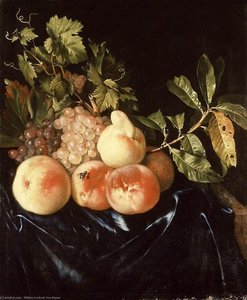
Willem Frederik van Royen
1645 - 1723 , Netherlands
基本情報
- Artistic Movement Or Style: Golden Age Painting
- Artists Or Movements Influenced By This Artist: ['Baroque']
- Artists Who Influenced This Artist: ['Arnold van Ravesteyn']
- Date Of Birth: c.1645
- Date Of Death: 1723
- Full Name: Willem Frederiksz van Royen
- Nationality: Dutch
- Notable Artworks:
- Still-Life of Peaches and Grapes
- The Carrot
- A Vase of Flowers
- Place Of Birth: Haarlem, Netherlands
関連記事

黄金世紀の巨匠たち:バロック絵画が彩る10選|ArtsDot
オランダ黄金時代の10大傑作を紐解く!レンブラント、フェルメール…バロック絵画の魅力と時代背景を深く探求。ArtsDotで、至高のアートコレクションと空間演出のヒントを見つけよう。高品質なアートプリントで、お部屋を華やかに。
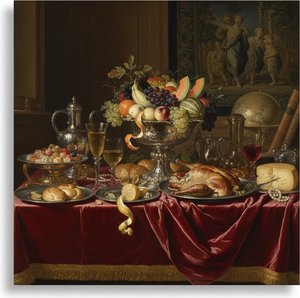
Abraham Hendricksz van Beyeren: Pioneering Dutch Still Life & the Banquet Tradition
Explore the captivating world of Dutch Golden Age still life with Abraham van Beyeren. Discover his innovative techniques, symbolic banquet scenes & lasting influence on art history. Learn about collecting these masterpieces.

レンブラント傑作25選:光と影の巨匠、魂を揺さぶる名画の世界 | ArtsDot
レンブラントの傑作25選。光と影の魔術師が描いた魂を揺さぶる名画の世界へ。美術史に残る自画像、夜警、宗教画…ArtsDotで高品質なアートプリントやインテリアアートをお楽しみください。コレクションはこちら→

Golden Age Reflections: Dutch Baroque Painting & Cultural Innovation
Explore the Dutch Golden Age of painting! Discover key artists like Vermeer & ter Borch, their innovative techniques, and the rich cultural context behind these Baroque masterpieces. Learn about collecting & appreciating this iconic art period.

Illuminating Innovation: Exploring the Dutch Golden Age of Painting
Explore the Dutch Golden Age of painting with ArtsDot. Discover Rembrandt, Vermeer & other Masters. Learn about key characteristics, iconic artworks, and lasting influence. Expert insights for collectors & enthusiasts.