


 プレビュー
プレビュー
 シェアする
シェアする シェアする
シェアする
 詳細を見る
詳細を見る

 ダウンロード
 似ている作品
 X線調査
X線調査 スライドショー
 統計情報
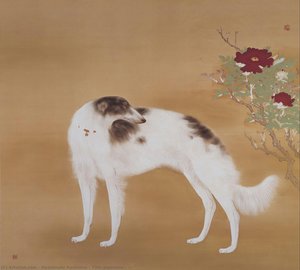
統計情報Warm Sunshine and Summer Breeze
 Nihonga
 169.0 x 198.0 cm
 Fukuoka Art Museum
 詳細を見る
詳細を見る
オンラインプレビューをはるかに凌ぐ、高解像度で鮮明なデジタル画像をご購入いただけます。
各ファイルは、社内の専門家が高度なツールと熟練した手作業によるレタッチを用いて、細心の注意を払って準備されています。すべての画像において、卓越した鮮明度、正確な色彩再現性、そして繊細なディテールを保証いたします。
最終ファイルは、プロフェッショナルな編集・印刷環境ですぐにご利用いただけるよう最適化された状態で、72時間以内にメールにてお届けいたします。これは、一流のデザインスタジオ、出版社、ギャラリーから信頼されているものと同等の品質です。
デジタルアート
個人での鑑賞、印刷、クリエイティブなプロジェクト用に、高解像度ファイルをダウンロードできます。 ( プリント版に切り替え 手描きの絵画を購入)
デジタル画像のご注文に付随する特典
高品質なデジタル画像配信を、確かな品質で。
ArtsDot.com を選ぶことは、単に画像を手に入れることではありません。それは、プロの手によって精密に仕上げられ、満足保証が付いた高品質なデジタルアートワークを受け取ることを意味します。ご注文いただいた際に自動的に付随する内容は、以下の通りです:

メールですぐにお届け
ご注文から72時間以内に、高解像度のデジタル画像ファイルがメールでお手元に届きます。すぐにそのままご利用いただけます。

AI技術で最適化されたデジタルファイル
お客様の作品は、高度なAIツールと専門家による手作業の編集を組み合わせてプロフェッショナルに最適化されており、細部のディテール、鮮明さ、そして正確な色再現性を最大限に引き出しています。

一生涯無料の再送サービス
ファイルを誤って削除したり、紛失してしまったりしましたか?ご安心ください。いつでも無料で再送いたします。

輸入手数料は一切かかりません
関税や手数料、配送料を気にすることなく、お気に入りのアートワークをすぐにお楽しみいただけます。デジタルダウンロードは常に免税です。

色彩再現の保証
プロ仕様のツールとカラーマネジメント技術を用いることで、デジタル画像が元の色を最大限に忠実に再現することを保証いたします。

100日間満足保証
ご購入いただいたデジタル画像にご満足いただけない場合は、100日以内であれば、理由を問わず修正または100%の返金対応をさせていただきます。

100% 返金保証
ご満足いただけない場合は、デジタルファイルを受け取ってから100日以内であれば、理由を問わず全額返金いたします。

まとめ買い割引
3枚購入で10%OFF - 5枚購入で15%OFF - 10枚以上購入で20%OFF。クリエイティブなプロジェクト、ギャラリー、エージェンシーに最適です。
関連作品




作家の略歴
Maurits Cornelis Escher: The Architect of Impossible Worlds
Maurits Cornelis Escher (1898-1972) remains one of the most singularly inventive and intellectually stimulating artists of the 20th century. Though largely overlooked during his lifetime, particularly in his native Netherlands, Escher’s intricate woodcuts, lithographs, and mezzotints have since achieved global renown, captivating audiences with their mind-bending explorations of mathematics, geometry, and perception. He wasn't simply a draftsman; he was an architect of impossible worlds – spaces that defy our everyday understanding of reality, inviting us to question the very nature of perspective, space, and time.
Born in Leeuwarden, Friesland, Netherlands, Escher’s early life was marked by personal tragedy. His mother died when he was just twelve years old, a loss that profoundly shaped his artistic sensibility. He initially pursued a career as a teacher but quickly realized his true calling lay in the visual arts. He enrolled at the School of Architecture and Decorative Arts in Haarlem, where he honed his technical skills while simultaneously developing his distinctive style. It’s fascinating to note that Escher was left-handed, a detail often cited by those who studied him, suggesting an inherent inclination towards precision and intricate detail.
Escher's artistic journey began with studies of nature – insects, landscapes, and plants – meticulously rendered in woodcuts and lithographs. These early works served as a foundation for his later explorations, providing him with the observational skills and technical mastery necessary to tackle increasingly complex subjects. A pivotal moment arrived when he encountered the work of Giorgio de Chirico, whose unsettling juxtapositions of familiar objects in dreamlike settings ignited Escher’s imagination and profoundly influenced his approach to composition and symbolism. He was particularly drawn to De Chirico's ability to evoke a sense of mystery and unease through seemingly ordinary scenes.
The Mathematical Foundations of Illusion
What distinguishes Escher’s work from mere technical skill is its deep engagement with mathematics, specifically topology, geometry, and tessellations. He didn’t simply *draw* impossible objects; he *calculated* them. Escher collaborated extensively with mathematicians like George Pólya, Roger Penrose, and Donald Coxeter, seeking to understand the underlying principles that governed his creations. These intellectual exchanges fueled his artistic explorations, pushing him to develop increasingly sophisticated techniques for representing concepts such as infinity, reflection, symmetry, and perspective.
His most famous works – *Hand with Reflecting Sphere*, *Drawing Hands*, *Relativity*, *Waterfall*, and *Ascending and Descending* – are prime examples of his mathematical ingenuity. These pieces demonstrate how he could create the illusion of depth and movement on a two-dimensional surface, exploiting optical illusions and geometric principles to generate images that seem to defy logic. The concept of tessellations—the covering of a plane with repeating shapes without gaps or overlaps—was central to many of his works, allowing him to explore patterns and symmetries in an endlessly fascinating way.
Influences Beyond Mathematics
While mathematics undoubtedly played a crucial role in Escher’s work, it wasn't the sole source of inspiration. He was deeply influenced by the art and architecture of the past, particularly the Islamic mosaics of the Alhambra in Spain and the intricate carvings of the Mezquita-Cathedral of Córdoba. These works, with their complex geometric patterns and mesmerizing symmetries, provided him with a visual vocabulary that he skillfully adapted to his own artistic vision.
Furthermore, Escher’s interest extended beyond Western art traditions. He traveled extensively throughout Italy and Spain, immersing himself in the cultures and landscapes of these regions. He was particularly fascinated by the concept of “impossible objects”—visual paradoxes that challenge our perception of reality—a theme he explored with remarkable consistency throughout his career. The influence of Renaissance perspective is also evident in many of his works, albeit often subverted to create a sense of disorientation and unease.
Legacy and Enduring Appeal
Despite initial neglect by the art world, M.C. Escher’s work gained increasing recognition in the late 20th century, culminating in widespread acclaim in the 21st. His images have been reproduced countless times on posters, postcards, and merchandise, cementing his status as a global icon. Escher's enduring appeal lies not only in the beauty of his creations but also in their intellectual depth and their ability to provoke thought and wonder.
He remains a testament to the power of artistic exploration—a reminder that art can be both aesthetically pleasing and intellectually stimulating, challenging our assumptions about the world around us. Escher’s legacy continues to inspire artists, mathematicians, and anyone who dares to question the boundaries of perception and possibility.

yoshimura tadao
1898 - 1952 , Japan
プロフィール概要
- Artistic Movement Or Style: Graphic art, Printmaking
- Artists Or Movements Influenced By This Artist:
- Rene Magritte
- Martin Gardner
- Artists Who Influenced This Artist:
- George Arnold Escher
- Frank Reaugh
- Date Of Birth: 17 June 1898
- Date Of Death: 27 March 1972
- Full Name: Maurits Cornelis Escher
- Nationality: Dutch
- Notable Artworks:
- Hand with Reflecting Sphere
- Drawing Hands
- Relativity
- Waterfall
- Ascending and Descending
- Place Of Birth: Leeuwarden, Netherlands