

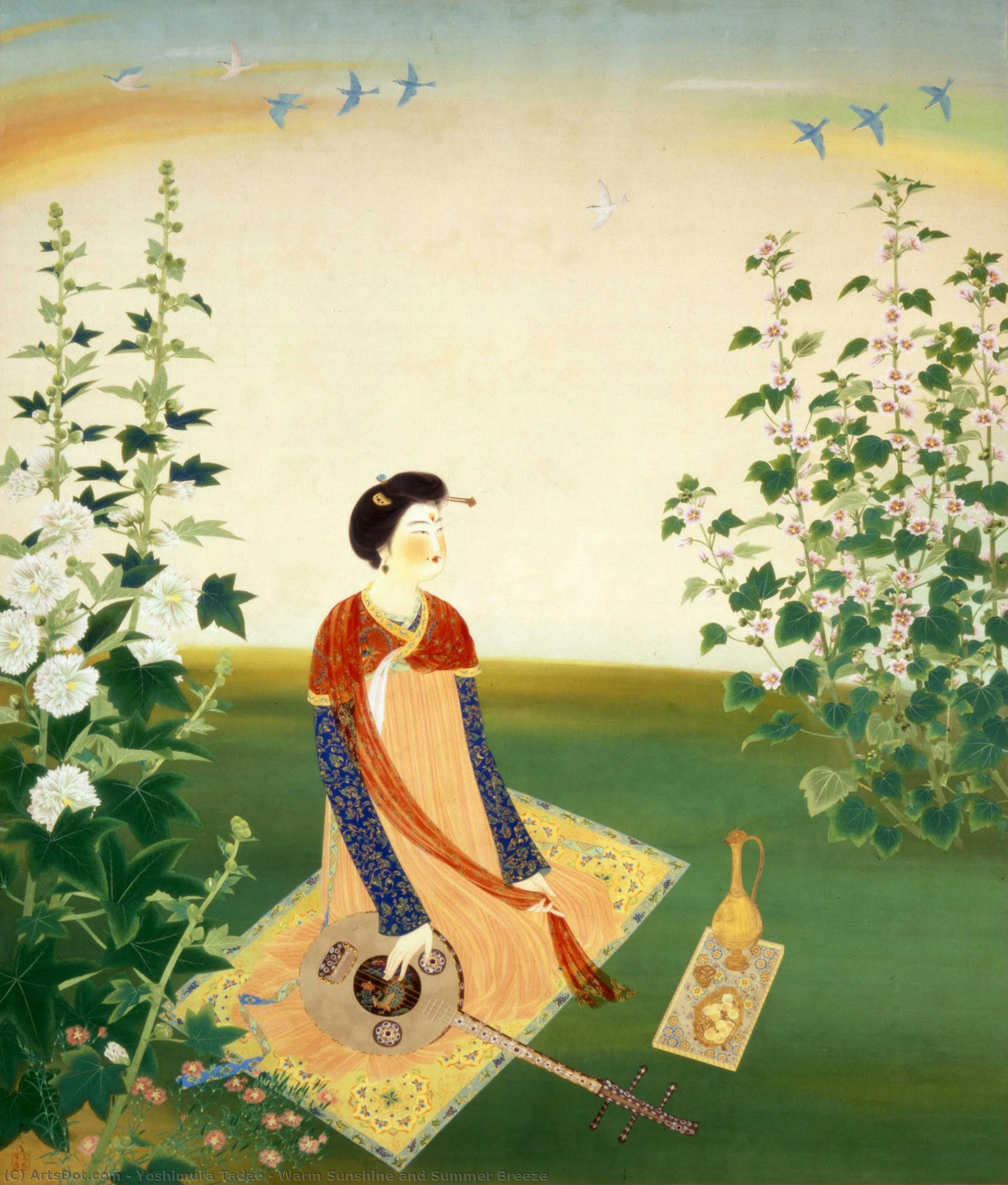
 プレビュー
プレビュー
 シェアする
シェアする シェアする
シェアする
 詳細を見る
詳細を見る

 ダウンロード
 似ている作品
 X線調査
X線調査 スライドショー
 統計情報
統計情報Warm Sunshine and Summer Breeze
 Nihonga
 169.0 x 198.0 cm
 Fukuoka Art Museum
 詳細を見る
詳細を見る
ジークレー/アートプリント
迅速な制作と多彩な仕上げオプションを備えた、ミュージアムクオリティのジークレーまたはキャンバスプリント。 ( 手描きの絵画を購入 デジタル画像販売へ切り替え)




































作品のオリジナル比率に合わせた、当店の規定サイズからお選びください。

特定のフレームやスペースに合わせて、ご自身でサイズを指定することも可能です。選択されたサイズが元の画像の比率と一致しない場合、作品をトリミングするか、鏡面反射または単色での塗りつぶしによって画像を拡張いたします。制作を開始する前に、ご確認用のデジタルモックアップをお送りいたします。
画面上のプレビューには、実際のトリミングや拡張は反映されませんのでご注意ください。最終的な構図を正確に確認できるのは、モックアップのみとなります。
カスタムサイズも承っておりますが、元の比率を維持するためには、あらかじめ用意されたリストからサイズを選択することをお勧めいたします。


 ガラスオプションは、110cm未満のサイズでのみご利用いただけます。

Warm Sunshine and Summer Breeze
ジークレー/アートプリント
複製画のサイズ
-


合計金額
$ 62
関連作品
アーティストの略歴
Maurits Cornelis Escher: The Architect of Impossible Worlds
Maurits Cornelis Escher (1898-1972) remains one of the most singularly inventive and intellectually stimulating artists of the 20th century. Though largely overlooked during his lifetime, particularly in his native Netherlands, Escher’s intricate woodcuts, lithographs, and mezzotints have since achieved global renown, captivating audiences with their mind-bending explorations of mathematics, geometry, and perception. He wasn't simply a draftsman; he was an architect of impossible worlds – spaces that defy our everyday understanding of reality, inviting us to question the very nature of perspective, space, and time.
Born in Leeuwarden, Friesland, Netherlands, Escher’s early life was marked by personal tragedy. His mother died when he was just twelve years old, a loss that profoundly shaped his artistic sensibility. He initially pursued a career as a teacher but quickly realized his true calling lay in the visual arts. He enrolled at the School of Architecture and Decorative Arts in Haarlem, where he honed his technical skills while simultaneously developing his distinctive style. It’s fascinating to note that Escher was left-handed, a detail often cited by those who studied him, suggesting an inherent inclination towards precision and intricate detail.
Escher's artistic journey began with studies of nature – insects, landscapes, and plants – meticulously rendered in woodcuts and lithographs. These early works served as a foundation for his later explorations, providing him with the observational skills and technical mastery necessary to tackle increasingly complex subjects. A pivotal moment arrived when he encountered the work of Giorgio de Chirico, whose unsettling juxtapositions of familiar objects in dreamlike settings ignited Escher’s imagination and profoundly influenced his approach to composition and symbolism. He was particularly drawn to De Chirico's ability to evoke a sense of mystery and unease through seemingly ordinary scenes.
The Mathematical Foundations of Illusion
What distinguishes Escher’s work from mere technical skill is its deep engagement with mathematics, specifically topology, geometry, and tessellations. He didn’t simply *draw* impossible objects; he *calculated* them. Escher collaborated extensively with mathematicians like George Pólya, Roger Penrose, and Donald Coxeter, seeking to understand the underlying principles that governed his creations. These intellectual exchanges fueled his artistic explorations, pushing him to develop increasingly sophisticated techniques for representing concepts such as infinity, reflection, symmetry, and perspective.
His most famous works – *Hand with Reflecting Sphere*, *Drawing Hands*, *Relativity*, *Waterfall*, and *Ascending and Descending* – are prime examples of his mathematical ingenuity. These pieces demonstrate how he could create the illusion of depth and movement on a two-dimensional surface, exploiting optical illusions and geometric principles to generate images that seem to defy logic. The concept of tessellations—the covering of a plane with repeating shapes without gaps or overlaps—was central to many of his works, allowing him to explore patterns and symmetries in an endlessly fascinating way.
Influences Beyond Mathematics
While mathematics undoubtedly played a crucial role in Escher’s work, it wasn't the sole source of inspiration. He was deeply influenced by the art and architecture of the past, particularly the Islamic mosaics of the Alhambra in Spain and the intricate carvings of the Mezquita-Cathedral of Córdoba. These works, with their complex geometric patterns and mesmerizing symmetries, provided him with a visual vocabulary that he skillfully adapted to his own artistic vision.
Furthermore, Escher’s interest extended beyond Western art traditions. He traveled extensively throughout Italy and Spain, immersing himself in the cultures and landscapes of these regions. He was particularly fascinated by the concept of “impossible objects”—visual paradoxes that challenge our perception of reality—a theme he explored with remarkable consistency throughout his career. The influence of Renaissance perspective is also evident in many of his works, albeit often subverted to create a sense of disorientation and unease.
Legacy and Enduring Appeal
Despite initial neglect by the art world, M.C. Escher’s work gained increasing recognition in the late 20th century, culminating in widespread acclaim in the 21st. His images have been reproduced countless times on posters, postcards, and merchandise, cementing his status as a global icon. Escher's enduring appeal lies not only in the beauty of his creations but also in their intellectual depth and their ability to provoke thought and wonder.
He remains a testament to the power of artistic exploration—a reminder that art can be both aesthetically pleasing and intellectually stimulating, challenging our assumptions about the world around us. Escher’s legacy continues to inspire artists, mathematicians, and anyone who dares to question the boundaries of perception and possibility.
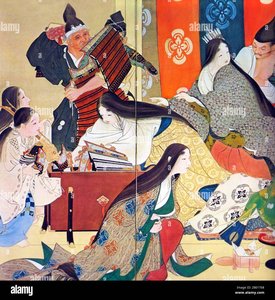
yoshimura tadao
1898 - 1952 , Japan
基本情報
- Artistic Movement Or Style: Graphic art, Printmaking
- Artists Or Movements Influenced By This Artist:
- Rene Magritte
- Martin Gardner
- Artists Who Influenced This Artist:
- George Arnold Escher
- Frank Reaugh
- Date Of Birth: 17 June 1898
- Date Of Death: 27 March 1972
- Full Name: Maurits Cornelis Escher
- Nationality: Dutch
- Notable Artworks:
- Hand with Reflecting Sphere
- Drawing Hands
- Relativity
- Waterfall
- Ascending and Descending
- Place Of Birth: Leeuwarden, Netherlands
関連記事

Utagawa Kuniyoshi: A Master of Japanese Ukiyo-e – Narrative Innovation & the Fusion of Tradition with Popular Culture
Explore the captivating world of Utagawa Kuniyoshi, a master of Japanese ukiyo-e woodblock prints. Discover his innovative warrior scenes, vibrant landscapes & lasting legacy in 19th-century art history.

葛飾北斎:25の傑作が語る浮世絵の世界 - ArtsDot
葛飾北斎の25選:『神奈川沖浪裏』や『富嶽三十六景』など、浮世絵の世界を深く探求。木版画の技法と日本美術の美をArtsDotで。高品質なアートプリントで空間に感動を。コレクションはこちら。

Xie Zhiliu: A Legacy of Ink Wash Painting & Modern Chinese Literati Tradition
Explore the legacy of Xie Zhiliu, a master of Chinese ink wash painting & prominent figure in modern art. Discover his techniques, influences, and contributions to literati tradition. A guide for discerning collectors.

Floating World: The Captivating Art and Legacy of Japanese Ukiyo-e
Explore the profound beauty of Japanese Ukiyo-e. Discover the history, masters like Hokusai, and the enduring legacy of the 'Floating World' through an expert art-historical lens.
Serenity on Canvas: A Guide to the Timeless Beauty of Japanese Landscape Painting
Discover the serene beauty of Japanese landscape painting. From Hokusai's iconic woodblock prints to meditative sumi-e ink washes, explore a visual journey through the 'floating world' and learn how to bring this timeless Zen aesthetic into your modern home decor.