




The Alchemy of Pigment: Inorganic Stability vs. Organic Evanescence
 The Chemistry of Permanence: Why Professional Oil Paintings Last Centuries
The Molecular Foundation: Inorganic Pigments vs. Organic Dyes Pigment A pigment is a chemical compound that gives a substance or organism color, or is used by humans to add or alter color or change visual appearance. Pigments are nearly or completely...
To gaze upon a classical masterpiece is to witness more than mere aesthetic triumph; it is to observe a profound chemical achievement. Long before the advent of modern synthetic laboratories, the history of art was, in essence, a history of alchemy. For the discerning collector, understanding the soul of a painting requires looking beneath the surface at the molecular foundation of color. The vibrant hues that continue to captivate us today were often born from a meticulous search for stable minerals and precious earth elements. When we observe the deep, celestial blues of an Old Master work, we are frequently seeing the legacy of lapis lazuli, ground into a fine powder to create ultramarine—a pigment so precious it was once valued more than gold. This profound depth of color is not merely a matter of artistic intent but a result of the molecular stability inherent in inorganic compounds.
The distinction between permanence and fleeting beauty lies in the fundamental difference between pigments and dyes. While dyes are often organic compounds that dissolve into a medium—leaving behind a beautiful but often ephemeral trace—pigments are nearly or completely insoluble particles. These chemical compounds, such as prehistoric ochre, charcoal, or rich cadmiums, possess an inherent resistance to the elements. This molecular stability is what separates a temporary decoration from a permanent asset. The selection of pigments like the deep, iron-based Mars Black was never a matter of mere preference but a calculated decision for longevity, ensuring that the artist's vision would endure through centuries of environmental shifts.
The Battle Against Light: Understanding Photodegradation and Lightfastness
 Lightfastness
Lightfastness is a property of a colourant such as dye or pigment that describes its resistance to fading when exposed to light. Dyes and pigments are used for example for dyeing of fabrics, plastics or other materials and manufacturing paints or pri...
Every artwork exists in a silent, elemental struggle against its environment, most notably the invisible energy of light. This phenomenon, known as photodegradation, is the primary antagonist in the preservation of color. When light encounters a painted surface, it can alter or even break the chemical bonds within the pigment's chromophore—the part of the molecule responsible for its color. The high-energy ultraviolet radiation from the sun acts as a catalyst, accelerating the bleaching process and causing colors to fade or shift unexpectedly. This is why the concept of lightfastness is so vital to any serious collector; it describes a pigment's resistance to this very decay.
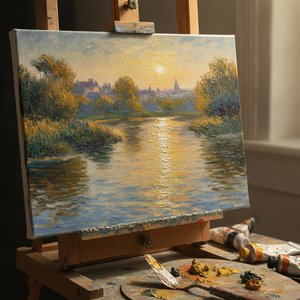
In the world of fine art, we distinguish between materials that are fugitive and those that are lightfast. Many lake pigments, which are made by precipitating a dye with an inert binder, can be particularly vulnerable because the underlying dyes lack the structural resilience to withstand UV exposure. In contrast, inorganic colourants are generally considered much more lightfast, providing a reliable brilliance that resists the bleaching effects of the electromagnetic spectrum. For those decorating a space with significant natural light, understanding this chemical vulnerability is essential to ensuring that the luminous glow of a sun-drenched landscape remains as vibrant in fifty years as it is on the day of its installation.
Mastering the Medium: The Role of Drying Oils and Chemical Binding
 Drying oil
A drying oil is an oil that hardens to a tough, solid film after a period of exposure to air, at room temperature. The oil hardens through a chemical reaction in which the components crosslink (and hence polymerize) by the action of oxygen (not throu...
The true magic of an oil painting lies in the sophisticated interaction between pigment and binder. Oil painting, a method that has been perfected over centuries, involves suspending pigments within a drying oil, such as linseed, poppy, or walnut oil. Unlike water-based media that dry through evaporation, these oils undergo a complex chemical reaction known as polymerization. Through exposure to oxygen, the components of the oil crosslink, hardening into a tough, solid, and waterproof film. This process creates a medium that offers unparalleled flexibility, richer and denser color, and the ability to build translucent layers that allow light to dance within the paint itself.
The mastery of the painter lies in understanding how these minerals interact with their medium. The choice of oil is a deliberate technical decision; for instance, certain oils may be chosen for their resistance to yellowing, while others are selected for their drying speed. At ArtsDot.com, our artists utilize specific oils, such as safflower, for lighter tones to prevent the dreaded yellowing effect over time. This careful management of the medium's chemistry ensures that the impasto textures and deep tonal ranges characteristic of high-quality reproductions remain structurally sound, preserving the tactile depth and "soul" of the original work.
The Art of Preservation: Modern Conservation Science and Protective Varnishes
 Conservation science (cultural property)
With respect to cultural property, conservation science is the interdisciplinary study of the conservation of art, architecture, technical art history and other cultural works through the use of scientific inquiry. General areas of research include t...
Beyond the pigments and oils, the longevity of a masterpiece is secured through the science of protection. Modern conservation science focuses on understanding the materials used by artists to prevent the causes of deterioration. One of the most critical final steps in the creation of a professional oil painting is the application of a protective varnish, such as Damar. This clear layer acts as a sacrificial shield, protecting the delicate paint surface from dust, moisture, and atmospheric pollutants. It also restores the saturation of colors that may have dulled during the drying process, bringing back the original luster of the work.
Preservation is an ongoing commitment that extends to how we care for art in our homes. To protect a significant investment, it is wise to avoid direct sunlight and use acid-free matting to create an air gap between prints and glass, preventing moisture buildup. In our custom hand-painted reproductions, we also utilize flexible gesso to prevent the canvas from cracking, ensuring that the structural integrity of the work remains intact. By combining historical techniques with modern scientific understanding, we ensure that each piece is not just a beautiful object, but a lasting legacy.
Investing in Longevity: Choosing Materials for a Lasting Collection
 Built to Last: The Science of Why Great Art Never Fades
The Alchemy of Color: The Molecular Foundation of Pigment The Chemistry of Permanence: Why Fine Art Survives the Test of Time The Alchemy of Pigment: The Molecular Foundation of Color Mastering the Brush: The Timeless Secrets of Old Master Oil Painti...
For the modern collector, selecting art is an exercise in both aesthetic passion and informed decision-making. Whether you are seeking a bespoke handmade oil reproduction or a high-quality Giclée print, the materials used define the lifespan of your collection. A true handmade oil reproduction, with its physical brushstrokes and textured impasto, offers a level of permanence and tactile depth that digital prints simply cannot replicate. These works are built to last, utilizing 100% cotton canvas and archival-grade pigments that stand the test of time.
As you build your collection, consider the "chemistry of permanence" in every piece. Look for the hallmarks of quality: the use of inorganic pigments, the application of protective varnishes, and the expertise of artists trained in academic traditions. By choosing works created with a deep respect for both artistic vision and chemical stability, you are not merely purchasing decor; you are acquiring enduring treasures that will continue to inspire and enrich your space for generations to come.