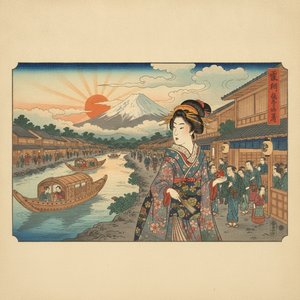
The Floating World: Understanding the Essence of Ukiyo-e
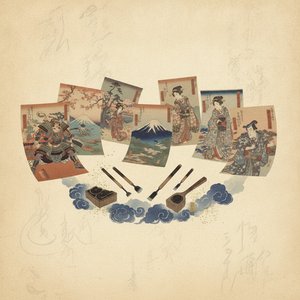 Floating Worlds: A Definitive Guide to the Mastery and Philosophy of Japanese Ukiyo-e Woodblock Prints
The Philosophy of Impermanence: Understanding the 'Floating World' Floating Worlds: The Captivating Magic and Timeless Legacy of Japanese Ukiyo-e Art The Philosophy of the Floating World: Understanding Ukiyo-e To understand Ukiyo-e is to grasp the ve...
To understand the seismic shift that occurred in nineteenth-century European aesthetics, one must first descend into the vibrant, ephemeral streets of Edo-period Japan. Here, a genre known as
Ukiyo-e—literally translated as
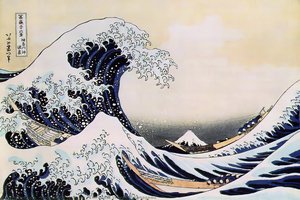
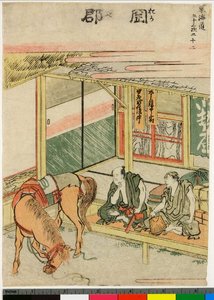
"pictures of the floating world"—blossomed from the burgeoning energy of a rising merchant class. This was an art form not born of aristocratic decree or religious solemnity, but of the pulse of urban life: the theater, the tea houses, and the transient pleasures of the city. These woodblock prints captured the very essence of impermanence, finding profound beauty in the fleeting moment, whether it was a Kabuki actor frozen mid-performance or the delicate grace of a courtesan.
The philosophy behind these works was deeply rooted in a bittersweet appreciation for life's transience. Artists like
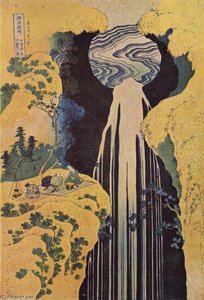
Katsushika Hokusai and
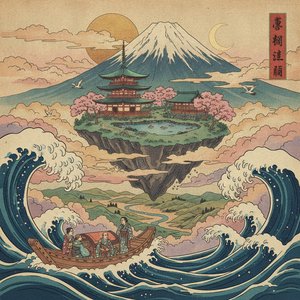
Utagawa Kunisada II did not merely document reality; they distilled it into striking compositions where ink blossomed into waves and mountains breathed with a life of their their own. Through the meticulous, labor-intensive process of woodblock printing—where a single design might require dozens of separate hand-printings on different blocks—the masters of Ukiyo-e achieved a level of color saturation and graphic clarity that was entirely unprecedented. This era of creativity, characterized by a fascination with the everyday, provided the essential visual vocabulary that would later travel across oceans to ignite a revolution in the West.
The Great Encounter: How Trade Reopened Japan to the West
 Japonisme
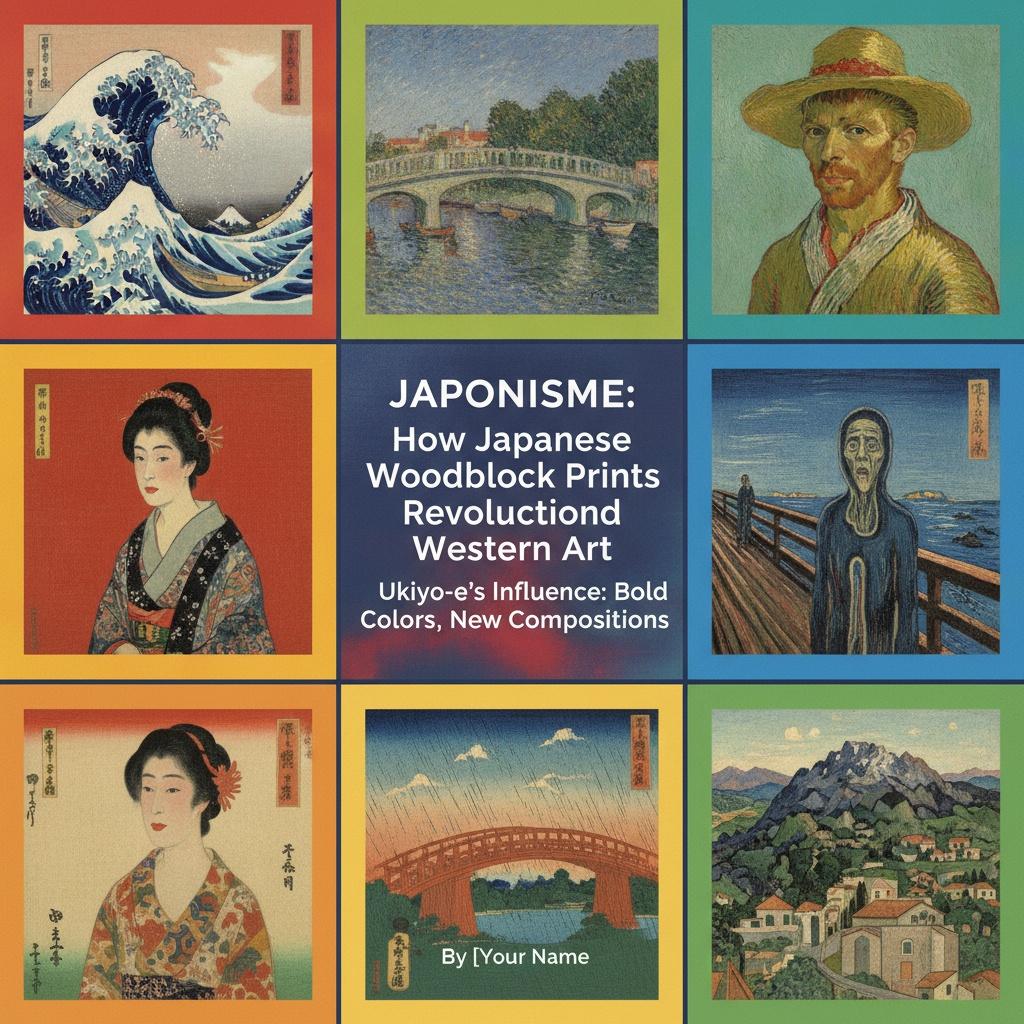
Japonisme is a French term that refers to the popularity and influence of Japanese art and design among a number of Western European artists in the nineteenth century following the forced reopening of foreign trade with Japan in 1858. Japonisme was f...
For centuries, Japan existed in a state of relative isolation under the Tokugawa shogunate, yet the seeds of global artistic convergence were sown during the mid-ninnetic century. The forced reopening of foreign trade in 1858 acted as a floodgate, releasing not just commodities like silk and ceramics, but an explosion of visual culture. As Japanese goods began to arrive in European ports, they were often accompanied by woodblock prints that served as packing material for more fragile wares. It was in this accidental encounter that Western eyes first glimpsed the radical possibilities of the Japanese aesthetic.
This period of influx, which art critic Philippe Burty famously termed
Japonisme in 1872, created a profound cultural fascination. The West, long accustomed to the heavy shadows and rigid perspectival rules of the Renaissance tradition, was suddenly confronted with an entirely different way of seeing. Collectors like Siegfried Bing began to curate these "exotic" works, bringing them into the salons of Paris and London. This was more than a mere trend in decorating; it was a fundamental disruption of the Western artistic hierarchy, challenging established notions of subject matter and composition through the sheer magnetism of Japanese decorative arts, from intricate enamels to sophisticated lacquerware.
Breaking the Perspective: New Visual Languages in Impressionism
The impact of these prints on the Impressionist and Post-Impressionist movements was nothing short of transformative. When masters like Monet, Degas, and Van Gogh encountered the Ukiyo-e school, they found a liberation from the constraints of traditional Western realism. The Japanese technique of
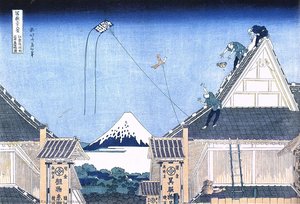
dramatic foreshortening and
asymmetrical composition offered a blueprint for a new kind of modernism. Instead of the centered, balanced subjects of classical painting, Western artists began to experiment with "cropped" views, where figures might disappear off the edge of the frame, suggesting a world that continued far beyond the boundaries of the canvas.
This shift allowed for a more dynamic and immersive experience for the viewer. The use of flat areas of color and bold, decisive contours—elements seen in the works of
Utagawa Kuniyoshi—encouraged Western painters to move away from the illusion of three-dimensional depth toward a more graphic, expressive surface. This newfound freedom allowed the Impressionists to capture light and atmosphere with a sense of spontaneity that mirrored the "floating" nature of their Japanese inspirations. The boundaries between the subject and the background began to blur, creating a rhythmic flow that redefined the very structure of modern painting.
Mastery of Line and Color: The Technical Influence of Woodblock Prints
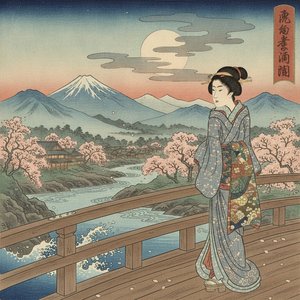 Ukiyo-e's Greatest Hits: 10 Masterpieces That Shaped a Movement | ArtsDot
Introduction Imagine a world captured not in grand historical narratives or regal portraits, but in fleeting moments of everyday life – a Kabuki actor frozen mid-performance, the delicate beauty of a courtesan, a surging wave threatening to engulf al...
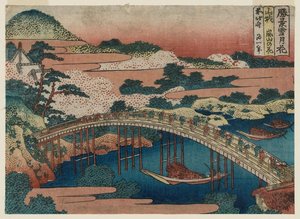
Beyond the conceptual shifts, the technical brilliance of the Ukiyo-e masters provided a direct toolkit for European innovation. The vibrant, often saturated pigments used in Japanese prints—such as the striking blues and deep reds found in the works of
Hokusai—offered a palette that was both bold and emotionally resonant. Western artists were captivated by the way these colors could exist in flat, unshaded planes, creating a sense of decorative power that did not rely on traditional chiaroscuro to define form.
Furthermore, the rhythmic flow of line work found in Japanese prints influenced the way Western painters approached texture and movement. The delicate, precise linework seen in the portraits of
Okumura Toshinobu or the muscular energy in the Sumo wrestler prints by
Kunisada II taught European artists how to use contour to direct the eye and convey kinetic energy. This technical dialogue between East and West facilitated a move toward more expressive, tactile surfaces, where the visible brushstroke became a hallmark of artistic truth, much like the meticulous carving of the woodblock itself.
Beyond the Canvas: Japonisme in Architecture, Design, and Fashion
The influence of Japonisme was far too expansive to be contained within the confines of oil painting; it seeped into the very fabric of European lifestyle. The aesthetic principles of Japanese design—simplicity, organic motifs, and a profound respect for natural materials—began to reshape architecture, landscaping, and even fashion. In the realm of interior design, the concept of "negative space" or
ma became a guiding principle, leading to more minimalist and airy domestic environments that favored clarity over clutter.
In the decorative arts, the motifs of the floating world—cranes, waves, and floral patterns—were integrated into everything from wallpaper to fine ceramics. Even the performing arts felt the ripple effects, with works like Gilbert and Sullivan's
The Mikado bringing Japanese themes to the operatic stage. This era of cross-cultural infusion created a globalized aesthetic language, where the boundaries between high art and functional design became increasingly fluid, paving the way for the modern design movements of the twentieth century.
The Enduring Legacy: Modern Interpretations of Japanese Aesthetics
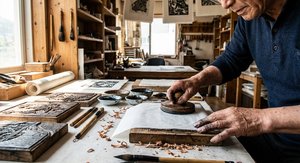 The Enduring Legacy of Woodblock Printmaking: Technique, History & Artistic Expression
Origins & Evolution: From Ancient China to Global Art Form Wikipedia: Woodblock printing Woodblock printing or block printing is a technique for printing text, images or patterns used widely throughout East Asia and originating in China in antiquity ...
Today, the legacy of Japonisme remains a cornerstone of our global visual heritage. The dialogue initiated in the nineteenth century continues to resonate in contemporary art, where the principles of minimalism, graphic boldness, and the celebration of the ephemeral are still deeply revered. We see this influence in everything from modern graphic design and typography to the way we approach photography and film composition.
The "floating world" has not disappeared; it has merely evolved. The ability to find profound meaning in a single, transient moment—a concept central to Ukiya-e—remains one of the most powerful tools in the artist's repertoire. As we continue to explore the intersections of different cultures and eras, the lessons of Japonisme remind us that art is a continuous, flowing river, forever shaped by the unexpected encounters that cross its path. For those seeking to bring this timeless elegance into their own spaces, the study of these historical masterworks offers an infinite well of inspiration and a deeper connection to the universal human experience.
For collectors and professionals looking to integrate these historical aesthetics into modern environments, ArtsDot.com provides access to a curated selection of high-quality reproductions and custom commissions that honor the technical mastery of the masters.