

Defining Surrealism: The Psychology of Dreamlike Imagery in Modern Hospitality
 Beyond Reality: A Sophisticated Exploration of Symbolism and the Dreamlike Subconscious in Art History
The Veil of Perception: Defining the Symbolist Movement To gaze upon a Symbolist masterpiece is to step through a threshold, leaving the tangible certainties of the material world for a realm where shadows possess weight and silence speaks in metapho...
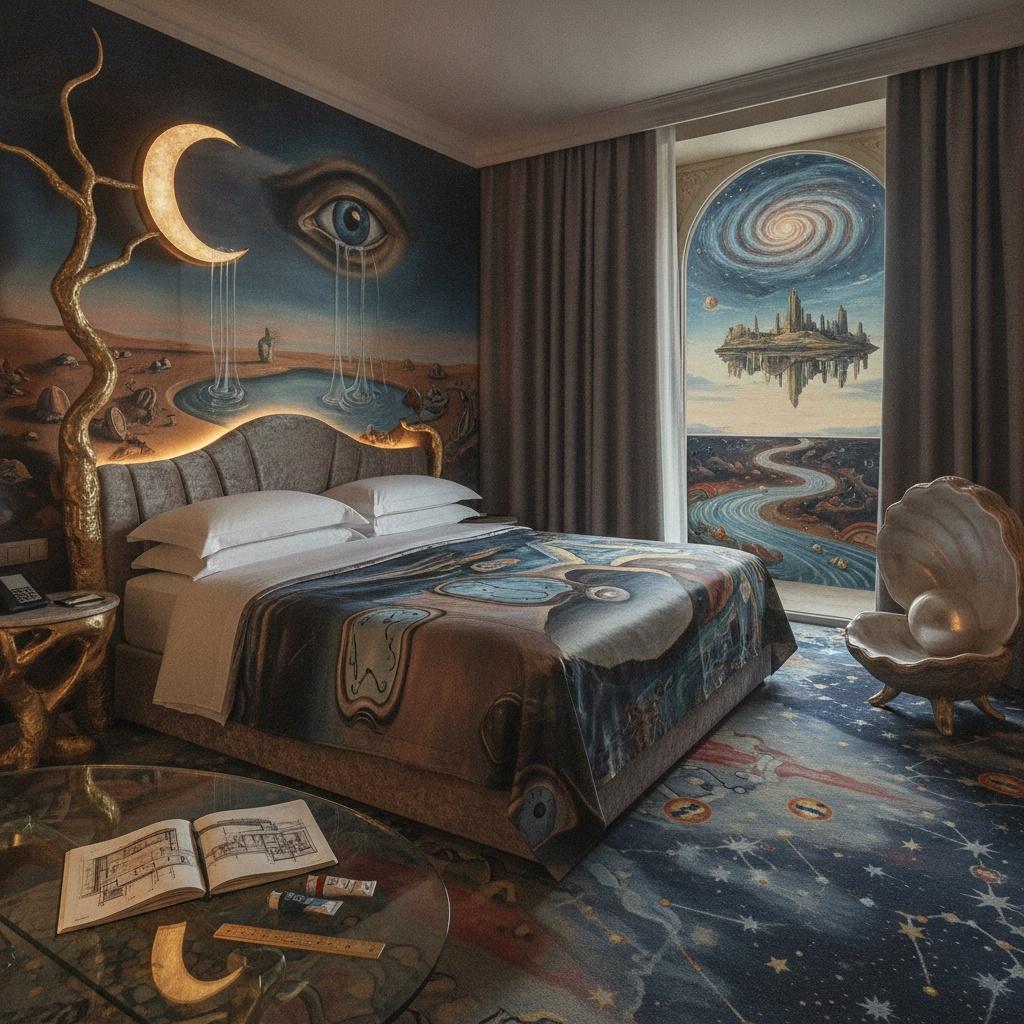
In the realm of high-end hospitality design, the atmosphere of a space is often defined by its ability to transport the guest away from the mundane. Surrealism, an avant-garde movement that emerged in the early 20th century, offers a profound psychological toolkit for the modern designer. Unlike traditional realism, which seeks to document the tangible world, Surrealism delves into the subconscious, utilizing dreamlike distortions and illogical juxtapositions to evoke deep emotional responses. For a hotel designer, integrating these elements is not merely about decoration; it is about creating an immersive environment where the boundaries between reality and imagination blur.
The power of Surrealist imagery lies in its capacity to unsettle and intrigue simultaneously. By introducing motifs that defy gravity, scale, or biological logic, a designer can transform a standard lobby into a captivating landscape of wonder. This movement draws heavily from Freudian psychoanalysis, presenting a visual language where shadows possess weight and silence speaks in metaphors. When implemented thoughtfully within a luxury suite or a boutique lounge, Surrealist art acts as a gateway to introspection, inviting guests to engage with the unseen currents of the human psyche and providing a sense of profound mystery that lingers long after they have checked out.
Key Surrealist Masters: Analyzing the Visual Language of Dalí and Redon
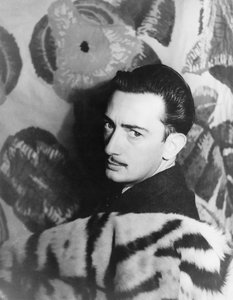 Salvador Dalí
A Life Submerged in Dreams: The World of Salvador Dalí Salvador Domingo Felipe Jacinto Dalí i Domènech, a name synonymous with surrealism, was born on May 11, 1904, in the sun-drenched town of Figueres, Spain. His existence was destined to be anythin...
To master the application of Surrealism, one must understand the distinct visual dialects established by its most influential practitioners. Salvador Dalí remains the undisputed titan of the movement, a master of what he termed the paranoiac-critical method. His work is characterized by an extraordinary technical brilliance—a meticulous realism that renders even the most impossible objects with startling clarity. In masterpieces such as Soft Watches, Dalí utilizes the imagery of melting timepieces to meditate on mortality and the fluidity of memory. For a procurement manager, Dalí’s repertoire offers a wealth of symbolic depth, where every drooping form or distorted landscape serves as a conversation piece for the discerning traveler.
In contrast to Dalí’s sharp, often unsettling clarity, the works of Odilon Redon offer a more ethereal and hauntingly elegant alternative. Redon’s dreamscapes are characterized by a soft, nebulous haze where figures emerge from darkness like flickering memories. His ability to manipulate light and shadow creates a sense of l'invisible, capturing the quiet, poetic moments of the subconscious. While Dalí might provide the dramatic focal point for a grand entrance, Redon’s more atmospheric approach is ideal for creating tranquil, contemplative spaces in spas or private library lounges, where the goal is to evoke a sense of ancient, dreamlike peace.
Architectural Integration: Using Surrealist Motifs to Create Immersive Guest Experiences
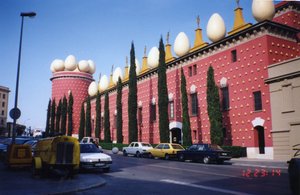 Dalí Theatre and Museum
A Surreal Labyrinth: Stepping into Dalí’s Living Dream To enter the Dalí Theatre and Museum in Figueres is not merely to visit an exhibition, but to surrender oneself to a meticulously crafted hallucination. Located in the heart of the Spanish town w...
The true success of Surrealist art in interior architecture lies in its ability to function as part of a total environment. The most ambitious examples of this can be seen in the Dalí Theatre and Museum, where the architecture itself becomes a self-portrait rendered in stone and glass. For the hospitality professional, this suggests that art should not merely hang on a wall but should interact with the very fabric of the building. This might involve utilizing optical illusions or anamorphic tricks that change as a guest moves through a corridor, or selecting pieces where the subject matter seems to emerge from the architectural shadows.
Integrating these motifs requires a departure from predictable constraints. One might consider how light interacts with a textured canvas to mimic the celestial atmosphere of a geodesic dome, or how furniture placement can echo the unsettling tableaux found in Surrealist paintings. When the art and the architecture speak the same language of metamorphosis and illusion, the result is a cohesive, living dreamscape. This level of integration elevates a hotel from a place of lodging to a destination of profound sensory provocation, ensuring that the physical space becomes an unforgettable part of the guest's psychological journey.
Strategic Selection: Matching Surrealist Compositions with Hotel Color Palettes and Textures
 Soft Watches, 1933
Soft Watches, 1933 – A Surreal Echo of Time and Loss Salvador Dalí’s “Soft Watches,” painted in 1933, is more than just a depiction of an inanimate object; it's a profound meditation on mortality, memory, and the elusive nature of time itself. Execut...
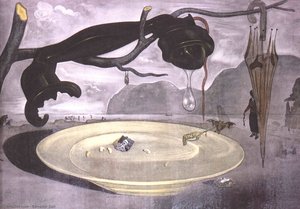
From a technical procurement perspective, selecting Surrealist works requires a disciplined approach to color theory and material harmony. The movement often relies on striking contrasts—the juxtaposition of smooth, polished surfaces against rough, weathered textures. When designing around a specific palette, one must consider how the deep, symbolic tones of a painting like The Hallucinogenic Toreador might interact with contemporary hotel finishes such as brushed brass, dark walnut, or polished concrete. The goal is to find a balance where the art complements rather than clashes with the existing architectural textures.
Texture plays a vital role in the impact of these reproductions. A high-quality, hand-painted oil reproduction offers a tactile depth that a flat print simply cannot replicate. The visible brushstrokes and the impasto technique provide a three-dimensional quality that catches the light, much like the way Dalí used texture to highlight themes of decay and metamorphosis. Designers should also consider the use of Aged & Cracked (craquelure) finishes for pieces intended to evoke antiquity or historical weight. By carefully matching the tonal range and physical texture of the artwork to the room's upholstery and flooring, a designer can create a seamless, sophisticated aesthetic that feels both curated and intentional.
Scale and Impact: Implementing Large-Format Murals and Multi-Panel Sets in Grand Lobbies
 The Salvador Dalí Museum
A Surrealist Sanctuary: Stepping into the Dreamscape To cross the threshold of The Salvador Dalí Museum in Saint Petersburg, Florida, is to abandon the predictable constraints of reality and tumble headfirst into a meticulously crafted dreamscape. Th...
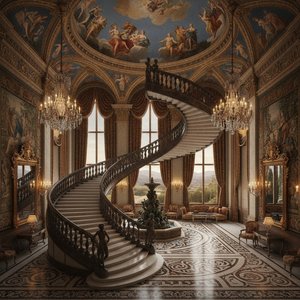
In grand architectural spaces such as hotel lobbies or sweeping staircases, the scale of the artwork is paramount. Small, isolated pieces can often be lost in the vastness of a high-ceilinged room. To command attention, designers should look toward large-format murals and multi-panel group sets. Our ability to split complex Surrealist compositions across three, four, or even five panels allows for a modern, architectural approach to storytelling. These multi-panel installations can span entire walls, creating a panoramic dreamscape that guides the eye through the space and reinforces the hotel's unique identity.
Furthermore, for spaces requiring a truly monumental presence, custom-painted murals and ceiling frescoes offer an unparalleled opportunity for transformation. Imagine a lobby where the ceiling is reimagined as a celestial Surrealist sky, painted on massive canvas rolls and installed with the precision of high-end wallpaper. This approach allows for the recreation of historical grandeur on a scale that is both breathtaking and bespoke. Whether through the expansive reach of a multi-panel set or the immersive envelopment of a custom mural, utilizing scale effectively ensures that the Surrealist vision becomes the defining characteristic of the hotel's architectural soul.