
The Eternal Current: Rivers as Metaphors for Time and Transition
 Flowing Masterpieces: 10 Stunning Artworks That Capture the Spirit of Rivers
Introduction There is a profound, rhythmic constancy in the movement of water that has captivated the human spirit since we first learned to observe the world. Rivers, as the lifeblood of our landscapes, do more than simply carve paths through earth ...
There exists a profound, rhythmic constancy in the movement of water that has captivated the human spirit since we first learned to observe the world. To study a river in art is to witness a silent, ongoing dialogue between the permanent and the ephemeral—the solid, unyielding banks meeting the restless, ever-changing current. Rivers act as the lifeblood of our landscapes, carving paths through earth and stone not merely as topographical features, but as mirrors to our own journeys. They embody themes of transition, persistence, and the inevitable flow of time, serving as a visual metaphor for the passage of seasons and the evolution of civilizations.
In the realm of fine art, these winding arteries represent much more than mere scenery; they are symbols of fertility, abundance, and the sacred connection between the known world and the untamed wild. Whether depicted as powerful, destructive forces capable of reshaping entire continents or as tranquil streams reflecting a summer sky, rivers invite us to slow our pace. To gaze upon a masterfully rendered river valley is to find a meditative solace in the way a painter captures the shimmer of sunlight on a ripple or the heavy, dark depths of a bend in the stream, reminding us that while the water is always moving, its essence remains timeless.
Mastering the Sublime: The Hudson River School and the Grandeur of Nature
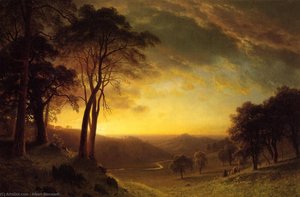 Sacramento River Valley
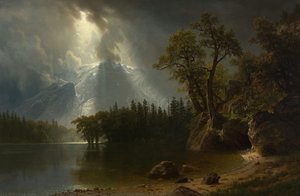
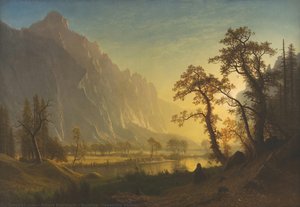
A Vision of the Sublime – Albert Bierstadt's Sacramento River Valley Albert Bierstadt’s “Sacramento River Valley,” painted in 1872, isn’t merely a landscape; it’s an immersive experience. This monumental oil on canvas transports the viewer to the hea...
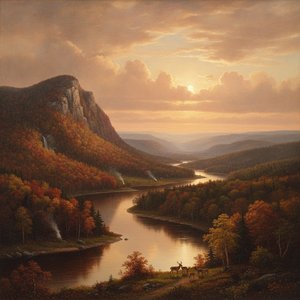
During the mid-19th century, a group of visionary American painters sought to elevate landscape painting beyond simple representation, aiming instead to convey the sublime—that breathtaking feeling of awe and wonder inspired by nature’s sheer grandeur. The Hudson River School, led by pivotal figures such as Albert Bierstadt, transformed the canvas into an immersive experience. In works like Sacramento River Valley, painted in 1872, we are transported to the heart of a burgeoning frontier. Here, the river does not merely flow; it snakes through a broad, fertile valley floor, flanked by towering cliffs and dense, ancient forests that command the viewer's reverence.
The mastery of these artists lay in their ability to capture the fleeting effects of light and atmosphere within such monumental compositions. Using a warm, golden palette of ochres, siennas, and delicate hints of rose, they bathed the American wilderness in an ethereal glow, particularly during the setting sun which casts long, dramatic shadows across the landscape. This movement rejected the rigid, neoclassical emphasis on idealized forms, choosing instead to celebrate the raw, untamed beauty of the wild. Through meticulous detail—the rough bark of ancient trees and the subtle gradations of color in distant hills—these painters created a vision of the American landscape that was both physically breathtaking and spiritually profound.
Light on the Water: Impressionist Innovations in Atmospheric Painting
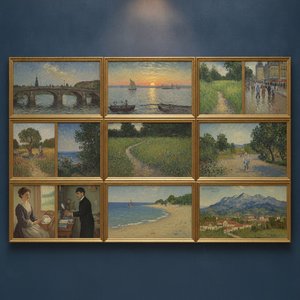 10 Iconic Impressionist Landscapes That Changed Art Forever
Introduction To step into the world of Impressionist landscapes is to abandon the rigid boundaries of reality and embrace the fleeting dance of light and atmosphere. Imagine standing on the banks of the Seine or amidst a sun-drenched meadow in Givern...
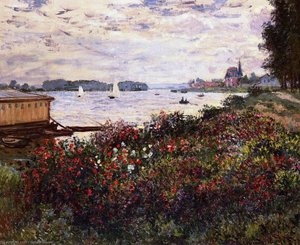
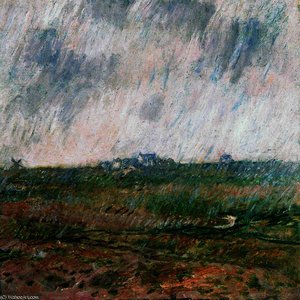
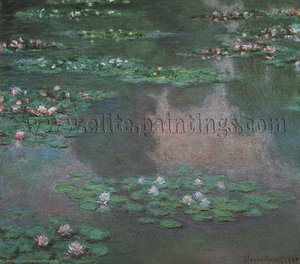
As the late 19th century approached, a radical rebellion emerged from the studios of France, forever altering our visual language. The Impressionists sought to abandon the rigid boundaries of reality to embrace the fleeting dance of light and atmosphere. Rather than documenting the world with photographic precision, artists like Claude Monet and Pierre-Auguste Renoir aimed to capture the impression—that breathless, ephemeral moment before the light shifts and the shadows lengthen. To step into an Impressionist landscape is to witness a revolution where the air feels heavy with moisture and the horizon vibrates with pure color.
This era saw artists moving their easels en plein air, venturing into the unpredictable brilliance of the outdoors to capture the pulse of a moment. They traded muted earth tones for a vibrant, broken palette, using energetic brushstrokes to mimic the flickering movement of leaves and the shimmering surface of a river. In these works, the boundaries between earth and sky seem to dissolve into a soft, golden haze. The focus shifted from the monumental to the sensory; it was no longer about the permanence of the stone, but about the way sunlight trembles upon a ripple or how a morning mist softens the edges of a lily pond. This movement reminds us that beauty is often found in the transient and the imperfect.
The Pastoral Ideal: Capturing the Serenity of the English Countryside
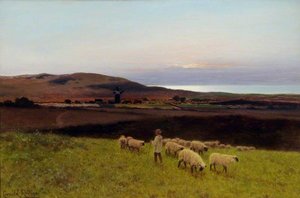 leopold rivers
A Life Painted in the English Countryside: Leopold Rivers (1852–1905) Leopold Rivers, born in London in 1852 and passing away in 1905, was a British landscape painter who dedicated his life to capturing the serene beauty of the English countryside. W...
While some artists sought the dramatic and the sublime, others dedicated their lives to the quiet, evocative beauty of the pastoral. The British landscape tradition, exemplified by painters such as Leopold Rivers, offers a glimpse into a world defined by a quiet Romantic sensibility. Rivers’ work, deeply rooted in the English countryside, provides intimate portraits of moors, hills, and rural life. His paintings are imbued with a delicate luminosity and a palpable sense of tranquility, capturing a Victorian England that was increasingly fascinated by its own pastoral heritage.
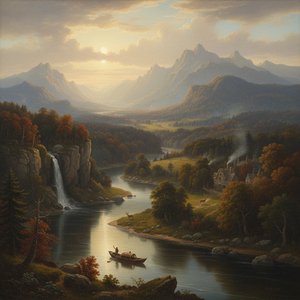
This tradition finds further resonance in the works of artists like William Mason Brown, whose River Landscape in Summer presents a serene, harmonious scene. Through the use of lush green foliage and the peaceful presence of nature's inhabitants, such as grazing horses or figures observing the view, these landscapes provide a sanctuary of shade and tranquility. There is a profound stillness captured in such works—a moment caught in time where the landscape breathes with a sense of peace. These depictions of the English countryside do not rely on grand societal statements but rather on the emotional resonance of place, offering a window into a world poised on the brink of change yet still holding onto its timeless traditions.
Curating Tranquility: Integrating River Landscapes into Luxury Interiors
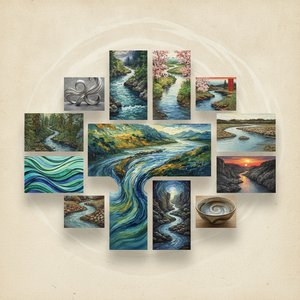
For the discerning collector and interior designer, the inclusion of river landscape art offers a unique opportunity to introduce a sense of movement and serenity into a sophisticated space. A large-scale, multi-panel composition can serve as an architectural anchor, particularly when placed along wide walls or grand staircases. The "multi-panel" trend allows the colors and brushstrokes of a single masterpiece to flow seamlessly across several canvases, creating a cohesive, modern aesthetic that breathes life into a room.
Integrating such works requires a thoughtful approach to color and scale. Whether one chooses the textured, impasto depth of a handmade oil reproduction or the luminous clarity of a fine art print, the goal is to create an atmosphere of curated tranquility. When selecting pieces for high-end hospitality or private estates, consider how the light in the room interacts with the painting’s palette—warm ochres can enhance a cozy study, while the cool blues and greens of a river scene can refresh a grand salon. By treating art as a vital component of the architectural experience, one can transform a mere room into a sanctuary of historical elegance and enduring beauty.
At ArtsDot.com, we specialize in bringing these timeless visions to life through our museum-grade, handmade oil reproductions. Our artists, holding degrees from prestigious Fine Arts academies, meticulously recreate the textures and soul of the Old Masters on 100% cotton canvas. Whether you seek a bespoke commission to transform a personal photograph into a Renaissance masterpiece or wish to explore our vast catalog of historical landscapes, we provide a full-service experience—from professional digital mockups to global, insured delivery. Discover the art of transformation and elevate your collection with ArtsDot.com.