 Предпросмотр
 Поделиться
 Поделиться
 Детали произведения

 Скачать
 Похожие работы
 Рентгенография
 Слайд-шоу
 Статистика
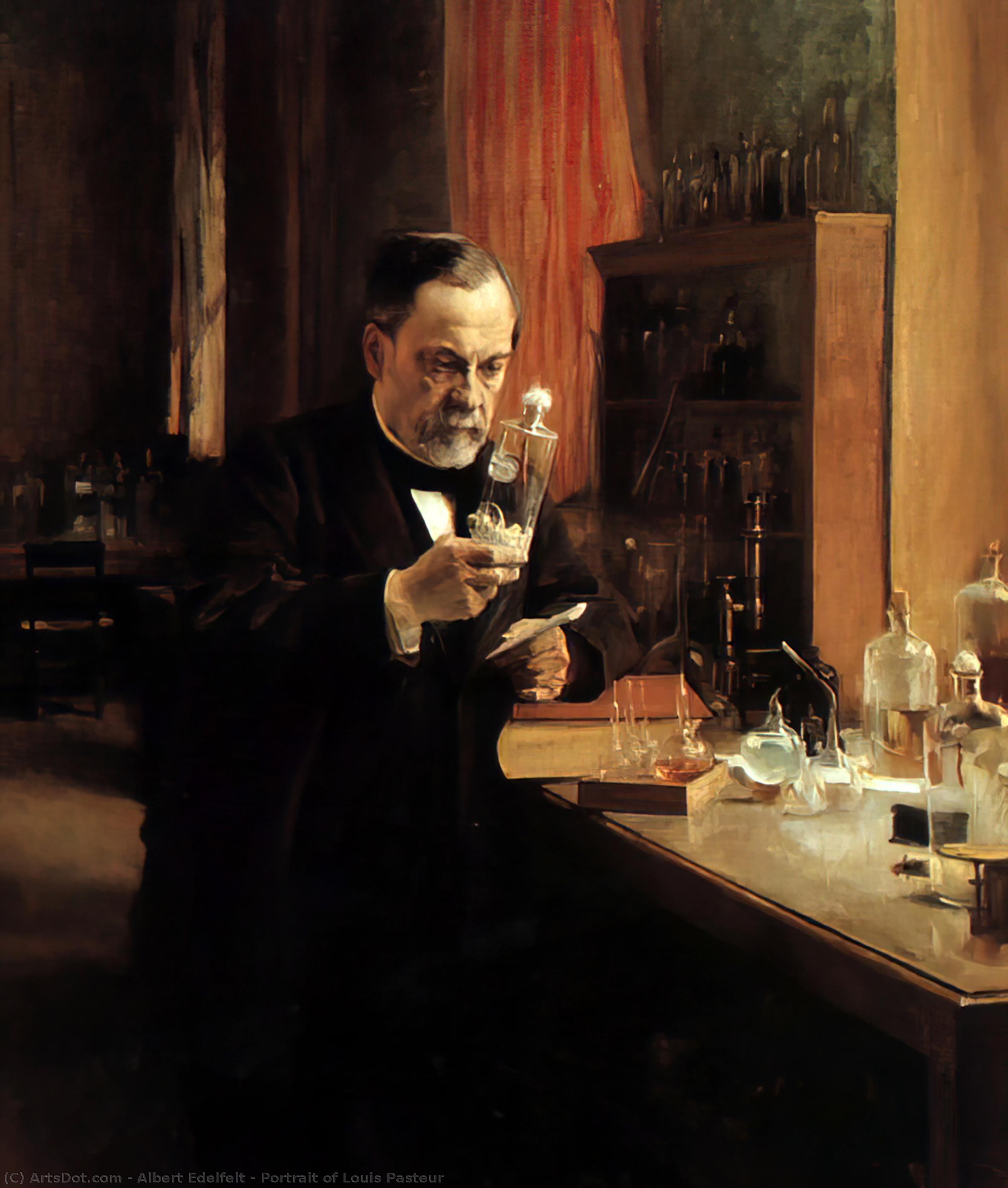
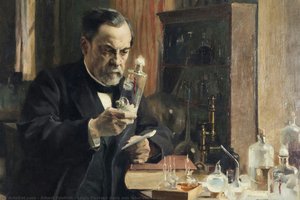
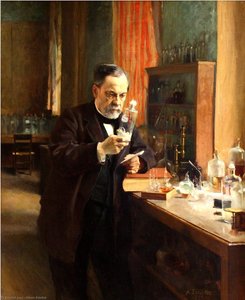
Portrait of Louis Pasteur


 Читать далее
Масляная репродукция ручной работы
Картина маслом на холсте в выбранном вами размере и раме, написанная на заказ нашими художниками. ( Перейти к печати Перейти к цифровым изображениям)




P118B $10

P118H $10

P118W $10

P438Z $10

P508JH $12

P508YH $12

P805H $10

P805Z $10

P919BZ $10

P919G $10

P919XJ $10

P959ZH $10

P968JZ $12

W106C $8

W218G $10

W218JH $8

W218Y $10

W307PJ $10

W316G $10

W316PJ $8

W316Y $10

W398PJ $8

W4111J $10

W500HY $15

W500JH $15

W692G $12

W849H $8

W940BG $15

W953PJ $8




Выберите один из наших стандартных размеров, соответствующих оригинальным пропорциям произведения искусства.

Вы можете указать собственные размеры, чтобы картина идеально вписалась в выбранную раму или пространство. Если выбранный вами размер не соответствует пропорциям оригинала, мы либо обрежем полотно, либо расширим его за счет дополнительных элементов, написанных вручную. Цифровой макет будет отправлен вам на утверждение перед началом производства.
Обратите внимание, что предварительный просмотр на экране не отражает фактическую обрезку или расширение. Только макет точно покажет окончательную композицию.
Хотя доступны индивидуальные размеры, мы рекомендуем выбирать вариант из предопределенного списка, чтобы сохранить исходные пропорции.
После оформления заказа команда ArtsDot.com свяжется с клиентом по электронной почте для уточнения деталей и предоставит предварительный макет
Доставка по всему миру () за 3–4 недели вместо стандартных 5 недель. (11 Сентябрь). Без компромиссов в качестве.

Бесплатная экспресс-доставка по всему миру

Высококачественный льняной холст

Полное страхование доставки

Гарантия возмещения таможенных пошлин

Гарантия точного соответствия цветов

100-дневная политика возврата (только при обнаружении дефектов)

Гарантия возврата 100% средств

Предложение оптовых скидок
 Вариант со стеклом доступен только для размеров менее 110 см

Portrait of Louis Pasteur
Техника репродукции
Размер репродукции
-


Итоговая стоимость
$ 263
A Vision of Scientific Eminence
In the quiet, focused atmosphere of a late nineteenth-century laboratory, Albert Edelfelt captures more than just a man; he captures the very essence of an intellectual revolution. His Portrait of Louis Pasteur is a profound meditation on the dawn of modern microbiology, presenting the legendary French chemist not as a distant icon, but as a figure deeply immersed in the tactile reality of his work. The painting serves as a window into a moment where scientific inquiry meets artistic mastery, inviting the viewer to witness the intense concentration and the heavy weight of discovery that defined Pasteur’s life. Through Edelfelt's lens, we see the pioneer surrounded by the tools of his trade—glassware, vials, and experimental apparatus—each element contributing to a narrative of relentless pursuit and the quiet dignity of scientific labor.
The emotional resonance of the piece lies in its ability to bridge the gap between the observer and the observed. There is an intimate, almost reverent quality to the way Edelfelt renders the laboratory setting, transforming a space of clinical study into a sanctuary of human intellect. For collectors and enthusiasts of historical portraiture, this work offers a rare opportunity to possess a piece that embodies the spirit of the Belle Époque—a period characterized by an unshakeable belief in progress and the power of human reason. The painting does not merely depict a subject; it evokes the atmosphere of an era where every drop of liquid in a test tube held the potential to change the course of medical history.
Mastery of Impressionistic Realism
Technically, Edelfelt achieves a breathtaking balance between Impressionistic vibrancy and Academic precision. Utilizing the rich, luminous qualities of oil on canvas, the artist employs a technique that allows for both meticulous anatomical accuracy and a soft, atmospheric light. One can observe the subtle gradations of color in Pasteur’s skin tones, which catch the ambient light of the lab, creating a lifelike warmth that breathes life into the portrait. The brushstrokes, while grounded in realism, possess a certain fluidity and texture—particularly in the rendering of the laboratory glassware and the fabric of Pasteur's attire—that lends the composition a sense of movement and vitality.
This sophisticated approach to light and shadow, often referred to as chiaroscuro, serves to direct the viewer's eye toward the subject's thoughtful expression. The interplay of light reflecting off the glass bottles on the table creates a rhythmic pattern of highlights that guides us through the depth of the room. For those looking to integrate such a masterpiece into a curated interior, the painting offers a versatile elegance. Its muted, earthy palette and sophisticated textures make it an ideal centerpiece for a study, a library, or a formal gallery space, providing a sense of historical gravity and intellectual sophistication to any environment.
A Legacy Captured in Pigment
Beyond its aesthetic brilliance, the portrait is steeped in profound symbolism. The laboratory environment acts as a metaphor for the human mind's capacity to unravel the mysteries of the natural world. Every bottle and vial serves as a visual testament to Pasteur’s tireless research into germ theory and vaccination. Edelfelt, a Finnish master who found his greatest acclaim in the heart of Paris, understood that to paint Pasteur was to paint the very foundation of modern hygiene and public health. The composition captures a moment of stillness within a life of constant motion, suggesting that true scientific breakthroughs are born from moments of profound, solitary reflection.
Owning a high-quality reproduction of this work is an invitation to celebrate the enduring legacy of human curiosity. It is a piece designed for those who appreciate art that tells a story—a story of courage, dedication, and the transformative power of knowledge. Whether displayed as a tribute to scientific history or as a cornerstone of classical decor, Edelfelt’s Portrait of Louis Pasteur remains an eternal emblem of achievement, reminding us that even in the smallest laboratory, the greatest revolutions begin.
Похожие произведения
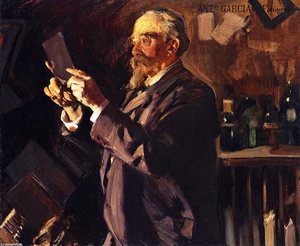
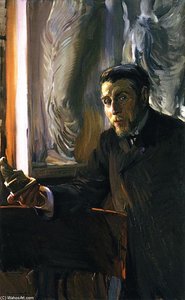
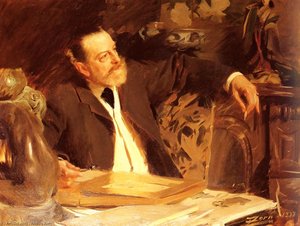
Биография художника
Early Life and Education
Albert Gustaf Aristides Edelfelt, a luminary of Finnish art history, was born on July 21, 1854, in Porvoo, Finland—a city steeped in Swedish heritage. His parents, Carl Albert Edelfelt, a respected civil servant, and Alexandra Edelfelt (née Brandt), were prominent figures within their community, fostering an environment that nurtured his artistic inclinations from a young age. From the outset, Edelfelt possessed an innate fascination for visual arts, propelling him to pursue formal studies at the Drawing School of the Finnish Art Society in Helsinki as early as 1869. This formative experience laid the groundwork for his future endeavors and cemented his dedication to mastering the craft of painting.Artistic Journey
Edelfelt’s artistic trajectory unfolded across several distinguished institutions, each contributing significantly to his evolving skillset and broadening his artistic horizons. He commenced his studies at Antwerp Academy of Art in Belgium during 1873-74, immersing himself in the traditions of history painting—a genre favored by luminaries like Jean-Léon Gérôme—and honing his technique under masterful guidance. Subsequently, he embarked on a transformative period at École nationale des beaux-arts in Paris (1874-78), where he continued to refine his artistic vision and absorb the influences of Impressionism. Notably, he benefited from the mentorship of Gérôme once more, solidifying his position within the Parisian art scene. A brief excursion to Saint Petersburg in 1881-82 exposed him to the vibrant cultural landscape of Russia, enriching his understanding of diverse artistic styles and perspectives.Rise to Prominence and Notable Works
Edelfelt’s ascent to artistic acclaim arrived with a resounding success at the Paris Universal Exposition of 1889—a pivotal moment that catapulted him into international recognition. His captivating portrait of Louis Pasteur, executed in 1886, garnered considerable praise and secured him the prestigious Legion of Honor—a testament to his exceptional talent and unwavering dedication. Furthermore, Edelfelt’s evocative depiction of “Young Woman in Her Boudoir” captured the delicate beauty and intimacy of feminine life with remarkable precision. Perhaps his most enduring masterpiece is “Under the Birches,” a poignant landscape painting that embodies the spirit of Finnish wilderness—a scene imbued with symbolic resonance and executed with masterful brushstrokes.Legacy and Impact
As one of Finland’s foremost artists of the era, Albert Edelfelt indelibly shaped the course of realist art in his homeland. His influence extended far beyond his own lifetime, inspiring younger generations of Finnish painters—including Akseli Gallen-Kallela and Gunnar Berndtson—who achieved considerable success in Paris under his guidance. Edelfelt’s unwavering commitment to portraying life with honesty and sensitivity established him as a cornerstone of Finnish artistic identity.Museum Collections and Commemoration
Edelfelt's artworks are proudly displayed in esteemed museums across Finland, most notably the Ateneum Museum in Helsinki—where visitors can immerse themselves in the splendor of his oeuvre. To honor his enduring legacy, a commemorative €100 Albert Edelfelt coin was minted in 2004—celebrating the centenary of his birth and reaffirming his place within Finnish cultural heritage.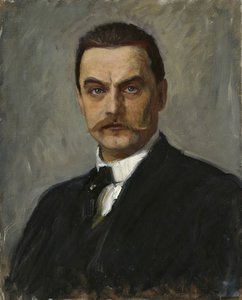
Альберт ЭдELFель
1854 - 1905 , Финляндия
Основные сведения
- Artistic Movement Or Style: Реализм
- Artists Or Movements Influenced By This Artist: ['Аксели Галлен-Каллела']
- Artists Who Influenced This Artist:
- Жан-Леон Жерьом
- Эрик Эдельфельт сын
- Date Of Birth: Июль 21, 1854
- Date Of Death: 1905
- Full Name: Albert Gustaf Aristides Edelfelt
- Nationality: Финский
- Notable Artworks:
- Портрет Луи Пастера
- Молодая женщина в будоире
- Под березами
- Place Of Birth: Порвоо, Финляндия
Похожие статьи
The Evocative Detail of Nature: A History of Naturalistic Illustration
Explore the rich history of botanical illustration! Discover pioneering artists like Maria Sibylla Merian & Marianne North. Learn about scientific precision, artistic expression, and find museum-quality reproductions at ArtsDot.
The Precision of Perception: Scientific Illustration as Art & Epistemology
Explore the fascinating history of scientific illustration – where art meets accuracy. Discover key artists like Karl Blossfeldt & Maud H. Purdy, and delve into its profound epistemological roots. ArtsDot offers museum-quality reproductions.
Albert Edelfelt: A Pioneer of Finnish Realism & International Impressionist Circles
Explore the life & work of Albert Edelfelt, a pioneering Finnish Realist painter who bridged Impressionism & national identity. Discover his masterpieces and lasting influence on art history.
The Flourishing Canvas: A Historical & Artistic Exploration of Botanical Illustration
Explore the rich history of botanical illustration! Discover key artists like Havell & Barraband, learn about scientific accuracy & aesthetic beauty. Shop museum-quality reproductions at ArtsDot.

Angelo Chiacchio: A Mid-Century American Illustration Master & the Rise of Commercial Art
Explore the captivating world of Angelo Chiacchio, a master of mid-century American illustration. Discover his evolution, signature style, and lasting impact on commercial art & design. Learn about his legacy at the Museum of American Illustration.