

 Поделиться
 Поделиться
 Детали произведения

 Скачать
 Похожие работы
 Слайд-шоу
 Статистика
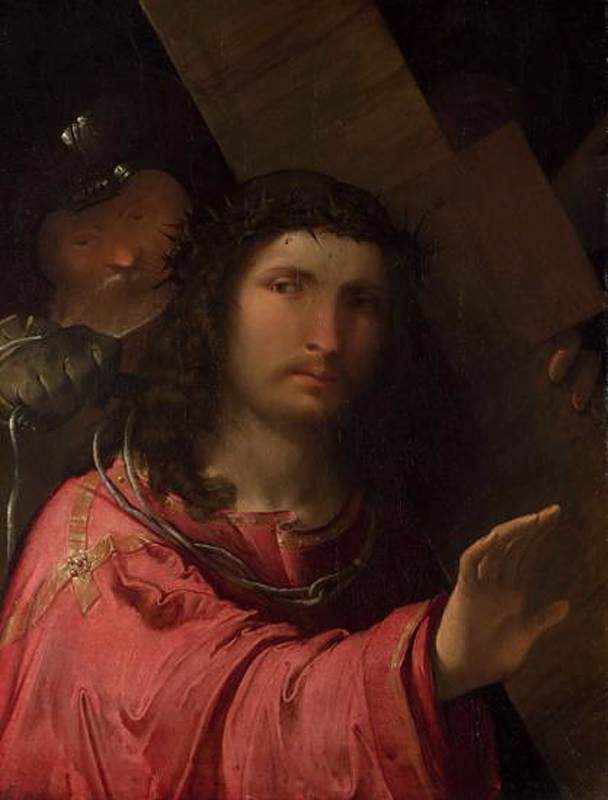
Christ Carrying the Cross
 Fresco
- Renaissance Mannerism
 1515
1515- Renaissance
 61.0 x 47.0 cm
 Национальная галерея
 Читать далее
Приобретите цифровое изображение высокого разрешения в улучшенном качестве, которое значительно превосходит онлайн-превью.
Каждый файл тщательно подготавливается нашими специалистами с использованием передовых инструментов и экспертной ручной ретуши. Мы гарантируем исключительную четкость, точную цветопередачу и детальную проработку каждого изображения.
Финальный файл доставляется по электронной почте в течение 72 часов и оптимизирован для немедленного использования в профессиональной среде, при верстке и печати. Это тот же уровень качества, которому доверяют ведущие дизайнерские студии, издательства и галереи.
Цифровое изображение
Скачайте файл высокого разрешения для личного использования, печати и творческих проектов. ( Перейти к печати Купить картину ручной работы)
Включено в каждый заказ цифровых изображений
Гарантия экспертной цифровой доставки
Выбирая ArtsDot.com, вы получаете не просто изображение — вы приобретаете профессионально обработанное цифровое произведение искусства, созданное с безупречной точностью и под защитой гарантии качества. Вот всё, что автоматически входит в ваш заказ:

Мгновенная доставка по e-mail
Ваш цифровой файл в высоком разрешении будет отправлен вам по электронной почте в течение 72 часов после оформления заказа — и сразу станет доступен для использования.

Цифровой файл с ИИ-улучшением
Ваше произведение искусства проходит профессиональную оптимизацию с использованием передовых инструментов ИИ и ручной обработки, что гарантирует максимальную детализацию, четкость и точность цветопередачи.

Бессрочная бесплатная повторная доставка
Случайно удалили или потеряли файл? Не беспокойтесь — мы отправим его вам повторно в любое время и совершенно бесплатно.

Без импортных пошлин — навсегда
Наслаждайтесь вашим произведением искусства мгновенно без таможенных пошлин, сборов или затрат на доставку — цифровые загрузки всегда не облагаются налогом.

Гарантия точности цветопередачи
Мы гарантируем, что ваше цифровое изображение максимально точно передает оригинальные цвета благодаря использованию профессиональных инструментов и систем управления цветом.

Гарантия удовлетворенности 100 дней
Если вы не будете удовлетворены своим цифровым изображением, мы внесем правки или вернем 100% стоимости в течение 100 дней — без лишних вопросов.

100% Гарантия возврата средств
Не удовлетворены покупкой? Получите полный возврат средств в течение 100 дней после получения цифрового файла — без лишних вопросов.

Скидки на оптовые заказы
Купите 3 изображения, сэкономьте 10% — Купите 5, сэкономьте 15% — Купите 10+, сэкономьте 20%. Отличное решение для творческих проектов, галерей и агентств.
Altobello Melone’s Dramatic Vision of Christ Carrying the Cross
Altobello Melone’s “Christ Carrying the Cross,” painted around 1515, stands as a testament to the burgeoning Mannerist style that flourished in Cremona during the High Renaissance. This monumental fresco, housed at The National Gallery in London, transcends mere depiction; it embodies an emotional intensity and masterful execution characteristic of its era.
Subject Matter & Composition: The painting portrays Jesus Christ bearing the cross upon his shoulders, a motif deeply rooted in Christian iconography. Melone skillfully arranges figures within a tightly cropped composition—a technique favored by Venetian artists—creating a dynamic interplay between light and dark that draws the viewer’s eye directly to the central figure. Two additional figures flank Christ: a woman believed to be Mary Magdalene and another soldier, adding layers of narrative complexity.
Style & Technique: Melone's approach aligns seamlessly with Lombard artistic traditions while embracing Mannerist innovations. He employs meticulous detail—a hallmark of Lombard art—to render textures and drapery with remarkable realism. However, unlike the idealized forms prevalent in earlier Renaissance paintings, Melone’s figures exhibit exaggerated gestures and expressions, conveying profound sorrow and spiritual contemplation. The dramatic chiaroscuro – intense contrasts between light and shadow – amplifies this emotional impact, creating a palpable sense of drama.
Historical Context & Influence: Cremona during Melone's lifetime was experiencing considerable artistic dynamism thanks to the patronage of influential families like Palazzo Borghese. Girolamo Romanino’s frescoes had established a precedent for expressive grandeur and influenced Melone profoundly, shaping his stylistic vision. The painting reflects broader humanist ideals prevalent at the time—a renewed interest in classical art and philosophy—albeit filtered through the lens of Christian faith.
Symbolism & Emotional Resonance: Beyond its visual splendor, “Christ Carrying the Cross” communicates a powerful message about sacrifice and redemption. Christ’s upward gaze symbolizes hope and spiritual aspiration, while the soldier’s grasp on the cross represents earthly constraints confronting divine grace. Melone's masterful manipulation of light and shadow underscores the painting’s emotional core—a poignant portrayal of suffering endured for salvation.
Further Exploration: For a deeper understanding of this masterpiece, we encourage you to visit Art UK (https://artuk.org/discover/artworks/christ-carrying-the-cross-114444) and Google Arts & Culture (https://artsandculture.google.com/asset/christ-carrying-the-cross-altobello-melone/ewGxZ7GtcyhxdA). You can also find detailed information on The National Gallery’s website (https://www.nationalgallery.org.uk/paintings/altobello-melone-christ-carrying-the-cross).
Похожие произведения
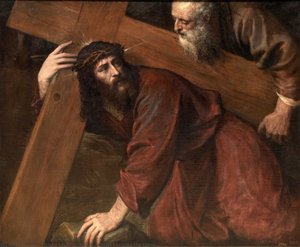
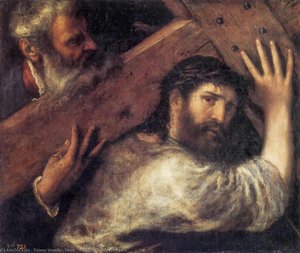
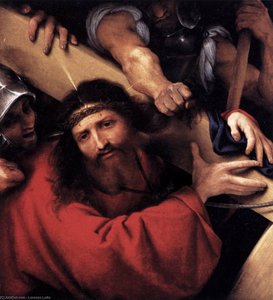
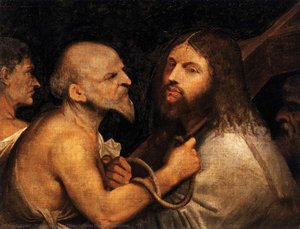
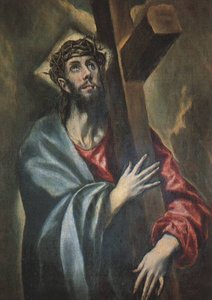
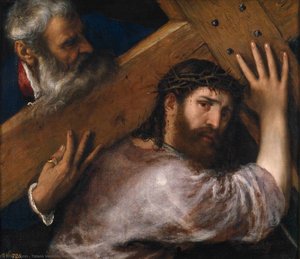
Биография художника
The Renaissance Visionary of Cremona
In the heart of the Italian Renaissance, amidst the vibrant cultural resurgence of Cremona, the name Altobello Melone emerges as a profound bridge between the harmonious traditions of Lombardy and the burgeoning complexity of Mannerism. Born around 1491, Melone’s early life was shaped by the intellectual currents of his era, particularly the humanist ideals flowing from Ferrara under the influence of Cesare Borgia. This exposure to classical aesthetics provided the foundational bedrock upon which he would build a career defined by both meticulous detail and an expressive, almost restless, grandeur. His artistic journey was not merely a solitary pursuit but a deep immersion into the stylistic evolution of Northern Italy, where the grace of the High Renaissance began to yield to the more dramatic and elongated forms of the later sixteenth century.
The development of Melone’s unique hand is inextricably linked to the mentorship of Girolamo Romanino. It was through this connection that Melone absorbed a sense of monumental scale and an ability to imbue frescoes with a palpable, living energy. While his early training focused on the precision and balanced compositions characteristic of the Lombard school, he gradually moved toward a more sophisticated use of light and shadow. This transition is nowhere more evident than in his mastery of chiaroscuro, a technique that allowed him to sculpt figures out of darkness, lending his religious narratives a sense of profound psychological depth and physical presence.
Masterworks and Monumental Commissions
The true measure of Melone’s legacy lies in the monumental scale of his public works, most notably his ambitious contributions to the Cremona Cathedral. Beginning in December 1516, Melone undertook a massive fresco cycle that sought to surpass the established greatness of Boccaccio Bicentino. This endeavor was more than a mere commission; it was a bold artistic statement that solidified his reputation as a master of large-scale narrative painting. Within these sacred walls, works such as Flight to Egypt (1517) showcase his ability to weave complex symbolism with the tender, humanized depictions of Mary and Joseph, creating scenes that are as much about divine grace as they are about earthly journeying.
Beyond the cathedral, Melone’s oeuvre is scattered across the Lombardy region, leaving behind a trail of masterpieces that continue to captivate the modern eye. His ability to navigate different artistic modes allowed him to produce works of varying emotional intensities:
- The Lamentation: Housed in the prestigious Brera Art Gallery, this work exemplifies his capacity for profound sorrow and dramatic composition.
- Christ Carrying the Cross: A striking example of his 1515 period, where the use of light creates a hauntingly dramatic atmosphere.
- The Road to Emmaus: A vibrant display of his Mannerist tendencies, capturing movement and interaction through a more fluid, expressive lens.
- The Seven Scenes: Adorning the chapel of Saint Lorenzo in Brescia, these frescoes demonstrate his skill in large-scale storytelling and architectural integration.
Legacy and Historical Significance
Altobello Melone did not exist in a vacuum; he was a central node in a dynamic creative network that shaped the Cremonese art scene. Through collaborations with artists like Giovanni Francesco Bembo and Paolo da Drizzona, he helped foster an environment where stylistic innovation could flourish. His influence extended to the next generation of painters, most notably Francesco Prata, who absorbed Melone’s vision of expressive gestures and classical themes. This lineage ensured that the specific nuances of the Cremonese style—a blend of Lombard precision and Mannerist drama—would persist through the sixteenth century.
Today, Melone is remembered not just as a painter of religious devotion, but as a pivotal figure who navigated the transition between two great eras of Italian art. His work remains a testament to a period of intense experimentation, where the stability of the Renaissance was beginning to fracture into the beautiful, distorted, and emotionally charged world of Mannerism. To study Melone is to witness the very moment when the classical ideal met the human impulse for drama, leaving an indelible mark on the history of European painting.
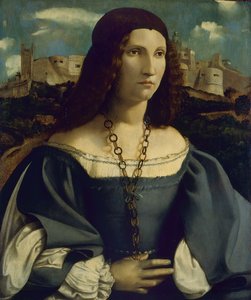
Altobello Melone
1491 - 1543 , Italy
Основные сведения
- Artistic Movement Or Style: Lombard & Mannerist
- Artists Or Movements Influenced By This Artist: ['Marcantonio Michiel']
- Artists Who Influenced This Artist:
- Girolamo Romanino
- Francesco Prata
- Date Of Birth: Cremona, Italy (1491)
- Date Of Death: Before 3 May 1543
- Full Name: Altobello Melone
- Nationality: Italian
- Notable Artworks:
- The Lamentation
- Tobias and the Angel
- Flight to Egypt
- Place Of Birth: Cremona