


 Предпросмотр
 Поделиться
 Поделиться
 Детали произведения

 Скачать
 Похожие работы
 Рентгенография
 Слайд-шоу
 Статистика
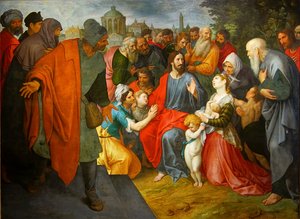
Suffer the little children to come unto me
 Acrylic On Canvas
- WallArt
- Northern Renaissance Revival
 1600
1600 179.0 x 236.0 cm
 Bonnefanten Museum
 Читать далее
Приобретите цифровое изображение высокого разрешения в улучшенном качестве, которое значительно превосходит онлайн-превью.
Каждый файл тщательно подготавливается нашими специалистами с использованием передовых инструментов и экспертной ручной ретуши. Мы гарантируем исключительную четкость, точную цветопередачу и детальную проработку каждого изображения.
Финальный файл доставляется по электронной почте в течение 72 часов и оптимизирован для немедленного использования в профессиональной среде, при верстке и печати. Это тот же уровень качества, которому доверяют ведущие дизайнерские студии, издательства и галереи.
Цифровое изображение
Скачайте файл высокого разрешения для личного использования, печати и творческих проектов. ( Перейти к печати Купить картину ручной работы)
Включено в каждый заказ цифровых изображений
Гарантия экспертной цифровой доставки
Выбирая ArtsDot.com, вы получаете не просто изображение — вы приобретаете профессионально обработанное цифровое произведение искусства, созданное с безупречной точностью и под защитой гарантии качества. Вот всё, что автоматически входит в ваш заказ:

Мгновенная доставка по e-mail
Ваш цифровой файл в высоком разрешении будет отправлен вам по электронной почте в течение 72 часов после оформления заказа — и сразу станет доступен для использования.

Цифровой файл с ИИ-улучшением
Ваше произведение искусства проходит профессиональную оптимизацию с использованием передовых инструментов ИИ и ручной обработки, что гарантирует максимальную детализацию, четкость и точность цветопередачи.

Бессрочная бесплатная повторная доставка
Случайно удалили или потеряли файл? Не беспокойтесь — мы отправим его вам повторно в любое время и совершенно бесплатно.

Без импортных пошлин — навсегда
Наслаждайтесь вашим произведением искусства мгновенно без таможенных пошлин, сборов или затрат на доставку — цифровые загрузки всегда не облагаются налогом.

Гарантия точности цветопередачи
Мы гарантируем, что ваше цифровое изображение максимально точно передает оригинальные цвета благодаря использованию профессиональных инструментов и систем управления цветом.

Гарантия удовлетворенности 100 дней
Если вы не будете удовлетворены своим цифровым изображением, мы внесем правки или вернем 100% стоимости в течение 100 дней — без лишних вопросов.

100% Гарантия возврата средств
Не удовлетворены покупкой? Получите полный возврат средств в течение 100 дней после получения цифрового файла — без лишних вопросов.

Скидки на оптовые заказы
Купите 3 изображения, сэкономьте 10% — Купите 5, сэкономьте 15% — Купите 10+, сэкономьте 20%. Отличное решение для творческих проектов, галерей и агентств.
A Window Into Faith and Renaissance Influence
The painting “Suffer the little children to come unto me,” attributed to Ambrosius Francken I (1545 – 1618), stands as a testament to the artistic fervor of Antwerp during the early Baroque period. Painted in 1600, this monumental oil on panel transcends mere depiction; it embodies a complex tapestry of religious devotion interwoven with echoes of Italian Renaissance grandeur. Francken’s masterful execution captures not just visual beauty but also profound spiritual contemplation—a characteristic deeply rooted in the intellectual currents shaping Europe at the time.- Subject Matter and Composition: At its core, the artwork portrays Jesus Christ seated centrally amidst a congregation of adults, notably mothers accompanied by their children. This deliberate arrangement underscores the importance of innocence and vulnerability within Christian faith—a theme prevalent throughout biblical narratives and powerfully conveyed through Francken’s careful composition. The figures are positioned in front of a classical temple reminiscent of Bramante's Tempietto in Rome, symbolizing spiritual aspiration and harking back to humanist ideals championed by Renaissance thinkers.
- Style and Technique: Francken’s style aligns seamlessly with the prevailing Baroque aesthetic—characterized by dramatic lighting, rich color palettes, and a heightened sense of realism. He skillfully employs chiaroscuro – the interplay between light and shadow – to sculpt form and imbue the scene with palpable emotion. The meticulous brushwork reveals an unwavering dedication to capturing nuanced textures and conveying depth of feeling.
Renaissance Echoes: Inspiration from Raphael and Michelangelo
Francken’s artistic vision wasn't born in isolation; it drew inspiration from luminaries of the Italian Renaissance. Specifically, Raphael’s celebrated tapestry depicting “The Miraculous Draught of Fishes,” from the series Acts of the Apostles, served as a significant catalyst for stylistic choices—particularly concerning spatial perspective and decorative ornamentation. Similarly, Michelangelo’s monumental statue “Madonna of Bruges,” which Francken undoubtedly observed during his travels, instilled in him an understanding of sculptural grandeur and emotive expression. These influences are subtly reflected in the temple architecture and the overall dynamism of the painting.- Symbolism: The inclusion of Jewish rabbis—identified by Hebrew text on their hats—represents a deliberate acknowledgment of religious diversity within Antwerp’s multicultural society. Isaiah, the prophet revered throughout Judaism and Christianity, underscores the universality of spiritual faith. Furthermore, the temple itself symbolizes divine presence and serves as a conduit for prayerful contemplation.
- Emotional Impact: “Suffer the little children to come unto me” succeeds in eliciting profound empathy and reverence. The tender depiction of mothers caring for their offspring evokes feelings of compassion and familial devotion—themes central to Christian morality. Francken’s masterful use of color and light amplifies these emotions, transporting viewers into a realm of spiritual serenity.
A Legacy of Flemish Artistry
Ambrosius Francken I's contribution to Flemish art is undeniable. As part of the prolific Francken dynasty—alongside his brothers Frans and Hieronymus—he established himself as one of Antwerp’s foremost painters, securing a prominent place in artistic history. His ability to synthesize humanist ideals with religious fervor exemplifies the spirit of the Baroque era and solidifies “Suffer the little children to come unto me” as an enduring masterpiece—a captivating portrayal of faith, compassion, and artistic brilliance.Похожие произведения

Биография художника
A Life Amidst Turmoil: The World of Ambrosius Francken I
Born in Herentals, Belgium, around 1544, Ambrosius Francken I emerged into a world already steeped in artistic tradition and poised on the brink of profound religious and political upheaval. His father, Nicolaes Francken, a painter himself, recognized and nurtured his son’s talent, initiating him into the family craft before relocating to the bustling artistic hub of Antwerp. This move proved pivotal, immersing young Ambrosius in an environment teeming with innovation and stylistic experimentation. The Francken family was destined to become synonymous with Flemish art during this era; Ambrosius's brothers, Frans Francken I and Hieronymus Francken I, also achieved considerable renown as painters, solidifying the family’s central role in the region’s artistic landscape. Ambrosius initially honed his skills under his father’s guidance, but he soon sought further refinement, becoming a pupil of Frans Floris, a leading figure in Antwerp Mannerism. This apprenticeship instilled in him the characteristic elongated figures, dynamic compositions, and dramatic narratives that would define his own distinctive style.Navigating Faith and Patronage
Francken’s early career unfolded against a backdrop of escalating religious tensions in the Low Countries. Around 1569, he found employment at the Bishop's residence in Tournai, followed by a sojourn to Fontainebleau in 1570 – experiences that undoubtedly broadened his artistic horizons and exposed him to new influences. Upon returning to Antwerp circa 1573, he formally established himself as a master within the Guild of Saint Luke, marking a significant step in his professional journey. However, this period was far from stable. The rise of Calvinism ignited iconoclasm – the systematic destruction of religious images – in 1581, dramatically impacting artistic commissions and forcing artists to adapt to a changing world. Francken himself appears to have navigated these turbulent waters with a degree of pragmatism. Initially believed to have embraced Calvinism, he was even elected dean of the Guild in 1582. Yet, following Antwerp’s return to Catholic control, he publicly reaffirmed his faith and astutely capitalized on the burgeoning demand for new altarpieces to replace those lost during the iconoclastic fury. This adaptability speaks volumes about his character and his understanding of the delicate balance between artistic expression and political expediency.Mannerist Visions and Religious Narratives
Ambrosius Francken I’s artistic style is firmly rooted in late Mannerism, a movement characterized by its elegance, sophistication, and often dramatic intensity. His paintings are populated with elongated figures engaged in dynamic compositions, meticulously rendered to convey powerful narratives. He primarily focused on religious subjects and historical allegories, becoming particularly renowned for his large-scale altarpieces commissioned by churches throughout Antwerp. These works were not merely decorative; they served as potent visual statements of faith, intended to inspire devotion and reaffirm Catholic doctrine in the wake of the iconoclastic disturbances. The influence of Marten de Vos is readily apparent in Francken’s opulent draping of robes and intricate attention to detail. He also occasionally collaborated with Abraham Govaerts, adding *staffage* – minor figures or details – within his landscapes, enriching the overall composition. Perhaps one of his most notable commissions was the triptych created for the Guild of Barbers and Surgeons in 1590. The panel depicting the miracles of Saints Cosmas and Damian is particularly striking, portraying a surgical procedure with remarkable naturalism—a departure from earlier idealized representations.A Legacy Forged in Faith and Innovation
The significance of Francken’s work extends beyond its aesthetic qualities; it played a crucial role in the artistic landscape of the Counter-Reformation. His altarpieces were instrumental in reasserting Catholic imagery and devotion, helping to heal the wounds inflicted by the iconoclastic period. His compositions, featuring muscular figures inspired by classical prototypes, exerted considerable influence on other artists of his time, shaping the direction of Flemish painting for generations to come. Interestingly, during a period of Calvinist affiliation (roughly 1579-1585), Francken created a series of engravings titled “The Fate of Mankind,” which offered a scathing critique of the Catholic clergy—a testament to his willingness to engage with contemporary political and religious debates through his art. He also served as a teacher, passing on his knowledge and skills to Hieronymus Francken II, the son of his brother Frans Francken I, ensuring the continuation of the artistic legacy within the family. Ambrosius Francken I died in Antwerp in 1618, leaving behind a substantial body of work that reflects the complexities of his era and solidifies his place as an important figure in Flemish Mannerist painting—a painter who navigated faith, politics, and artistry with remarkable skill and vision.Major Works
- The Miracles of Saints Cosmas and Damian (1590): A triptych panel for the Guild of Barbers and Surgeons, notable for its realistic depiction of surgical procedures.
- Altarpieces for Antwerp Churches: Numerous large-scale altarpieces created to replace those destroyed during the iconoclasm, showcasing his mastery of religious narrative.
- The Fate of Mankind (c. 1579-1585): A series of engravings offering a critical commentary on the Catholic clergy during his Calvinist period.
- Suffer the little children to come unto me: Depicts Jesus with children, showcasing Francken’s skill in portraying emotional and religious scenes.
Ambrosius Francken I
1545 - 1618