

 Поделиться
 Поделиться
 Детали произведения

 Скачать
 Похожие работы
 Слайд-шоу
 Статистика
Untitled
 Sculpture
- Sculpture
- Modern Brazilian Abstraction
 1960
1960- Early Modern
 48.0 x 49.0 cm
 MAM Rio
 Читать далее
Жикле / Арт-принт
Печать (жикле) или холст музейного качества с быстрыми сроками изготовления и широким выбором вариантов отделки. ( Купить картину ручной работы Перейти к цифровым изображениям)




































Выберите один из наших стандартных размеров, соответствующих оригинальным пропорциям произведения искусства.

Вы можете указать свои собственные размеры, чтобы репродукция идеально подошла под конкретную раму или пространство. Если выбранный вами размер не будет соответствовать пропорциям оригинала, мы либо обрежем произведение, либо дополним изображение зеркальным отражением краев или однотонной заливкой. Перед началом производства вам будет отправлен цифровой макет для утверждения.
Пожалуйста, обратите внимание, что предварительный просмотр на экране не отображает фактическую обрезку или расширение изображения. Только макет точно покажет финальную композицию.
Несмотря на возможность заказа индивидуальных размеров, мы рекомендуем выбирать размер из предопределенного списка, чтобы сохранить оригинальные пропорции.
Доставка по всему миру () за 2 недели вместо стандартных 4/5 недель. (12 Сентябрь)

Бесплатная экспресс-доставка по всему миру

Высококачественный льняной холст

Полное страхование доставки

Гарантия возмещения таможенных пошлин

Гарантия точного соответствия цветов

100-дневная политика возврата (только при обнаружении дефектов)

Гарантия возврата 100% средств

Предложение оптовых скидок
 Вариант со стеклом доступен только для размеров менее 110 см

Untitled
Жикле / Арт-принт
Размер репродукции
-


Итоговая стоимость
$ 62
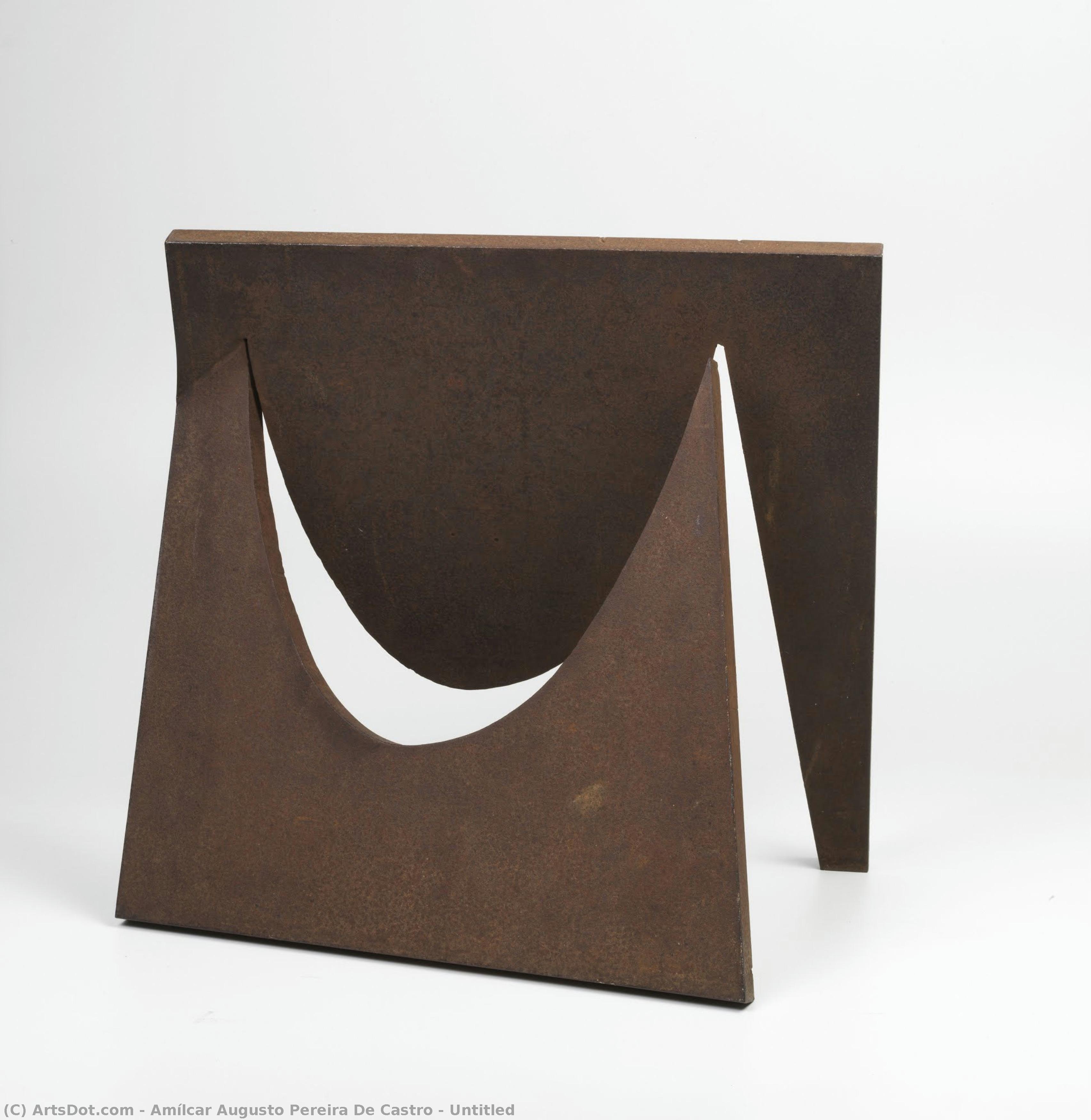
A Moment of Contemplation: Unveiling Amílcar de Castro’s “Untitled”
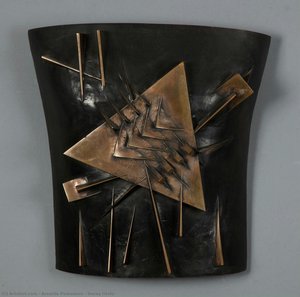
This captivating sculpture by Amílcar Augusto Pereira de Castro, created in 1960, offers a profound meditation on form and emotion. Measuring 48 x 49 cm, the piece immediately draws the eye to its meticulously crafted metal construction – two sharply defined triangular shapes intertwined with a gracefully curved central element. The photograph captures this work at a close range, emphasizing the tactile quality of the metal and the subtle interplay of light and shadow that defines its surface.
The Sculptor’s Vision: Modernism Rooted in Brazilian Tradition
Born in Recife, Brazil, in 1920, Amílcar de Castro emerged as a significant figure within the Brazilian modernist movement. His artistic journey began with graphic design, but he swiftly transitioned to sculpture and painting, forging a distinctive style that blended European modernism with deeply rooted Brazilian traditions. De Castro’s work reflects his upbringing in Paraisópolis, a vibrant shantytown on the outskirts of Recife, where he witnessed firsthand the complexities of urban life and the resilience of the human spirit. This influence is palpable in “Untitled,” which avoids purely abstract formalism, instead suggesting a recognizable, yet deliberately ambiguous, expression – perhaps a fleeting smile or a thoughtful frown.
Technique and Materiality
The sculpture’s creation likely involved a combination of techniques characteristic of de Castro's practice. While precise details are unavailable, it is reasonable to assume the use of welding and metal fabrication—skills honed during his early career. The choice of metal itself – likely steel or iron – speaks to the artist’s desire for durability and strength, mirroring the enduring nature of human emotion. The polished surface reflects light in a way that enhances the geometric precision while simultaneously softening the edges, creating a dynamic visual experience. This careful attention to material and technique is a hallmark of de Castro's oeuvre.
Symbolic Resonance and Historical Context
"Untitled," created during a period of significant artistic experimentation in Brazil, aligns with the broader modernist movement’s exploration of form, space, and emotion. The triangular shapes themselves can be interpreted as symbols of stability and strength, while the curved element introduces an element of fluidity and vulnerability. The sculpture's creation in 1960, just a decade after de Castro's initial foray into sculpture, represents a maturation of his artistic voice – a confident embrace of abstraction alongside a deep connection to Brazilian cultural heritage. This piece is now part of the collection at the Museu de Arte Moderna do Rio de Janeiro (MAM Rio), solidifying its place within the canon of modern Brazilian art.
Похожие произведения
Биография художника
The Sculptural Legacy of Amílcar de Castro
Born amidst the vibrant landscapes of Brazil in 1920, Amílcar Augusto Pereira de Castro emerged as a transformative force in the mid-century art world. His journey began in Paraisópolis, Minas Gerais, where the rich cultural tapestry of his upbringing laid the foundation for a career defined by structural innovation and profound geometric clarity. Though he first found his footing in the precise, communicative realm of graphic design, the call of three-dimensional form proved irresistible. Under the mentorship of the legendary Brazilian modernist Alberto da Veiga Guachan, de Castro began to navigate the delicate intersection between traditional Brazilian aesthetics and the burgeoning movements of international modernism.
As his artistic vision matured, de Castro transitioned from the two-dimensional constraints of design into a masterful exploration of sculpture and painting. His work became a dialogue between weight and void, where the physical presence of material met the ethereal lightness of abstract thought. He possessed a rare ability to manipulate space, utilizing bold brushstrokes in his paintings and stark, geometric configurations in his sculptures to evoke a sense of movement within stillness. This duality allowed him to bridge the gap between the organic textures of Brazilian tradition and the rigorous, mathematical precision of Concrete Art.
A Synthesis of Modernism and Tradition
The essence of de Castro’s oeuvre lies in its remarkable ability to harmonize seemingly contradictory elements. While his sculptures often leaned toward the abstract, utilizing sharp angles and industrial-inspired geometric shapes, they never lost a connection to the soulful, rhythmic qualities found in Brazilian modernism. His approach to color was equally evocative; he employed vibrant palettes that breathed life into his compositions, ensuring that even his most minimalist forms resonated with emotional depth.
His technical experimentation was a hallmark of his development. De Castro did not merely shape materials; he interrogated them. Whether working with the rigid boundaries of metal or the fluid possibilities of oil on canvas, he sought to uncover the inherent tension within each medium. This period of intense exploration led to several defining achievements:
- The Mastery of Form: His ability to translate complex mathematical concepts into tangible, sculptural objects that command the surrounding space.
- The Integration of Design: A unique graphic sensibility that brought a sense of structural balance and clarity to his larger-scale works.
- Cultural Synthesis: The seamless blending of local Brazilian motifs with the global language of abstraction and geometric modernism.
Enduring Influence and Historical Significance
The historical significance of Amílcar de Castro is etched into the permanent collections of some of the world's most prestigious institutions. His Untitled sculpture from the 1950s remains a cornerstone of the collection at the Museu de Arte Moderna do Rio de Janeiro (MAM Rio), serving as a testament to his role in shaping the trajectory of Brazilian abstract art. Furthermore, his painting Tecelares stands as a profound example of his ability to weave complex textures and colors into a cohesive abstract narrative.
Beyond the museum walls, de Castro’s legacy continues to inspire contemporary artists who seek to explore the boundaries of materiality and space. His work remains a vital part of the global modernist canon, preserved in collections ranging from the National Museum of Women in the Arts to private estates such as the Sergio Sahione Fadel collection. Through his lifelong commitment to experimentation and his profound respect for the structural integrity of art, de Castro ensured that his vision would remain an indelible part of Brazil's rich artistic heritage.

amílcar augusto pereira de castro
1920 - 2002 , Brazil
Основные сведения
- Artistic Movement Or Style: 1920s Art Deco
- Artists Or Movements Influenced By This Artist:
- Dada
- Surrealism
- Artists Who Influenced This Artist: ['Marcel Duchamp']
- Date Of Death: 2002
- Place Of Birth: WahooArt
Похожие статьи

The Enduring Form: Sculpture Across History, Technique & Emotional Resonance
Explore the rich history of sculpture with ArtsDot. Discover key techniques, influential artists & investment potential for discerning collectors. Expert insights into valuing and collecting timeless masterpieces.

10 легендарных бронзовых шедевров, изменивших искусство | ArtsDot
Погрузитесь в мир великих бронзовых шедевров! От Давида Донателло до Мыслителя Родена – узнайте историю создания, технику и значение легендарных скульптур. Вдохновение для интерьера и музейное качество репродукций на ArtsDot.com.

10 легендарных бронзовых скульптур, изменивших искусство навсегда | ArtsDot
Погрузитесь в мир великих бронзовых скульптур! От Давида Микеланджело до работ Родена – история искусства, техники и вдохновения. Купите репродукции шедевров для вашего интерьера на ArtsDot.com
Непреходящее наследие бронзовой скульптуры: история, техники и современные интерпретации
Узнайте историю бронзовой скульптуры, техники литья и советы по коллекционированию от экспертов. Откройте для себя вечное искусство бронзы!

The Enduring Form: Exploring Themes & Techniques in Sculpture Across Historical Periods
Explore the rich history of sculpture from ancient masterpieces to contemporary innovations. Discover key techniques, influential artists & investment potential for discerning art collectors.