

 Предпросмотр
 Поделиться
 Поделиться
 Детали произведения

 Скачать
 Похожие работы
 Рентгенография
 Слайд-шоу
 Статистика
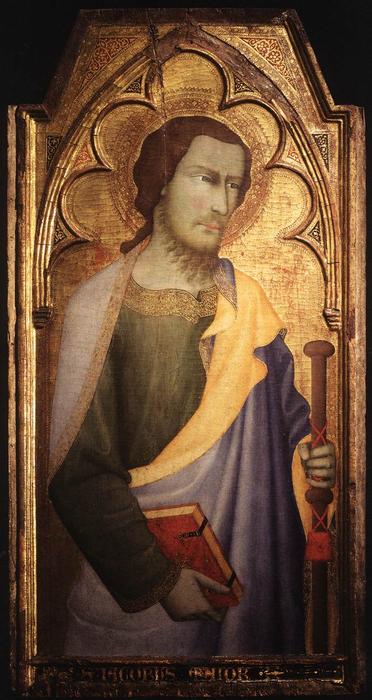
St James the Greater
 Acrylic On Canvas
- WallArt
- Early Renaissance
 1355
1355 101.0 x 51.0 cm
 Музео Нац. Каподимонте
 Читать далее
Приобретите цифровое изображение высокого разрешения в улучшенном качестве, которое значительно превосходит онлайн-превью.
Каждый файл тщательно подготавливается нашими специалистами с использованием передовых инструментов и экспертной ручной ретуши. Мы гарантируем исключительную четкость, точную цветопередачу и детальную проработку каждого изображения.
Финальный файл доставляется по электронной почте в течение 72 часов и оптимизирован для немедленного использования в профессиональной среде, при верстке и печати. Это тот же уровень качества, которому доверяют ведущие дизайнерские студии, издательства и галереи.
Цифровое изображение
Скачайте файл высокого разрешения для личного использования, печати и творческих проектов. ( Перейти к печати Купить картину ручной работы)
Включено в каждый заказ цифровых изображений
Гарантия экспертной цифровой доставки
Выбирая ArtsDot.com, вы получаете не просто изображение — вы приобретаете профессионально обработанное цифровое произведение искусства, созданное с безупречной точностью и под защитой гарантии качества. Вот всё, что автоматически входит в ваш заказ:

Мгновенная доставка по e-mail
Ваш цифровой файл в высоком разрешении будет отправлен вам по электронной почте в течение 72 часов после оформления заказа — и сразу станет доступен для использования.

Цифровой файл с ИИ-улучшением
Ваше произведение искусства проходит профессиональную оптимизацию с использованием передовых инструментов ИИ и ручной обработки, что гарантирует максимальную детализацию, четкость и точность цветопередачи.

Бессрочная бесплатная повторная доставка
Случайно удалили или потеряли файл? Не беспокойтесь — мы отправим его вам повторно в любое время и совершенно бесплатно.

Без импортных пошлин — навсегда
Наслаждайтесь вашим произведением искусства мгновенно без таможенных пошлин, сборов или затрат на доставку — цифровые загрузки всегда не облагаются налогом.

Гарантия точности цветопередачи
Мы гарантируем, что ваше цифровое изображение максимально точно передает оригинальные цвета благодаря использованию профессиональных инструментов и систем управления цветом.

Гарантия удовлетворенности 100 дней
Если вы не будете удовлетворены своим цифровым изображением, мы внесем правки или вернем 100% стоимости в течение 100 дней — без лишних вопросов.

100% Гарантия возврата средств
Не удовлетворены покупкой? Получите полный возврат средств в течение 100 дней после получения цифрового файла — без лишних вопросов.

Скидки на оптовые заказы
Купите 3 изображения, сэкономьте 10% — Купите 5, сэкономьте 15% — Купите 10+, сэкономьте 20%. Отличное решение для творческих проектов, галерей и агентств.
The Vision of Saint James
Andrea di Vanni D’andrea's “St James the Greater,” painted in 1355, is more than just a depiction of a revered biblical figure; it’s a vibrant window into the artistic and spiritual landscape of early Renaissance Italy. This tempera painting, now housed within the esteemed Museo Nazionale di Capodimonte in Naples, radiates an aura of serene authority and profound devotion. The work immediately draws the eye to St James himself – a profile portrait rendered with remarkable detail, his gaze fixed and contemplative. He’s not presented as a warrior or a triumphant figure, but rather as a scholar and guide, holding a book open before him, suggesting both his role as an apostle and his connection to knowledge and wisdom.
The painting's composition is carefully balanced, utilizing the golden ratio to create a sense of harmony. The muted blues of St James’ robes provide a striking contrast against the warmer tones of the background – a landscape subtly rendered, hinting at a distant architectural vista that remains intentionally indistinct. This deliberate ambiguity invites viewers to focus on the central figure and his symbolic actions rather than getting lost in extraneous details. The gilded frame, an extravagant addition, isn't merely decorative; it elevates the entire scene, symbolizing St James’s holiness and the importance of this sacred image.
A Glimpse into 14th-Century Siena
To understand “St James the Greater,” we must step back in time to Siena, the birthplace of Andrea di Vanni D’andrea. The mid-14th century was a period of intense artistic and political ferment in the city – a time marked by civic pride, religious fervor, and the rise of powerful merchant families. D’andrea, born around 1332, was deeply involved in Sienese politics, serving in various governmental roles alongside his fellow artist Andrea Belvedere. This engagement with public life undoubtedly influenced his artistic style, imbuing his works with a sense of civic responsibility and a keen awareness of the visual language used to communicate power and authority. The painting reflects this context through its dignified portrayal of St James – an image designed to inspire faith and loyalty.
The technique employed by D’andrea is characteristic of the tempera medium, favored for its luminosity and ability to create rich colors. Tempera paints are created by mixing pigments with egg yolk, resulting in a durable and vibrant finish. The meticulous detail evident in St James's robes, the intricate patterns on the frame, and even the subtle shading of his face speaks to D’andrea’s considerable skill and patience. The painting’s dimensions – 101 x 51 cm – suggest it was originally intended for a private chapel or devotional setting, highlighting its intimate scale and personal significance.
Symbolism and Spiritual Resonance
Beyond the purely visual elements, “St James the Greater” is rich in symbolism. The book held by St James represents his role as an apostle and teacher, conveying the importance of scripture and divine guidance. The golden halo surrounding his head signifies his status as a saint – a beacon of light for believers. The landscape, though indistinct, likely alludes to the spiritual journey undertaken by those seeking salvation. It’s a reminder that faith is not merely a matter of belief but also of a continuous striving towards enlightenment and righteousness.
Furthermore, the painting's placement within the Museo Nazionale di Capodimonte – a museum dedicated to preserving and showcasing Italian art from various periods – underscores its enduring significance. It stands as a testament to the artistic achievements of the early Renaissance and continues to inspire awe and contemplation in viewers today. The work’s meticulous detail and profound symbolism invite us to reflect on themes of faith, knowledge, and the human condition.
Further Exploration
- Original Image:** St James the Greater by ANDREA di Vanni d'Andrea
- Museum Information:** Museo Nazionale di Capodimonte, Naples
- Artist Biography:** Andrea di Vanni d’andrea
Похожие произведения

Биография художника
The Sienese Master: The Life and Legacy of Andrea di Vanni
In the golden light of the fourteenth century, within the winding, terracotta-hued streets of Siena, a painter emerged whose brush would capture the spiritual essence of the Early Renaissance. Andrea di Vanni d'Andrea, known simply as Andrea di Vanni, was more than just a practitioner of religious iconography; he was a man deeply woven into the very fabric of his city’s civic and spiritual identity. Born around 1332, Vanni’s life unfolded during a transformative era for Italian art, a period where the delicate elegance of the Gothic tradition began to meet the burgeoning structural ambitions of the Renaissance.
While historical records regarding his earliest years remain somewhat veiled in mystery, we first encounter his presence in the artistic landscape around 1353. During this formative period, he was associated with the esteemed painter Bartolo di Fredi, a connection that likely provided him with the technical foundation necessary to navigate the demanding workshops of Siena. However, Vanni was not merely a man of the studio; his life was marked by a remarkable duality between artistic creation and civic duty. He played an active role in the governance of Siena, holding prestigious offices such as gonfaloniero and serving as an envoy to the Papal court. This unique position allowed him to exist at the intersection of political power and religious devotion, a vantage point that undoubtedly informed the gravity and importance found within his compositions.
A Tapestry of Influence and Technique
To understand the visual language of Andrea di Vanni, one must look toward the masters who preceded him. His style breathes with the lingering grace of Simone Martini and Pietro Lorenzetti, the titans of Sienese painting. From Martini, Vanni inherited a penchant for lyrical lines and a certain ethereal quality, while from Lorenzetti, he drew a sense of weight and emotional presence. His work often eschews the heavy use of chiaroscuro—the dramatic play of light and shadow—in favor of a striking, almost silhouette-like design. This technique creates a powerful graphic impact, particularly when set against the luminous, unyielding gold backgrounds so characteristic of Sienese devotional art.
One of his most breathtaking achievements is the polyptych housed in the church of Santo Stefano alla Lizza. In this masterpiece, the viewer is confronted with a central portrait of the Virgin and Child that commands the space through sheer coloristic brilliance. The Madonna is rendered as a dark, elegant pattern against her gilded throne, creating a visual rhythm that feels both ancient and strikingly modern. This ability to balance intricate ornamentation with bold, simplified forms allowed his work to resonate deeply within the liturgical spaces of his era.
Fragments of a Vanished Splendor
The true breadth of Vanni’s oeuvre remains a poignant subject for art historians, as much of his legacy has been lost to the ravages of time. Many of his most ambitious projects, including portraits of Saint Catherine of Siena and scenes from the life of Saint James, have disappeared into the shadows of history. Yet, the fragments that remain—such as the Enthroned Madonna in the transept of San Francesco or the fragmented Crucifixion now held in the Istituto delle Belle Arti—serve as vital windows into his creative soul.
Even in these surviving pieces, we see a painter dedicated to the commemorative and the sacred. His work was often commissioned to honor saints and celebrate the continuity of faith within the Sienese community. Though he may not possess the global fame of some of his contemporaries, Andrea di Vanni d'Andrea remains an indispensable figure for understanding the evolution of the Sienese school. He stands as a testament to an era where art, politics, and piety were inextricably linked, leaving behind a visual heritage that continues to whisper the glories of the early Italian Renaissance.
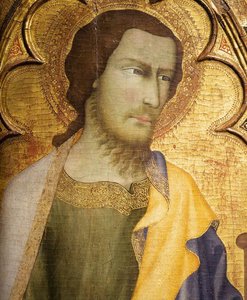
andrea di vanni d'andrea
1332 - 1414 , Italy
Основные сведения
- Artistic Movement Or Style: Early Renaissance
- Artists Who Influenced This Artist:
- Simone Martini
- Pietro Lorenzetti
- Date Of Birth: 1332
- Date Of Death: 1414
- Full Name: Andrea di Vanni d'Andrea
- Nationality: Italian
- Notable Artworks:
- Enthroned Madonna
- St. Paul
- Portrait of St. Catherine of Siena
- Polyptych in Santo Stefano alla Lizza
- Place Of Birth: Siena, Italy