 Предпросмотр
 Поделиться
 Поделиться
 Детали произведения

 Скачать
 Похожие работы
 Рентгенография
 Слайд-шоу
 Статистика
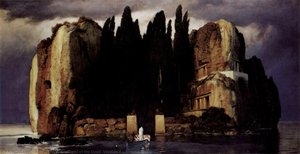
The Isle of the Dead (Version 2)
 1880
1880 74.0 x 122.0 cm
 Читать далее
Масляная репродукция ручной работы
Картина маслом на холсте в выбранном вами размере и раме, написанная на заказ нашими художниками. ( Перейти к печати Перейти к цифровым изображениям)




































Выберите один из наших стандартных размеров, соответствующих оригинальным пропорциям произведения искусства.

Вы можете указать собственные размеры, чтобы картина идеально вписалась в выбранную раму или пространство. Если выбранный вами размер не соответствует пропорциям оригинала, мы либо обрежем полотно, либо расширим его за счет дополнительных элементов, написанных вручную. Цифровой макет будет отправлен вам на утверждение перед началом производства.
Обратите внимание, что предварительный просмотр на экране не отражает фактическую обрезку или расширение. Только макет точно покажет окончательную композицию.
Хотя доступны индивидуальные размеры, мы рекомендуем выбирать вариант из предопределенного списка, чтобы сохранить исходные пропорции.
После оформления заказа команда ArtsDot.com свяжется с клиентом по электронной почте для уточнения деталей и предоставит предварительный макет
Доставка по всему миру () за 3–4 недели вместо стандартных 5 недель. (12 Сентябрь). Без компромиссов в качестве.

Бесплатная экспресс-доставка по всему миру

Высококачественный льняной холст

Полное страхование доставки

Гарантия возмещения таможенных пошлин

Гарантия точного соответствия цветов

100-дневная политика возврата (только при обнаружении дефектов)

Гарантия возврата 100% средств

Предложение оптовых скидок
 Вариант со стеклом доступен только для размеров менее 110 см

The Isle of the Dead (Version 2)
Техника репродукции
Размер репродукции
-


Итоговая стоимость
$ 263
The Painting's Composition
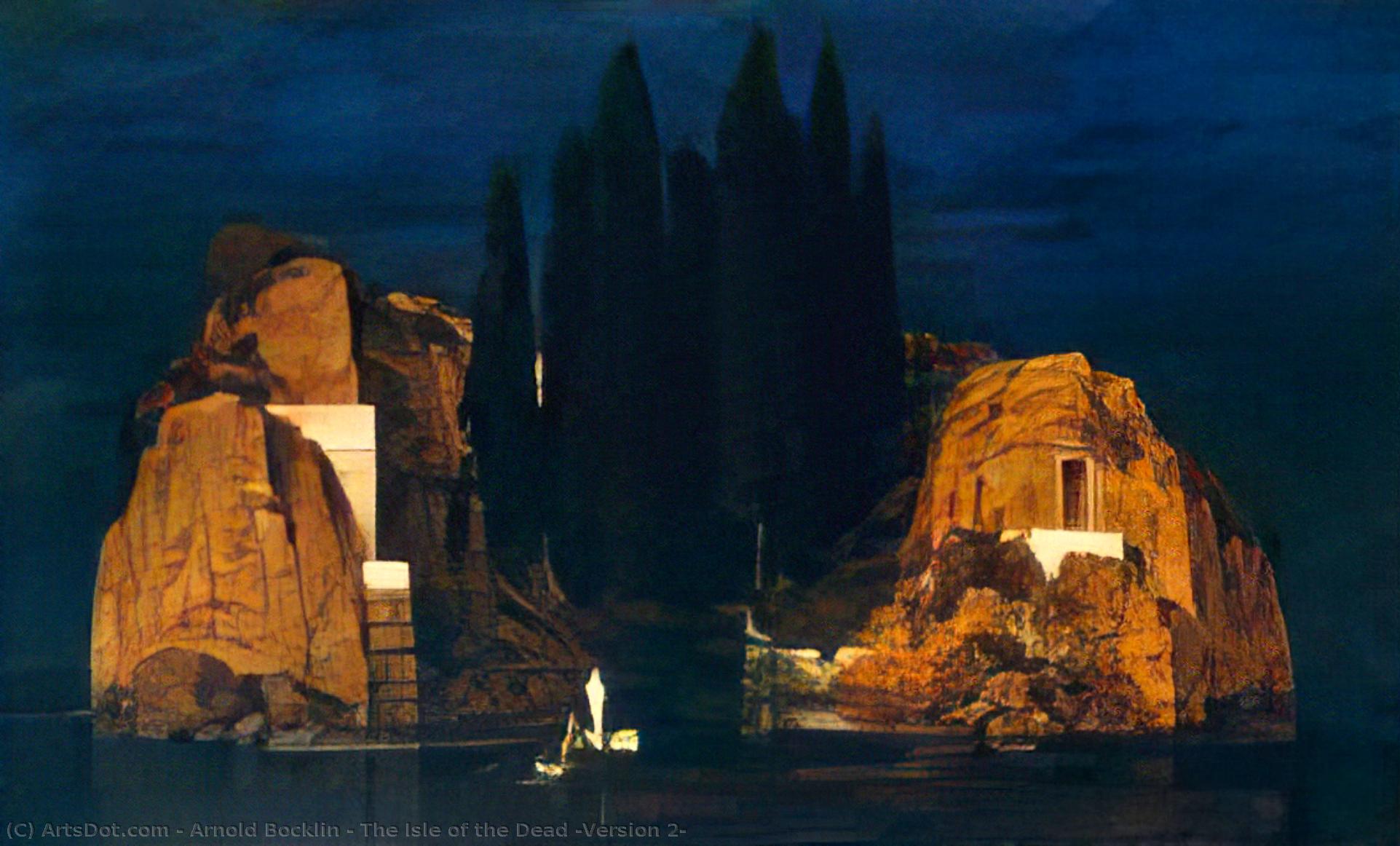
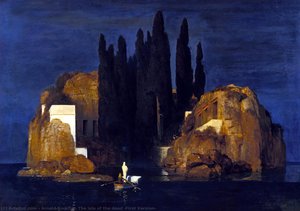
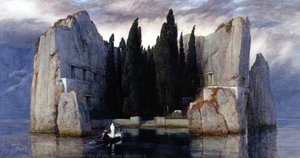
The painting depicts a desolate and rocky islet seen across an expanse of dark water. A small rowboat approaches the shore, carrying a shrouded figure who stands at the bow, facing the gate. Behind this figure is a white, festooned object commonly interpreted as a coffin. The tiny islet is dominated by a dense grove of tall, dark cypress trees, closely hemmed in by precipitous cliffs. Sepulchral portals and windows on the rock faces further enhance the funerary theme.Symbolism and Interpretation
Böcklin himself provided no public explanation for the painting's meaning, describing it as "a dream picture: it must produce such a stillness that one would be awed by a knock on the door." The title, conferred by art dealer Fritz Gurlitt in 1883, was not specified by Böcklin but derives from a phrase in an 1880 letter to the painting's original commissioner. Many observers have interpreted the oarsman as Charon, the boatman who ferried souls to the underworld in Greek mythology, with the water representing either the River Styx or the River Acheron and his white-clad passenger being a recently deceased soul transiting to the afterlife.Versions of the Painting
Böcklin produced several different versions of The Isle of the Dead between 1880 and 1886. The first version, painted in 1880, is housed at The Metropolitan Museum of Art in New York. Other notable versions include The Isle of the Dead (Version 2), also located at The Metropolitan Museum of Art, and The Isle of the Dead (Version 3), which is part of the collection at Alte Nationalgalerie in Berlin.Relevance and Influence
The painting's popularity was evident in its widespread reproduction in prints, particularly in central Europe during the early 20th century. Vladimir Nabokov noted in his novel Despair that these prints could be found in every Berlin home.Conclusion
The Isle of the Dead by Arnold Böcklin is a masterpiece of Symbolist art, rich in symbolism and mystery. Its enduring appeal lies in its ability to evoke a sense of stillness and awe, inviting viewers to ponder the mysteries of life and death. For those interested in exploring more works by Arnold Böcklin or other artists, ArtsDot offers high-quality handmade oil painting reproductions. Visit their website to discover a wide range of artistic masterpieces.- The Isle of the Dead (Version 2) by Arnold Böcklin
- History of Painting
Похожие произведения
![Life Of Saint Francis - [04] - Death And Ascension Of St Francis — Джотто Ди Бондоне, Italian Renaissance](/media/artworks/images-thumb/08/8b/088b102b13c1a379233690905590f156.jpg)
Биография художника
Arnold Böcklin (1827–1901)
Arnold Böcklin, a Swiss Symbolist painter, was born on October 16, 1827, in Basel, Switzerland. His father, Christian Frederick Böcklin, descended from an old family of Schaffhausen and engaged in the silk trade. Ursula Lippe, Arnold’s mother, was a native of the same city. He studied at Düsseldorf Academy under Schirmer, becoming a friend of Anselm Feuerbach. Böcklin is associated with the Düsseldorf school of painting.Early Life and Training
Arnold Böcklin's artistic journey began early in Basel where he received his initial training from Ludwig Adam Kelterborn. Recognizing his exceptional talent, Schirmer encouraged him to pursue studies at Düsseldorf Academy, fostering a connection with Feuerbach that would profoundly influence his worldview. This formative period instilled in him an appreciation for classical art and landscape painting—particularly the brooding grandeur of Caspar David Friedrich—which would permeate his subsequent works. Böcklin’s fascination with German Romanticism served as a cornerstone for his artistic development.Artistic Career and Symbolism
Böcklin's career unfolded across Europe, encompassing Paris, Antwerp, and Rome, where he absorbed the stylistic innovations of the Impressionists and Renaissance masters alike. He established himself as professor at Weimar Art School, honing his skills and experimenting with new techniques. Böcklin’s distinctive style—characterized by dreamlike landscapes infused with mythological imagery—became synonymous with Symbolism. His magnum opus, *The Isle of the Dead* (1880–1886), captivated audiences and inspired composers like Rachmaninoff, cementing his place as a pivotal figure in late Romantic art. Böcklin’s exploration of mortality and subconsciousness resonated deeply with artists of his time and continues to inspire contemplation today.Notable Works
Böcklin's oeuvre is marked by iconic paintings such as *Nymph and Satyr* (1858), *Sappho* (1859), *Self-Portrait with Death Playing the Violin* (1872), and of course, *The Isle of the Dead*, which exists in five versions. These works exemplify Böcklin’s masterful command of composition and color—often employing muted palettes to evoke a sense of melancholy and mystery. His meticulous attention to detail captured the ethereal beauty of nature and conveyed profound psychological themes.Legacy and Influence
Böcklin's influence extended beyond his immediate contemporaries, shaping the artistic sensibilities of subsequent generations. Clement Greenberg hailed Böcklin’s work as “one of the most consummate expressions” of its time, recognizing its pioneering role in bridging Romanticism and Symbolism. His distinctive vision anticipated the surrealist aesthetic of the 20th century, demonstrating an uncanny ability to tap into universal anxieties about death and existence. Böcklin's enduring legacy resides not only in his artistic achievements but also in his contribution to the intellectual discourse surrounding art and symbolism—a testament to his profound understanding of human psychology and the power of imagery. ## Museums and Collections Böcklin’s artworks are housed in prestigious institutions worldwide, including Öffentliche Kunstsammlung Basel (Basel, Switzerland), Kunstmuseum Basel (Switzerland), and Museum Kunsthaus Zürich (Zürich, Switzerland). Visiting these museums offers a valuable opportunity to immerse oneself in the artist's artistic universe and appreciate the enduring fascination with his haunting landscapes and symbolic narratives.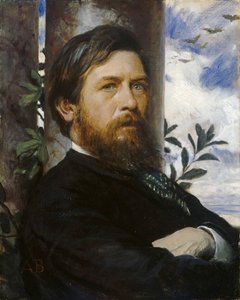
Арнольд Бёклин
1827 - 1901 , Швейцария
Основные сведения
- Artistic Movement Or Style: Символизм
- Artists Or Movements Influenced By This Artist:
- Ганс Фома
- Прерафаэлиты
- Artists Who Influenced This Artist:
- Ширмер
- Фейербах
- Date Of Birth: 16 октября 1827 г.
- Date Of Death: 16 января 1901 г.
- Full Name: Арнольд Бёклин
- Nationality: Швейцарский
- Notable Artworks:
- Остров мёртвых
- Нимфа и сатир
- Сапфо
- Портрет самого себя
- Place Of Birth: Базель, Швейцария