 Поделиться
 Поделиться
 Детали произведения

 Скачать
 Похожие работы
 Слайд-шоу
 Статистика
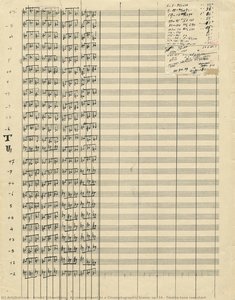
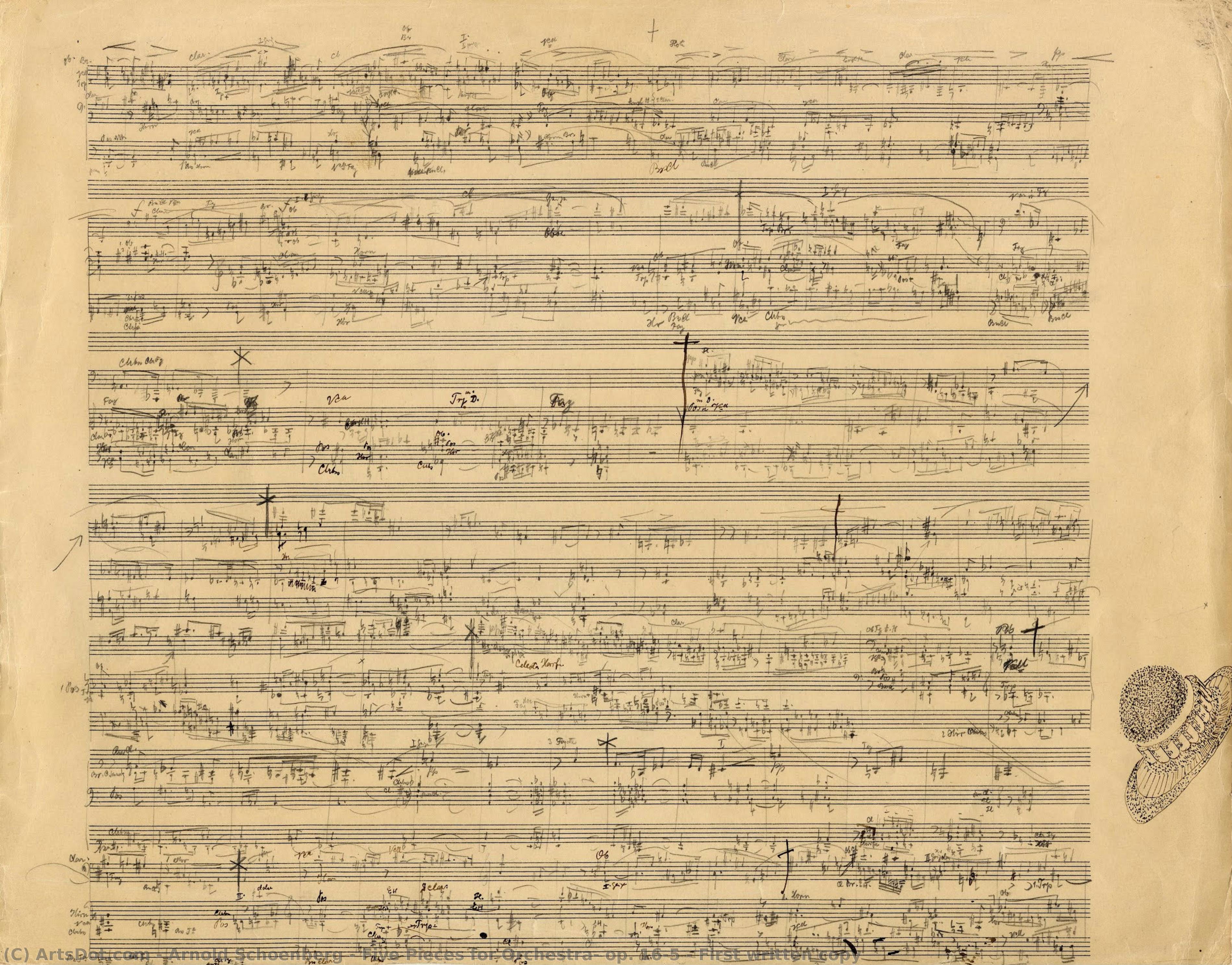
Five Pieces for Orchestra, op. 16/5 – First written copy
 Giclée Print
- Digital
- Expressionist Atonality
Expressionist Atonality
 1909
1909 36.0 x 28.0 cm
 Arnold Schönberg Center
 Читать далее
Масляная репродукция ручной работы
Картина маслом на холсте в выбранном вами размере и раме, написанная на заказ нашими художниками. ( Перейти к печати Перейти к цифровым изображениям)




































Выберите один из наших стандартных размеров, соответствующих оригинальным пропорциям произведения искусства.

Вы можете указать собственные размеры, чтобы картина идеально вписалась в выбранную раму или пространство. Если выбранный вами размер не соответствует пропорциям оригинала, мы либо обрежем полотно, либо расширим его за счет дополнительных элементов, написанных вручную. Цифровой макет будет отправлен вам на утверждение перед началом производства.
Обратите внимание, что предварительный просмотр на экране не отражает фактическую обрезку или расширение. Только макет точно покажет окончательную композицию.
Хотя доступны индивидуальные размеры, мы рекомендуем выбирать вариант из предопределенного списка, чтобы сохранить исходные пропорции.
После оформления заказа команда ArtsDot.com свяжется с клиентом по электронной почте для уточнения деталей и предоставит предварительный макет
Доставка по всему миру () за 3–4 недели вместо стандартных 5 недель. (10 Сентябрь). Без компромиссов в качестве.

Бесплатная экспресс-доставка по всему миру

Высококачественный льняной холст

Полное страхование доставки

Гарантия возмещения таможенных пошлин

Гарантия точного соответствия цветов

100-дневная политика возврата (только при обнаружении дефектов)

Гарантия возврата 100% средств

Предложение оптовых скидок
 Вариант со стеклом доступен только для размеров менее 110 см

Five Pieces for Orchestra, op. 16/5 – First written copy
Техника репродукции
Размер репродукции
-


Итоговая стоимость
$ 263
A Window into Schoenberg's Revolutionary Soundscape
This meticulously crafted hand-painted reproduction offers an intimate glimpse into the genesis of Arnold Schoenberg’s groundbreaking “Five Pieces for Orchestra, op. 16/5,” a composition born from a summer of intense creative exploration in 1909. The original score, painstakingly preserved and now faithfully recreated, is not merely musical notation; it's a tangible artifact of a pivotal moment in the history of Western music – a testament to Schoenberg’s radical departure from traditional tonal harmony and his pioneering embrace of atonality.
- The Context: Steinakirchen 1909 The summer of 1909 found Schoenberg, alongside fellow modernist giants Zemlinsky, Berg, Webern, and Oppenheimer, sequestered in the idyllic Austrian village of Steinakirchen. This period proved extraordinarily productive, yielding not only the “Five Pieces” but also the Piano Piece op. 11 and the unsettling monodrama, *Erwartung* (Waiting), foreshadowing his later explorations into expressionism.
- Strauss’s Vision Schoenberg's correspondence with Richard Strauss reveals a deliberate intention to create music that eschewed grand symphonic structures. He envisioned “short orchestra pieces” – fleeting moments of color and mood, prioritizing emotional impact over architectural form. This directive shaped the very essence of *Five Pieces*.
- “Musical Prose” The score’s syntax is deliberately unconventional: atextonic melodies, thematic absence, and an emphasis on dynamic variation. Schoenberg termed this approach “musical prose,” describing it as music unlike anything heard before – a bold proclamation of new tonal beauty, seeking out unexpected accents and contrasts, and exploring previously uncharted emotional territories.
Decoding the Score: Technique and Style
The hand-painted reproduction faithfully captures the intricate details of Schoenberg’s original score. The delicate lines representing individual notes, the precise placement of rests, and the nuanced markings indicating dynamics and tempo are rendered with exceptional care. The artist has skillfully recreated the characteristic handwriting style prevalent in early 20th-century musical scores, adding to the piece's historical authenticity. Note the use of clefs and staves – fundamental elements of musical notation that define the structure and organization of the composition.
- Material & Technique The reproduction utilizes archival quality paper mimicking the texture of period manuscripts, and traditional hand-painting techniques to achieve a level of detail and nuance that digital reproductions simply cannot replicate.
- Color Palette While a black and white photograph represents the original score, this reproduction employs a subtle tonal palette – primarily grays and browns – evocative of aged parchment, further enhancing its historical feel.
Symbolism and Emotional Resonance
More than just a musical score, this piece embodies Schoenberg’s revolutionary spirit. The “Five Pieces” represent a deliberate rejection of established conventions, a fearless exploration of dissonance and atonality, and an attempt to capture the raw essence of human emotion without the constraints of traditional harmony. The emphasis on "speaking music," as Schoenberg himself described it, suggests a desire for direct communication – a musical language that transcends words and speaks directly to the listener’s soul.
- Atonality's Impact The piece exemplifies atonality, a compositional technique where no single note is inherently "correct" or establishes a tonal center. This creates a sense of instability and ambiguity, reflecting the anxieties and uncertainties of the modern age.
- Emotional Intensity Despite its unconventional structure, the score conveys a profound emotional intensity – a blend of melancholy, longing, and perhaps even a hint of unease. The carefully crafted dynamics and melodic contours contribute to this powerful effect.
Dimensions & Acquisition
This hand-painted reproduction measures 36 x 28 cm (14 x 11 inches), making it suitable for display in a variety of settings – from private study to art gallery. It’s an ideal addition to any collection of modern art, musical memorabilia, or simply as a conversation starter.
Похожие произведения
Биография художника
ранние годы и музыкальные истоки
Арнольд Шёнберг, австро-американский композитор, родился 13 сентября 1874 года в Вене, Австрия. Его ранние годы были отмечены скромным происхождением: его отец был владельцем обувного магазина. Несмотря на это, врожденная страсть Шёнберга к музыке побудила его во многом самостоятельно освоить эту сложную область искусства.музыкальная эволюция и выдающиеся произведения
Ранние работы Шёнберга, такие как «Verklärte Nacht» (Преображенная ночь, 1899), демонстрировали синтез традиций Брамса и Вагнера. По мере своего творческого развития он стал центральной фигурой Второй венской школы наряду с Антоном Веберном и Альбаном Бергом. Его композиции, включая Струнный квартет № 2 (1907–1908), «Erwartung» (Ожидание, 1909) и «Pierrot Lunaire» (Лунный Пьеро, 1912), стали воплощением его новаторского подхода к атональности.преподавание, эмиграция и поздние годы
В 1933 году Шёнберг был вынужден покинуть Прусскую академию искусств из-за прихода нацистов к власти, которые заклеймили его музыку как «дегенеративную». Впоследствии он преподавал в США, в том числе в Калифорнийском университете в Лос-Анджелесе (1936–1944), чьи учебные корпуса названы в его честь. [https://ArtsDot.com/@/arnold-schoenberg](узнайте больше о жизни и творчестве Шёнберга на ArtsDot).- Шёнберг исследовал возможности киномузыки и писал более тональную музыку, завершив свою Камерную симфонию № 2 в 1939 году.
- Он сатирически изобразил фашистских тиранов в «Оде Наполеону» (1942), вдохновленной Байроном.
- Послевоенная Вена предложила ему почетное гражданство, но в этот период он был болен, что нашло отражение в его Струнном трио (1946).
наследие и влияние
Когда мир узнал о трагедии Холокоста, Шёнберг увековечил память его жертв в произведении «Выживший из Варшавы» (1947). В 1951 году Израильская консерватория и академия музыки избрала его почетным президентом. [https://ArtsDot.com/@@/a@d3bqc7-the-museum-destroyed-by-fire-(united-states)](узнайте больше о влиянии его творчества на ArtsDot). Ключевые моменты:- Инновационная музыка Шёнберга была одной из самых влиятельных и дискуссионных в классической музыке XX века.
- Как минимум три поколения композиторов развивали её строгие формальные принципы.
- Его эстетические и музыковедческие взгляды оказали глубокое влияние на таких теоретиков, как Теодор В. Адорно и Карл Далхаус.
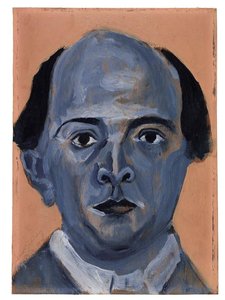
Арнольд Шёнберг
1874 - 1951 , Австрия
Основные сведения
- Artistic Movement Or Style: Двенадцатитоновая техника; Экспрессионизм
- Artists Or Movements Influenced By This Artist:
- Антон Веберн
- Альбан Берг
- Artists Who Influenced This Artist:
- Иоганнес Брамс
- Рихард Вагнер
- Date Of Birth: 13 сентября 1874 г.
- Date Of Death: 1951
- Full Name: Арнольд Шёнберг
- Nationality: Австро-американский
- Notable Artworks:
- Сюита, op. 29
- Музыкальная пишущая машинка
- Staffliner
- Place Of Birth: Вена, Австрия
Похожие статьи

The Enduring Legacy of Fine Art Prints: Technique, History & Aesthetic Impact
Explore the rich history & techniques of fine art prints. Discover investment potential, assess authenticity, and learn how to preserve your collection with expert guidance. Trusted insights for discerning collectors.
Harmonies on Canvas: Exploring the Visual Representation of Music in Art History
Explore the fascinating history of music's visual representation in art! From ancient symbolism to modern abstraction, discover how artists have captured sound and emotion on canvas. Expert insights & stunning examples.
The Enduring Legacy of Printmaking: Techniques, Themes & Artistic Innovation Across Centuries
Explore the rich history of printmaking with ArtsDot. Discover techniques from intaglio to lithography, learn about collecting valuable prints & find museum-quality reproductions. Expert insights for art enthusiasts and collectors.

Giclée Prints: Archival Quality & Aesthetic Nuances for the Discerning Collector
Explore the world of giclée prints with ArtsDot. Learn about archival quality, aesthetic nuances & investment potential. Expert guidance for discerning art collectors seeking museum-quality reproductions and lasting value.

Echoes of Time: Exploring the Enduring Appeal & Historical Context of Vintage Art Prints
Explore the captivating world of vintage art prints! Discover their history, collecting tips & enduring appeal. Expert insights on chromolithography and building a legacy collection with ArtsDot.