

 Предпросмотр
 Поделиться
 Поделиться
 Детали произведения

 Скачать
 Похожие работы
 Рентгенография
 Слайд-шоу
 Статистика
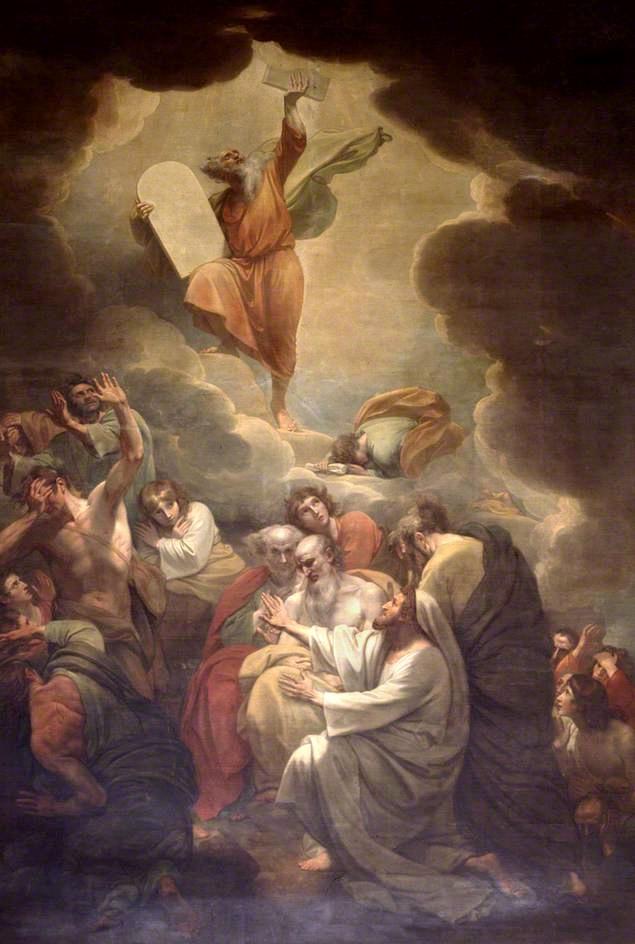
Moses Receiving the Law on Mount Sinai


 Читать далее
Приобретите цифровое изображение высокого разрешения в улучшенном качестве, которое значительно превосходит онлайн-превью.
Каждый файл тщательно подготавливается нашими специалистами с использованием передовых инструментов и экспертной ручной ретуши. Мы гарантируем исключительную четкость, точную цветопередачу и детальную проработку каждого изображения.
Финальный файл доставляется по электронной почте в течение 72 часов и оптимизирован для немедленного использования в профессиональной среде, при верстке и печати. Это тот же уровень качества, которому доверяют ведущие дизайнерские студии, издательства и галереи.
Цифровое изображение
Скачайте файл высокого разрешения для личного использования, печати и творческих проектов. ( Перейти к печати Купить картину ручной работы)
Включено в каждый заказ цифровых изображений
Гарантия экспертной цифровой доставки
Выбирая ArtsDot.com, вы получаете не просто изображение — вы приобретаете профессионально обработанное цифровое произведение искусства, созданное с безупречной точностью и под защитой гарантии качества. Вот всё, что автоматически входит в ваш заказ:

Мгновенная доставка по e-mail
Ваш цифровой файл в высоком разрешении будет отправлен вам по электронной почте в течение 72 часов после оформления заказа — и сразу станет доступен для использования.

Цифровой файл с ИИ-улучшением
Ваше произведение искусства проходит профессиональную оптимизацию с использованием передовых инструментов ИИ и ручной обработки, что гарантирует максимальную детализацию, четкость и точность цветопередачи.

Бессрочная бесплатная повторная доставка
Случайно удалили или потеряли файл? Не беспокойтесь — мы отправим его вам повторно в любое время и совершенно бесплатно.

Без импортных пошлин — навсегда
Наслаждайтесь вашим произведением искусства мгновенно без таможенных пошлин, сборов или затрат на доставку — цифровые загрузки всегда не облагаются налогом.

Гарантия точности цветопередачи
Мы гарантируем, что ваше цифровое изображение максимально точно передает оригинальные цвета благодаря использованию профессиональных инструментов и систем управления цветом.

Гарантия удовлетворенности 100 дней
Если вы не будете удовлетворены своим цифровым изображением, мы внесем правки или вернем 100% стоимости в течение 100 дней — без лишних вопросов.

100% Гарантия возврата средств
Не удовлетворены покупкой? Получите полный возврат средств в течение 100 дней после получения цифрового файла — без лишних вопросов.

Скидки на оптовые заказы
Купите 3 изображения, сэкономьте 10% — Купите 5, сэкономьте 15% — Купите 10+, сэкономьте 20%. Отличное решение для творческих проектов, галерей и агентств.
A Divine Encounter Amidst the Storm
In the grand theater of 18th-century history painting, few moments resonate with as much spiritual gravity as Benjamin West’s “Moses Receiving the Law on Mount Sinai.” Completed in 1784, this masterpiece serves as a breathtaking bridge between the structured ideals of Neoclassicims and the burgeoning emotional intensity of British Romanticism. The canvas captures the very heartbeat of biblical revelation, transporting the viewer to the rugged, windswept heights of Sinai. Here, the air feels heavy with the presence of the divine, as Moses stands at the precipice of a new era for humanity. West does not merely illustrate a scriptural event; he orchestrates a cosmic drama where the boundaries between heaven and earth dissolve into a turbulent, atmospheric spectacle.
The composition is a masterclass in structural storytelling. Utilizing a classic pyramidal arrangement, West anchors the viewer's gaze upon Moses, who rises like a pillar of strength amidst the surrounding chaos. His outstretched arms, clutching the two stone tablets of the Ten Commandments, create a powerful vertical axis that connects the terrestrial realm to the celestial light breaking through the clouds. This deliberate geometry provides a sense of stability and permanence, mirroring the eternal nature of the Law being imparted. Surrounding this central figure is a sea of humanity—Aaron, Joshua, and the Israelites—whose faces are etched with a profound spectrum of human emotion. From the wide-eyed astonishment of the youth to the contemplative reverence of the elders, West captures the psychological weight of witnessing the impossible.
The Alchemy of Light and Shadow
Technically, the painting is an extraordinary display of West’s ability to manipulate light to evoke spiritual awe. The sky above Mount Sinai is not a mere backdrop but a living, breathing character in the narrative. Rendered in bruised purples, stormy greys, and deep indigos, the turbulent heavens serve as a visual metaphor for the internal upheaval and the monumental significance of the moment. West employs a dramatic use of chiaroscuro, allowing shafts of divine light to pierce through the gloom, illuminating the tablets and Moses’ determined features. This interplay of shadow and brilliance creates a sculptural depth, making the figures appear almost tangible, as if they might step from the canvas into the room.
For the discerning collector or interior designer, this work offers more than just historical interest; it provides a profound emotional anchor for any space. The painting’s rich, moody palette and its themes of resilience, leadership, and spiritual clarity make it an ideal centerpiece for a library, a formal study, or a grand salon. A high-quality reproduction of this piece allows one to invite this sense of monumental drama into a contemporary setting, offering a window into an era where art sought to elevate the soul. To hang such a work is to surround oneself with the echoes of greatness, celebrating the enduring power of truth and the timeless beauty of the human spirit in the face of the infinite.
Похожие произведения
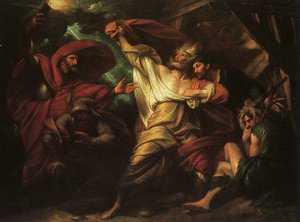

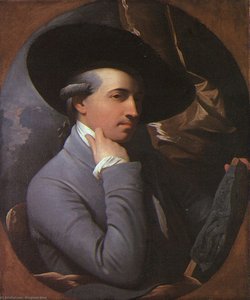


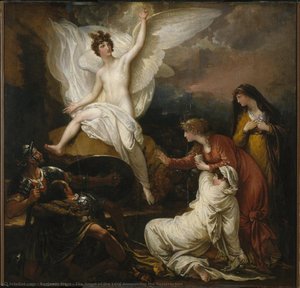
Биография художника
A Pioneer Bridging Worlds: The Life and Legacy of Benjamin West
Born in 1738 amidst the burgeoning landscape of colonial Pennsylvania, Benjamin West emerged as a pivotal figure in the transatlantic art world, a painter who skillfully navigated the currents of Neoclassicism and Romanticism while forging a uniquely American artistic identity. His story is one of remarkable self-education, unwavering ambition, and an extraordinary ability to connect with both aristocratic patrons and revolutionary ideals. From humble beginnings—his father an innkeeper in Springfield—West’s innate talent was nurtured by early exposure to the arts, reportedly learning rudimentary techniques from Native Americans before receiving any formal training. This unconventional start instilled within him a spirit of innovation that would characterize his entire career. He quickly established himself as a sought-after portraitist in Philadelphia and New York, but a thirst for deeper artistic knowledge propelled him towards Europe in 1760, embarking on a journey that would irrevocably alter the course of American art.From Italy to London: Forging a Path to Recognition
West’s arrival in Italy marked a turning point. Immersing himself in the artistic heartland of Europe, he studied the masters—Titian, Raphael—and engaged with contemporary Neoclassical thinkers like Anton Rafael Mengs and Angelica Kauffman. This period was crucial in shaping his aesthetic sensibilities, instilling within him an appreciation for classical form and historical narrative. He spent years meticulously copying works by these giants, absorbing their techniques and developing a profound understanding of composition, color theory, and the idealized beauty championed by Neoclassicism. However, it was London that ultimately became his adopted home and artistic center. Arriving in 1763, West swiftly ascended the ranks of the British art scene, captivating audiences with his ambitious canvases and securing the patronage of King George III. This royal endorsement not only provided financial stability but also cemented his position as a leading figure within the establishment. A defining moment came with his election to the Royal Academy in 1769, an institution he would later preside over as President from 1792 until his death. His influence extended beyond his own artistic production; West became a champion for American artists seeking training in Europe, offering guidance and support to generations of aspiring painters like Allston, Copley, and Morse.Revolutionizing Historical Painting: Technique and Controversy
West’s impact on the art world wasn't merely about achieving technical mastery; it was about challenging conventions. He dared to reimagine historical painting, moving away from rigid adherence to classical precedent and embracing a more contemporary sensibility. The Death of General Wolfe (1770), arguably his most famous work, exemplifies this revolutionary approach. By depicting the fallen general surrounded by figures in *contemporary* military attire rather than traditional Roman garb, West sparked considerable debate. Critics questioned the historical accuracy, but audiences were captivated by the immediacy and emotional resonance of the scene. It was a bold move, reflecting a shift towards greater realism and narrative power in history painting—a departure from the idealized, often distant depictions favored by earlier artists. This work demonstrated his willingness to experiment with modern dress within a classical framework, setting a precedent for future generations of historical painters. His style evolved over time, incorporating elements of Romanticism into his later works, yet always retaining a commitment to ambitious composition and detailed execution. Other notable pieces like Thetis Bringing the Armor to Achilles, The Three Sisters, The Fright of Astyanax, and The Cave of Despair demonstrate his versatility and mastery across a range of mythological and historical themes.A Lasting Legacy: Shaping Artistic Identity
Benjamin West’s legacy extends far beyond the canvases he created. He fundamentally altered the landscape of American art, establishing history painting as a viable genre for American artists and fostering a sense of national artistic identity. His presidency of the Royal Academy solidified his influence on British art, promoting innovation and supporting emerging talent.- He championed a more accessible and emotionally engaging style of historical representation.
- His studio became a haven for American artists seeking training in Europe.
- He bridged the gap between Neoclassicism and the burgeoning Romantic movement.

Бенджамин Вест
1738 - 1820 , Соединенные Штаты Америки
Основные сведения
- Artistic Movement Or Style: Неоклассицизм, Романтизм
- Artists Or Movements Influenced By This Artist:
- Аллстон
- Копли
- Морс
- Artists Who Influenced This Artist:
- Титян
- Рафаэль
- Менгс
- Гамвитт
- Кауффман
- Date Of Birth: 1738-10-10
- Date Of Death: 1820-03-11
- Full Name: Benjamin West
- Nationality: Американский
- Notable Artworks:
- Смерть генерала Вулф
- Тетис с доспехами для Ахиллеса
- Три сестры
- Испуг Астанакса
- Place Of Birth: Springfield, США