 Предпросмотр
 Поделиться
 Поделиться
 Детали произведения

 Скачать
 Похожие работы
 Рентгенография
 Слайд-шоу
 Статистика
Kupavina's Place
 Oil On Panel
- Russian Realism
 1926
1926 Государственный центральный театральный музей имени А. А. Бахрушина
 Читать далее
Масляная репродукция ручной работы
Картина маслом на холсте в выбранном вами размере и раме, написанная на заказ нашими художниками. ( Перейти к печати Перейти к цифровым изображениям)




P118B $10

P118H $10

P118W $10

P438Z $10

P508JH $12

P508YH $12

P805H $10

P805Z $10

P919BZ $10

P919G $10

P919XJ $10

P959ZH $10

P968JZ $12

W106C $8

W218G $10

W218JH $8

W218Y $10

W307PJ $10

W316G $10

W316PJ $8

W316Y $10

W398PJ $8

W4111J $10

W500HY $15

W500JH $15

W692G $12

W849H $8

W940BG $15

W953PJ $8




Выберите один из наших стандартных размеров, соответствующих оригинальным пропорциям произведения искусства.

Вы можете указать собственные размеры, чтобы картина идеально вписалась в выбранную раму или пространство. Если выбранный вами размер не соответствует пропорциям оригинала, мы либо обрежем полотно, либо расширим его за счет дополнительных элементов, написанных вручную. Цифровой макет будет отправлен вам на утверждение перед началом производства.
Обратите внимание, что предварительный просмотр на экране не отражает фактическую обрезку или расширение. Только макет точно покажет окончательную композицию.
Хотя доступны индивидуальные размеры, мы рекомендуем выбирать вариант из предопределенного списка, чтобы сохранить исходные пропорции.
После оформления заказа команда ArtsDot.com свяжется с клиентом по электронной почте для уточнения деталей и предоставит предварительный макет
Доставка по всему миру () за 3–4 недели вместо стандартных 5 недель. (13 Сентябрь). Без компромиссов в качестве.

Бесплатная экспресс-доставка по всему миру

Высококачественный льняной холст

Полное страхование доставки

Гарантия возмещения таможенных пошлин

Гарантия точного соответствия цветов

100-дневная политика возврата (только при обнаружении дефектов)

Гарантия возврата 100% средств

Предложение оптовых скидок
 Вариант со стеклом доступен только для размеров менее 110 см

Kupavina's Place
Техника репродукции
Размер репродукции
-


Итоговая стоимость
$ 263
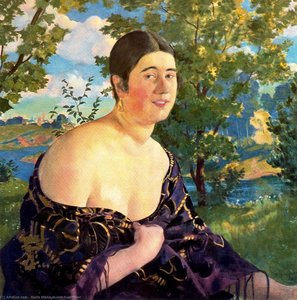
A Window Into Russian Soul: Boris Kustodiev’s “Kupavina’s Place”
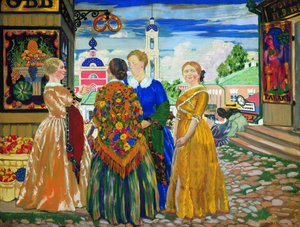
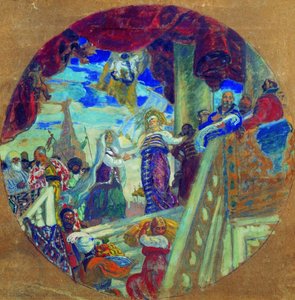
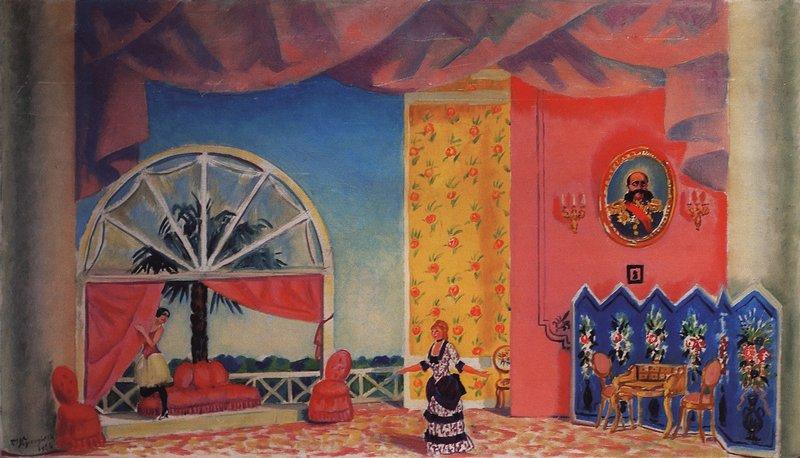
Boris Mikhailovich Kustodiev's "Kupavina’s Place," painted in 1926, isn’t merely a depiction of a theatrical scene; it’s a vibrant portal into the heart of early 20th-century Russia – a world steeped in merchant tradition, social observation, and a profound sense of melancholy. The painting captures a moment within the bustling confines of Kupavina's theater, a space brimming with life, conversation, and an unspoken narrative that Kustodiev masterfully conveys through his distinctive style.
Kustodiev’s artistic signature is immediately recognizable: a rich, almost theatrical palette dominated by deep reds, ochres, and blues. He eschewed the stark realism of earlier academic styles, instead embracing a highly stylized approach that blended elements of folk art with a subtle, melancholic romanticism. The figures are not rendered with photographic precision but rather as carefully constructed characters, each imbued with a distinct personality and gesture. Notice how the two men seated in the chairs – their faces partially obscured yet radiating an air of quiet contemplation – seem to be lost in private worlds, while the central figure, standing slightly apart, embodies a more active engagement with the scene.
The painting’s historical context is crucial to understanding its emotional resonance. Russia was undergoing rapid transformation at this time, grappling with the aftermath of the 1905 Revolution and the rise of Soviet ideology. Kustodiev, having witnessed the social upheaval firsthand, channeled his observations into a series of works that explored themes of tradition versus modernity, wealth versus poverty, and the enduring spirit of the Russian people. “Kupavina’s Place” reflects this duality – a celebration of the opulent world of merchants juxtaposed with an underlying sense of loss for a vanishing way of life.
The Language of Gesture and Color
Kustodiev's genius lies in his ability to communicate volumes through subtle gestures and carefully chosen colors. The women, particularly those seated, are rendered with a delicate grace, their hands poised as if caught mid-conversation or perhaps anticipating an invitation. The use of red is particularly striking – it’s not merely decorative but carries symbolic weight, representing passion, wealth, and even danger. Notice how the crimson drapes contribute to the painting's dramatic atmosphere.
Furthermore, Kustodiev employed a technique known as “coloristic realism,” prioritizing color and light over strict anatomical accuracy. This approach lends the scene an almost dreamlike quality, blurring the boundaries between reality and imagination. The lighting is particularly evocative, casting long shadows that heighten the sense of drama and mystery.
Symbolism Within the Scene
Beyond its immediate visual appeal, “Kupavina’s Place” is rich in symbolic meaning. The theater itself represents a microcosm of Russian society – a space where social hierarchies are played out, secrets are exchanged, and destinies are shaped. The figures within the scene can be interpreted as representatives of different social classes and roles: merchants, servants, actors, and patrons—all interconnected by the shared experience of the performance.
The central figure, standing slightly apart from the group, is often seen as a symbol of isolation or detachment. He seems to observe the scene with a critical eye, perhaps reflecting on the fleeting nature of human relationships and the impermanence of worldly pleasures. The painting invites us to contemplate these deeper themes alongside its surface beauty.
A Timeless Masterpiece – Reproduction Possibilities
Reproductions of “Kupavina’s Place” offer a remarkable opportunity to bring this captivating artwork into your home or office. Hand-painted reproductions capture the essence of Kustodiev's style, faithfully recreating his rich colors, expressive brushstrokes, and evocative atmosphere. Whether you choose an unframed canvas or a beautifully framed piece, a reproduction of “Kupavina’s Place” will serve as a constant reminder of Russia’s vibrant cultural heritage and the enduring power of art to transport us to another time and place.
Consider commissioning a custom-sized reproduction – allowing you to perfectly integrate this iconic artwork into your existing décor. The painting's scale, color palette, and subject matter will undoubtedly add depth, character, and a touch of Russian soul to any space.
Похожие произведения
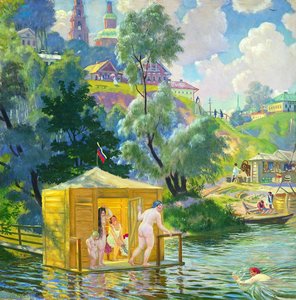
Биография художника
A Life Immersed in Russian Spirit
Boris Mikhailovich Kustodiev, born on March 7, 1878, in Astrakhan, Russia, was an artist whose work became inextricably linked to a vibrant and often idealized depiction of Russian life. His early years were shaped by a profound sense of provinciality, a consequence of the financial hardships that followed his father’s untimely death – a respected professor of philosophy, history, and logic at the local theological seminary. This formative experience, witnessing the struggles of merchants and the everyday lives of common folk, deeply influenced the themes that would dominate his artistic output throughout his career. Kustodiev's education began within the walls of the Astrakhan theological seminary, yet it was private lessons with Pavel Vlasov, a devoted student of Vasily Perov, that truly ignited his artistic passion and provided him with a foundational understanding of realistic painting techniques. This pivotal connection led him to St. Petersburg and the prestigious Imperial Academy of Arts, where he studied under the renowned Ilya Repin from 1896 to 1903. Repin recognized Kustodiev’s considerable talent early on, even inviting him to assist with a monumental commemorative painting – an invaluable opportunity that honed his skills and firmly established his commitment to capturing the essence of Russian identity. This period was not merely about instruction; it was a crucial mentorship, shaping his artistic vision and providing him with a deep appreciation for the power of visual storytelling.Artistic Development and Key Themes
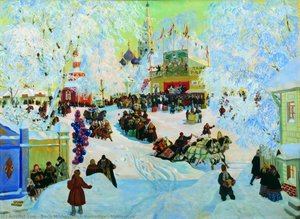
Kustodiev’s artistic journey unfolded across a diverse range of genres – portraiture, genre scenes brimming with life, and meticulously illustrated books. However, he consistently returned to portraying the richness and complexity of Russian culture, particularly the lives of the merchant class. His style evolved organically over time, initially rooted in Realism but gradually incorporating elements of Art Nouveau’s decorative flair and flowing lines. He possessed an extraordinary ability – a rare gift – not just to *represent* what he saw, but also to capture the atmosphere, the mood, and the very spirit of a place or moment. The merchant class, with their intricate traditions, elaborate customs, and often-hidden wealth, became a recurring motif in his work, reflecting those early childhood impressions from Astrakhan. Paintings like *The Merchant’s Wife* (1918), a masterpiece of quiet dignity and understated beauty, stand as powerful testaments to this enduring fascination, offering a glimpse into the lives of individuals often overlooked by history. Beyond portraits, Kustodiev masterfully depicted scenes of everyday life – bustling marketplaces overflowing with goods, lively festivals like Maslenitsa (Pancake Week) celebrated with joyous abandon, and serene landscapes that evoked a deep sense of national pride and connection to the Russian land. His work wasn’t simply representational; it was infused with a palpable love for Russia and its people, a sentiment that resonated deeply with viewers. He traveled extensively throughout Europe – France, Spain, Italy – seeking inspiration and broadening his artistic horizons, yet always felt drawn back to his homeland, believing that true artistic expression stemmed from the heart of Russian culture.Influences and Artistic Style
Kustodiev’s artistic development was profoundly shaped by several key influences. Vasily Perov, his initial mentor, instilled in him a commitment to depicting the lives of ordinary people with honesty and empathy. Ilya Repin, his teacher at the Imperial Academy of Arts, provided invaluable guidance on composition, technique, and the importance of capturing psychological depth in his subjects. The works of Russian realist painters like Petrov and Repin served as a foundation for Kustodiev’s style, emphasizing detailed observation and a commitment to portraying the realities of Russian life. However, he also embraced elements of Art Nouveau, incorporating flowing lines, vibrant colors, and decorative motifs into his paintings – a reflection of the artistic trends of his time. This fusion of realism and stylistic innovation resulted in a distinctive visual language that is both deeply rooted in Russian tradition and imbued with a sense of modern elegance. His use of color was particularly noteworthy; he employed rich, saturated hues to evoke emotion and create a visually arresting effect. Kustodiev’s paintings are characterized by their meticulous detail, vibrant colors, and a remarkable ability to capture the essence of his subjects – whether they were merchants, peasants, or members of the aristocracy.Overcoming Adversity: Resilience and Artistic Output
In 1916, Kustodiev's life took an unexpected and devastating turn when he suffered a severe spinal injury, resulting in paraplegia. This debilitating condition confined him to a wheelchair and dramatically altered his physical capabilities. Many would have succumbed to despair, but Kustodiev’s spirit remained unbroken. Instead of allowing his physical limitations to extinguish his creative flame, he channeled his energy into painting with renewed intensity. Despite the immense challenges, he continued to produce an astonishing volume of work – portraits, genre scenes, and illustrations – often working from memory and imagination. This period saw a shift in his artistic style, characterized by an intensified joyfulness and a bolder use of color. It’s as if, unable to fully experience life through his body, he poured all of his energy into recreating its beauty on canvas, celebrating the simple pleasures of everyday existence. His paintings from this era – *Fontanka* (1916) and *Maslenitsa* (1916), for example – are imbued with a sense of optimism and resilience that is both poignant and inspiring.Legacy and Historical Significance
Boris Kustodiev’s contribution to Russian art lies in his ability to capture the spirit of an era – a time of profound social change, political upheaval, and burgeoning cultural identity. He wasn't merely documenting reality; he was interpreting it through a lens of nostalgia, affection, and deep understanding. His paintings offer invaluable insights into the lives of ordinary Russians during the late 19th and early 20th centuries, preserving their traditions, customs, and values for posterity. His work resonated deeply with audiences then and continues to captivate viewers today, serving as a window into a bygone era. Kustodiev’s influence can be seen in the works of subsequent generations of Russian artists who sought to celebrate their national identity and depict the beauty of everyday life. His paintings are now held in prominent collections across Russia – including the Kramskoy Museum of Fine Arts in Voronezh and the Kharkov Museum of Art in Ukraine – ensuring that his artistic vision will continue to inspire and enrich for years to come. He remains a beloved figure in Russian art, celebrated for his vibrant depictions of Russian life and his unwavering spirit in the face of adversity.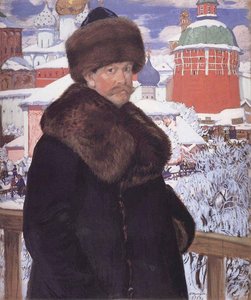
Борис Кустодиев
1878 - 1927 , Россия
Основные сведения
- Artistic Movement Or Style: Реализм, модерн
- Artists Or Movements Influenced By This Artist: ['Русский модерн']
- Artists Who Influenced This Artist:
- Василий Перов
- Илья Репин
- Date Of Birth: 7 марта 1878 г.
- Date Of Death: 28 мая 1927 г.
- Full Name: Борис Михайлович Кустодиев
- Nationality: Русский
- Notable Artworks:
- Дружина гулящей барыни
- Масленица
- Фонтанка
- Place Of Birth: Астрахан, Россия
Похожие статьи
Ivan Bilibin: A Synthesis of Folklore, Modernism & National Identity in Russian Illustration
Explore the enchanting world of Ivan Bilibin, a master Russian illustrator who synthesized folklore, Art Nouveau & national identity. Discover his iconic fairy tale illustrations and legacy with ArtsDot.
Victor Vasnetsov: Myth, Nationalism & the Revival of Russian Fairy Tale Painting
Explore the captivating world of Victor Vasnetsov, a co-founder of Russian folklorist painting. Discover his iconic works, influence on national identity, and lasting legacy in this expert guide.
Boris Grigoriev: Capturing the Soul of Russia Through Realism & Narrative Art
Explore the captivating realism of Boris Grigoriev, a pivotal Russian artist renowned for his poignant portraits & depictions of peasant life. Discover his artistic evolution and lasting legacy at ArtsDot.
Vladimir Makovsky: Realism, Social Commentary & Russian Life in Late 19th-Century Painting
Explore the captivating world of Vladimir Makovsky, a leading Russian realist painter. Discover his insightful depictions of 19th-century life, social commentary & legacy with ArtsDot.
Konstantin Korovin: A Master of Russian Impressionism & Evocative Light
Explore the captivating world of Konstantin Korovin, a leading Russian Impressionist painter renowned for his vibrant landscapes & innovative theater designs. Discover his life, legacy, and enduring artistic impact.