

 Предпросмотр
 Поделиться
 Поделиться
 Детали произведения

 Скачать
 Похожие работы
 Рентгенография
 Слайд-шоу
 Статистика
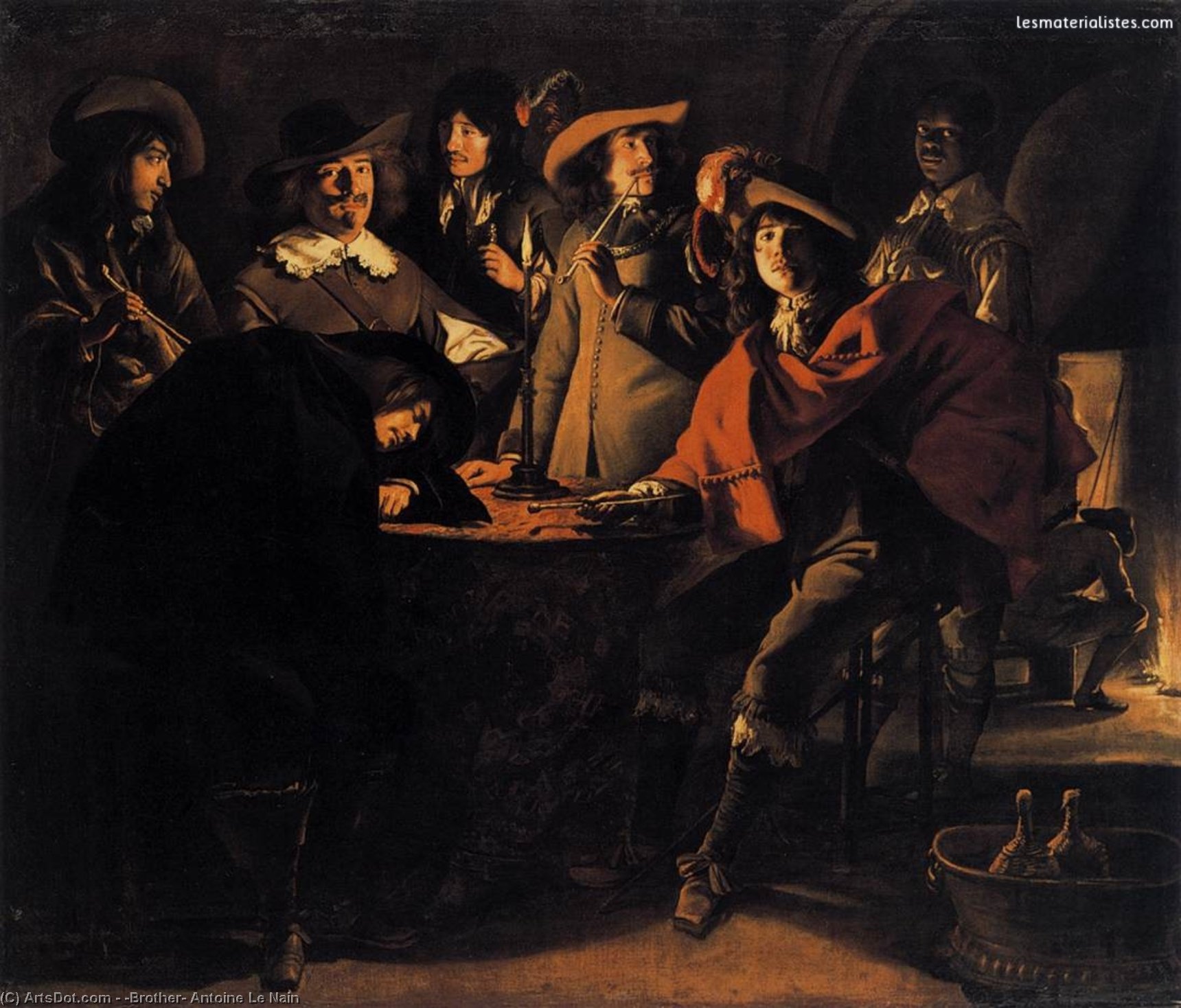
Smokers in an Interior
 Oil On Canvas
- WallArt
- Baroque
 1643
1643- Early Modern
 117.0 x 137.0 cm
 Лувр
Лувр
 Читать далее
Масляная репродукция ручной работы
Картина маслом на холсте в выбранном вами размере и раме, написанная на заказ нашими художниками. ( Перейти к печати Перейти к цифровым изображениям)




P118B $10

P118H $10

P118W $10

P438Z $10

P508JH $12

P508YH $12

P805H $10

P805Z $10

P919BZ $10

P919G $10

P919XJ $10

P959ZH $10

P968JZ $12

W106C $8

W218G $10

W218JH $8

W218Y $10

W307PJ $10

W316G $10

W316PJ $8

W316Y $10

W398PJ $8

W4111J $10

W500HY $15

W500JH $15

W692G $12

W849H $8

W940BG $15

W953PJ $8




Выберите один из наших стандартных размеров, соответствующих оригинальным пропорциям произведения искусства.

Вы можете указать собственные размеры, чтобы картина идеально вписалась в выбранную раму или пространство. Если выбранный вами размер не соответствует пропорциям оригинала, мы либо обрежем полотно, либо расширим его за счет дополнительных элементов, написанных вручную. Цифровой макет будет отправлен вам на утверждение перед началом производства.
Обратите внимание, что предварительный просмотр на экране не отражает фактическую обрезку или расширение. Только макет точно покажет окончательную композицию.
Хотя доступны индивидуальные размеры, мы рекомендуем выбирать вариант из предопределенного списка, чтобы сохранить исходные пропорции.
После оформления заказа команда ArtsDot.com свяжется с клиентом по электронной почте для уточнения деталей и предоставит предварительный макет
Доставка по всему миру () за 3–4 недели вместо стандартных 5 недель. (11 Сентябрь). Без компромиссов в качестве.

Бесплатная экспресс-доставка по всему миру

Высококачественный льняной холст

Полное страхование доставки

Гарантия возмещения таможенных пошлин

Гарантия точного соответствия цветов

100-дневная политика возврата (только при обнаружении дефектов)

Гарантия возврата 100% средств

Предложение оптовых скидок
 Вариант со стеклом доступен только для размеров менее 110 см

Smokers in an Interior
Техника репродукции
Размер репродукции
-


Итоговая стоимость
$ 263
The Quiet Drama of Camaraderie: An Encounter with Le Nain's Social Scene
To gaze upon Smokers in an Interior is to step through the threshold and into a moment suspended in amber—a gathering rendered with profound, almost palpable realism. This painting captures not the grand spectacle of mythology or royalty, but something far more intimate, yet infinitely richer: the quiet drama of human connection. Twelve figures, assembled within the warm embrace of an interior space, are caught mid-conversation, their postures suggesting a tapestry woven from shared laughter and murmured secrets. The composition is dense with life; men stand in casual groupings while others settle around a substantial dining table. It speaks to the universal ritual of fellowship, where the simple act of sharing company becomes the central subject matter.
Mastery of Light and Everyday Life
The technical brilliance evident in this work by (Brother) Antoine Le Nain cannot be overstated. While the scene is bustling with activity—the scattered bottles hinting at refreshment, the formality suggested by a few ties amidst the gathering—it is the handling of light that truly elevates the piece. The Nains were masters of observation, and here, they illuminate the textures of everyday existence: the sheen on polished wood, the drape of fabric, the subtle play of shadow across a face. Their technique grounds the viewer firmly in the 17th century, yet the emotional resonance feels timeless. It is an art that celebrates the dignity inherent in the ordinary man and woman.
Historical Echoes: The Baroque Gaze on Humanity
Painted in 1643, this work sits squarely within the rich tapestry of 17th-century Dutch and French genre painting, though filtered through the unique lens of the Le Nain family. While many contemporaries sought divine grandeur, the Nains turned their gaze downward, toward the lives lived by common people. This focus was revolutionary; it imbued the mundane—a smoke-filled room, a shared meal—with an almost monumental significance. The atmosphere is one of unpretentious camaraderie, suggesting that true nobility resides not in title, but in the quality of human interaction.
Symbolism and Emotional Resonance for the Modern Collector
For the collector or designer seeking to infuse a space with depth and narrative weight, Smokers in an Interior offers more than mere decoration; it offers ambiance. The painting evokes warmth, intellectual exchange, and the comforting rhythm of social ritual. It whispers tales of bygone eras—of robust conversation fueled by good company and perhaps a few too many drinks. Reproducing this piece allows one to curate not just a wall hanging, but an entire mood: one of sophisticated, lived-in elegance. It is a visual invitation to pause, observe the subtle gestures, and appreciate the enduring power found in simply being together.
Похожие произведения




Биография художника
The Enigmatic World of the Le Nain Brothers
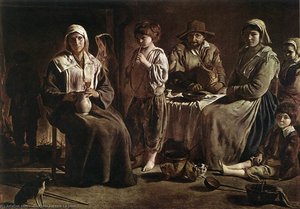
The name “Le Nain” – meaning “the dwarf” in French – evokes a sense of mystery, and fittingly shrouds the lives and work of Antoine, Louis, and Mathieu Le Nain. These three brothers, active in 17th-century France, stand as unique figures in the Baroque period, celebrated for their profoundly realistic depictions of everyday life, particularly the peasantry. Unlike many of their contemporaries who focused on mythological or religious narratives, the Le Nains turned their attention to the lives of ordinary people, imbuing them with a dignity and quiet strength rarely seen in art before their time. Their collaborative nature only deepens the intrigue; for centuries, scholars have debated which brother was responsible for specific paintings, as they signed their works simply “Lenain,” obscuring individual authorship.
Early Life and Artistic Formation
Born in or near Laon, a town in Picardy, France, the Le Nain brothers emerged from relatively obscure beginnings. Mathieu, born in 1607, was the youngest of the three. Antoine (circa 1600) and Louis (circa 1603) followed, though precise birthdates remain uncertain. By 1630, all three had established a shared workshop in Paris, a pivotal move that cemented their artistic partnership. Antoine’s admission to the Parisian painters' guild was crucial, allowing his brothers to train under him without incurring fees—a testament to their familial dedication and collaborative spirit. Initially, their paintings reflected the prevailing styles of the era, with religious subjects influenced by French artists like Philippe de Champaigne and Jacques Blanchard. However, a significant shift occurred around 1640, sparked by exposure to the work of Italian master Orazio Gentileschi, whose dramatic use of light and shadow left an indelible mark on their evolving style.
A New Vision: Genre Painting and Peasant Life
The Le Nains’ most enduring legacy lies in their genre paintings—scenes depicting everyday life. They were among the first French artists to elevate the peasantry to the level of serious artistic subject matter, portraying them not as idealized figures or comic stereotypes, but as individuals with inherent dignity and quiet resilience. Paintings like *The Well* and *Landscape with Peasants and a Chapel* showcase their meticulous attention to detail, capturing the textures of rough clothing, weathered faces, and the earthy tones of the rural landscape. Their compositions are often characterized by a sense of stillness and introspection, inviting viewers to contemplate the lives and experiences of these humble subjects. While remarkably realistic, their peasants possess an almost classical composure, suggesting a degree of idealization that sets them apart from purely documentary depictions.
Collaboration, Style, and Technical Mastery
The collaborative nature of the Le Nain workshop presents a unique challenge to art historians attempting to attribute specific works to individual brothers. Their shared studio fostered a remarkable consistency in style, making it difficult to discern distinct artistic personalities. However, scholars have identified certain tendencies—Antoine is often associated with more formal portraiture and religious scenes, while Mathieu’s work is characterized by larger compositions and a greater emphasis on narrative detail. Regardless of authorship, the Le Nains shared a mastery of technique, particularly their use of *impasto* – applying paint thickly to create texture and depth. Their palette favored earthy tones—browns, ochres, and grays—which contribute to the somber yet dignified atmosphere of their paintings. The influence of Caravaggio’s tenebrism, with its dramatic contrasts of light and shadow, is also evident in their work.
Legacy and Historical Significance
In 1648, all three Le Nain brothers were received into the newly founded French Academy, a testament to their growing reputation and artistic merit. Despite this recognition, their fame waned in the centuries following their deaths. It wasn’t until the 19th century that they were rediscovered, championed by art historians like Champfleury who recognized their groundbreaking realism and influence on later artists. Gustave Courbet, Édouard Manet, and other Realist painters of the 19th century drew inspiration from the Le Nains' unflinching portrayal of everyday life, acknowledging them as precursors to modern artistic sensibilities. Today, the Le Nain brothers are celebrated for their unique contribution to French Baroque painting—a legacy built on collaboration, technical mastery, and a profound respect for the dignity of ordinary people. Their paintings offer a glimpse into a world often overlooked by art history, reminding us that beauty and meaning can be found in the most humble of subjects.
Основные сведения
- Artistic Movement Or Style: Baroque, Genre painting
- Artists Or Movements Influenced By This Artist:
- Gustave Courbet
- Édouard Manet
- Artists Who Influenced This Artist:
- Orazio Gentileschi
- Philippe de Champaigne
- Date Of Birth: c. 1600
- Date Of Death: May 25, 1648
- Full Name: Antoine Le Nain
- Nationality: French
- Notable Artworks:
- The Well
- Backgammon Players
- Adoration of the Shepherds
- Place Of Birth: Laon, France
Похожие статьи
The Interior Gaze: Exploring Representations of Domestic Space in Art History
Explore the fascinating history of domestic interiors in art! From Dutch Masters to Impressionism, discover how artists captured home life & social meaning. Expert analysis and insights at ArtsDot.

The Dramatic Flourish: Exploring the Baroque Movement's Enduring Legacy in Art History
Explore the dramatic world of Baroque art! Discover iconic artists like Caravaggio & Rubens, defining techniques, and its lasting impact on art history. Expert insights for collectors & enthusiasts at ArtsDot.

Барочная драма: Искусство величия в современном интерьере
Погрузитесь в мир роскоши и величия барокко! Узнайте об истории стиля, ключевых элементах интерьера и архитектуре. Вдохновляйтесь с и создайте свой неповторимый дизайн.
Intimate Interiors: Domestic Life & Artistic Representation from Renaissance to Impressionism
Explore the evolution of domestic life in Western art from the Renaissance to Impressionism. Discover symbolism, realism & artistic techniques shaping intimate interior scenes. Learn more with ArtsDot.
Decoding Baroque Grandeur: A Guide to the Drama and Emotion of 17th-Century Art
Explore the breathtaking drama of 17th-century Baroque art. Our expert guide decodes the use of chiaroscuro, emotional intensity, and historical grandeur to help you appreciate and curate timeless masterpieces for your collection.