

 Поделиться
 Поделиться
 Детали произведения

 Скачать
 Похожие работы
 Слайд-шоу
 Статистика
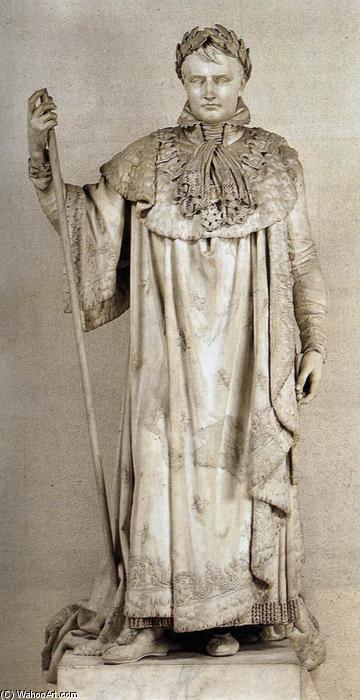
Napoleon I in his Coronation Costume


 Читать далее
Приобретите цифровое изображение высокого разрешения в улучшенном качестве, которое значительно превосходит онлайн-превью.
Каждый файл тщательно подготавливается нашими специалистами с использованием передовых инструментов и экспертной ручной ретуши. Мы гарантируем исключительную четкость, точную цветопередачу и детальную проработку каждого изображения.
Финальный файл доставляется по электронной почте в течение 72 часов и оптимизирован для немедленного использования в профессиональной среде, при верстке и печати. Это тот же уровень качества, которому доверяют ведущие дизайнерские студии, издательства и галереи.
Цифровое изображение
Скачайте файл высокого разрешения для личного использования, печати и творческих проектов. ( Перейти к печати Купить картину ручной работы)
Включено в каждый заказ цифровых изображений
Гарантия экспертной цифровой доставки
Выбирая ArtsDot.com, вы получаете не просто изображение — вы приобретаете профессионально обработанное цифровое произведение искусства, созданное с безупречной точностью и под защитой гарантии качества. Вот всё, что автоматически входит в ваш заказ:

Мгновенная доставка по e-mail
Ваш цифровой файл в высоком разрешении будет отправлен вам по электронной почте в течение 72 часов после оформления заказа — и сразу станет доступен для использования.

Цифровой файл с ИИ-улучшением
Ваше произведение искусства проходит профессиональную оптимизацию с использованием передовых инструментов ИИ и ручной обработки, что гарантирует максимальную детализацию, четкость и точность цветопередачи.

Бессрочная бесплатная повторная доставка
Случайно удалили или потеряли файл? Не беспокойтесь — мы отправим его вам повторно в любое время и совершенно бесплатно.

Без импортных пошлин — навсегда
Наслаждайтесь вашим произведением искусства мгновенно без таможенных пошлин, сборов или затрат на доставку — цифровые загрузки всегда не облагаются налогом.

Гарантия точности цветопередачи
Мы гарантируем, что ваше цифровое изображение максимально точно передает оригинальные цвета благодаря использованию профессиональных инструментов и систем управления цветом.

Гарантия удовлетворенности 100 дней
Если вы не будете удовлетворены своим цифровым изображением, мы внесем правки или вернем 100% стоимости в течение 100 дней — без лишних вопросов.

100% Гарантия возврата средств
Не удовлетворены покупкой? Получите полный возврат средств в течение 100 дней после получения цифрового файла — без лишних вопросов.

Скидки на оптовые заказы
Купите 3 изображения, сэкономьте 10% — Купите 5, сэкономьте 15% — Купите 10+, сэкономьте 20%. Отличное решение для творческих проектов, галерей и агентств.
A Regal Portrait of Imperial Power: Claude Ramey’s “Napoleon I in his Coronation Costume”
Standing before us is more than just a marble statue; it's a meticulously crafted embodiment of power, ceremony, and the enduring legacy of Napoleon Bonaparte. Created in 1813 by the esteemed French sculptor Claude Ramey, this remarkable piece captures the emperor not as a battlefield commander, but as a figure of profound majesty within the opulent setting of his coronation. The statue’s commanding presence immediately draws the eye, inviting contemplation on the political and artistic forces that shaped its creation during a pivotal moment in European history.
Ramey's skill lies not merely in replicating form, but in imbuing the marble with an almost palpable sense of weight and dignity. The statue’s composition is strikingly centered, emphasizing Napoleon’s imposing stature – his broad shoulders, firm stance, and the deliberate posture of a ruler surveying his domain. The detail is astonishing; from the intricate folds of the richly embroidered coronation robes to the laurel wreath encircling his head, every element speaks to the grandeur of the occasion. The lighting, though captured in a photograph, suggests a carefully orchestrated illumination designed to highlight the statue’s texture and form, creating subtle shadows that define the musculature and drapery with remarkable precision.
Neoclassical Grandeur: Style and Technique
“Napoleon I in his Coronation Costume” is a quintessential example of Neoclassicism, a style deeply rooted in the ideals of ancient Greece and Rome. Ramey masterfully employs classical principles of proportion, balance, and idealized form to depict Napoleon. The statue’s smooth surfaces, flowing drapery, and restrained emotion align perfectly with the movement's emphasis on order, reason, and civic virtue – qualities that Napoleon sought to associate himself with after his rise to power. The sculpting technique itself is a testament to Ramey’s mastery; he skillfully manipulates the marble to achieve an astonishing level of realism while maintaining a formal, almost sculptural quality. The use of polished marble creates a luminous effect, reflecting light and enhancing the statue's visual impact.
Symbolism Woven into Stone
Beyond its aesthetic qualities, the sculpture is rich in symbolic meaning. Napoleon’s coronation attire – the crimson robes, the golden embellishments, the laurel wreath – are all potent emblems of imperial authority. The staff he carries represents his power and dominion, while the laurel wreath signifies victory and honor. The statue's placement within a formal, ceremonial setting further reinforces this symbolism, transforming it into a visual statement about Napoleon’s ambition and his desire to establish himself as a legitimate heir to Roman emperors. It is a deliberate attempt to connect his reign with a glorious past, bolstering his claim to leadership.
A Window into the Napoleonic Era
This remarkable sculpture offers a valuable glimpse into the political and artistic climate of post-revolutionary France. Commissioned shortly after Napoleon’s coronation, it reflects the emperor's efforts to legitimize his rule and project an image of stability and grandeur. The statue served not only as a symbol of imperial power but also as a powerful propaganda tool, designed to inspire loyalty and awe among the French populace. Further research reveals that Ramey was a prominent figure in Parisian art circles during this period, and his work played a significant role in shaping the visual landscape of the Napoleonic era. The image’s sepia tone adds an element of historical distance, reminding us that we are viewing a moment frozen in time – a testament to the enduring power of art to capture and convey the spirit of its age.
Bringing History Home: Reproductions and Inspiration
Today, reproductions of “Napoleon I in his Coronation Costume” continue to captivate audiences worldwide. Whether adorning a grand salon or a private study, this iconic artwork evokes a sense of timeless elegance and imperial authority. Its powerful composition and rich symbolism make it an ideal choice for collectors seeking to add a touch of historical gravitas to their spaces. Consider the impact of Ramey’s masterful execution – the way he has captured not just Napoleon's likeness but also his very essence as a ruler, a visionary, and a figure who irrevocably shaped the course of European history.
Похожие произведения
Биография художника
Early Life and Artistic Foundations
Claude Ramey, born in Dijon, France, on October 29th, 1754, emerged from a modest artisan family—his father was a master grain sifter. This upbringing, though not steeped in the world of high art, provided an early exposure to craftsmanship and meticulous detail that would later inform his sculptural practice. Ramey’s initial artistic training took place at the École de Dessin in Dijon under the guidance of François Devosge III, where he demonstrated a natural aptitude for drawing and form. Recognizing his potential, his family encouraged him to pursue further studies in Paris in 1780, marking a pivotal moment in his development.
In Paris, Ramey entered the atelier of Étienne-Pierre-Adrien Gois, a respected sculptor who instilled in him a solid foundation in classical techniques. This period was crucial for shaping his aesthetic sensibilities and preparing him for the rigorous competition that lay ahead. In 1782, Ramey achieved a significant milestone by winning the prestigious Prix de Rome with his sculpture *The Good Samaritan*. This coveted award granted him a four-year residency at the Académie de France in Rome (1782–1786), an invaluable opportunity to immerse himself in the rich artistic heritage of antiquity and the Renaissance.
Years in Rome and Neoclassical Influences
The years Ramey spent in Rome were transformative. Surrounded by masterpieces of classical sculpture, he absorbed the principles of balance, harmony, and idealized form that defined the Neoclassical style. He meticulously studied ancient sculptures, Renaissance works, and the burgeoning art scene of his time, developing a keen eye for anatomical accuracy and expressive detail. This period solidified his commitment to portraying noble subjects with grace and dignity.
The influence of artists like Antonio Canova and Jean-Antoine Houdon is evident in Ramey’s early work. He embraced the Neoclassical emphasis on clarity, precision, and emotional restraint, seeking to emulate the timeless beauty of ancient art while infusing his sculptures with a contemporary sensibility. Upon his return to France, he began exhibiting regularly at the Paris Salons from 1793 onwards, quickly gaining recognition for his refined technique and elegant compositions.
Navigating Revolutionary and Napoleonic Commissions
Ramey’s career unfolded during a period of immense political upheaval in France—the Revolution, the rise of Napoleon, and the subsequent Restoration. He adeptly navigated these turbulent times by securing commissions from various regimes, demonstrating his versatility and adaptability. During the Revolution, he contributed to public projects like a bas-relief of *Architecture* for the Panthéon (now housed in the Musée Carnavalet), reflecting the ideals of civic virtue and national pride.
Under Napoleon’s patronage, Ramey received significant commissions for monumental works celebrating imperial power. He created low reliefs depicting scenes such as the *View of Austerlitz* for the Arc de Triomphe du Carrousel, showcasing his ability to capture grand historical narratives in sculpted form. His marble statue of *Napoleon I in his Coronation Costume* (1813), now a centerpiece of the Louvre’s collection, exemplifies his mastery of Neoclassical portraiture and his skill in conveying imperial grandeur.
Major Achievements and Artistic Legacy
Beyond his Napoleonic commissions, Ramey produced a diverse body of work that included mythological subjects, portrait busts, and allegorical sculptures. His marble statue of *Sappho* (1801), also housed in the Louvre, is celebrated for its graceful form, emotional depth, and exquisite detail. He also sculpted the marble statue of Eugène de Beauharnais for the Château de Versailles, further solidifying his reputation as a leading sculptor of his time.
Ramey’s contributions extended beyond individual sculptures; he was actively involved in decorating public buildings such as the Louvre, the Palais du Luxembourg, and the Senate stairway. In 1817, he was elected to the Académie des Beaux-Arts, a testament to his artistic achievements and standing within the French art community. He also served as a teacher, passing on his knowledge and skills to a new generation of sculptors, including Jean-Pierre Cortot.
Claude Ramey died in Paris in June 1838, leaving behind a legacy of elegant Neoclassical sculptures that continue to captivate audiences today. His work embodies the ideals of balance, harmony, and idealized form, reflecting his deep appreciation for classical art and his ability to adapt those principles to contemporary subjects. He was also the father of Étienne-Jules Ramey (1796–1852), who continued the family tradition as a sculptor.
claude ramey
1754 - 1838