

 Предпросмотр
 Поделиться
 Поделиться
 Детали произведения

 Скачать
 Похожие работы
 Рентгенография
 Слайд-шоу
 Статистика
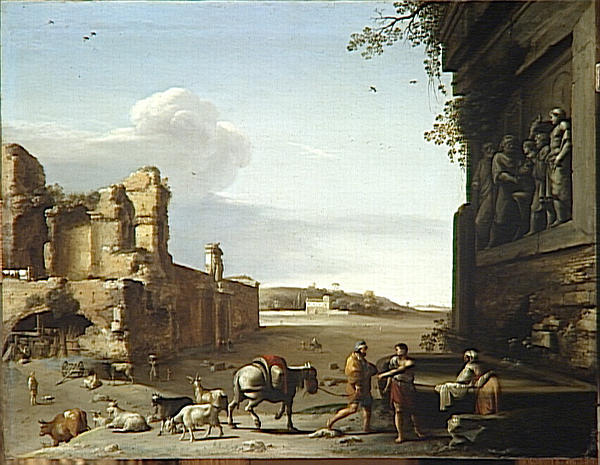
RUINES DE L'ANCIENNE ROME AVEC UN BAS RELIEF ANTIQUE


 Читать далее
Приобретите цифровое изображение высокого разрешения в улучшенном качестве, которое значительно превосходит онлайн-превью.
Каждый файл тщательно подготавливается нашими специалистами с использованием передовых инструментов и экспертной ручной ретуши. Мы гарантируем исключительную четкость, точную цветопередачу и детальную проработку каждого изображения.
Финальный файл доставляется по электронной почте в течение 72 часов и оптимизирован для немедленного использования в профессиональной среде, при верстке и печати. Это тот же уровень качества, которому доверяют ведущие дизайнерские студии, издательства и галереи.
Цифровое изображение
Скачайте файл высокого разрешения для личного использования, печати и творческих проектов. ( Перейти к печати Купить картину ручной работы)
Включено в каждый заказ цифровых изображений
Гарантия экспертной цифровой доставки
Выбирая ArtsDot.com, вы получаете не просто изображение — вы приобретаете профессионально обработанное цифровое произведение искусства, созданное с безупречной точностью и под защитой гарантии качества. Вот всё, что автоматически входит в ваш заказ:

Мгновенная доставка по e-mail
Ваш цифровой файл в высоком разрешении будет отправлен вам по электронной почте в течение 72 часов после оформления заказа — и сразу станет доступен для использования.

Цифровой файл с ИИ-улучшением
Ваше произведение искусства проходит профессиональную оптимизацию с использованием передовых инструментов ИИ и ручной обработки, что гарантирует максимальную детализацию, четкость и точность цветопередачи.

Бессрочная бесплатная повторная доставка
Случайно удалили или потеряли файл? Не беспокойтесь — мы отправим его вам повторно в любое время и совершенно бесплатно.

Без импортных пошлин — навсегда
Наслаждайтесь вашим произведением искусства мгновенно без таможенных пошлин, сборов или затрат на доставку — цифровые загрузки всегда не облагаются налогом.

Гарантия точности цветопередачи
Мы гарантируем, что ваше цифровое изображение максимально точно передает оригинальные цвета благодаря использованию профессиональных инструментов и систем управления цветом.

Гарантия удовлетворенности 100 дней
Если вы не будете удовлетворены своим цифровым изображением, мы внесем правки или вернем 100% стоимости в течение 100 дней — без лишних вопросов.

100% Гарантия возврата средств
Не удовлетворены покупкой? Получите полный возврат средств в течение 100 дней после получения цифрового файла — без лишних вопросов.

Скидки на оптовые заказы
Купите 3 изображения, сэкономьте 10% — Купите 5, сэкономьте 15% — Купите 10+, сэкономьте 20%. Отличное решение для творческих проектов, галерей и агентств.
A Ruined Majesty: Cornelis van Poelenburch’s “Ruines de l'Ancienne Rome avec un bas relief antique”
Cornelis van Poelenburch’s “Ruines de l’Ancienne Rome avec un bas relief antique” isn’t merely a landscape painting; it’s a poignant meditation on time, memory, and the enduring allure of vanished grandeur. Completed around 1630, this oil-on-copper masterpiece transports us to the heart of ancient Rome, not as a vibrant metropolis but as a hauntingly beautiful ruin – a testament to both human ambition and inevitable decay. The painting’s power lies in its ability to evoke a profound sense of melancholy and contemplation, inviting viewers to consider their own place within the vast sweep of history.
Van Poelenburch, a pivotal figure in the Utrecht school of landscape painting, was deeply influenced by his time spent in Rome. He absorbed the classical ideals of beauty and proportion while simultaneously embracing the dramatic contrasts of light and shadow championed by Caravaggio. This dual influence is strikingly evident here; the composition echoes the balanced arrangements favored by Renaissance masters, yet the use of tenebrism – a hallmark of Caravaggist style – imbues the scene with an intense emotional charge. The muted palette, dominated by earthy browns, ochres, and subtle blues, creates a sense of atmospheric depth, drawing the eye into the receding landscape.
Composition and Perspective: A Journey Through Time
The painting’s composition is meticulously crafted to guide the viewer's gaze across the scene. The foreground is dominated by imposing Roman ruins – crumbling columns, fragmented walls, and weathered arches – that immediately establish a sense of scale and antiquity. These monumental structures are strategically placed to create a strong diagonal line, leading the eye towards the distant horizon where a hazy, atmospheric perspective suggests an endless expanse of countryside. The artist masterfully employs linear perspective, subtly converging lines to create the illusion of depth and distance, while simultaneously utilizing aerial perspective – softening colors and reducing detail in the background – to further enhance this effect.
Scattered throughout the landscape are figures—a small group of people and animals—adding a layer of narrative complexity. These figures, rendered with a delicate realism characteristic of van Poelenburch’s style, appear almost as if they are caught in a timeless moment, interacting with the ruins as if they were part of their daily lives. The inclusion of these human elements serves to remind us that even amidst the decay of civilization, life continues on.
Symbolism and Emotional Resonance
The ruins themselves are potent symbols – representing not just the physical decline of Rome but also the transience of power, wealth, and glory. They speak to the cyclical nature of history, suggesting that all empires eventually crumble, leaving behind only fragments of their former selves. Yet, within this sense of loss lies a strange beauty; the weathered stones possess an undeniable dignity, as if they are silently bearing witness to centuries of human drama.
The presence of animals – likely sheep and goats – further reinforces the painting’s themes of pastoral simplicity and connection with nature. They represent a return to a more primal existence, contrasting sharply with the artificiality and ambition of the Roman Empire. The overall effect is one of poignant beauty—a bittersweet reminder of the past and an invitation to contemplate our own mortality.
Technique and Materials: A Master’s Touch
Van Poelenburch's skill as a painter is evident in every brushstroke. He employs a traditional oil painting technique, layering thin glazes of paint to build up form and texture with remarkable precision. The surface of the copper panel—a material favored by Dutch artists at the time—adds a subtle sheen that enhances the richness of the colors. Close examination reveals the artist’s meticulous attention to detail – from the rough texture of the stone to the delicate folds of the clothing worn by the figures. The use of impasto, particularly in rendering the relief sculpture, adds a tactile quality to the painting, inviting viewers to reach out and touch its weathered surface.
This artwork is a remarkable example of Dutch Golden Age landscape painting, seamlessly blending classical influences with a distinctly personal vision. “Ruines de l’Ancienne Rome avec un bas relief antique” remains a captivating work of art, offering a timeless meditation on the beauty and fragility of human existence.
Похожие произведения
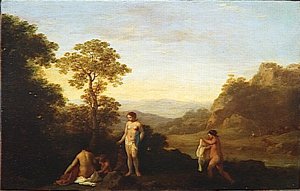
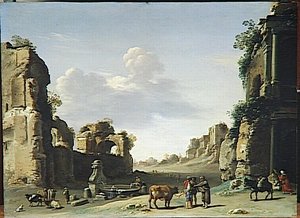
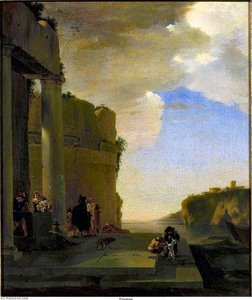
Биография художника
Ранние годы и обучение
Корнелис ван Поленбург, выдающийся голландский пейзажист, родился в Утрехте, Нидерланды, в 1594 году. Изначально он обучался у Абрахама Блоэмаerta, известного художника того времени. Это фундаментальное обучение заложило основу для будущего успеха ван Поленбурга.Художественная карьера и влияние
Поездки ван Поленбурга в Рим в начале XVII века оказали огромное влияние на его творчество, сделав его ведущим представителем первого поколения голландских пейзажистов, работавших в Италии. Его небольшие полотна, часто изображающие итальянские пейзажи с маленькими фигурами, разыгрывающими библейские или мифологические сцены, демонстрировали его неповторимый стиль. Известные работы:- Сатиры, шпионящие на нимф (после 1627 г.), характерный пример творчества ван Поленбурга, изображающий архаичные пейзажи с купающимися фигурами. (посмотреть в ArtsDot)
- Совет богов (около 1630 г.), картина, демонстрирующая идеализированный холмистый пейзаж ван Поленбурга и богинь в римском стиле, ныне хранящаяся в Маурициусе (Гаага, Нидерланды). (посмотреть в ArtsDot)
Наследие и поздние годы
Творчество ван Поленбурга высоко ценилось его современниками, включая герцога Тосканского и голландского статхольдера. Позднее он вернулся в Утрехт, где скончался в 1667 году, всего через несколько лет после своего старого учителя Абрахама Блоэмаerta. Ключевые моменты:- родился в Утрехте, Нидерланды, в 1594 г.
- обучался у Абрахама Блоэмаerta
- под влиянием пребывания в Риме
- известен своими небольшими итальянскими пейзажами с фигурами
- умер в Утрехте в 1667 г. посмотреть работы Корнелиса ван Поленбурга в ArtsDot узнать больше о Корнелисе ван Поленбурге на Википедии
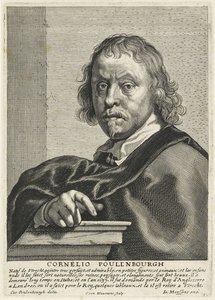
Корнелис Ван Поленбург
1594 - 1667 , Нидерланды
Основные сведения
- Artistic Movement Or Style: Голландский пейзаж, Романизм
- Artists Or Movements Influenced By This Artist: ['Клод Лорен']
- Artists Who Influenced This Artist: ['Абрахам Блоэмаерт']
- Date Of Birth: 1594 год, Утрехт, Нидерланды
- Date Of Death: 1667 год, Утрехт, Нидерланды
- Full Name: Корнелис ван Поленбург
- Nationality: Голландский
- Notable Artworks:
- Сатиры, шпионящие на нимф
- Совет богов
- Place Of Birth: Утрехт, Нидерланды