

 Предпросмотр
 Поделиться
 Поделиться
 Детали произведения

 Скачать
 Похожие работы
 Рентгенография
 Слайд-шоу
 Статистика
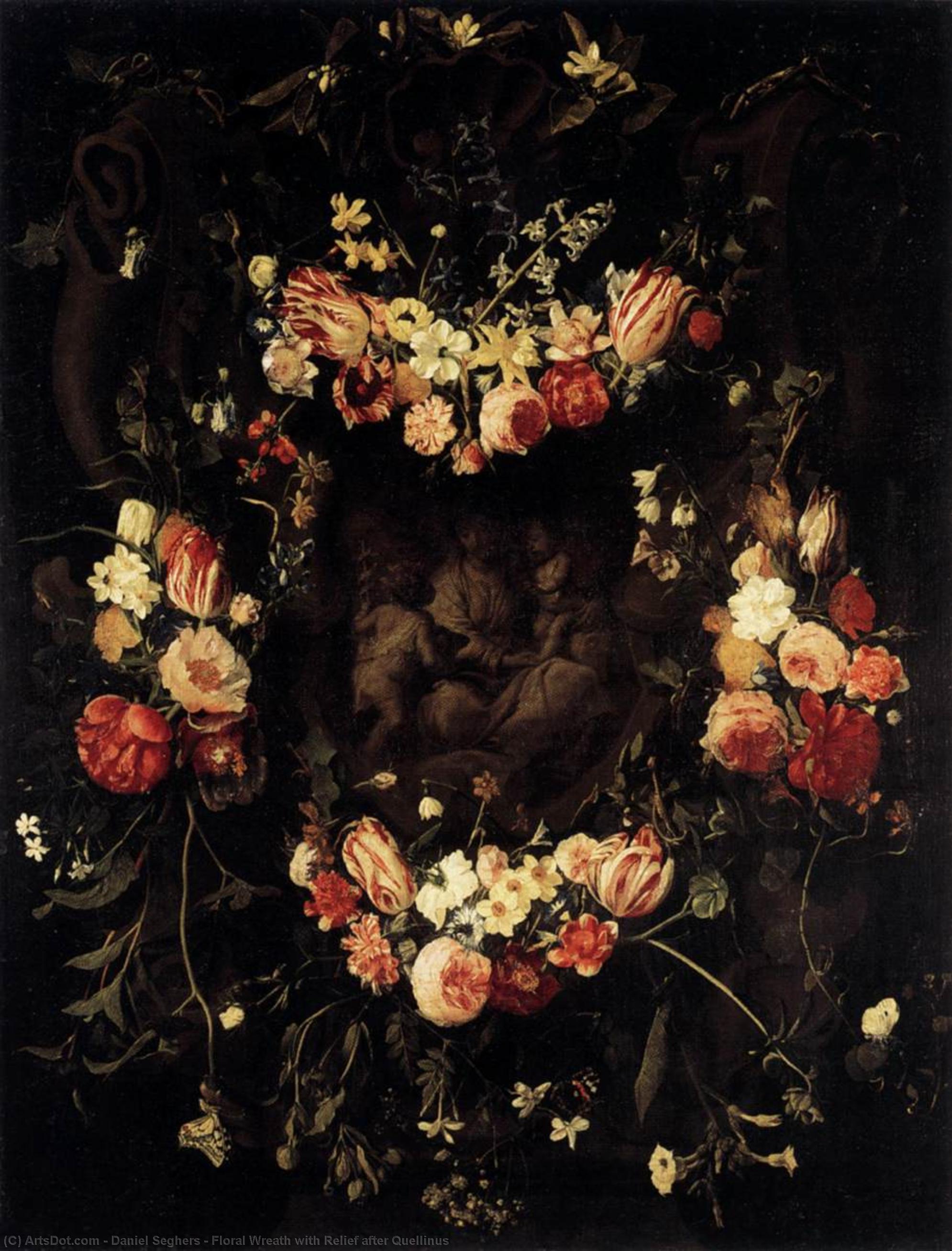
Floral Wreath with Relief after Quellinus
 Oil On Canvas
- WallArt
- Baroque Flower Painting
 1645
1645 129.0 x 95.0 cm
 Стейтлешские музеи Берлина
 Читать далее
Жикле / Арт-принт
Печать (жикле) или холст музейного качества с быстрыми сроками изготовления и широким выбором вариантов отделки. ( Купить картину ручной работы Перейти к цифровым изображениям)




P118B $10

P118H $10

P118W $10

P438Z $10

P508JH $12

P508YH $12

P805H $10

P805Z $10

P919BZ $10

P919G $10

P919XJ $10

P959ZH $10

P968JZ $12

W106C $8

W218G $10

W218JH $8

W218Y $10

W307PJ $10

W316G $10

W316PJ $8

W316Y $10

W398PJ $8

W4111J $10

W500HY $15

W500JH $15

W692G $12

W849H $8

W940BG $15

W953PJ $8




Выберите один из наших стандартных размеров, соответствующих оригинальным пропорциям произведения искусства.

Вы можете указать свои собственные размеры, чтобы репродукция идеально подошла под конкретную раму или пространство. Если выбранный вами размер не будет соответствовать пропорциям оригинала, мы либо обрежем произведение, либо дополним изображение зеркальным отражением краев или однотонной заливкой. Перед началом производства вам будет отправлен цифровой макет для утверждения.
Пожалуйста, обратите внимание, что предварительный просмотр на экране не отображает фактическую обрезку или расширение изображения. Только макет точно покажет финальную композицию.
Несмотря на возможность заказа индивидуальных размеров, мы рекомендуем выбирать размер из предопределенного списка, чтобы сохранить оригинальные пропорции.
Доставка по всему миру () за 2 недели вместо стандартных 4/5 недель. (10 Сентябрь)

Бесплатная экспресс-доставка по всему миру

Высококачественный льняной холст

Полное страхование доставки

Гарантия возмещения таможенных пошлин

Гарантия точного соответствия цветов

100-дневная политика возврата (только при обнаружении дефектов)

Гарантия возврата 100% средств

Предложение оптовых скидок
 Вариант со стеклом доступен только для размеров менее 110 см

Floral Wreath with Relief after Quellinus
Жикле / Арт-принт
Размер репродукции
-


Итоговая стоимость
$ 62
A Symphony of Blooms: Daniel Seghers’ Floral Wreath with Relief
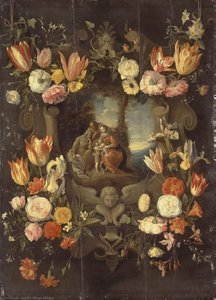
The painting before us – “Floral Wreath with Relief after Quellinus” by the masterful Flemish painter Daniel Seghers, created in 1645 – is more than a simple still life; it's an immersive experience of color, texture, and profound serenity. Measuring 129 x 95 cm, this work transports us to a world meticulously crafted with delicate brushstrokes and an astonishing attention to detail. At its heart lies a captivating scene: a baby nestled within a lavish wreath overflowing with an astounding thirteen distinct flower species – roses in varying shades of crimson and blush, the elegant curves of carnations, the stately presence of lilies, and countless others, each rendered with breathtaking realism.
Seghers, born in Antwerp in 1590, was a pivotal figure in the development of Flemish flower painting. His artistic journey began within the prestigious studio of Jan Brueghel the Elder, absorbing the master’s techniques and ultimately forging his own distinctive style. This apprenticeship instilled in him a deep appreciation for naturalism and an ability to capture the fleeting beauty of the botanical world. His work reflects not just technical skill but also a profound connection to the religious currents of his time – Seghers was a Jesuit brother, and his paintings often carried subtle devotional undertones, though here, the focus is primarily on the celebration of life and innocence.
The Legacy of Quellinus and Baroque Ornamentation
This particular piece draws inspiration from Erasmus II Quellinus, a prominent Antwerp sculptor known for his intricate relief work. Seghers skillfully translates this sculptural element into a painted wreath – a technique that was gaining popularity during the mid-17th century. The ‘relief’ aspect isn't literal depth but rather an illusion created through careful layering of petals and leaves, suggesting three-dimensionality and adding to the overall richness of the composition. The style is firmly rooted in the Baroque period, characterized by dramatic contrasts between light and shadow, a heightened sense of realism, and an opulent display of decorative elements – all hallmarks of Seghers’s oeuvre.
Notice the masterful use of color; the vibrant reds and pinks of the roses are juxtaposed with the softer hues of the carnations and lilies. The artist employs a technique known as ‘stiacciato,’ where colors are applied in thick, opaque layers to create a sense of volume and texture. This method is particularly evident in the rendering of the baby’s skin – soft and luminous against the dense foliage. The background, rendered in deep browns and greens, serves to further accentuate the brilliance of the floral display, creating a harmonious balance between foreground and background.
Symbolism and Emotional Resonance
Beyond its technical brilliance, “Floral Wreath with Relief” is rich in symbolic meaning. The baby at the center represents innocence, vulnerability, and new life – themes frequently explored in religious art of the period. The wreath itself symbolizes protection, abundance, and eternal life. Flowers, universally associated with beauty, love, and remembrance, contribute to the painting’s overall atmosphere of warmth and tenderness. It's a scene designed to evoke feelings of comfort, serenity, and perhaps even a touch of nostalgia.
The choice of flowers is also significant. Each bloom carries its own symbolic weight – roses representing love and devotion, lilies signifying purity and grace, and carnations conveying remembrance and affection. Seghers’s meticulous selection and arrangement create a visual poem that speaks to the enduring power of nature and the beauty of human connection. This painting isn't merely a depiction of flowers; it is an invitation into a world of quiet contemplation and profound emotional resonance – a testament to Seghers’s extraordinary talent and his ability to capture the essence of beauty in its most delicate form.
Похожие произведения



Биография художника
A Life in Flowers and Faith
Daniël Seghers, a name synonymous with the exquisite beauty of 17th-century Flemish flower painting, was more than just an artist; he was a man deeply entwined with the religious currents and artistic fervor of his time. Born in Antwerp in 1590, a city then pulsating with Renaissance energy, Seghers’s life unfolded against a backdrop of shifting allegiances and profound spiritual awakening. His early years were marked by upheaval – the death of his father, Pieter, and his mother's subsequent conversion to Calvinism prompted a relocation to the Dutch Republic around 1601, likely settling in Utrecht. This period, though shrouded in some mystery regarding his initial artistic training, undoubtedly laid the groundwork for his future mastery. By 1611, however, Antwerp beckoned once more, and Seghers formally entered the studio of Jan Brueghel the Elder within the prestigious Guild of Saint Luke. This apprenticeship proved pivotal, immersing him in the established conventions of Flemish painting and shaping his nascent style.Conversion, Collaboration, and Artistic Flourishing
A defining moment arrived in 1614 with Seghers’s re-conversion to Catholicism, a decision that irrevocably altered the course of his life and art. He embraced the Jesuit order in Mechelen, dedicating himself to a path of faith and service. While debate lingers regarding whether he was formally ordained as a priest, his commitment to the religious life profoundly influenced his artistic trajectory. His work became imbued with a spiritual depth, reflecting the Counter-Reformation’s emphasis on piety and emotional resonance. His talent quickly gained recognition, leading to commissions such as the two flower garland paintings created for the Cathedral of St. Michael and St. Gudula in Brussels in 1621. A sojourn to Rome between 1625 and 1627 proved invaluable. There, he collaborated with some of the era’s most celebrated painters, notably assisting Nicolas Poussin on religious paintings and contributing a flower garland for Cardinal Ludovisi's commission alongside Domenichino. This exposure to Roman artistic circles broadened his horizons and refined his technique before his return to Antwerp in 1627, where he continued painting prolifically until his death.The Art of the Garland: Innovation and Style
Seghers didn’t merely replicate the flower garland tradition established by Jan Brueghel the Elder; he elevated it to new heights of artistry and symbolism. While initially influenced by his master's style, Seghers gradually moved towards a more naturalistic depiction of flowers, evolving from uniform garlands to arrangements composed of diverse groupings. His later works are characterized by vibrant colors, a sculptural quality, and a dramatic interplay of light and shadow, with blossoms illuminated against dark backgrounds. He possessed a keen eye for detail, favoring locally-grown roses and tulips often depicted just before full bloom, capturing their ephemeral beauty. A distinctive innovation was his incorporation of stone cartouches as framing elements within his compositions, adding architectural depth and visual interest. Furthermore, Seghers created unique “pietà” garlands featuring thistles, thorns, and other thorny plants – poignant symbols of Christ’s suffering and a testament to his devout faith. He frequently employed oil on copper, a popular support for cabinet paintings prized for its smooth surface and ability to showcase intricate detail.Patronage, Legacy, and Enduring Appeal
The exquisite quality of Seghers's work attracted the attention of Europe’s most discerning patrons. Cardinal-Infante Ferdinand of Austria, Archduke Leopold Wilhelm of Austria, Queen Christina of Sweden, and King Charles II of England all sought his paintings for their collections. This aristocratic patronage not only secured his financial stability but also cemented his reputation as a leading artist of his time. Seghers was also a generous mentor, sharing his knowledge with several notable artists including Jan Philip van Thielen, Ottmar Elliger, Ignace Raeth, and Andries Bosman, ensuring the continuation of his artistic legacy. His contribution to the flower garland genre is undeniable; he transformed it from mere decoration into a vehicle for profound symbolic meaning and technical mastery. His meticulous attention to detail, vibrant color palettes, and innovative compositions secured his place as a pivotal figure in 17th-century Flemish art. Today, Daniel Seghers’s floral still lifes continue to captivate audiences with their timeless beauty and enduring spiritual resonance, offering a glimpse into a world where faith, artistry, and the fleeting splendor of nature converge.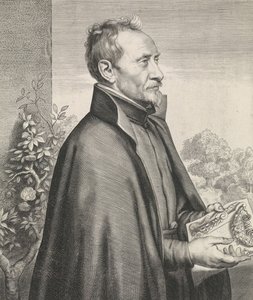
Daniel Seghers
1590 - 1661 , Belgium
Основные сведения
- Artistic Movement Or Style: Baroque, Still life
- Artists Or Movements Influenced By This Artist:
- Jan Philip van Thielen
- Ottmar Elliger
- Artists Who Influenced This Artist: ['Jan Brueghel the Elder']
- Date Of Birth: 1590
- Date Of Death: 1661
- Full Name: Daniel Seghers
- Nationality: Flemish
- Notable Artworks:
- Wreath of Pink Roses
- Flowers in a Glass Vase
- Garland of Flowers
- Place Of Birth: Antwerp, Belgium
Похожие статьи
Blossoming Symbolism: A Historical Journey Through Flowers in Western Painting
Explore the rich history of flower symbolism in Western painting! Discover how artists from the Renaissance to Modernism used blossoms to convey meaning, emotion & beauty. Learn about iconic artworks and movements.
Jan van Kessel the Elder: A Baroque Master of Floral Still Life & Miniature Portraiture
Discover the exquisite detail of Jan van Kessel the Elder's Baroque floral still lifes & captivating miniatures. Explore his artistic legacy, scientific precision, and lasting influence on 17th-century Flemish painting.
Blossoms of Time: A Historical Journey Through Flower Painting
Explore the captivating history of flower painting! Discover Dutch masters, symbolic meanings, & botanical art. Expert insights & high-quality reproductions at ArtsDot.
Blossoms of Time: A Historical & Aesthetic Exploration of Floral Painting Across Cultures
Explore the rich history of floral painting! Discover symbolism, techniques & masterpieces from Van Huysum to O'Keeffe. Expert insights for art lovers & collectors at ArtsDot.
Шедевры XVII века: Топ-10 картин для вдохновения и декора от ArtsDot
Погрузитесь в мир искусства XVII века! От Рембрандта до Вермеера – 10 шедевров барокко и фламандской живописи. Узнайте истории великих художников и вдохновитесь для декора вашего интерьера. Репродукции картин премиум-качества на ArtsDot.com