

 Предпросмотр
 Поделиться
 Поделиться
 Детали произведения

 Скачать
 Похожие работы
 Рентгенография
 Слайд-шоу
 Статистика
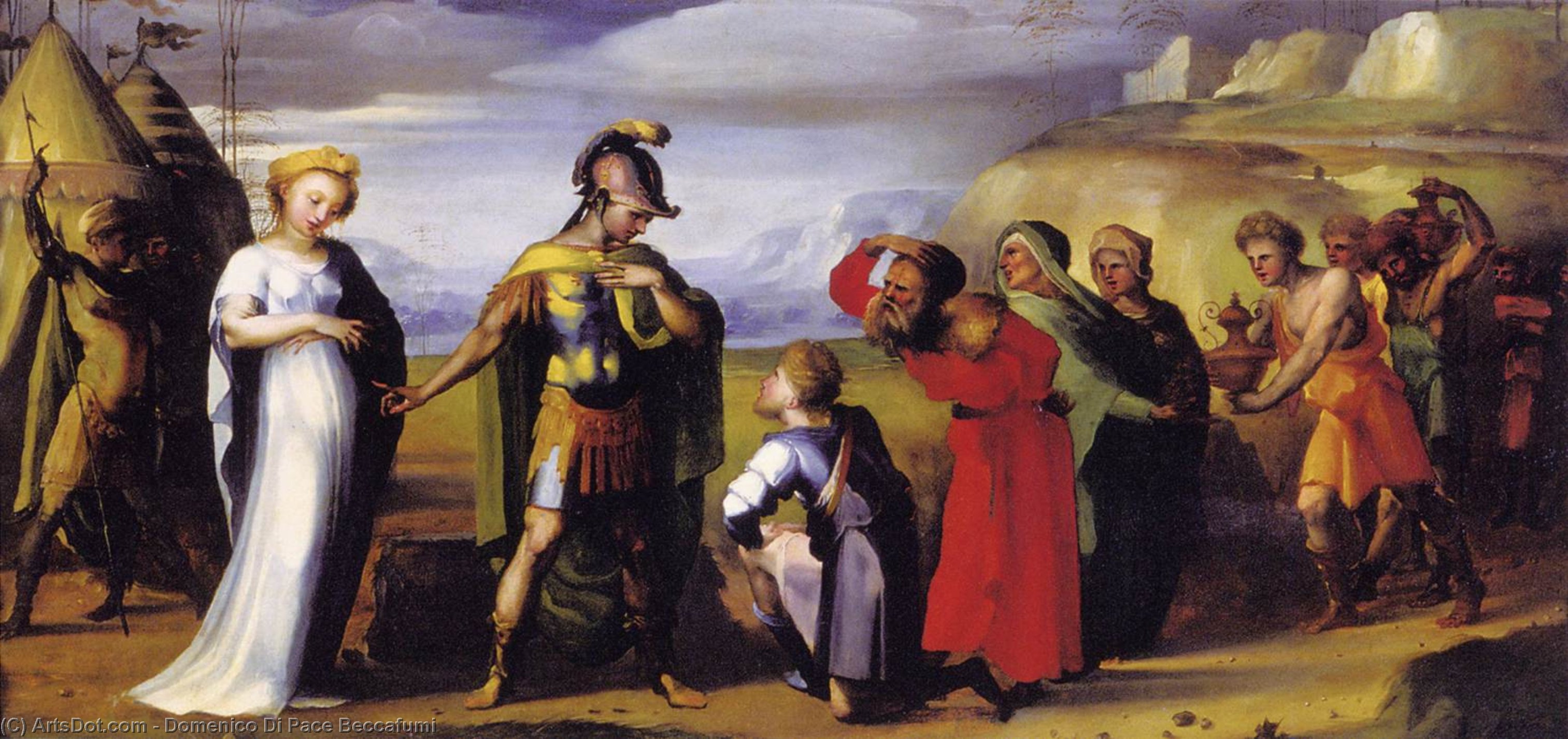
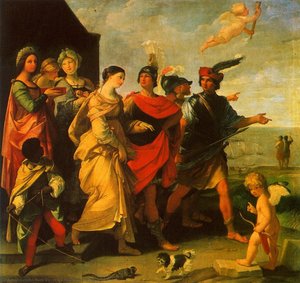
The Continence of Scipio Africanus
 Oil
Oil- WallArt
- Mannerism
 1525
1525- Renaissance
 68.0 x 140.0 cm
 Museo Nazionale di Palazzo Mansi
 Читать далее
Приобретите цифровое изображение высокого разрешения в улучшенном качестве, которое значительно превосходит онлайн-превью.
Каждый файл тщательно подготавливается нашими специалистами с использованием передовых инструментов и экспертной ручной ретуши. Мы гарантируем исключительную четкость, точную цветопередачу и детальную проработку каждого изображения.
Финальный файл доставляется по электронной почте в течение 72 часов и оптимизирован для немедленного использования в профессиональной среде, при верстке и печати. Это тот же уровень качества, которому доверяют ведущие дизайнерские студии, издательства и галереи.
Цифровое изображение
Скачайте файл высокого разрешения для личного использования, печати и творческих проектов. ( Перейти к печати Купить картину ручной работы)
Включено в каждый заказ цифровых изображений
Гарантия экспертной цифровой доставки
Выбирая ArtsDot.com, вы получаете не просто изображение — вы приобретаете профессионально обработанное цифровое произведение искусства, созданное с безупречной точностью и под защитой гарантии качества. Вот всё, что автоматически входит в ваш заказ:

Мгновенная доставка по e-mail
Ваш цифровой файл в высоком разрешении будет отправлен вам по электронной почте в течение 72 часов после оформления заказа — и сразу станет доступен для использования.

Цифровой файл с ИИ-улучшением
Ваше произведение искусства проходит профессиональную оптимизацию с использованием передовых инструментов ИИ и ручной обработки, что гарантирует максимальную детализацию, четкость и точность цветопередачи.

Бессрочная бесплатная повторная доставка
Случайно удалили или потеряли файл? Не беспокойтесь — мы отправим его вам повторно в любое время и совершенно бесплатно.

Без импортных пошлин — навсегда
Наслаждайтесь вашим произведением искусства мгновенно без таможенных пошлин, сборов или затрат на доставку — цифровые загрузки всегда не облагаются налогом.

Гарантия точности цветопередачи
Мы гарантируем, что ваше цифровое изображение максимально точно передает оригинальные цвета благодаря использованию профессиональных инструментов и систем управления цветом.

Гарантия удовлетворенности 100 дней
Если вы не будете удовлетворены своим цифровым изображением, мы внесем правки или вернем 100% стоимости в течение 100 дней — без лишних вопросов.

100% Гарантия возврата средств
Не удовлетворены покупкой? Получите полный возврат средств в течение 100 дней после получения цифрового файла — без лишних вопросов.

Скидки на оптовые заказы
Купите 3 изображения, сэкономьте 10% — Купите 5, сэкономьте 15% — Купите 10+, сэкономьте 20%. Отличное решение для творческих проектов, галерей и агентств.
A Vision of Virtue: The Legacy of Scipio Africanus
In the grand tapestry of the Italian Renaissance, few moments capture the intersection of classical heroism and moral nobility as poignantly as Domenico di Pace Beccafumi’s The Continence of Scipio Africanus. This masterful work serves as a window into a bygone era where the virtues of antiquity were reimagined through the lens of Sienese Mannerism. The painting depicts the legendary Roman general, Scipio Africanus, in a scene that transcends mere historical documentation to become an allegory of self-restraint and magnanimity. As the eye wanders across the canvas, one encounters a profound narrative arc; Beccafumi does not merely present a single moment in time, but rather weaves together the various stages of a great man's life, from the vigor of youth to the contemplative wisdom of old age. This temporal layering invites the viewer to reflect on the enduring nature of character and the weight of historical legacy.
The composition is anchored by a central dialogue between two figures—an elder statesman and a younger companion—whose intense exchange suggests a pivotal moment of decision or shared revelation. Set against a breathtaking backdrop of rugged, majestic mountains, the landscape provides more than just a scenic setting; it acts as a silent witness to the gravity of the human drama unfolding in the foreground. The scale of the scenery lends an epic quality to the piece, mirroring the monumental importance of Scipio’s legendary act of mercy. For the discerning collector or interior designer, this painting offers a sense of profound depth and architectural grandeur, making it a commanding centerpiece for any space dedicated to classical elegance.
The Mastery of Sienese Mannerism
Technically, Beccafumi stands as a visionary who pushed the boundaries of the Sienese school, moving away from the static perfection of the High Renaissance toward the more fluid and emotive language of Mannerism. In The Continence of Scipio Africanus, one can observe his signature use of light and shadow to sculpt form and evoke atmosphere. The artist employs a sophisticated palette that balances rich, opulent tones with subtle, luminous highlights, creating a sense of movement even within the stillness of the figures. His ability to manipulate light suggests a spiritual or psychological dimension, where the glow on a face or the fold of a garment carries emotional weight.
The brushwork, though precise in its depiction of historical detail, possesses an underlying energy that breathes life into the crowded scene. Beccafumi’s figures are characterized by an elegant, almost elongated grace, a hallmark of the Mannerist style that allows for greater expressive potential. This technique ensures that every element of the painting—from the intricate textures of the Roman attire to the atmospheric haze of the distant peaks—contributes to a cohesive emotional experience. To possess a reproduction of such a work is to bring into one's home not just a depiction of history, but a masterclass in the dramatic interplay of light, color, and human emotion.
An Inspiration for Modern Interiors
For those looking to curate an environment of intellectual depth and timeless sophistication, this artwork offers unparalleled inspiration. The painting’s complex narrative and rich historical context make it an ideal choice for libraries, study halls, or formal living areas where conversation and contemplation are encouraged. Its large-scale presence (68 x 140 cm) allows the intricate details to unfold slowly, rewarding repeated viewings with new discoveries of symbolism and subtle facial expressions.
Integrating a high-quality reproduction of Beccafumi’s masterpiece into a contemporary or classical interior design scheme provides a bridge between the ancient world and the modern aesthetic. It serves as a sophisticated focal point that speaks to a love for history, art, and the enduring human struggle for virtue. Whether paired with minimalist modern furniture to create a striking contrast or nestled within a traditional setting to enhance its classical resonance, The Continence of Scipio Africanus remains an evocative testament to the power of art to immortalize the highest ideals of humanity.
Похожие произведения

Биография художника
Domenico Beccafumi (The J. Paul Getty Museum Collection)
Domenico di Pace Beccafumi, a name that resonates less immediately than those of his Florentine contemporaries, nonetheless occupies a pivotal position in the narrative of Italian Renaissance art. Born around 1486 in Montaperto, near Siena, Beccafumi’s artistic journey was one of remarkable development, culminating in a style that bridged the High Renaissance and the burgeoning complexities of Mannerism. His story isn't simply about technical skill; it is about a deeply individual vision—a sensibility steeped in the traditions of his Sienese heritage yet boldly reaching towards new expressive possibilities. His origins were humble: the son of Giacomo di Pace, a peasant who worked on the estate of Lorenzo Beccafumi. Seeing his talent for drawing, Lorenzo adopted him and commended him to learn painting from Mechero, a local Sienese artist. This early grounding in the Sienese school would prove foundational, even as he ventured beyond its established conventions. The Sienese tradition, already diverging from the classical ideals embraced elsewhere in Italy, fostered an environment where emotional intensity and decorative detail were valued, qualities that would become hallmarks of Beccafumi’s unique style.Rome and the Forging of a Unique Style
Around 1509, Beccafumi journeyed to Rome, a transformative moment exposing him to the artistic ferment of the papal city. He encountered the groundbreaking works of Raphael and Michelangelo, absorbing their innovations in composition, anatomy, and dramatic expression. However, unlike many artists who sought to directly emulate these masters, Beccafumi synthesized these influences through his own distinct lens. He didn’t simply *copy* the Roman style; he filtered it through a pre-existing Sienese aesthetic—one characterized by a certain provincialism, an emphasis on decorative detail, and a lingering medieval sensibility. Upon returning to Siena, this synthesis began to manifest in a style increasingly his own. It was a style marked by irrationality, emotional intensity, and a captivating visual experience achieved through discordant colors and hallucinatory settings. His paintings weren’t merely representations of reality; they were explorations of inner states, imbued with a sense of unease and psychological depth. This departure from the harmonious balance of High Renaissance ideals signaled his embrace of Mannerism, though he remained distinctly apart from its more widespread trends. He skillfully blended the decorative elements and emotional intensity of the Sienese school with the emerging stylistic features of Mannerism—a fusion that would define his artistic legacy.Masterworks and Artistic Innovations
Beccafumi’s output was diverse, encompassing painting, sculpture, mosaic design, and printmaking. Among his most celebrated achievements are the frescoes in the Oratory of St. Benedict in Siena, a testament to his narrative skill and expressive power. The Trinity Triptych, housed in the Pinacoteca Nazionale di Siena, showcases his mastery of oil painting and his ability to convey religious devotion with both grandeur and intimacy. The Annunciation, also at the Pinacoteca Nazionale, exemplifies his distinctive use of color and composition, creating a scene that is both serene and subtly unsettling. However, perhaps his most ambitious undertaking was his direction of the pavement for Siena Cathedral between 1517 and 1544. This monumental project involved intricate designs inlaid with marble and mosaics, depicting scenes from biblical stories—Ahab, Elijah, Melchisedec, Abraham, and Moses among them. Beccafumi not only designed these scenes but also innovated the technical processes used in their creation, demonstrating his remarkable versatility as an artist and craftsman. His skill extended to printmaking, where he excelled in both engraving and woodcut, furthering disseminating his style and ideas beyond Siena’s borders. These prints allowed for wider dissemination of his style and ideas, influencing artists across Italy.Critical Assessment and Legacy
Compared to the equilibrated compositions favored by Raphael and Michelangelo, Beccafumi's paintings stand apart—embracing instead a sense of emotional tension, instability, and expressive distortion. This willingness to challenge conventional norms foreshadowed later trends in art, influencing subsequent generations with its innovative techniques and psychological depth. He remains a compelling figure, a testament to the enduring power of individual vision within the broader currents of art history. His work is characterized by misty, non-linear quality—forms appearing to dissolve into a hazy atmosphere—jagged lines and primal coloration—bold, unconventional use of color that departed from the more balanced palettes of his contemporaries—and emotional tension—a pervasive sense of unease reflecting a departure from classical ideals. Domenico Beccafumi’s contribution to Italian Renaissance art is undeniable; he solidified Sienese artistic traditions while simultaneously pushing boundaries toward Mannerist innovation. He died in Siena in 1551, marking the symbolic end of his era and cementing his place as one of the last undiluted representatives of the Sienese school—a legacy that continues to inspire admiration and scholarly study today.- Key Characteristics of Beccafumi’s Style:
- Misty, Non-Linear Quality: His paintings often possess an ethereal quality, with forms appearing to dissolve into a hazy atmosphere.
- Jagged Lines and Primal Coloration: Beccafumi favored sharp, angular lines and a bold, unconventional use of color that departed from the more balanced palettes of his contemporaries.
- Emotional Tension and Instability: A pervasive sense of unease and psychological complexity characterizes his work, reflecting a departure from classical ideals of harmony and proportion.
- Sienese Tradition with Mannerist Influences: He skillfully blended the decorative elements and emotional intensity of the Sienese school with the emerging stylistic features of Mannerism.
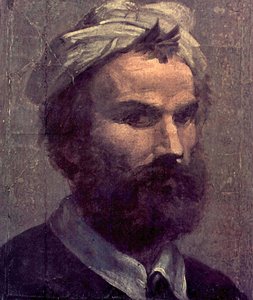
domenico di pace beccafumi
1486 - 1551 , Италия
Основные сведения
- Artistic Movement Or Style: Мannerизм, Ренессанс
- Artists Who Influenced This Artist:
- Рафаэль
- Микеланджело
- Date Of Birth: c. 1486
- Date Of Death: May 18, 1551
- Full Name: Domenico di Pace Beccafumi
- Nationality: Итальянский
- Notable Artworks:
- Триптих Троицы
- Аннунциато
- Переход Девы Марии
- Place Of Birth: Montaperto, Italy