


 Поделиться
 Поделиться
 Детали произведения

 Скачать
 Похожие работы
 Слайд-шоу
 Статистика
The Madonna of the Burning Bush
 Enamel
- Decor
- Renaissance Elegance
 1490
1490- Renaissance
 11.0 x 8.0 cm
 Музей Дж. Пол Гети
 Читать далее
Масляная репродукция ручной работы
Картина маслом на холсте в выбранном вами размере и раме, написанная на заказ нашими художниками. ( Перейти к печати Перейти к цифровым изображениям)




































Выберите один из наших стандартных размеров, соответствующих оригинальным пропорциям произведения искусства.

Вы можете указать собственные размеры, чтобы картина идеально вписалась в выбранную раму или пространство. Если выбранный вами размер не соответствует пропорциям оригинала, мы либо обрежем полотно, либо расширим его за счет дополнительных элементов, написанных вручную. Цифровой макет будет отправлен вам на утверждение перед началом производства.
Обратите внимание, что предварительный просмотр на экране не отражает фактическую обрезку или расширение. Только макет точно покажет окончательную композицию.
Хотя доступны индивидуальные размеры, мы рекомендуем выбирать вариант из предопределенного списка, чтобы сохранить исходные пропорции.
После оформления заказа команда ArtsDot.com свяжется с клиентом по электронной почте для уточнения деталей и предоставит предварительный макет
Доставка по всему миру () за 3–4 недели вместо стандартных 5 недель. (15 Сентябрь). Без компромиссов в качестве.

Бесплатная экспресс-доставка по всему миру

Высококачественный льняной холст

Полное страхование доставки

Гарантия возмещения таможенных пошлин

Гарантия точного соответствия цветов

100-дневная политика возврата (только при обнаружении дефектов)

Гарантия возврата 100% средств

Предложение оптовых скидок
 Вариант со стеклом доступен только для размеров менее 110 см

The Madonna of the Burning Bush
Техника репродукции
Размер репродукции
-


Итоговая стоимость
$ 263
A Vision of Divine Radiance
In the delicate intersection of late medieval devotion and the burgeoning light of the Renaissance, The Madonna of the Burning Bush emerges as a breathtaking testament to spiritual grace. Created by the master Georges Trubert around 1490, this exquisite work transcends mere illustration, offering instead a window into a celestial realm. The composition centers on the Virgin Mary, depicted with a youthful, serene elegance, cradling the Christ Child in her arms. Bathed in a radiant gold leaf background, the figures seem to emanate their own internal light, a deliberate artistic choice that evokes the divine illumination experienced by Moses on Mount Sinai. This shimmering atmosphere does more than decorate; it sanctifies the space, inviting the viewer into a moment of profound, quiet contemplation.
The artistry is further elevated by a masterful use of trompe-l'oeil, where Trubert pushes the boundaries of the medium to create an illusion of physical depth. The Madonna appears encased within a jewel-encrusted frame that seems to cast actual shadows upon the page, while a painted chain appears to weave through slits in the parchment itself. This clever manipulation of perception blurs the line between the two-dimensional surface and the three-dimensional world, making the sacred scene feel tangibly present. For the discerning collector or interior designer, such a piece offers a sophisticated layer of visual intrigue, providing a focal point that rewards close inspection with unexpected layers of detail and technical brilliance.
Symbolism and the Flame of Devotion
Beyond its aesthetic splendor, the artwork is steeped in profound theological symbolism that would have resonated deeply with the Renaissance mind. The titular "Burning Bush" serves as a powerful metaphor; just as the bush burned without being consumed, medieval theologians saw in this phenomenon a reflection of Mary’s perpetual virginity. Below the Virgin, crowned as the Queen of Heaven, the flowering bush spreads rhythmic flames that form a decorative border for the entire page. These flames are not merely ornamental but represent the inextinguishable nature of divine love and protection. The golden hues throughout the work reinforce this theme of holiness, acting as a visual shorthand for the grace that flows from the Creator through the Madonna to humanity.
Every element of the composition—from the delicate placement of the angels to the intricate, gilded textures—is designed to evoke an emotional response of awe and reverence. The painting captures a sense of eternal stillness, a moment frozen in time where the earthly and the divine meet. For those looking to integrate fine art into a curated space, this reproduction brings with it an aura of historical weight and spiritual tranquility. It is more than a decorative object; it is a narrative of protection, a masterpiece of French craftsmanship that continues to inspire wonder centuries after its creation.
Похожие произведения

Биография художника
The Emergence of a Renaissance Visionary
In the heart of Paris, amidst the burgeoning humanist spirit of the late fifteenth century, the artistic journey of Georges Trubert began. A figure poised at the threshold of the Renaissance, Trubert’s early years were shaped by an era of profound intellectual and aesthetic transformation. While much of his formative training remains shrouded in the mIsts of time, it is understood that he honed his craft within the prestigious atelier of the sculptor Jean Goujon. This connection proved vital, as Goujon’s mastery over stone, gilded bronze, and enamel provided the foundational vocabulary for Trubert's later triumphs. Through this lineage, Trubert did not merely learn a trade; he inherited a vision of how metal and pigment could be transmuted into objects of divine beauty.A Life Within the Royal Courts
Trubert’s career was a nomadic tapestry woven through the most influential courts of France. His presence was felt deeply in Provence, Anjou, and Lorraine, where his talent captured the attention of powerful patrons. Around 1467, he found himself at the court of Duke René I of Anjou, a sovereign whose historical accounts frequently celebrate Trubert’s contributions. The artist even earned the prestigious title of Valet de Chambre, a testament to his proximity to power and his esteemed status within the royal household. His travels were not limited to French soil; the pursuit of excellence led him to Rome, allowing him to absorb the classical grandeur that would later infuse his decorative works with a renewed sense of elegance. Following the passing of René I, Trubert continued his ascent, eventually serving René II, the Duke of Lorraine, ensuring that his artistic influence spanned generations and territories.The Alchemy of Champlevé Enamel
At the core of Trubert’s enduring legacy lies his unparalleled mastery of the champlevé technique. This was no mere decoration, but a painstaking process of alchemical precision. Trubert would meticulously carve shallow recesses into precious metal plates—typically silver or gold—creating a landscape of valleys within the metal. These hollows were then filled with molten glass pigments, which, when fired in the kiln, fused into vibrant, permanent hues. Unlike simpler vitreous enamels applied over smooth surfaces, this method allowed for:- Intricate Textural Depth: The ability to create complex patterns and imagery that seemed to pulse with life.
- Luminous Color Palettes: A spectrum of brilliant blues, deep reds, and radiant golds that captured the light in extraordinary ways.
- Narrative Complexity: The capacity to render detailed religious scenes with a clarity and nuance that rivaled the finest manuscript illuminations.
Sacred Symbolism and Eternal Grace
Trubert’s work often served as a bridge between the earthly and the divine. In masterpieces such as The Madonna of the Burning Bush, he utilized the brilliance of gold leaf to evoke the presence of God. The use of radiant backgrounds was not merely an aesthetic choice; it was a theological statement, symbolizing the divine illumination experienced by biblical figures. Through his delicate handling of enamel and precious metals, Trubert transformed liturgical objects into windows of spiritual contemplation. His ability to blend the decorative splendor of the Middle Ages with the emerging elegance of the Renaissance ensures that his name remains etched in the annals of art history—not just as a craftsman, but as a pioneer who redefined the boundaries of the decorative arts.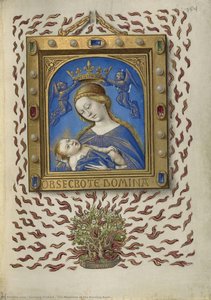
Georges Trubert
1460 - 1538 , France
Основные сведения
- Artistic Movement Or Style: Renaissance
- Artists Or Movements Influenced By This Artist: ['Limoges Enamel']
- Artists Who Influenced This Artist:
- Italian Renaissance artists
- Flemish School
- Date Of Birth: Paris, France (1460)
- Date Of Death: 1538
- Full Name: Georges Trubert
- Nationality: French
- Notable Artworks: ['The Madonna of the Burning Bush']
- Place Of Birth: Paris
Похожие статьи

The Enduring Legacy of Fine Art Prints: Technique, History & Aesthetic Impact
Explore the rich history & techniques of fine art prints. Discover investment potential, assess authenticity, and learn how to preserve your collection with expert guidance. Trusted insights for discerning collectors.

Жорж Брак: 25 шедевров кубизма для ценителей искусства и интерьера
Откройте для себя 25 шедевров Жоржа Брака – пионера кубизма! Узнайте историю создания культовых картин, технику и влияние французского художника на искусство XX века. Репродукции высокого качества для вашего интерьера на ArtsDot.com.

Giclée Prints: Archival Quality & Aesthetic Nuances for the Discerning Collector
Explore the world of giclée prints with ArtsDot. Learn about archival quality, aesthetic nuances & investment potential. Expert guidance for discerning art collectors seeking museum-quality reproductions and lasting value.

Жорж Сёра: 25 шедевров великого мастера пуантилизма | ArtsDot
Откройте для себя 25 шедевров Жоржа Сёра – пионера пуантилизма! Узнайте историю создания культовых картин, технику письма и влияние импрессионизма. Репродукции высокого качества на ArtsDot.com. Искусство для вашего интерьера.

Echoes of Time: Exploring the Enduring Appeal & Historical Context of Vintage Art Prints
Explore the captivating world of vintage art prints! Discover their history, collecting tips & enduring appeal. Expert insights on chromolithography and building a legacy collection with ArtsDot.