


 Поделиться
 Поделиться
 Детали произведения

 Скачать
 Похожие работы
 Слайд-шоу
 Статистика
The Madonna of the Burning Bush
 Enamel
- Decor
- Renaissance Elegance
 1490
1490- Renaissance
 11.0 x 8.0 cm
 Музей Дж. Пол Гети
 Читать далее
Приобретите цифровое изображение высокого разрешения в улучшенном качестве, которое значительно превосходит онлайн-превью.
Каждый файл тщательно подготавливается нашими специалистами с использованием передовых инструментов и экспертной ручной ретуши. Мы гарантируем исключительную четкость, точную цветопередачу и детальную проработку каждого изображения.
Финальный файл доставляется по электронной почте в течение 72 часов и оптимизирован для немедленного использования в профессиональной среде, при верстке и печати. Это тот же уровень качества, которому доверяют ведущие дизайнерские студии, издательства и галереи.
Цифровое изображение
Скачайте файл высокого разрешения для личного использования, печати и творческих проектов. ( Перейти к печати Купить картину ручной работы)
Включено в каждый заказ цифровых изображений
Гарантия экспертной цифровой доставки
Выбирая ArtsDot.com, вы получаете не просто изображение — вы приобретаете профессионально обработанное цифровое произведение искусства, созданное с безупречной точностью и под защитой гарантии качества. Вот всё, что автоматически входит в ваш заказ:

Мгновенная доставка по e-mail
Ваш цифровой файл в высоком разрешении будет отправлен вам по электронной почте в течение 72 часов после оформления заказа — и сразу станет доступен для использования.

Цифровой файл с ИИ-улучшением
Ваше произведение искусства проходит профессиональную оптимизацию с использованием передовых инструментов ИИ и ручной обработки, что гарантирует максимальную детализацию, четкость и точность цветопередачи.

Бессрочная бесплатная повторная доставка
Случайно удалили или потеряли файл? Не беспокойтесь — мы отправим его вам повторно в любое время и совершенно бесплатно.

Без импортных пошлин — навсегда
Наслаждайтесь вашим произведением искусства мгновенно без таможенных пошлин, сборов или затрат на доставку — цифровые загрузки всегда не облагаются налогом.

Гарантия точности цветопередачи
Мы гарантируем, что ваше цифровое изображение максимально точно передает оригинальные цвета благодаря использованию профессиональных инструментов и систем управления цветом.

Гарантия удовлетворенности 100 дней
Если вы не будете удовлетворены своим цифровым изображением, мы внесем правки или вернем 100% стоимости в течение 100 дней — без лишних вопросов.

100% Гарантия возврата средств
Не удовлетворены покупкой? Получите полный возврат средств в течение 100 дней после получения цифрового файла — без лишних вопросов.

Скидки на оптовые заказы
Купите 3 изображения, сэкономьте 10% — Купите 5, сэкономьте 15% — Купите 10+, сэкономьте 20%. Отличное решение для творческих проектов, галерей и агентств.
A Vision of Divine Radiance
In the delicate intersection of late medieval devotion and the burgeoning light of the Renaissance, The Madonna of the Burning Bush emerges as a breathtaking testament to spiritual grace. Created by the master Georges Trubert around 1490, this exquisite work transcends mere illustration, offering instead a window into a celestial realm. The composition centers on the Virgin Mary, depicted with a youthful, serene elegance, cradling the Christ Child in her arms. Bathed in a radiant gold leaf background, the figures seem to emanate their own internal light, a deliberate artistic choice that evokes the divine illumination experienced by Moses on Mount Sinai. This shimmering atmosphere does more than decorate; it sanctifies the space, inviting the viewer into a moment of profound, quiet contemplation.
The artistry is further elevated by a masterful use of trompe-l'oeil, where Trubert pushes the boundaries of the medium to create an illusion of physical depth. The Madonna appears encased within a jewel-encrusted frame that seems to cast actual shadows upon the page, while a painted chain appears to weave through slits in the parchment itself. This clever manipulation of perception blurs the line between the two-dimensional surface and the three-dimensional world, making the sacred scene feel tangibly present. For the discerning collector or interior designer, such a piece offers a sophisticated layer of visual intrigue, providing a focal point that rewards close inspection with unexpected layers of detail and technical brilliance.
Symbolism and the Flame of Devotion
Beyond its aesthetic splendor, the artwork is steeped in profound theological symbolism that would have resonated deeply with the Renaissance mind. The titular "Burning Bush" serves as a powerful metaphor; just as the bush burned without being consumed, medieval theologians saw in this phenomenon a reflection of Mary’s perpetual virginity. Below the Virgin, crowned as the Queen of Heaven, the flowering bush spreads rhythmic flames that form a decorative border for the entire page. These flames are not merely ornamental but represent the inextinguishable nature of divine love and protection. The golden hues throughout the work reinforce this theme of holiness, acting as a visual shorthand for the grace that flows from the Creator through the Madonna to humanity.
Every element of the composition—from the delicate placement of the angels to the intricate, gilded textures—is designed to evoke an emotional response of awe and reverence. The painting captures a sense of eternal stillness, a moment frozen in time where the earthly and the divine meet. For those looking to integrate fine art into a curated space, this reproduction brings with it an aura of historical weight and spiritual tranquility. It is more than a decorative object; it is a narrative of protection, a masterpiece of French craftsmanship that continues to inspire wonder centuries after its creation.
Похожие произведения

Биография художника
The Emergence of a Renaissance Visionary
In the heart of Paris, amidst the burgeoning humanist spirit of the late fifteenth century, the artistic journey of Georges Trubert began. A figure poised at the threshold of the Renaissance, Trubert’s early years were shaped by an era of profound intellectual and aesthetic transformation. While much of his formative training remains shrouded in the mIsts of time, it is understood that he honed his craft within the prestigious atelier of the sculptor Jean Goujon. This connection proved vital, as Goujon’s mastery over stone, gilded bronze, and enamel provided the foundational vocabulary for Trubert's later triumphs. Through this lineage, Trubert did not merely learn a trade; he inherited a vision of how metal and pigment could be transmuted into objects of divine beauty.A Life Within the Royal Courts
Trubert’s career was a nomadic tapestry woven through the most influential courts of France. His presence was felt deeply in Provence, Anjou, and Lorraine, where his talent captured the attention of powerful patrons. Around 1467, he found himself at the court of Duke René I of Anjou, a sovereign whose historical accounts frequently celebrate Trubert’s contributions. The artist even earned the prestigious title of Valet de Chambre, a testament to his proximity to power and his esteemed status within the royal household. His travels were not limited to French soil; the pursuit of excellence led him to Rome, allowing him to absorb the classical grandeur that would later infuse his decorative works with a renewed sense of elegance. Following the passing of René I, Trubert continued his ascent, eventually serving René II, the Duke of Lorraine, ensuring that his artistic influence spanned generations and territories.The Alchemy of Champlevé Enamel
At the core of Trubert’s enduring legacy lies his unparalleled mastery of the champlevé technique. This was no mere decoration, but a painstaking process of alchemical precision. Trubert would meticulously carve shallow recesses into precious metal plates—typically silver or gold—creating a landscape of valleys within the metal. These hollows were then filled with molten glass pigments, which, when fired in the kiln, fused into vibrant, permanent hues. Unlike simpler vitreous enamels applied over smooth surfaces, this method allowed for:- Intricate Textural Depth: The ability to create complex patterns and imagery that seemed to pulse with life.
- Luminous Color Palettes: A spectrum of brilliant blues, deep reds, and radiant golds that captured the light in extraordinary ways.
- Narrative Complexity: The capacity to render detailed religious scenes with a clarity and nuance that rivaled the finest manuscript illuminations.
Sacred Symbolism and Eternal Grace
Trubert’s work often served as a bridge between the earthly and the divine. In masterpieces such as The Madonna of the Burning Bush, he utilized the brilliance of gold leaf to evoke the presence of God. The use of radiant backgrounds was not merely an aesthetic choice; it was a theological statement, symbolizing the divine illumination experienced by biblical figures. Through his delicate handling of enamel and precious metals, Trubert transformed liturgical objects into windows of spiritual contemplation. His ability to blend the decorative splendor of the Middle Ages with the emerging elegance of the Renaissance ensures that his name remains etched in the annals of art history—not just as a craftsman, but as a pioneer who redefined the boundaries of the decorative arts.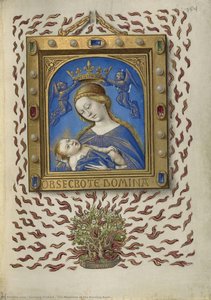
Georges Trubert
1460 - 1538 , France
Основные сведения
- Artistic Movement Or Style: Renaissance
- Artists Or Movements Influenced By This Artist: ['Limoges Enamel']
- Artists Who Influenced This Artist:
- Italian Renaissance artists
- Flemish School
- Date Of Birth: Paris, France (1460)
- Date Of Death: 1538
- Full Name: Georges Trubert
- Nationality: French
- Notable Artworks: ['The Madonna of the Burning Bush']
- Place Of Birth: Paris