

 Предпросмотр
 Поделиться
 Поделиться
 Детали произведения

 Скачать
 Похожие работы
 Рентгенография
 Слайд-шоу
 Статистика
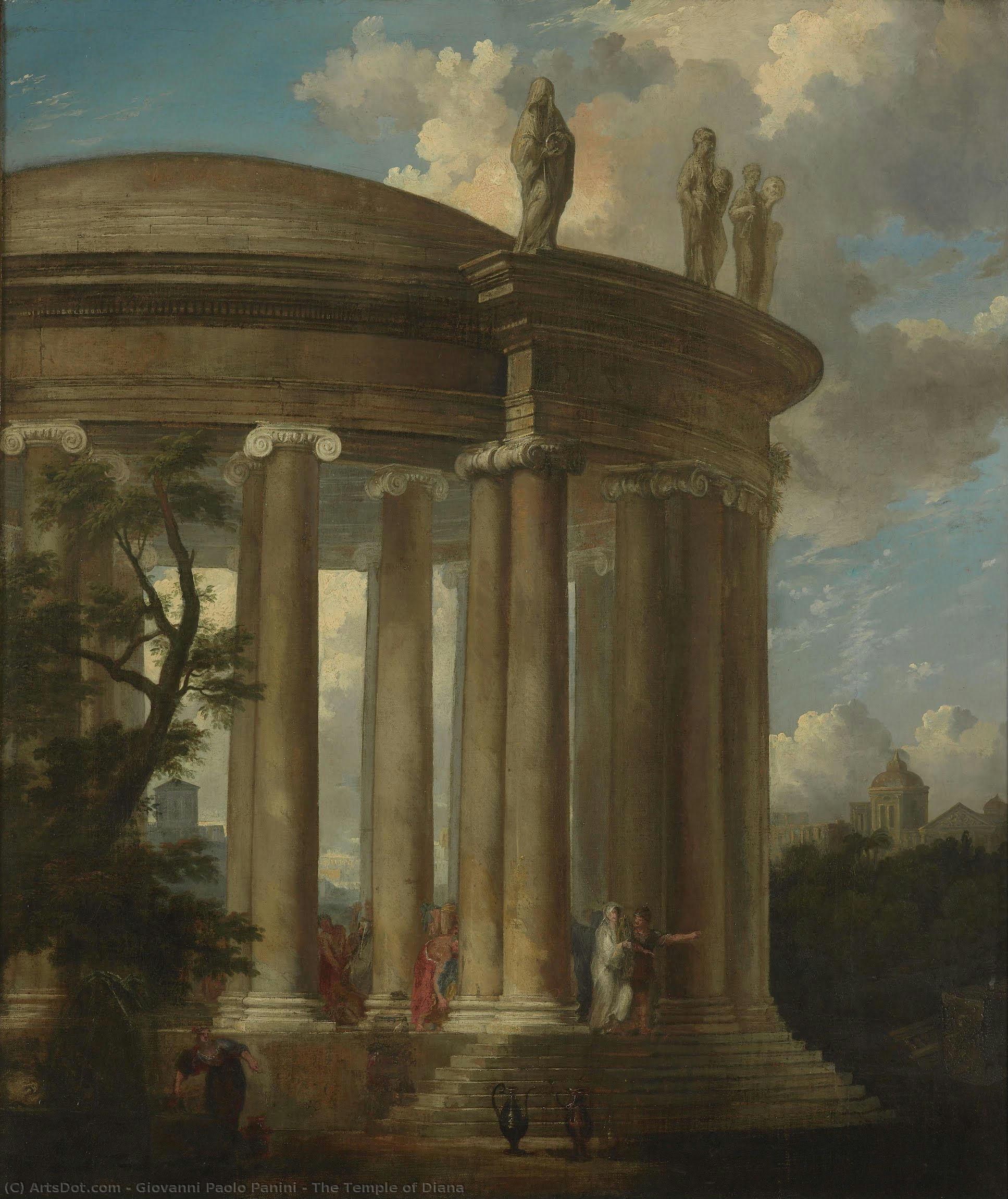
The Temple of Diana


 Читать далее
Приобретите цифровое изображение высокого разрешения в улучшенном качестве, которое значительно превосходит онлайн-превью.
Каждый файл тщательно подготавливается нашими специалистами с использованием передовых инструментов и экспертной ручной ретуши. Мы гарантируем исключительную четкость, точную цветопередачу и детальную проработку каждого изображения.
Финальный файл доставляется по электронной почте в течение 72 часов и оптимизирован для немедленного использования в профессиональной среде, при верстке и печати. Это тот же уровень качества, которому доверяют ведущие дизайнерские студии, издательства и галереи.
Цифровое изображение
Скачайте файл высокого разрешения для личного использования, печати и творческих проектов. ( Перейти к печати Купить картину ручной работы)
Включено в каждый заказ цифровых изображений
Гарантия экспертной цифровой доставки
Выбирая ArtsDot.com, вы получаете не просто изображение — вы приобретаете профессионально обработанное цифровое произведение искусства, созданное с безупречной точностью и под защитой гарантии качества. Вот всё, что автоматически входит в ваш заказ:

Мгновенная доставка по e-mail
Ваш цифровой файл в высоком разрешении будет отправлен вам по электронной почте в течение 72 часов после оформления заказа — и сразу станет доступен для использования.

Цифровой файл с ИИ-улучшением
Ваше произведение искусства проходит профессиональную оптимизацию с использованием передовых инструментов ИИ и ручной обработки, что гарантирует максимальную детализацию, четкость и точность цветопередачи.

Бессрочная бесплатная повторная доставка
Случайно удалили или потеряли файл? Не беспокойтесь — мы отправим его вам повторно в любое время и совершенно бесплатно.

Без импортных пошлин — навсегда
Наслаждайтесь вашим произведением искусства мгновенно без таможенных пошлин, сборов или затрат на доставку — цифровые загрузки всегда не облагаются налогом.

Гарантия точности цветопередачи
Мы гарантируем, что ваше цифровое изображение максимально точно передает оригинальные цвета благодаря использованию профессиональных инструментов и систем управления цветом.

Гарантия удовлетворенности 100 дней
Если вы не будете удовлетворены своим цифровым изображением, мы внесем правки или вернем 100% стоимости в течение 100 дней — без лишних вопросов.

100% Гарантия возврата средств
Не удовлетворены покупкой? Получите полный возврат средств в течение 100 дней после получения цифрового файла — без лишних вопросов.

Скидки на оптовые заказы
Купите 3 изображения, сэкономьте 10% — Купите 5, сэкономьте 15% — Купите 10+, сэкономьте 20%. Отличное решение для творческих проектов, галерей и агентств.
A Vision of Roman Grandeur: The Temple of Diana
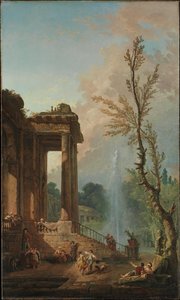
To gaze upon Giovanni Paolo Panini's depiction of the Temple of Diana is to step directly into the sun-drenched, imagined heart of 18th-century Rome. This work is not merely a painting; it is an elaborate architectural daydream, a capriccio rendered with breathtaking illusionism. Panini, the master chronicler of Roman visions, possessed a unique gift for transforming historical ruins and idealized structures into scenes that feel both utterly real and wonderfully fantastical. The composition immediately draws the eye to the magnificent temple itself, its dome crowned with graceful statues of angels, suggesting a divine presence overseeing the earthly bustle below.
Mastery in Illusionistic Space
Technically, this piece showcases Panini's profound understanding of perspective, an art form he honed through studying stage designers like Francesco Galli-Bibiena. The arrangement of the four prominent columns flanking the temple creates a perfect rhythm, guiding the viewer’s gaze deep into the painted space. Notice how the figures—some poised in the immediate foreground, others receding into the middle distance—are integrated seamlessly with the architecture. They populate the scene like characters in an unfolding historical drama. The inclusion of everyday details, such as the dog resting near the bottom right corner, anchors this grand spectacle in a tangible reality, suggesting life continues amidst monumental antiquity.
Historical Echoes and Symbolism
The Temple of Diana itself carries immense weight in art history, symbolizing feminine power, the hunt, and classical ideals. Panini’s choice to immortalize it speaks to the enduring fascination with classical antiquity that permeated Roman artistic life during his time. The overall atmosphere is one of cultured contemplation—a moment suspended between the grandeur of empire past and the vibrant life of the present. For the collector or designer, this piece offers more than mere decoration; it offers a connection to the Enlightenment's romantic yearning for idealized history.
Bringing Roman Romance Home
Whether adorning a grand salon or lending an air of cultivated mystery to a study, a reproduction of this work invites the sublime into your modern life. Panini’s ability to blend architectural precision with narrative poetry makes it endlessly captivating. It speaks to those who appreciate not just beauty, but the story behind the beauty—the journey from the stage designs of Galli-Bibiena to the final, breathtaking vision on canvas. Owning this piece is acquiring a fragment of Roman genius, an invitation to wander through Panini’s meticulously crafted dreamscape.
Похожие произведения

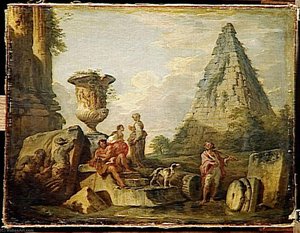
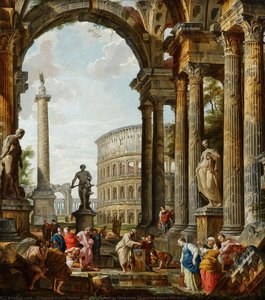
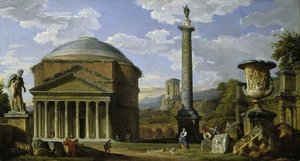
Биография художника
Giovanni Paolo Pannini (1691–1765): Master of Roman Vedute & Architectural Fantasies
Giovanni Paolo Pannini, a name synonymous with the grandeur and romantic allure of 18th-century Rome, was more than just a painter; he was a visual architect of memory. Born in Piacenza in 1691, his artistic journey began under the tutelage of Giuseppe Natali and Andrea Galluzzi, but it was his exposure to the theatrical designs of Francesco Galli-Bibiena that truly ignited his imagination. This early immersion in stagecraft would profoundly influence his later work, imbuing it with a sense of dramatic composition and illusionistic space. In 1711, Panini relocated to Rome, a city already steeped in artistic history, where he honed his skills under the guidance of Benedetto Luti, mastering the art of drawing and laying the foundation for his future mastery of perspective.Early Training & Influences: Shaping a Vision
Giovanni Paolo Pannini’s formative years were marked by rigorous training in Piacenza, where he studied under Giuseppe Natali and Andrea Galluzzi—artists known for their meticulous realism and attention to detail. However, it was Francesco Galli-Bibiena's theatrical productions that proved particularly transformative. Galli-Bibiena’s innovative use of perspective and dramatic staging instilled in Pannini a fascination with illusionistic space—a technique he would later employ extensively in his paintings. This influence extended beyond mere visual style; it fostered a broader intellectual sensibility, encouraging Pannini to consider how artists could manipulate perception to convey emotion and create immersive experiences. The early works of Giovanni Ghisolfi, who had pioneered the depiction of Roman ruins with remarkable accuracy, served as another important source of inspiration for Pannini—demonstrating the power of combining observation with imaginative reconstruction.From Frescoes to Vedute: The Evolution of an Artistic Style
Panini’s initial success didn't come as a canvas painter but as a decorator of palaces. His frescoes adorned the walls of prominent Roman residences, including the Villa Patrizi (1719–1725), Palazzo de Carolis (1720) and Seminario Romano (1721–1722). These commissions allowed him to develop his technical prowess and establish a reputation within Rome’s artistic circles. He skillfully employed *quadratura*, or scenic perspective—a technique perfected by Ferdinando Galli Bibiena—to create monumental compositions that captivated viewers and conveyed grandeur. However, it was Pannini's embrace of the *veduta*, or view painting, that would ultimately define his legacy. Unlike earlier topographical artists who focused on precise documentation, Pannini infused his depictions of Rome with a sense of imaginative reconstruction. He didn’t merely record what he saw; he re-imagined it, blending existing structures with fragments of ancient ruins and fanciful architectural elements—a practice known as *capriccio*. This approach—often likened to that of Marco Ricci—enabled him to create scenes that were both recognizable and dreamlike, capturing the spirit of Rome’s layered history.The Pantheon & Beyond: Pannini's Iconic Views
Among Pannini’s most celebrated achievements is his depiction of the interior of Saint Peter’s Basilica (c. 1734), a masterpiece of illusionistic perspective that remains unsurpassed in its ambition and technical virtuosity. Pannini meticulously recreated the basilica’s vast space, employing innovative techniques to convey depth and grandeur—a feat that cemented his reputation as one of Rome's foremost artists. Similarly impressive is his view of the Pantheon (c. 1754), where he skillfully captured the ethereal quality of light filtering through the dome’s oculus—creating a scene that embodies both scientific precision and poetic beauty. Pannini’s prolific output extended beyond architectural interiors; he produced numerous landscapes featuring Roman ruins, capturing their desolate grandeur with remarkable sensitivity. These paintings—particularly *Paesti qvod Posidoniam etiam dixere rvdera* (Rovine della citta' di Pesto detta ancora Posidonia)—demonstrate Pannini’s ability to transform ordinary subjects into extraordinary visions—infused with a profound appreciation for the passage of time and the enduring legacy of antiquity.Legacy & Influence: Shaping Romantic Vision
Giovanni Paolo Pannini’s influence extended far beyond his own lifetime, shaping the artistic sensibilities of subsequent generations. He was recognized as a teacher at both the Accademia di San Luca and the Académie de France in Rome—a distinction that underscored his stature within the Roman art world. Notably, he mentored Hubert Robert, whose fantastical landscapes would become equally renowned for their imaginative embellishment and masterful use of perspective—reflecting Pannini’s pioneering approach to architectural painting. Pannini's style resonated with other *vedutisti*, including Antonio Joli and Charles-Louis Clérisseau, inspiring them to explore the possibilities of capturing Rome’s atmosphere and grandeur through innovative visual techniques. His enduring legacy can be seen in the works of artists who followed him—artists who embraced Romantic ideals while retaining Pannini's meticulous attention to detail and his profound understanding of illusionistic space—solidifying his place as a pivotal figure in the history of European art.
Джан Паоло Панини
1691 - 1765 , Италия
Основные сведения
- Artistic Movement Or Style: Барокко, Ведутизм
- Artists Or Movements Influenced By This Artist: ['Жан Оноре Фрагонард']
- Artists Who Influenced This Artist:
- Джозеф Натали
- Эндреа Гальци Бибеена
- Date Of Birth: 1691
- Full Name: Giovanni Paolo Pannini
- Nationality: Итальянский
- Notable Artworks:
- Интерьер Пантеона
- Виды Рима
- Каприцио
- Place Of Birth: Piacenza, Италия