Предпросмотр
 Поделиться
 Поделиться
 Детали произведения

 Скачать
 Похожие работы
 Рентгенография
 Слайд-шоу
 Статистика
Crucifix with Mary, Mary Magdalen and St John the Evangelist
 Acrylic On Canvas
- WallArt
- Early Renaissance
 1519
1519 179.0 x 166.0 cm
 Альте Пинакотека
 Читать далее
Масляная репродукция ручной работы
Картина маслом на холсте в выбранном вами размере и раме, написанная на заказ нашими художниками. ( Перейти к печати Перейти к цифровым изображениям)




P118B $10

P118H $10

P118W $10

P438Z $10

P508JH $12

P508YH $12

P805H $10

P805Z $10

P919BZ $10

P919G $10

P919XJ $10

P959ZH $10

P968JZ $12

W106C $8

W218G $10

W218JH $8

W218Y $10

W307PJ $10

W316G $10

W316PJ $8

W316Y $10

W398PJ $8

W4111J $10

W500HY $15

W500JH $15

W692G $12

W849H $8

W940BG $15

W953PJ $8




Выберите один из наших стандартных размеров, соответствующих оригинальным пропорциям произведения искусства.

Вы можете указать собственные размеры, чтобы картина идеально вписалась в выбранную раму или пространство. Если выбранный вами размер не соответствует пропорциям оригинала, мы либо обрежем полотно, либо расширим его за счет дополнительных элементов, написанных вручную. Цифровой макет будет отправлен вам на утверждение перед началом производства.
Обратите внимание, что предварительный просмотр на экране не отражает фактическую обрезку или расширение. Только макет точно покажет окончательную композицию.
Хотя доступны индивидуальные размеры, мы рекомендуем выбирать вариант из предопределенного списка, чтобы сохранить исходные пропорции.
После оформления заказа команда ArtsDot.com свяжется с клиентом по электронной почте для уточнения деталей и предоставит предварительный макет
Доставка по всему миру () за 3–4 недели вместо стандартных 5 недель. (14 Сентябрь). Без компромиссов в качестве.

Бесплатная экспресс-доставка по всему миру

Высококачественный льняной холст

Полное страхование доставки

Гарантия возмещения таможенных пошлин

Гарантия точного соответствия цветов

100-дневная политика возврата (только при обнаружении дефектов)

Гарантия возврата 100% средств

Предложение оптовых скидок
 Вариант со стеклом доступен только для размеров менее 110 см

Crucifix with Mary, Mary Magdalen and St John the Evangelist
Техника репродукции
Размер репродукции
-


Итоговая стоимость
$ 263
A Window into Renaissance Spirit
The painting “Crucifix with Mary Magdalene and St John the Evangelist,” executed in 1519 by Hans Burgkmair the Elder, stands as a remarkable testament to the burgeoning artistic dialogue between Northern Europe and Italy during the High Renaissance. More than just a depiction of Christian iconography—the crucifixion itself—it embodies a complex interplay of tradition and innovation that defines this transformative period.
- Historical Context: Augsburg, Burgkmair’s birthplace, was at the epicenter of humanist scholarship and artistic experimentation. The rediscovery of classical texts fueled intellectual curiosity and spurred artists to explore new perspectives on human experience and spirituality.
- Style: Burgkmair's style leans heavily toward German Late Gothic traditions, yet he skillfully incorporates elements characteristic of Florentine Renaissance painting—particularly in the use of perspective and anatomical accuracy—demonstrating a masterful assimilation of Italian artistic ideals.
Technical Mastery – The Art of Detail
Burgkmair’s technique is characterized by meticulous attention to detail, reflecting the prevailing emphasis on realism within the Renaissance aesthetic. He employed oil paint on panel—a relatively new medium at the time—allowing for subtle gradations of color and capturing nuanced textures. Observe particularly the expressive rendering of Mary Magdalene's face; Burgkmair’s masterful brushwork conveys profound sorrow and compassion, mirroring the emotional depth favored by artists like Leonardo da Vinci.
- Medium: Oil paint on panel – providing luminosity and capturing subtle tonal variations.
- Brushwork: Delicate layering of pigment creates a palpable sense of atmosphere and conveys emotion with remarkable precision.
Symbolism Beyond the Visible
The composition itself is laden with symbolic significance. The crucifix serves as a central focal point, representing Christ’s sacrifice for humanity—a cornerstone of Christian faith. Mary Magdalene's presence symbolizes repentance and divine grace, while St John the Evangelist embodies unwavering devotion and spiritual contemplation. Even the inclusion of a book – positioned prominently in the upper right corner – speaks to the importance of scripture and intellectual inquiry within Renaissance culture.
Consider:The positioning of the figures—grouped around Christ—suggests unity and communion, reflecting the humanist belief in human dignity and interconnectedness. The muted color palette contributes to a solemn mood, emphasizing the gravity of the depicted event.
Emotional Resonance – A Portrait of Faith
“Crucifix with Mary Magdalene and St John the Evangelist” transcends mere visual representation; it evokes a powerful emotional response in the viewer. Burgkmair’s ability to convey profound sorrow, compassion, and spiritual contemplation speaks to the enduring power of religious art to inspire reflection and evoke empathy. This painting remains an invaluable window into the artistic spirit of its time—a testament to both tradition and innovation that continues to captivate audiences centuries later.
Похожие произведения
Биография художника
Hans Burgkmair the Elder: Bridging Renaissance Italy and German Tradition
Born in Augsburg, Germany, around 1473, Hans Burgkmair the Elder emerged as a pivotal figure in the transition between late Gothic and early Renaissance art. His life coincided with a period of intense artistic exchange between Northern Europe and Italy, and he skillfully absorbed the innovations of the Italian Renaissance while retaining a distinctly German sensibility. Unlike many artists who traveled to Italy for formal training, Burgkmair’s influence stemmed from his deep engagement with the ideas circulating through printed books and images – a crucial development in disseminating new artistic trends across Europe. He wasn't merely copying Italian models; he was actively synthesizing them with established Northern European techniques and subject matter.
His early career began as an apprentice to his father, Thomas Burgkmair, a respected painter in Strasbourg. This familial connection provided him with a solid foundation in traditional German painting styles. However, it was his time working under Martin Schongauer in Colmar that truly ignited his artistic development. Schongauer’s mastery of detail and use of oil paint—techniques still relatively novel at the time—profoundly impacted Burgkmair's approach to rendering form and texture. Following Schongauer’s death, Burgkmair continued his training in Augsburg, absorbing further influences from the burgeoning artistic scene.
The Rise of a Master: Woodcuts and Frescoes
Burgkmair quickly established himself as a highly sought-after artist, specializing primarily in woodcut and fresco. His woodcuts, numbering around 700, are particularly significant for their innovative use of chiaroscuro – the dramatic interplay of light and shadow achieved through multiple blocks inked with varying tones. This technique, pioneered by Burgkmair, moved beyond the traditional single-block method and allowed him to create a remarkable sense of depth and volume, mimicking the effects of oil painting. His most celebrated woodcut series is undoubtedly the “Triumphs of Maximilian,” commissioned by Emperor Maximilian I to commemorate his victories and solidify his imperial authority. These prints are not merely decorative; they’re complex allegorical narratives filled with symbolism and meticulously rendered details.
Beyond woodcuts, Burgkmair was a skilled fresco painter. He is credited with decorating the facade of the Fugger residence in Augsburg – a landmark building that exemplifies the early Italian Renaissance style in Germany. Sadly, these frescoes have been lost to history, leaving behind only tantalizing descriptions and fragments of their grandeur. His work on the Munich and Vienna facades offers valuable insights into his fresco technique and stylistic choices.
Influences and Artistic Style
Burgkmair’s artistic style is a fascinating blend of Northern European tradition and Italian Renaissance ideals. He retained the meticulous detail and realism characteristic of German painting, but he also embraced the Italian emphasis on perspective, proportion, and classical motifs. The influence of Giorgione, a Venetian painter known for his atmospheric landscapes and poetic compositions, is particularly evident in Burgkmair’s work. Giorgione's use of muted colors and evocative scenes clearly resonated with Burgkmair, who sought to capture the mood and atmosphere of his subjects rather than simply depicting them realistically.
His son, Hans Burgkmair the Younger, continued his father’s legacy, collaborating on the “Turnierbuch,” a lavish illustrated tournament book. This collaborative effort further cemented the family's reputation as leading artists of their time and demonstrated the transmission of artistic knowledge from one generation to the next.
Legacy and Historical Significance
Hans Burgkmair the Elder’s contribution to art history is immense. He was among the first German artists to genuinely engage with the innovations of the Italian Renaissance, adapting them to his own cultural context and developing a unique artistic style. His pioneering use of chiaroscuro in woodcuts revolutionized printmaking techniques, paving the way for future generations of artists. Furthermore, he played a crucial role in introducing Renaissance ideas to Northern Europe through his prints and frescoes, contributing significantly to the broader dissemination of artistic knowledge during a period of rapid cultural change. He stands as a testament to the dynamic interplay between tradition and innovation that characterized the early Renaissance era.
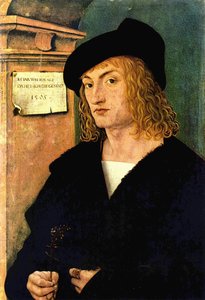
hans burgkmair
1473 - 1531 , Germany
Основные сведения
- Artistic Movement Or Style: Italian Renaissance
- Artists Or Movements Influenced By This Artist: ['Hans Burgkmair the Younger']
- Artists Who Influenced This Artist:
- Giovanni Bellini
- Giorgione
- Date Of Birth: 1473
- Date Of Death: c. 1531
- Full Name: Hans Burgkmair the Elder
- Nationality: German
- Notable Artworks:
- Triumphs of Maximilian
- Turnierbuch
- Lovers Surprised by Death
- Place Of Birth: Augsburg, Germany
Похожие статьи
Фра Анджелико: Топ-25 шедевров эпохи Возрождения для вашего интерьера
Погрузитесь в мир Фра Анджелико! Топ-25 шедевров Возрождения – религиозные фрески, алтари и картины с ангелами. Узнайте историю искусства и вдохновитесь для декора дома. Репродукции картин высокого качества на ArtsDot.com.
10 Шедевров Немецкого Экспрессионизма: Искусство Эмоций и Вдохновения | ArtsDot
Погрузитесь в мир немецкого экспрессионизма! Узнайте истории создания шедевров Мунка, Кирхнера, Кандинского и других великих художников. Репродукции картин высокого качества для вашего интерьера на ArtsDot.com. Откройте всю коллекцию онлайн!

Эль Греко: 25 шедевров гения. Купить картины онлайн | ArtsDot
Погрузитесь в мир Эль Греко! 25 величайших шедевров испанского маньеризма. Узнайте историю создания культовых картин, технику и символизм. Купите репродукции высокого качества для вашего интерьера на ArtsDot.com.

Джон Сингер Сарджент: 25 шедевров портретной живописи для вашего интерьера | ArtsDot
Погрузитесь в мир Джона Сингера Сарджента! 25 шедевров импрессионизма и реализма, раскрывающих элегантность эпохи Gilded Age. Купите репродукции картин Сарджента музейного качества для вашего интерьера на ArtsDot.com.

Джон Констебль: 25 шедевров английского пейзажа для вашего интерьера
Погрузитесь в мир английского пейзажа с Джоном Констеблом! 25 шедевров романтизма, история создания картин и вдохновение для вашего интерьера. Репродукции высокого качества на ArtsDot.com – искусство для ценителей.