

 Предпросмотр
 Поделиться
 Поделиться
 Детали произведения

 Скачать
 Похожие работы
 Рентгенография
 Слайд-шоу
 Статистика
MAURICE QUAY


 Читать далее
Приобретите цифровое изображение высокого разрешения в улучшенном качестве, которое значительно превосходит онлайн-превью.
Каждый файл тщательно подготавливается нашими специалистами с использованием передовых инструментов и экспертной ручной ретуши. Мы гарантируем исключительную четкость, точную цветопередачу и детальную проработку каждого изображения.
Финальный файл доставляется по электронной почте в течение 72 часов и оптимизирован для немедленного использования в профессиональной среде, при верстке и печати. Это тот же уровень качества, которому доверяют ведущие дизайнерские студии, издательства и галереи.
Цифровое изображение
Скачайте файл высокого разрешения для личного использования, печати и творческих проектов. ( Перейти к печати Купить картину ручной работы)
Включено в каждый заказ цифровых изображений
Гарантия экспертной цифровой доставки
Выбирая ArtsDot.com, вы получаете не просто изображение — вы приобретаете профессионально обработанное цифровое произведение искусства, созданное с безупречной точностью и под защитой гарантии качества. Вот всё, что автоматически входит в ваш заказ:

Мгновенная доставка по e-mail
Ваш цифровой файл в высоком разрешении будет отправлен вам по электронной почте в течение 72 часов после оформления заказа — и сразу станет доступен для использования.

Цифровой файл с ИИ-улучшением
Ваше произведение искусства проходит профессиональную оптимизацию с использованием передовых инструментов ИИ и ручной обработки, что гарантирует максимальную детализацию, четкость и точность цветопередачи.

Бессрочная бесплатная повторная доставка
Случайно удалили или потеряли файл? Не беспокойтесь — мы отправим его вам повторно в любое время и совершенно бесплатно.

Без импортных пошлин — навсегда
Наслаждайтесь вашим произведением искусства мгновенно без таможенных пошлин, сборов или затрат на доставку — цифровые загрузки всегда не облагаются налогом.

Гарантия точности цветопередачи
Мы гарантируем, что ваше цифровое изображение максимально точно передает оригинальные цвета благодаря использованию профессиональных инструментов и систем управления цветом.

Гарантия удовлетворенности 100 дней
Если вы не будете удовлетворены своим цифровым изображением, мы внесем правки или вернем 100% стоимости в течение 100 дней — без лишних вопросов.

100% Гарантия возврата средств
Не удовлетворены покупкой? Получите полный возврат средств в течение 100 дней после получения цифрового файла — без лишних вопросов.

Скидки на оптовые заказы
Купите 3 изображения, сэкономьте 10% — Купите 5, сэкономьте 15% — Купите 10+, сэкономьте 20%. Отличное решение для творческих проектов, галерей и агентств.
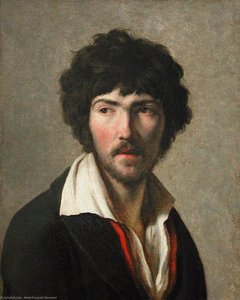
The Enduring Gaze of Maurice Quay
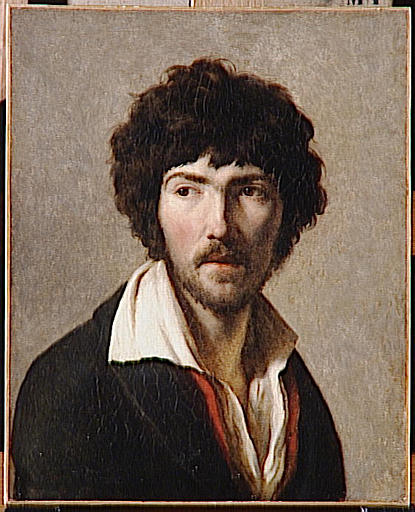
To stand before this portrait of Maurice Quay is to encounter not merely a likeness, but a moment suspended in time—a quiet meditation on character captured by the masterful hand of Henri François Riesener. The subject confronts the viewer with an unwavering, direct gaze that seems to penetrate the veil of centuries. It is a look imbued with a profound sense of contemplation, suggesting a life lived with purpose and intellect. Riesener, working during the vibrant, tumultuous period spanning the late Enlightenment into the dawn of Romanticism, understood how to distill the essence of a person into pigment. The composition centers entirely on this figure, allowing the muted background to recede into an atmospheric whisper, ensuring that every line drawn—from the curve of the jaw to the fall of the collar—serves only to elevate the presence of Quay himself.
A Study in Academic Technique and Earthy Tones
Technically, this work is a superb example of academic portraiture. One can almost feel the meticulous layering of oil paint upon canvas; the visible brushstrokes are not flaws, but rather signatures of the artist's skilled hand, lending a palpable texture to the surface. Riesener employed a sophisticated palette dominated by rich, earthy tones—deep browns, creamy ivories, and subtle grays—punctuated only by the restrained accents of white and perhaps a hint of muted red in the vestments. The lighting is handled with exquisite delicacy; it appears soft and diffused, illuminating the planes of the face from an unseen source to the left. This careful chiaroscuro sculpts the cheekbones and forehead, giving the portrait a remarkable three-dimensionality despite its relatively contained perspective. It speaks to a mastery of blending that achieves a near-photographic smoothness on the skin while retaining the warmth inherent in hand-painted artistry.
Historical Echoes: The Parisian Salon
Considering Riesener’s own biography—a career shaped by the towering figures of Neoclassicism and the burgeoning emotionalism of Romanticism—this portrait sits at a fascinating crossroads. It possesses the formal structure and polished finish associated with the grand salons of Paris, yet the intensity in Quay's eyes hints at the deeper psychological currents that would define the coming decades. The style suggests an era where portraiture was both a social obligation and a profound artistic endeavor. Owning a reproduction of this piece is to invite a piece of Parisian cultural history into your own space; it connects the modern admirer directly to the refined tastes and intellectual climate of early 19th-century French aristocracy and bourgeoisie.
Symbolism and Emotional Resonance for the Modern Collector
Beyond its technical brilliance, the portrait resonates with universal themes. The formal attire suggests a man of standing, yet his bearing is one of quiet introspection rather than overt power. This subtle tension—between public presentation and private thought—is what gives the piece its enduring emotional pull. For the collector or designer, this artwork offers an unparalleled focal point. It does not shout for attention; it commands it through sheer presence. Imagine this reproduction gracing a library wall or serving as the centerpiece in a formal drawing-room—it lends an air of cultivated gravitas and timeless sophistication to any interior setting.
Похожие произведения

Биография художника
A Legacy of Elegance: The Life and Art of Henri François Riesener
In the grand, sweeping tapestry of French art history, few names evoke the refined grace of the Napoleonic era quite like Henri François Riesener. Born in Paris in 1767, Riesener was a man shaped by both the meticulous precision of craftsmanship and the turbulent winds of revolution. He descended from a prestigious lineage of German cabinetmakers, most notably his father, Jean-Henri Riesener, whose legendary skill in creating exquisite furniture for the French court instilled in the younger Riesener an innate appreciation for fine detail and aesthetic harmony. This heritage provided a foundation of discipline that would later define his approach to the delicate medium of miniature painting and the commanding presence of his larger portraits.
Riesener’s artistic journey was far from a quiet studio existence; it was a life lived amidst the very heart of historical transformation. His formal education brought him under the guidance of masters such as François-André Vincent and the titan of Neoclassicism, Jacques-Louis David. From these mentors, he absorbed the rigorous anatomical accuracy and the dignified, structured compositions that characterized the era. Yet, his horizons were expanded far beyond the borders of Paris. Driven by a spirit of adventure, Riesener joined Napoleon’s army during the Italian campaigns and later traveled to Egypt. These expeditions exposed him to the exoticism of distant cultures and the stark beauty of ancient landscapes, infusing his later work with a subtle psychological depth and a worldly perspective that set him apart from his contemporaries.
Mastery of the Portrait and the Miniature
Upon his return to a post-war Paris, Riesener established himself as a premier portraitist, a role that allowed him to navigate the highest echel's of society. His ability to capture not just the physical likeness, but the very essence of his subjects, made him a favorite among the elite. His canvases served as windows into the Napoleonic age, documenting the faces of power and culture. Whether he was rendering the authoritative presence of Maurice Quay or the intellectual dignity of figures like Charles Maurice de Talleyrand-Périgord, Riesener utilized a Neoclassical technique that emphasized clarity, light, and a sense of timelessness.
Beyond the grand scale of oil portraiture, Riesener found profound success as a miniaturist. This medium required an extraordinary level of patience and a delicate touch, qualities he possessed in abundance. His miniatures were prized for their intimacy, offering a portable piece of art that could be held close to the heart. His repertoire was remarkably diverse, ranging from:
- The commanding portraits of military and political figures such as Eugène de Beauharnais.
- Captivating depictions of celebrated opera singers, which brought a sense of movement and lyricism to his work.
- Intimate studies of the Parisian socialites, including Madame Sallandrouze.
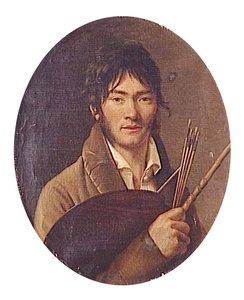
- Tributes to fellow artists, such as his poignant portrait of the sculptor Antoine André Ravrio, now preserved in the Louvre Museum.
Historical Significance and Enduring Impression
The significance of Henri François Riesener lies in his role as a visual chronicler of a pivotal era. As France transitioned from the twilight of the Enlightenment through the fervor of the Revolution and into the grandeur of the First Empire, Riesener’s brush captured the shifting moods of a nation. His work embodies the tension between the structured elegance of Neoclassicism and the burgeoning emotional intensity of Romanticism. Through his portraits, we gain an intimate understanding of the faces that shaped modern Europe, seeing them not merely as historical icons, but as living, breathing individuals caught in the currents of change.
Today, Riesener’s legacy continues to resonate through the prestigious collections of the Louvre and other world-class institutions. His ability to blend the technical precision inherited from his father's craft with the grand stylistic innovations of his teachers ensures that his work remains a vital subject of study for art historians. To look upon a Riesener portrait is to witness the intersection of personal artistry and historical destiny, a testament to a life spent capturing the fleeting beauty and enduring dignity of the human spirit.
henri françois riesener
1767 - 1828 , France
Основные сведения
- Artistic Movement Or Style: Neoclassical Portraiture
- Artists Or Movements Influenced By This Artist: ['Classical Portraiture']
- Artists Who Influenced This Artist:
- François-André Vincent
- Jacques-Louis David
- Date Of Birth: Paris, France (1767)
- Date Of Death: 1828
- Full Name: Henri François Riesener
- Nationality: French
- Notable Artworks:
- Portrait de François Adrien Boieldieu
- Portrait of Sofia Apraxina
- Portrait en pied de l’Impératrice Joséphine
- Place Of Birth: Paris