


 Предпросмотр
 Поделиться
 Поделиться
 Детали произведения

 Скачать
 Похожие работы
 Рентгенография
 Слайд-шоу
 Статистика
“Lemon Grove” series
 Oil On Canvas
- WallArt
- Contemporary Realism
 2019
2019- Modern
 30.0 x 30.0 cm
 Коллекция Сотириса Фелиоса
 Читать далее
Масляная репродукция ручной работы
Картина маслом на холсте в выбранном вами размере и раме, написанная на заказ нашими художниками. ( Перейти к печати Перейти к цифровым изображениям)




P118B $10

P118H $10

P118W $10

P438Z $10

P508JH $12

P508YH $12

P805H $10

P805Z $10

P919BZ $10

P919G $10

P919XJ $10

P959ZH $10

P968JZ $12

W106C $8

W218G $10

W218JH $8

W218Y $10

W307PJ $10

W316G $10

W316PJ $8

W316Y $10

W398PJ $8

W4111J $10

W500HY $15

W500JH $15

W692G $12

W849H $8

W940BG $15

W953PJ $8




Выберите один из наших стандартных размеров, соответствующих оригинальным пропорциям произведения искусства.

Вы можете указать собственные размеры, чтобы картина идеально вписалась в выбранную раму или пространство. Если выбранный вами размер не соответствует пропорциям оригинала, мы либо обрежем полотно, либо расширим его за счет дополнительных элементов, написанных вручную. Цифровой макет будет отправлен вам на утверждение перед началом производства.
Обратите внимание, что предварительный просмотр на экране не отражает фактическую обрезку или расширение. Только макет точно покажет окончательную композицию.
Хотя доступны индивидуальные размеры, мы рекомендуем выбирать вариант из предопределенного списка, чтобы сохранить исходные пропорции.
После оформления заказа команда ArtsDot.com свяжется с клиентом по электронной почте для уточнения деталей и предоставит предварительный макет
Доставка по всему миру () за 3–4 недели вместо стандартных 5 недель. (15 Сентябрь). Без компромиссов в качестве.

Бесплатная экспресс-доставка по всему миру

Высококачественный льняной холст

Полное страхование доставки

Гарантия возмещения таможенных пошлин

Гарантия точного соответствия цветов

100-дневная политика возврата (только при обнаружении дефектов)

Гарантия возврата 100% средств

Предложение оптовых скидок
 Вариант со стеклом доступен только для размеров менее 110 см

“Lemon Grove” series
Техника репродукции
Размер репродукции
-


Итоговая стоимость
$ 263
“Lemon Grove” – A Study in Contrasts by Jannis Psychopedis
Jannis Psychopedis’s “Lemon Grove,” completed in 2019, is more than just a still life; it's a carefully constructed meditation on the relationship between nature and industry, abundance and constraint. This meticulously rendered oil painting immediately captivates with its stark simplicity – two vibrant oranges nestled against a coiled metallic chain interwoven with foliage, all set upon a profoundly dark background. The artwork’s power resides in this deliberate juxtaposition, forcing the viewer to confront the inherent tensions within the scene.
- Subject Matter: The core of the piece is undeniably the still life arrangement itself. Two oranges, symbols of nourishment and vitality, are presented alongside a metallic chain – an object representing human intervention and potentially, restriction. The inclusion of foliage adds another layer, grounding the composition in the natural world while simultaneously highlighting its vulnerability against the cold precision of metal.
- Style & Technique: Psychopedis’s style leans heavily into classical still life traditions, yet he infuses it with a distinctly contemporary sensibility. The technique is characterized by painstaking detail and a masterful command of oil paint. Thin glazes are layered to build up color and luminosity, resulting in a surface that practically vibrates with texture – particularly evident in the intricate rendering of the chain’s surface and the subtly rough skin of the oranges.
Decoding the Symbolism
The symbolism within “Lemon Grove” is rich and layered, inviting multiple interpretations. The metallic chain, a recurring motif in Psychopedis's work, often represents constraint, burden, or perhaps even the weight of history – a subtle nod to Germany’s complex past, mirroring the artist’s own lineage and engagement with memory. However, it can also be viewed as a connection, binding the natural elements together. The oranges themselves are potent symbols of abundance, prosperity, and warmth, yet their vulnerability against the cold metal suggests a precariousness, a reminder that even the most nourishing things can be threatened.
- The Dark Background: The almost absolute black background isn’t merely a stylistic choice; it dramatically isolates the subject matter, intensifying its visual impact and amplifying the sense of tension. It evokes a void, perhaps representing the unknown or the absence of comfort.
- Compositional Elements: The diagonal placement of the chain creates dynamic movement within the frame, contrasting with the rounded forms of the oranges and leaves. This interplay of curves and angles adds to the overall feeling of unease and contemplation.
Historical Context & Artistic Influence
Jannis Psychopedis’s work is deeply rooted in a tradition of European still life painting, yet he also engages with contemporary concerns through his meticulous attention to detail and his willingness to explore complex themes. His artistic journey, influenced by figures like Anselm Kiefer – a sculptor known for confronting German memory – demonstrates a commitment to engaging with weighty historical narratives through the language of art. The artist’s background in Greece further informs his perspective, adding an element of timelessness and universal appeal to his work.
Emotional Resonance & Collector's Appeal
"Lemon Grove" possesses a quiet emotional power that lingers long after viewing. The piece evokes a sense of contemplative melancholy, fueled by the stark contrast between natural beauty and manufactured object. This makes it an ideal addition to any collection seeking depth and nuance. The 30 x 30 cm size makes it suitable for a variety of interior design settings, from modern minimalist spaces to more traditional interiors. The high-quality reproduction ensures that the artwork’s rich texture and luminous colors will be faithfully reproduced, offering collectors and enthusiasts alike an exceptional piece of art.
Похожие произведения
Биография художника
Anselm Kiefer: A Sculptor of German Memory
Born in Donaueschingen, Baden-Württemberg, on March 8, 1945, Anselm Kiefer’s life and art are inextricably linked to the weighty history of Germany. Raised near the Rhine River in a region steeped in folklore and tradition, he developed from childhood a profound ambition: to become an artist – a desire fueled by his namesake, the nineteenth-century classical painter Anselm Feuerbach. This early determination shaped his trajectory, leading him through studies at the University of Freiburg and the Karlsruhe Academy before finding mentorship with Joseph Beuys during informal visits to Düsseldorf in the early 1970s. His artistic journey initially unfolded within the confines of his family home in Hornbach and later a converted brick factory in Buchen, eventually culminating in his relocation to Paris in 2008 – a move reflecting both a desire for creative space and a detachment from the intensely scrutinized landscape of German art history.
Materials and Method: A Process of Excavation
Kiefer’s artistic practice is immediately recognizable through its distinctive materiality. He eschews traditional painting techniques, instead employing a vast array of unconventional materials – straw, ash, clay, lead, shellac, and even pulverized brick – to construct layered, textured surfaces. This deliberate rejection of conventional methods speaks directly to his engagement with the past; he doesn’t simply *represent* history but actively *excavates* it through physical processes. The application of these materials is often laborious and demanding, involving repeated layering, pressing, and burning, creating works that are both monumental in scale and intensely tactile. The use of straw, for instance, references the fields of Germany’s rural past, while ash evokes the devastation of war and the cyclical nature of destruction and renewal. Lead, frequently used in his paintings, symbolizes the weight of history and the burden of memory.
Themes of German History and Trauma
At the heart of Kiefer’s oeuvre lies a sustained engagement with Germany's complex and often painful past. His work is saturated with references to World War II, the Holocaust, and the legacy of Nazism – not as celebratory or romanticized depictions, but as confronting explorations of trauma, guilt, and responsibility. He draws heavily on German literature, mythology, and historical events, frequently revisiting iconic figures like Frederick Barbarossa and employing elements from Wagner’s *Ring* cycle and Goethe's poetry. However, Kiefer doesn’t merely replicate these sources; he actively disrupts them, layering them with unsettling imagery and ambiguous symbolism. His 1969 self-portraits, *Occupations*, are a particularly striking example of this approach – a provocative series that simultaneously references paramilitary uniforms and evokes the figure of Hitler, forcing viewers to confront uncomfortable associations.
Reception and Critical Interpretations
Kiefer’s work initially garnered mixed reactions in both Germany and America. In the United States, his art was often interpreted as a solitary struggle against the repression of Germany's fascist past – a concept known as *Vergangenheitsbewältigung* (“coming to terms with the past”). However, within Germany, critics viewed his deliberate use of provocative imagery as a form of original sin, questioning whether he was truly engaging with the complexities of German history or simply exploiting it for artistic effect. Andreas Huyssen’s 1992 essay highlighted this divergence in interpretation, noting that Kiefer's Germanness functioned differently depending on the cultural context. Despite these critical debates, Kiefer’s work has gained widespread recognition as a significant contribution to Neo-Expressionism and continues to provoke thought and discussion about memory, identity, and the enduring legacy of the past.
Key Works and Legacy
Among Kiefer's most notable works are *Schneeschmelze im Odenwald Winter ade* (Snowmelt in the Black Forest, Winter Ade), a monumental painting depicting a desolate landscape overlaid with fragments of text and imagery; *Scheiden tut* (It Hurts), a complex installation incorporating ash, straw, and photographs that explores themes of loss and fragmentation; and *Neue Wilden* (New Wilds), a series of paintings referencing the Romantic era. His ongoing exploration of German history and his innovative use of materials have cemented his place as one of the most important artists working today. Kiefer’s work serves not only as a historical record but also as a powerful meditation on the enduring challenges of confronting the past and forging a future free from its shadows.
jannis psychopedis
1945 - , Greece
Основные сведения
- Artistic Movement Or Style: Neo-Expressionism
- Artists Or Movements Influenced By This Artist: ['New Symbolism']
- Artists Who Influenced This Artist: ['Joseph Beuys']
- Date Of Birth: March 8, 1945
- Full Name: Anselm Kiefer
- Nationality: German
- Notable Artworks:
- Schneeschmelze im Odenwald Winter ade
- Margarete
- Scheiden tut
- Place Of Birth: Donaueschingen, Germany
Похожие статьи

The Enduring Legacy of Oil on Canvas: Technique, History & Aesthetic Impact
Explore the rich history & techniques of oil painting – from Renaissance masters to Impressionism. Discover pigments, layering methods, and why this timeless medium endures. Expert insights for artists & art enthusiasts.

Oil on Canvas: A Historical & Technical Exploration of a Timeless Artistic Medium
Explore the rich history & enduring techniques of oil painting on canvas. Discover the science behind its longevity, conservation practices, and contemporary relevance. Expert insights for art enthusiasts.

The Enduring Power of Painting: A Historical & Contemporary Exploration of Form and Emotion
Explore the rich history & enduring techniques of oil painting with ArtsDot. Discover masterpieces, learn about art collecting, and find authentic handmade reproductions crafted by skilled artists.
Silent Narratives: Exploring the Enduring Appeal of Still Life Painting Across Centuries
Explore the rich history of still life painting with ArtsDot. Discover Dutch Masters, decode vanitas symbolism & learn about collecting timeless art. Expert insights and museum-quality reproductions.
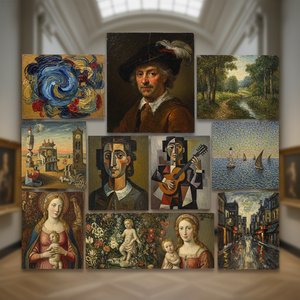
Топ-10 шедевров масляной живописи на доске, изменившие искусство | ArtsDot.com
Откройте для себя 10 легендарных шедевров масляной живописи на доске, изменивших искусство! Узнайте истории Ван Гога, Моне и других великих художников. Репродукции картин премиум-качества для вашего интерьера – ArtsDot.com