 Предпросмотр
 Поделиться
 Поделиться
 Детали произведения

 Скачать
 Похожие работы
 Рентгенография
 Слайд-шоу
 Статистика
The Plaster Kiln
 Oil On Canvas
- WallArt
- Romanticism
 1822
1822- 19th Century
 50.0 x 61.0 cm
 Лувр
Лувр
 Читать далее
Масляная репродукция ручной работы
Картина маслом на холсте в выбранном вами размере и раме, написанная на заказ нашими художниками. ( Перейти к печати Перейти к цифровым изображениям)




































Выберите один из наших стандартных размеров, соответствующих оригинальным пропорциям произведения искусства.

Вы можете указать собственные размеры, чтобы картина идеально вписалась в выбранную раму или пространство. Если выбранный вами размер не соответствует пропорциям оригинала, мы либо обрежем полотно, либо расширим его за счет дополнительных элементов, написанных вручную. Цифровой макет будет отправлен вам на утверждение перед началом производства.
Обратите внимание, что предварительный просмотр на экране не отражает фактическую обрезку или расширение. Только макет точно покажет окончательную композицию.
Хотя доступны индивидуальные размеры, мы рекомендуем выбирать вариант из предопределенного списка, чтобы сохранить исходные пропорции.
После оформления заказа команда ArtsDot.com свяжется с клиентом по электронной почте для уточнения деталей и предоставит предварительный макет
Доставка по всему миру () за 3–4 недели вместо стандартных 5 недель. (11 Сентябрь). Без компромиссов в качестве.

Бесплатная экспресс-доставка по всему миру

Высококачественный льняной холст

Полное страхование доставки

Гарантия возмещения таможенных пошлин

Гарантия точного соответствия цветов

100-дневная политика возврата (только при обнаружении дефектов)

Гарантия возврата 100% средств

Предложение оптовых скидок
 Вариант со стеклом доступен только для размеров менее 110 см

The Plaster Kiln
Техника репродукции
Размер репродукции
-


Итоговая стоимость
$ 263
A Symphony of Rural Resilience
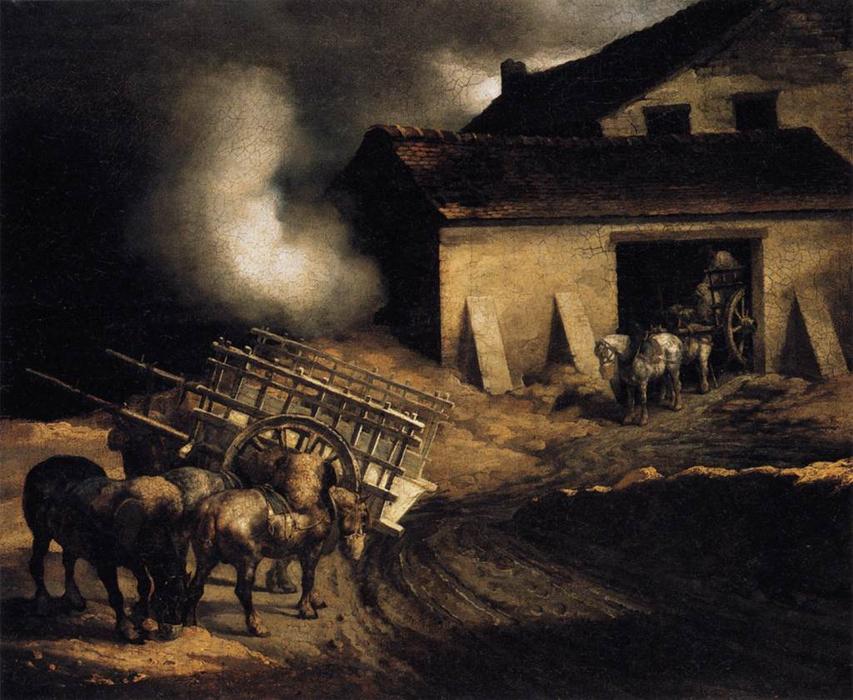
In the quiet, brooding landscapes of nineteenth-century France, few works capture the raw, unvarnished essence of pastoral life as poignantly as Théodore Géricault’s “The Plaster Kiln.” Completed around 1822, this masterpiece serves as a profound window into the Normandy countryside, offering much more than a mere topographical record. It is an evocative tableau where the heavy atmosphere of a damp, overcast sky meets the grounded, rhythmic labor of farm life. As one gazes upon the scene, the viewer is immediately drawn into a world of textured reality—where the glistening surfaces and the weight of manual toil create a sensory experience that transcends the canvas.
The composition unfolds within a sprawling farmyard, dominated by the powerful presence of several horses engaged in the arduous tasks of the day. Some are seen pulling heavy carts laden with clay bricks, while others stand motionless, awaiting instruction, their massive forms anchoring the scene. A solitary figure, likely overseeing these operations, adds a sense of quiet determination amidst the physicality of the labor. Gériculated utilizes a masterful pyramidal structure, subtly drawing the eye upward toward the central horse, which stands as a monumental symbol of both strength and resilience in the face of an unforgiving environment.
The Mastery of Romantic Realism
Géricault’s technique in “The Plaster Kiln” exemplifies the very heart of the Romantic movement—a commitment to capturing deep emotion and conveying dramatic narratives through meticulous skill. Drawing from his training under masters like Carle Vernet and Pierre-Narcisse Guérin, Géricault blends classical principles of anatomy with expressive, almost visceral brushstrokes. The artist employs a sophisticated monochrome palette, primarily utilizing shades of grey, which intensifies the painting's solemn mood and directs the viewer's focus toward subtle tonal variations and textures.
The use of thick impasto is particularly striking here; it creates palpable surfaces that convey the roughness of the clay bricks and the rugged musculature of the horses. This tactile quality allows the viewer to almost feel the grit of the earth and the dampness of the air. For the discerning collector or interior designer, this piece offers a profound depth that commands attention, providing a sophisticated focal point that brings a sense of historical gravity and organic texture to any curated space.
A Legacy of Social Commentary
Beyond its aesthetic brilliance, “The Plaster Kiln” is steeped in the historical tension of the Napoleonic Restoration. Painted during a period marked by political repression and economic hardship, the work serves as a poignant emblem of social realism. It provides an unflinching portrayal of the arduous realities faced by rural laborers, transforming a simple agricultural scene into a powerful commentary on human suffering and endurance. The shadows within the painting seem to hold the weight of a changing society, making the piece not just a depiction of nature, but a reflection of the human condition.
To possess a reproduction of this work is to invite a piece of art history into one's home—a piece that speaks of strength, the dignity of labor, and the enduring beauty found in the most rugged corners of existence. Whether used to anchor a large-scale gallery wall or as a contemplative element in a study, “The Plaster Kiln” remains an eternal testament to Géricault’s ability to find the sublime within the struggle.
Похожие произведения
Биография художника
A Life Forged in Romantic Fire
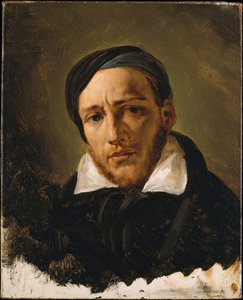
Jean-Louis André Théodore Géricault, a name that echoes through the halls of French art history, was born into a world poised on the precipice of profound change. Emerging from the bustling port city of Rouen in 1791, his early years unfolded amidst the lingering tremors of revolution and the burgeoning ambitions of Napoleon’s empire. Though inheriting a comfortable existence through his family's legal and business ventures – notably a thriving tobacco enterprise – Géricault’s destiny wasn’t one of law or commerce, but rather within the vibrant realm of artistic expression. His initial training under Carle Vernet, a master of English sporting art, instilled in him a keen eye for anatomy and movement, particularly evident in his depictions of powerful horses in motion. However, this early foundation soon led him to seek deeper knowledge independently, immersing himself within the hallowed halls of the Louvre, transforming it into his own personal academy.The Louvre as Academy: A Dialogue with Masters
From 1810 to 1815, the Louvre became Géricault’s true classroom and source of inspiration. He didn't merely copy the works of the Old Masters – Rubens, Titian, Velázquez, and Rembrandt – but engaged in a profound dialogue with their artistic philosophies. This period wasn’t about replication; it was about absorbing the very essence of these masters, internalizing their approaches to light, shadow, composition, and the portrayal of human emotion. He studied not just technique, but also the underlying motivations and narratives behind each masterpiece. This self-directed education fostered a unique artistic voice, one that would soon challenge the prevailing Neoclassical conventions, favoring dramatic intensity and emotional truth over rigid formality. His early works, such as *The Charging Chasseur* (1812), already hinted at this emerging sensibility – a boldness of execution, a fascination with movement, and a willingness to depict contemporary subjects with unprecedented realism. He continued to refine his skills in equestrian art, mastering the portrayal of power, grace, and the raw energy of horses, a subject that would remain a recurring theme throughout his career.The Raft of the Medusa: A Monument to Human Suffering
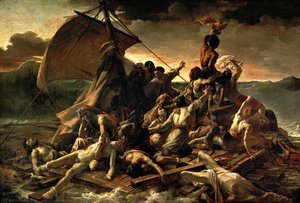
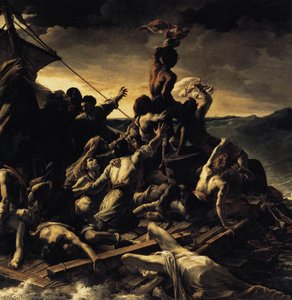
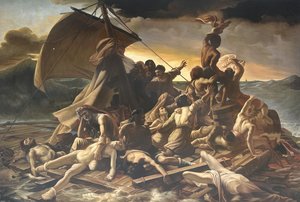
Géricault’s name is inextricably linked with *The Raft of the Medusa* (1818-1819), a monumental canvas that transcends mere historical depiction and becomes a searing indictment of human fallibility and societal injustice. Inspired by the harrowing true story of the shipwreck of the French frigate Méduse in 1816, where negligence and incompetence led to unimaginable suffering for its passengers, the painting is a visceral portrayal of desperation, hope, and despair. Géricault undertook meticulous research, interviewing survivors, studying corpses at hospitals, and even constructing a scale model of the raft itself to ensure accuracy. He sought not just to record an event, but to convey the profound emotional impact on those who endured it. The resulting work is not simply a depiction of tragedy; it’s an immersive experience that confronts viewers with the raw reality of human suffering. The composition, built around two pyramidal structures – one representing despair and death, the other embodying hope and potential rescue – creates a dynamic tension that draws the eye across the canvas, mirroring the struggle for survival amidst overwhelming odds. *The Raft of the Medusa* was initially met with controversy at its exhibition in 1819, sparking intense political debate and firmly establishing Géricault’s reputation as a daring and unconventional artist. The painting's impact extended far beyond the art world, becoming a potent symbol of governmental incompetence and the resilience of the human spirit in the face of unimaginable hardship.Beyond Tragedy: Military Themes and Artistic Legacy
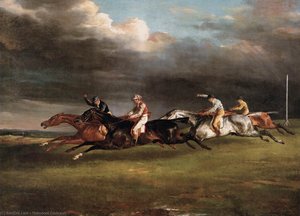
While *The Raft of the Medusa* remains his most celebrated achievement, Géricault’s artistic output encompassed a broader range of subjects. He continually returned to military themes, evident in works like *Wounded Cuirassier* (1814) and *The Derby of Epsom* (1821), demonstrating a fascination with drama, conflict, and the psychological toll of warfare. These paintings reveal his continued exploration of human emotion under duress – fear, pain, courage, and vulnerability – often focusing on the physical and emotional consequences of battle. He also ventured into portraiture and lithography, further expanding his artistic repertoire and experimenting with new techniques. Tragically, Géricault’s life was cut short by illness at the age of 32 in 1824, following years of suffering from riding accidents and a chronic tubercular infection. His premature death robbed the art world of a prodigious talent, but his influence on subsequent generations of artists – particularly Eugène Delacroix – was profound. He is remembered as a pioneer of Romanticism, an artist who dared to confront difficult truths, imbue his work with a powerful emotional resonance, and challenge the established norms of artistic expression. His bronze figure reclines, brush in hand, on his tomb at Père Lachaise Cemetery in Paris, above a low-relief panel depicting the harrowing scene from *The Raft of the Medusa* – a fitting tribute to an artist who dedicated his life to capturing the complexities and contradictions of the human condition.Key Characteristics & Influences
- Romanticism: Géricault is considered one of the first French Romantic painters, moving away from Neoclassical ideals towards emotional intensity and dramatic expression.
- Dramatic Composition: His paintings are known for their dynamic compositions, often utilizing diagonal lines and contrasting light and shadow to create a sense of movement and tension.
- Realism & Research: Géricault was committed to realism, conducting extensive research – including studying corpses and interviewing survivors – to ensure the accuracy and emotional impact of his work.
- Influence of Old Masters: He drew inspiration from Baroque masters like Rubens, Titian, and Velázquez, adopting their techniques for dramatic lighting and expressive brushwork.
- Focus on Human Suffering: His art often depicts scenes of tragedy, despair, and the darker aspects of human experience, reflecting a Romantic fascination with intense emotions.
Жан-Луи Герике
1791 - 1824 , Франция
Основные сведения
- Artistic Movement Or Style: Романтизм
- Artists Or Movements Influenced By This Artist: ['Жюльен Дюкруа']
- Artists Who Influenced This Artist:
- Карл Верне
- Пьер-Нарсис, барон Жеринье
- Date Of Birth: 26 сентября 1791 г.
- Date Of Death: 26 января 1824 г.
- Full Name: Jean-Louis André Théodore Géricault
- Nationality: Француз
- Notable Artworks:
- Рафт Медузы
- Вормозный кавалерист
- Египетская сказка
- Place Of Birth: Рейн, Франция
Похожие статьи

Evocations of Place: A Historical Journey Through Landscape Art
Explore the rich history of landscape art with ArtsDot. Discover renowned artists, movements like Impressionism & Romanticism, and expert guidance for collecting timeless pieces. Find your perfect serene escape today!

Романтический пейзаж: 10 шедевров, изменивших искусство | ArtsDot.com
Погрузитесь в мир романтического пейзажа! 10 шедевров Фридриха, Тёрнера и других гениев. Узнайте историю создания культовых картин и вдохновитесь для декора интерьера. Репродукции высокого качества на ArtsDot.com.

Cultivating Visions: A Historical Journey Through Rural Landscapes in Art
Explore the rich history of rural landscape painting with ArtsDot. Discover Impressionist masterpieces, key artists & movements. Find your perfect serene artwork and bring nature's beauty home.

Джон Констебль: 25 шедевров английского пейзажа для вашего интерьера
Погрузитесь в мир английского пейзажа с Джоном Констеблом! 25 шедевров романтизма, история создания картин и вдохновение для вашего интерьера. Репродукции высокого качества на ArtsDot.com – искусство для ценителей.

Paul Huet: Capturing the Essence of French Romanticism Through Light and Landscape
Explore the captivating world of Paul Huet (1803-1869), a master of French Romantic landscape painting. Discover his influence on Barbizon & Impressionism, and browse high-quality reproductions at ArtsDot.