

 Предпросмотр
 Поделиться
 Поделиться
 Детали произведения

 Скачать
 Похожие работы
 Рентгенография
 Слайд-шоу
 Статистика
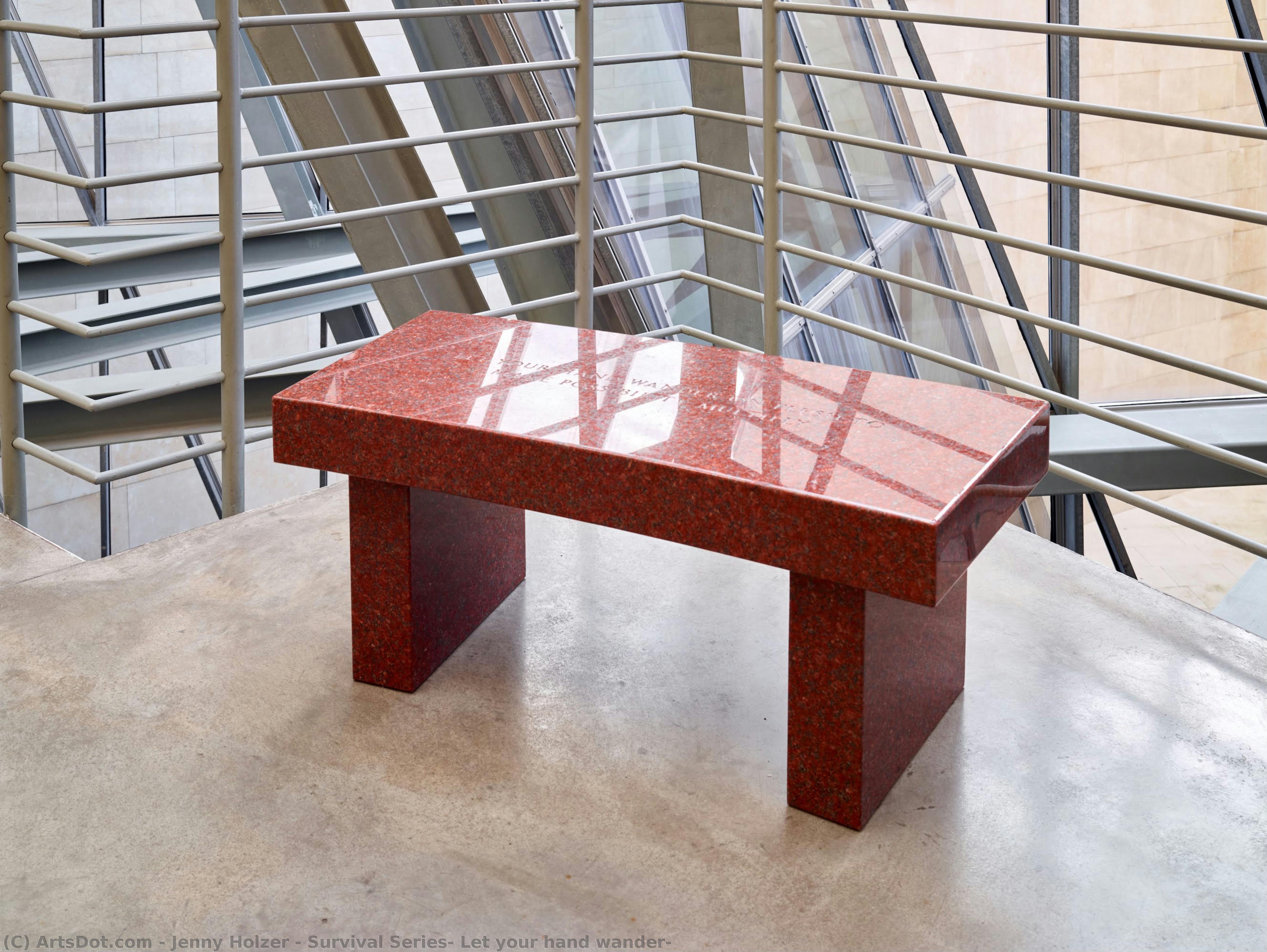
Survival Series: Let your hand wander…


 Читать далее
Жикле / Арт-принт
Печать (жикле) или холст музейного качества с быстрыми сроками изготовления и широким выбором вариантов отделки. ( Купить картину ручной работы Перейти к цифровым изображениям)




P118B $10

P118H $10

P118W $10

P438Z $10

P508JH $12

P508YH $12

P805H $10

P805Z $10

P919BZ $10

P919G $10

P919XJ $10

P959ZH $10

P968JZ $12

W106C $8

W218G $10

W218JH $8

W218Y $10

W307PJ $10

W316G $10

W316PJ $8

W316Y $10

W398PJ $8

W4111J $10

W500HY $15

W500JH $15

W692G $12

W849H $8

W940BG $15

W953PJ $8




Выберите один из наших стандартных размеров, соответствующих оригинальным пропорциям произведения искусства.

Вы можете указать свои собственные размеры, чтобы репродукция идеально подошла под конкретную раму или пространство. Если выбранный вами размер не будет соответствовать пропорциям оригинала, мы либо обрежем произведение, либо дополним изображение зеркальным отражением краев или однотонной заливкой. Перед началом производства вам будет отправлен цифровой макет для утверждения.
Пожалуйста, обратите внимание, что предварительный просмотр на экране не отображает фактическую обрезку или расширение изображения. Только макет точно покажет финальную композицию.
Несмотря на возможность заказа индивидуальных размеров, мы рекомендуем выбирать размер из предопределенного списка, чтобы сохранить оригинальные пропорции.
Доставка по всему миру () за 2 недели вместо стандартных 4/5 недель. (11 Сентябрь)

Бесплатная экспресс-доставка по всему миру

Высококачественный льняной холст

Полное страхование доставки

Гарантия возмещения таможенных пошлин

Гарантия точного соответствия цветов

100-дневная политика возврата (только при обнаружении дефектов)

Гарантия возврата 100% средств

Предложение оптовых скидок
 Вариант со стеклом доступен только для размеров менее 110 см

Survival Series: Let your hand wander…
Жикле / Арт-принт
Размер репродукции
-


Итоговая стоимость
$ 62
The Weight of Words: Exploring Jenny Holzer's "Survival Series"
Jenny Holzer’s “Survival Series,” particularly exemplified by works like the iconic red granite bench, isn’t merely a piece of public art; it’s an invitation to a profound dialogue with ourselves and the world around us. Beginning in 1983, this series represents a pivotal moment in Holzer's career – a shift away from ephemeral street posters towards a more enduring, tactile engagement with the viewer. The core concept is deceptively simple: concise aphorisms, often starkly urgent or questioning, are etched directly onto durable materials like stone and granite, transforming them into silent, contemplative witnesses to our daily lives.
Holzer’s work draws heavily from her background in conceptual art and the broader intellectual currents of the 1970s. Influenced by figures like Sol LeWitt and the rise of systems thinking, she sought to strip away the traditional hierarchy between artist and artwork, emphasizing instead the idea itself as the primary creative force. The act of carving words into stone becomes a deliberate disruption of the material’s inherent stillness, imbuing it with a new layer of meaning – a constant reminder of the power of language to shape our perceptions.
The Granite Bench: A Microcosm of Human Experience
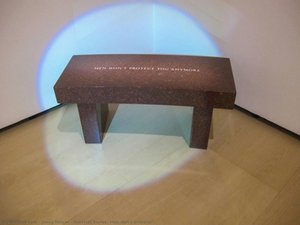
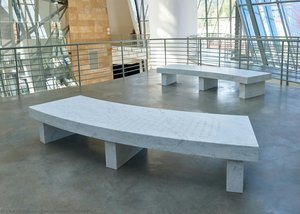
The specific bench featured here—a substantial red granite monument situated on sidewalks and public spaces—is particularly compelling. Its scale is deliberately imposing, drawing attention and encouraging prolonged engagement. The choice of red granite itself is significant; the color evokes both passion and a sense of permanence, suggesting that these words are meant to endure. The square shape of the bench provides a stable, grounded platform for reflection, while the inscription—"Let your hand wander on flesh to make possibility multiply"— invites a physical interaction with the artwork.
- Material & Technique: The piece is crafted from Indian Red granite, chosen for its rich color and durability. The words are meticulously carved using precise techniques, ensuring legibility and a tactile quality that contrasts sharply with the smooth, cool surface of the stone.
- Typography: Holzer’s signature use of all-caps lettering contributes to the work's forceful impact. The bold typeface commands attention and reinforces the urgency of the message.
- Location & Context: The bench’s placement in public spaces—often near buildings, parks, or transportation hubs—amplifies its effect, embedding it within the rhythms of daily life.
Decoding the Aphorisms and Their Enduring Relevance
Holzer's aphorisms are not simply decorative; they’re carefully constructed statements designed to provoke thought and challenge assumptions. The phrase “Let your hand wander on flesh to make possibility multiply” speaks directly to the interconnectedness of human experience, suggesting that physical contact—even a simple touch—can unlock new potential and foster creativity. It's a call to action, urging us to engage with our surroundings and embrace the unexpected.
The “Survival Series,” as a whole, reflects Holzer’s deep concern with issues of power, communication, and the human condition. Her work continues to resonate today because it taps into fundamental questions about our place in the world and the role of language in shaping our reality. The granite bench stands as a testament to her enduring vision – a silent, powerful reminder that even the most ordinary objects can become vehicles for profound reflection.
A Legacy of Public Engagement
Jenny Holzer’s work transcends traditional art categories, functioning as both sculpture and social commentary. The “Survival Series” exemplifies her commitment to creating accessible, thought-provoking experiences for a broad audience. Reproductions of this bench offer a tangible connection to Holzer's ideas, inviting viewers to contemplate the messages embedded within its enduring form. It’s an investment in art that sparks conversation, challenges perspectives, and ultimately, enriches our understanding of ourselves and the world around us.
Похожие произведения

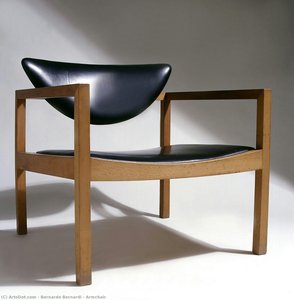
Биография художника
Jenny Holzer: Architect of Public Thought
Jenny Holzer, a name synonymous with provocative public art and the potent deployment of language, stands as a pivotal figure in neo-conceptualism. Born in Gallipolis, Ohio, in 1950, her journey from aspiring painter to globally recognized artist is marked by a relentless interrogation of power, society, and the very nature of communication. Holzer’s work isn't merely visual; it’s an immersive experience designed to challenge viewers, sparking reflection and demanding engagement with complex ideas. Her career, spanning decades and encompassing diverse media – from billboards and LED projections to stone benches and painted signs – has cemented her legacy as a vital voice in contemporary art.
Early Influences and Artistic Beginnings
Holzer’s artistic roots were initially planted in the traditional world of painting. She began formal training at Duke University, Durham, North Carolina, followed by studies at the University of Chicago and Ohio University, where she honed her skills in drawing, printmaking, and painting. However, a pivotal shift occurred during her time at the Rhode Island School of Design (RISD) in 1974-75. It was here that she began to experiment with language as a primary artistic medium, moving beyond representational imagery and embracing the directness of text. This nascent interest coincided with her relocation to New York City in 1976, where she joined the Whitney Museum’s Independent Study Program – a crucible for experimental art practices. Crucially, Holzer found work as a typesetter for Laundry News, a laundromat-industry trade newspaper, providing a grounding in typography and printmaking that would later inform her distinctive visual style.
The Rise of “Truisms” and Public Intervention
Holzer’s breakthrough arrived with the creation of *Truisms* (1977-79), a series of nearly 300 aphoristic statements printed on white paper in black italic script and wheat-pasted onto buildings, walls, and fences throughout Manhattan. These deceptively simple pronouncements – often drawn from her extensive reading list at the Whitney Independent Study Program – served as a radical intervention into the urban landscape. *Truisms* weren’t intended to be aesthetically pleasing; their power lay in their bluntness, challenging viewers to question assumptions about truth, knowledge, and societal norms. The anonymity of the project further amplified its impact, fostering a sense of collective engagement and critical dialogue. This early work established Holzer's core methodology: deploying concise, often unsettling statements within public spaces to provoke thought and challenge conventional perspectives.
Expanding the Medium: LED Projections and Beyond
Following *Truisms*, Holzer continued to explore the possibilities of language in public space. The *Living* series (1980-82), presented on aluminum and bronze plaques, addressed the mundane necessities of daily life – eating, breathing, sleeping, and human relationships – with a stark, matter-of-fact tone. This period also saw Holzer’s first foray into electronic signage, culminating in her iconic display at Times Square in 1982. From this point forward, LED projections became a central element of her practice, allowing for dynamic, site-specific installations that responded to the architecture and context of their surroundings. Holzer's work has since diversified dramatically, incorporating traditional media such as painting, stone benches, and even a race car for BMW, demonstrating an ongoing commitment to experimentation and pushing the boundaries of artistic expression.
Legacy and Critical Significance
Jenny Holzer’s impact on contemporary art is undeniable. She belongs to a generation of artists who sought new ways to integrate narrative and commentary into visual objects, challenging traditional notions of representation. Her work has been exhibited worldwide, including at major institutions such as the Guggenheim Museum in New York and the Neue Nationalgalerie in Berlin. Holzer’s exploration of themes like power, gender, war, and surveillance continues to resonate deeply with audiences today, prompting critical reflection on the social and political forces shaping our world. Her legacy extends beyond individual artworks; she has fundamentally altered the way public space is perceived and utilized as a site for artistic intervention, solidifying her position as a pioneering voice in neo-conceptualism and a vital commentator on the complexities of modern society.
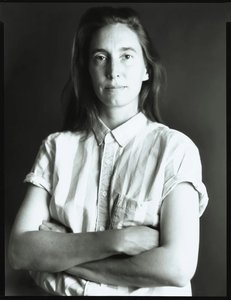
Jenny Holzer
1950 - , United States of America
Основные сведения
- Artistic Movement Or Style: Neo-conceptual art
- Artists Or Movements Influenced By This Artist:
- Cindy Sherman
- Sarah Charlesworth
- Artists Who Influenced This Artist:
- Louise Lawler
- Barbara Kruger
- Date Of Birth: July 29, 1950
- Full Name: Jenny Holzer
- Nationality: American
- Notable Artworks:
- Truisms
- DODDOACID
- Survival Series
- Place Of Birth: Gallipolis, Ohio
Похожие статьи
Топ-25 шедевров Венецианской биеннале: искусство для вашего дома от ArtsDot
Откройте для себя 25 шедевров Венецианской биеннале! Узнайте истории великих художников, техники и вдохновение за культовыми работами. Репродукции картин высокого качества от ArtsDot.com – искусство для вашего дома. Explore the full collection online!
Lithography: A Historical Survey of Technique, Artistic Expression & Enduring Legacy
Explore the rich history of lithography – from Senefelder’s invention to its impact on fine art & commercial printing. Discover key artists, techniques, and collecting insights at ArtsDot.
Jacob Lawrence: Narratives of Struggle, Resilience & Modernist Innovation
Explore the powerful narratives of Jacob Lawrence, a pivotal African American artist of the Harlem Renaissance. Discover his iconic 'Migration Series,' dynamic cubism style, and lasting impact on American art history.
Aaron Siskind: Deconstructing Reality – A Photographic Exploration of Texture, Form & the Abstract Landscape
Explore the transformative journey of Aaron Siskind, from social realism to pioneering abstract photography. Discover his iconic series & lasting influence on modern art. A guide for collectors.
Топ-10 знаменитых картин в каменных тонах: искусство и декор от ArtsDot
Откройте для себя 10 знаменитых картин, где камень становится главным героем! Изучите историю искусства, технику живописи и вдохновитесь шедеврами импрессионизма и реализма. Репродукции высокого качества на ArtsDot.com – преобразите интерьер с искусством!