

 Предпросмотр
 Поделиться
 Поделиться
 Детали произведения

 Скачать
 Похожие работы
 Рентгенография
 Слайд-шоу
 Статистика
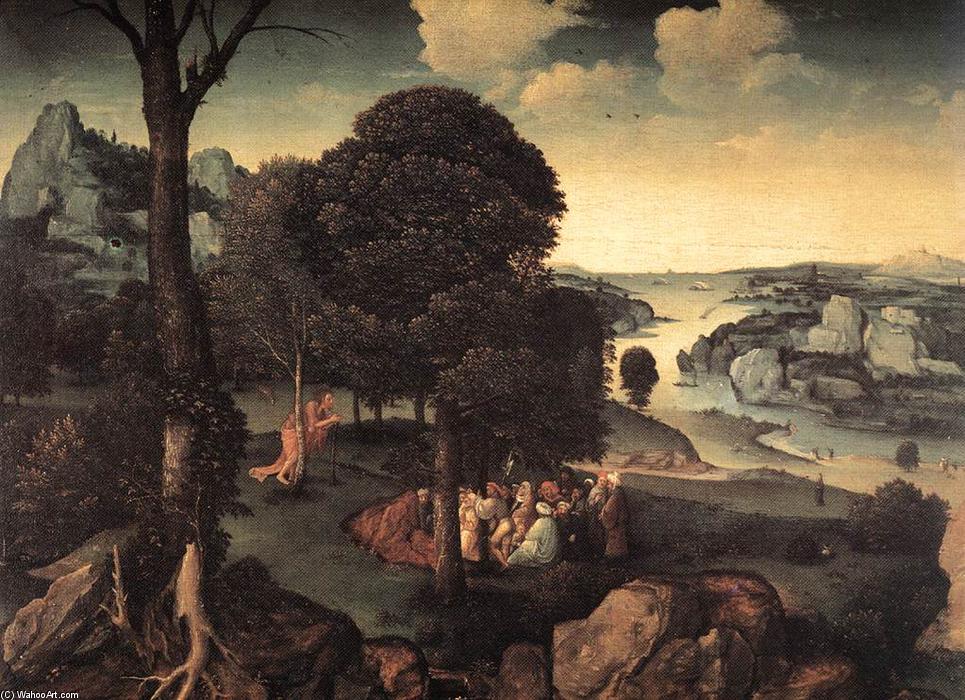
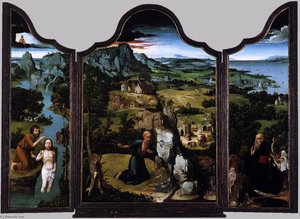
Landscape with St John the Baptist Preaching


 Читать далее
Приобретите цифровое изображение высокого разрешения в улучшенном качестве, которое значительно превосходит онлайн-превью.
Каждый файл тщательно подготавливается нашими специалистами с использованием передовых инструментов и экспертной ручной ретуши. Мы гарантируем исключительную четкость, точную цветопередачу и детальную проработку каждого изображения.
Финальный файл доставляется по электронной почте в течение 72 часов и оптимизирован для немедленного использования в профессиональной среде, при верстке и печати. Это тот же уровень качества, которому доверяют ведущие дизайнерские студии, издательства и галереи.
Цифровое изображение
Скачайте файл высокого разрешения для личного использования, печати и творческих проектов. ( Перейти к печати Купить картину ручной работы)
Включено в каждый заказ цифровых изображений
Гарантия экспертной цифровой доставки
Выбирая ArtsDot.com, вы получаете не просто изображение — вы приобретаете профессионально обработанное цифровое произведение искусства, созданное с безупречной точностью и под защитой гарантии качества. Вот всё, что автоматически входит в ваш заказ:

Мгновенная доставка по e-mail
Ваш цифровой файл в высоком разрешении будет отправлен вам по электронной почте в течение 72 часов после оформления заказа — и сразу станет доступен для использования.

Цифровой файл с ИИ-улучшением
Ваше произведение искусства проходит профессиональную оптимизацию с использованием передовых инструментов ИИ и ручной обработки, что гарантирует максимальную детализацию, четкость и точность цветопередачи.

Бессрочная бесплатная повторная доставка
Случайно удалили или потеряли файл? Не беспокойтесь — мы отправим его вам повторно в любое время и совершенно бесплатно.

Без импортных пошлин — навсегда
Наслаждайтесь вашим произведением искусства мгновенно без таможенных пошлин, сборов или затрат на доставку — цифровые загрузки всегда не облагаются налогом.

Гарантия точности цветопередачи
Мы гарантируем, что ваше цифровое изображение максимально точно передает оригинальные цвета благодаря использованию профессиональных инструментов и систем управления цветом.

Гарантия удовлетворенности 100 дней
Если вы не будете удовлетворены своим цифровым изображением, мы внесем правки или вернем 100% стоимости в течение 100 дней — без лишних вопросов.

100% Гарантия возврата средств
Не удовлетворены покупкой? Получите полный возврат средств в течение 100 дней после получения цифрового файла — без лишних вопросов.

Скидки на оптовые заказы
Купите 3 изображения, сэкономьте 10% — Купите 5, сэкономьте 15% — Купите 10+, сэкономьте 20%. Отличное решение для творческих проектов, галерей и агентств.
A Pioneering Vision of Pastoral Harmony: Exploring Joachim Patenier’s Landscape with St John the Baptist Preaching
Joachim Patenier stands as a singular figure in the burgeoning landscape of Flemish painting, a testament to artistic innovation that anticipated the profound shifts occurring across Europe during the Renaissance. Unlike his contemporaries who meticulously rendered architectural details and portraits with exacting precision—the titans of realism championed by Jan van Eyck and Rogier van der Weyden—Patenier dared to elevate the natural world into the heart of his narrative, establishing him as “the good painter of landscapes,” a designation that resonates powerfully even today through the observations of Albrecht Dürer. This singular focus wasn’t merely stylistic preference; it represented a fundamental reimagining of artistic expression, driven by an intellectual curiosity and spiritual sensitivity that distinguished Patenier from many of his peers.- Subject Matter: The painting depicts St John the Baptist delivering a sermon to a congregation gathered amidst a serene rural setting. This biblical scene—a cornerstone of Christian iconography—immediately imbues the artwork with religious significance, reflecting the humanist ideals prevalent during Patenier’s time.
- Style & Technique: Patenier's approach distinguishes itself from the prevailing artistic conventions of his era. Rather than striving for photographic accuracy, he employs atmospheric perspective – a technique pioneered by Patenier himself – to create depth and luminosity within the landscape. Softly blended hues dominate, conveying a palpable sense of tranquility and inviting contemplation.
- Symbolism: The inclusion of birds soaring overhead symbolizes hope and ascension, mirroring St John’s preaching and reinforcing the spiritual message of the scene. Similarly, the rocky outcrops and distant mountains contribute to the overall composition's grandeur, representing challenges overcome and steadfast faith.
Похожие произведения
Биография художника
A Pioneer of the Inner Landscape: Joachim Patenier and the Dawn of Atmospheric Painting
Joachim Patenier, a name often whispered alongside those of Jan van Eyck and Rogier van der Weyden, occupies a unique position in the history of Flemish painting. Born around 1480 in Dinant or Bouvignes – the precise location remains shrouded in some mystery – his artistic vision marked a pivotal shift away from the meticulous detail of earlier Netherlandish masters towards an exploration of landscape as not merely a backdrop, but as a powerful emotional and narrative force. While biographical details remain scarce, piecing together fragments from contemporary accounts, particularly those of Albrecht Dürer, reveals a man deeply engaged with the artistic currents of his time, yet forging a path distinctly his own. Dürer’s description of Patenier as “the good painter of landscapes” is remarkably prescient; it acknowledges not just technical skill but an innovative sensibility that would redefine how artists approached the representation of the natural world. He wasn't simply *depicting* landscapes, he was imbuing them with a sense of atmosphere and psychological depth previously unseen.The Flemish Primitives and the Italian Echo
Patenier’s artistic foundations were firmly rooted in the traditions of the Early Netherlandish masters. The influence of Jan van Eyck's painstaking realism and Rogier van der Weyden’s expressive figures is evident in his early works, particularly in the meticulous rendering of textures and details. He absorbed the lessons of Northern precision – the ability to capture light and shadow with astonishing accuracy, the detailed portrayal of fabrics and objects – but yearned for something more expansive. The burgeoning Italian Renaissance, with its emphasis on classical forms and perspective, also exerted a subtle influence, though filtered through a distinctly Flemish lens. This wasn’t a wholesale adoption of Italian ideals; rather, Patenier selectively incorporated elements – a sense of spatial depth, a greater use of aerial perspective – while retaining the Northern penchant for intricate detail and symbolic resonance. His landscapes weren't simply imitations of nature but carefully constructed allegories, often imbued with religious meaning. The vastness of his skies, the jagged peaks of distant mountains, and the winding paths through dense forests all served to amplify the spiritual drama unfolding within his paintings. He was a master of creating a sense of distance and depth, using techniques borrowed from Italian artists while maintaining his own distinctive style.Landscapes as Spiritual Realms: Major Works and Artistic Development
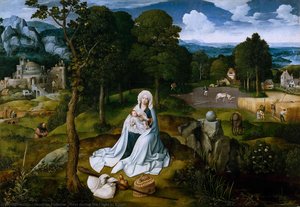
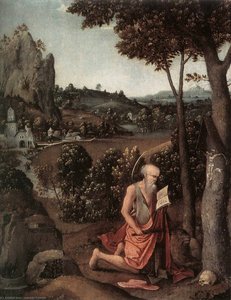
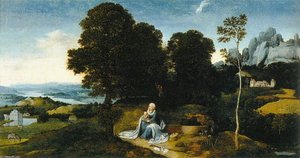
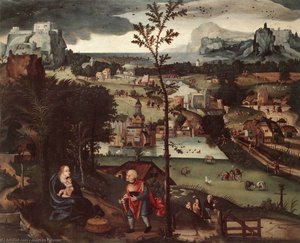
Patenier’s most celebrated works are those that showcase his innovative approach to landscape. Paintings like *Landscape with St Jerome*, of which several versions exist, exemplify his mastery. Here, the figure of Saint Jerome is dwarfed by the immensity of the surrounding wilderness, a stark contrast to earlier depictions where figures dominated the composition. The landscape isn’t merely a setting; it's an active participant in the narrative, reflecting Jerome’s solitude, contemplation, and spiritual struggle. Similarly, *Rest during the Flight into Egypt* presents a sweeping panorama that emphasizes the Holy Family’s vulnerability and their journey through a world both beautiful and perilous. The dramatic skies, often filled with swirling clouds and ominous shadows, foreshadow the trials to come.- The Deposition*, showcasing his masterful use of chiaroscuro – the dramatic contrast between light and dark – and his ability to convey profound emotional depth.
- The Holy Family* demonstrates his skill in composition, color harmony, and the depiction of intimate familial scenes.
- *Temptation of St Anthony* showcases his imaginative and often unsettling depictions of spiritual struggles.
A Lasting Legacy: Patenier’s Influence on Art History
Joachim Patenier died relatively young in 1524, but his impact on art history is undeniable. He was a true innovator, pioneering landscape as an independent genre and paving the way for later artists to explore the expressive potential of nature. His work bridged the gap between the late medieval traditions of the Flemish Primitives and the emerging Renaissance styles of the 16th century. He influenced generations of painters, inspiring them to see landscapes not just as backdrops but as powerful vehicles for conveying emotion, symbolism, and spiritual meaning. His legacy extends beyond technical innovation; he fundamentally altered how artists perceived their relationship with the natural world. Today, Patenier’s paintings can be found in prominent museums worldwide, including the Musées royaux des Beaux-Arts de Belgique in Brussels and the Prado Museum in Madrid, serving as a testament to his enduring artistic vision. His work continues to captivate viewers with its breathtaking beauty, profound symbolism, and the haunting sense of mystery that permeates his atmospheric landscapes – a true master who dared to look beyond the surface and explore the inner landscape of the soul. He remains a pivotal figure in the development of Western art, a testament to the power of innovation and the enduring allure of the natural world.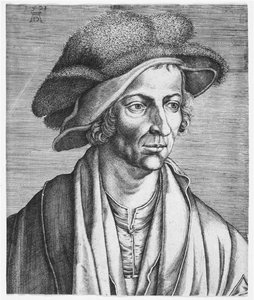
Якоим Патенир
1481 - 1524 , Бельгия
Основные сведения
- Artistic Movement Or Style: Ренессанс, Пейзаж
- Artists Or Movements Influenced By This Artist: ['Поздние фламандские художники']
- Artists Who Influenced This Artist:
- Ян ван Эйк
- Робер ван дер Вейден
- Date Of Birth: 1480-е гг.
- Date Of Death: 1524 г.
- Full Name: Joachim Patinier
- Nationality: Фламандский
- Notable Artworks:
- Снятие с креста
- Семейство Святого Лоренца
- Пейзаж со Святым Иеронимам
- Взятие из Египта
- Узы искушения святого Антония
- Place Of Birth: Динан, Бельгия