

 Поделиться
 Поделиться
 Детали произведения

 Скачать
 Похожие работы
 Слайд-шоу
 Статистика
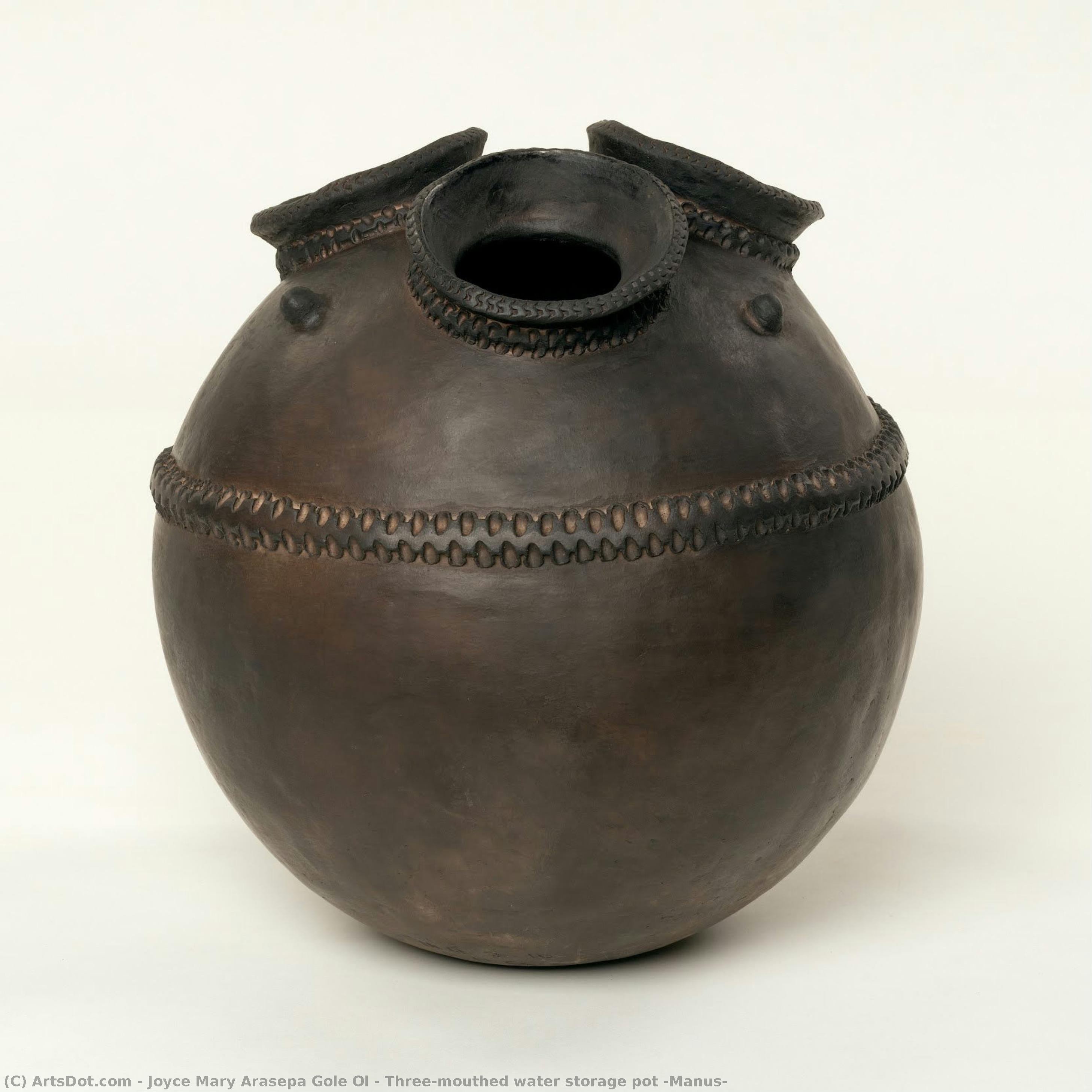
Three-mouthed water storage pot (Manus)
 Ceramics
- Cubism
 2016
2016 34.0 x 33.0 cm
 Государственная галерея искусств и Галерея современного искусства (QAGOMA)
 Читать далее
Приобретите цифровое изображение высокого разрешения в улучшенном качестве, которое значительно превосходит онлайн-превью.
Каждый файл тщательно подготавливается нашими специалистами с использованием передовых инструментов и экспертной ручной ретуши. Мы гарантируем исключительную четкость, точную цветопередачу и детальную проработку каждого изображения.
Финальный файл доставляется по электронной почте в течение 72 часов и оптимизирован для немедленного использования в профессиональной среде, при верстке и печати. Это тот же уровень качества, которому доверяют ведущие дизайнерские студии, издательства и галереи.
Цифровое изображение
Скачайте файл высокого разрешения для личного использования, печати и творческих проектов. ( Перейти к печати Купить картину ручной работы)
Включено в каждый заказ цифровых изображений
Гарантия экспертной цифровой доставки
Выбирая ArtsDot.com, вы получаете не просто изображение — вы приобретаете профессионально обработанное цифровое произведение искусства, созданное с безупречной точностью и под защитой гарантии качества. Вот всё, что автоматически входит в ваш заказ:

Мгновенная доставка по e-mail
Ваш цифровой файл в высоком разрешении будет отправлен вам по электронной почте в течение 72 часов после оформления заказа — и сразу станет доступен для использования.

Цифровой файл с ИИ-улучшением
Ваше произведение искусства проходит профессиональную оптимизацию с использованием передовых инструментов ИИ и ручной обработки, что гарантирует максимальную детализацию, четкость и точность цветопередачи.

Бессрочная бесплатная повторная доставка
Случайно удалили или потеряли файл? Не беспокойтесь — мы отправим его вам повторно в любое время и совершенно бесплатно.

Без импортных пошлин — навсегда
Наслаждайтесь вашим произведением искусства мгновенно без таможенных пошлин, сборов или затрат на доставку — цифровые загрузки всегда не облагаются налогом.

Гарантия точности цветопередачи
Мы гарантируем, что ваше цифровое изображение максимально точно передает оригинальные цвета благодаря использованию профессиональных инструментов и систем управления цветом.

Гарантия удовлетворенности 100 дней
Если вы не будете удовлетворены своим цифровым изображением, мы внесем правки или вернем 100% стоимости в течение 100 дней — без лишних вопросов.

100% Гарантия возврата средств
Не удовлетворены покупкой? Получите полный возврат средств в течение 100 дней после получения цифрового файла — без лишних вопросов.

Скидки на оптовые заказы
Купите 3 изображения, сэкономьте 10% — Купите 5, сэкономьте 15% — Купите 10+, сэкономьте 20%. Отличное решение для творческих проектов, галерей и агентств.
Похожие произведения

Биография художника
Robert Delaunay: A Revolutionary of Color and Light
Robert Delaunay, born Robert-Victor-Felix Delaunay on April 12th, 1885, in the bustling heart of Paris, was not merely a painter; he was a pioneer who fundamentally reshaped our perception of color and its expressive potential. His life, intertwined with that of his wife Sonia Delaunay, became a vibrant testament to artistic collaboration and a bold rejection of traditional aesthetic boundaries. From his early apprenticeship as a theatrical designer – a period that instilled in him an appreciation for visual harmony and dynamic composition – to his later explorations into abstraction, Delaunay’s career was marked by relentless experimentation and a profound belief in the inherent power of color itself. He died on October 25th, 1941, leaving behind a legacy as one of the most influential figures of the early 20th century.Early Influences and the Dawn of Divisionism
Delaunay’s artistic journey began within the framework of Neo-Impressionism, a movement he initially embraced in the early 1900s. This influence is evident in his early works like “Saint-Séverin,” where meticulously placed dots of color were used to recreate the shimmering light and atmosphere of the Parisian cathedral. However, Delaunay quickly recognized the limitations of this approach, finding it too reliant on a purely optical imitation of reality. He sought a more fundamental expression of color’s essence, leading him to develop his own distinctive style known as Divisionism – a technique that involved dissecting images into smaller, independent areas of color, allowing each hue to stand alone and interact with its neighbors. This method, often described as “controlled fragmentation,” liberated color from the constraints of form and allowed for a more dynamic and emotionally charged visual experience.The Birth of Orphism: A Symphony of Color
Around 1912, alongside his wife Sonia, Delaunay co-founded the movement known as Orphism – a term coined by the poet Guillaume Apollinaire, who recognized the group’s radical approach to color and form. Orphism wasn't simply about using bright colors; it was a philosophy of art centered on the belief that color itself possessed an independent existence and could be used to evoke emotions and sensations directly. Delaunay and Sonia experimented with circular forms, radiating lines, and bold, contrasting hues, creating paintings that resembled stained-glass windows or kaleidoscopic patterns. Their work rejected representational imagery in favor of pure visual sensation, aiming to create a “pure” artistic experience. Key works from this period include "Disc" (1912) and "Circular Forms" (1913), which exemplify the movement’s core principles.Abstraction and the Pursuit of Pure Color
Following World War I, Delaunay's style underwent a significant transformation. He moved away from the fragmented forms of Divisionism and embraced a more abstract approach, focusing on the interplay of color and light. His later paintings, such as “Endless Rhythm” (1930-31), are characterized by large, luminous fields of color that seem to vibrate with energy. These works represent a culmination of his lifelong exploration of color theory, informed by scientific research into the nature of light and perception. He believed that painting should be a purely visual art, independent of subject matter, and sought to create paintings that were not merely representations of objects but rather expressions of pure feeling.Legacy and Influence
Robert Delaunay’s impact on 20th-century art is undeniable. His pioneering work in color theory influenced a generation of artists, including Stanton Macdonald-Wright, Morgan Russell, Paul Klee, and even the German Expressionists. His emphasis on the independent existence of color paved the way for later developments in abstract expressionism and color field painting. Furthermore, his collaborative partnership with Sonia Delaunay established a unique model for artistic creation, demonstrating the power of shared vision and mutual inspiration. Today, Robert Delaunay’s paintings are celebrated for their vibrant energy, innovative use of color, and profound exploration of the visual world. His legacy continues to inspire artists and viewers alike, reminding us of the transformative potential of art to evoke emotion and expand our understanding of reality.
joyce mary arasepa gole ol
1941 - , Papua New Guinea
Основные сведения
- Artistic Movement Or Style:
- Divisionism
- Cubism
- Orphism
- Abstract art
- Artists Or Movements Influenced By This Artist:
- Stanton-Wright
- Morgan Russell
- Patrick Bruce
- Der Blaue Reiter
- Macke
- Marc
- Klee
- Benton
- Feininger
- Artists Who Influenced This Artist:
- Neoimpressionism
- Cézanne
- Date Of Birth: April 12, 1885
- Date Of Death: October 25, 1941
- Full Name: Robert Delaunay
- Nationality: French
- Notable Artworks:
- Endless Rhythm
- Cubism
- Orphic Cubism
- Simultanism
- Place Of Birth: Paris, France