


 Предпросмотр
 Поделиться
 Поделиться
 Детали произведения

 Скачать
 Похожие работы
 Рентгенография
 Слайд-шоу
 Статистика
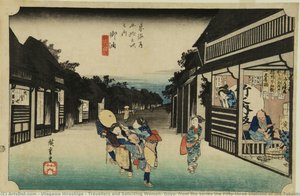
Kiso Road, Fukaya Station
 Woodblock Print
- Ukiyo-e
 19th Century
 36.0 x 24.0 cm
 Saitama Prefectural Museum of History and Folklore
 Читать далее
Приобретите цифровое изображение высокого разрешения в улучшенном качестве, которое значительно превосходит онлайн-превью.
Каждый файл тщательно подготавливается нашими специалистами с использованием передовых инструментов и экспертной ручной ретуши. Мы гарантируем исключительную четкость, точную цветопередачу и детальную проработку каждого изображения.
Финальный файл доставляется по электронной почте в течение 72 часов и оптимизирован для немедленного использования в профессиональной среде, при верстке и печати. Это тот же уровень качества, которому доверяют ведущие дизайнерские студии, издательства и галереи.
Цифровое изображение
Скачайте файл высокого разрешения для личного использования, печати и творческих проектов. ( Перейти к печати Купить картину ручной работы)
Включено в каждый заказ цифровых изображений
Гарантия экспертной цифровой доставки
Выбирая ArtsDot.com, вы получаете не просто изображение — вы приобретаете профессионально обработанное цифровое произведение искусства, созданное с безупречной точностью и под защитой гарантии качества. Вот всё, что автоматически входит в ваш заказ:

Мгновенная доставка по e-mail
Ваш цифровой файл в высоком разрешении будет отправлен вам по электронной почте в течение 72 часов после оформления заказа — и сразу станет доступен для использования.

Цифровой файл с ИИ-улучшением
Ваше произведение искусства проходит профессиональную оптимизацию с использованием передовых инструментов ИИ и ручной обработки, что гарантирует максимальную детализацию, четкость и точность цветопередачи.

Бессрочная бесплатная повторная доставка
Случайно удалили или потеряли файл? Не беспокойтесь — мы отправим его вам повторно в любое время и совершенно бесплатно.

Без импортных пошлин — навсегда
Наслаждайтесь вашим произведением искусства мгновенно без таможенных пошлин, сборов или затрат на доставку — цифровые загрузки всегда не облагаются налогом.

Гарантия точности цветопередачи
Мы гарантируем, что ваше цифровое изображение максимально точно передает оригинальные цвета благодаря использованию профессиональных инструментов и систем управления цветом.

Гарантия удовлетворенности 100 дней
Если вы не будете удовлетворены своим цифровым изображением, мы внесем правки или вернем 100% стоимости в течение 100 дней — без лишних вопросов.

100% Гарантия возврата средств
Не удовлетворены покупкой? Получите полный возврат средств в течение 100 дней после получения цифрового файла — без лишних вопросов.

Скидки на оптовые заказы
Купите 3 изображения, сэкономьте 10% — Купите 5, сэкономьте 15% — Купите 10+, сэкономьте 20%. Отличное решение для творческих проектов, галерей и агентств.
A Window into the Bunsei Era: The Bustling Spirit of Fukaya Station
In the delicate interplay of light and shadow captured within Kiso Road, Fukaya Station, we are transported back to a vanished world of 19th-century Japan. This evocative work by the ukiyo-e master Keisai Eisen serves as more than just a landscape; it is a cinematic snapshot of life in motion. Through the monochromatic lens of this composition, the artist invites us to wander alongside the travelers of the Kisokaidō highway, feeling the rhythmic pulse of a roadside station coming to life. The scene is thick with atmosphere, where the quiet dignity of the architecture meets the spontaneous energy of a crowd, creating a sense of timelessness that resonates deeply with the modern observer.
The composition masterfully balances the structural permanence of the buildings and fences with the fleeting, ephemeral nature of human movement. As we gaze upon the street, our eyes are drawn through a carefully orchestrated depth of field—from the figures in the immediate foreground to the distant silhouettes navigating the urban landscape. The presence of a small dog trotting amidst the pedestrians and the subtle detail of a handbag carried by a traveler add layers of profound realism, grounding the historical scene in a relatable, human intimacy. This is not merely a depiction of a location, but a celebration of the "floating world," where every passing moment is imbued with significance.
The Mastery of Keisai Eisen and the Ukiyo-e Tradition
To understand the soul of this piece, one must look to the hand of Keisai Eisen, an artist who defined the aesthetic of the Bunsei era. Renowned for his ability to capture both the sensual beauty of women and the rugged spirit of Japanese landscapes, Eisen possessed a unique gift for storytelling through line and tone. In this particular work, his technique emphasizes the textures of the wooden structures and the varied silhouettes of the travelers, creating a visual rhythm that mimics the heartbeat of a busy station. The use of high-contrast tones allows the viewer to perceive the weight of the shadows and the brightness of the open street, evoking a sense of atmosphere that feels almost tactile.
For collectors and interior designers alike, this reproduction offers a sophisticated focal point that bridges the gap between historical reverence and contemporary elegance. The monochromatic palette provides a versatile aesthetic that complements both minimalist modern interiors and more traditional, richly textured spaces. It serves as a conversation piece that invites contemplation on themes of journey, transition, and the enduring beauty of the everyday. Owning such a piece is an opportunity to possess a fragment of Japanese history, rendered with the precision and emotional depth that only a master of the ukiyo-e tradition could achieve.
Похожие произведения
Биография художника
The Soul of the Bunsei Era: The Life and Legacy of Keisai Eisen
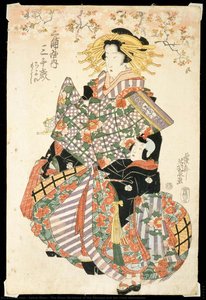
In the vibrant, flickering light of 19th-century Edo, few artists captured the pulse of the "floating world" with as much evocative intensity as Keisai Eisen. Born into the prestigious Ikeda samurai clan as Ikeda Yoshinobu, his early life was a tapestry of privilege and profound hardship. The son of a respected calligrapher, Shigeharu, Eisen was raised in an environment steeped in the delicate arts of poetry and brushwork. However, the untimely loss of his parents thrust him into the life of a rōnin—a wandering samurai. This transition from the structured world of the elite to the unpredictable streets of the urban commoner did more than just alter his social standing; it infused his artistic vision with a raw, rebellious spirit and a deep empathy for the transient beauty found in the everyday.
Eisen’s artistic journey was shaped by a rigorous lineage of masters. He first sought formal training under Hakkeisai, a practitioner of the prestigious Kano school, which provided him with a foundation in classical technique and structural precision. Yet, it was his subsequent apprenticeship under Kikugawa Eizan, a titan of bijin-ga (pictures of beautiful women), that truly ignited his creative fire. While he inherited the grace of his predecessors, Eisen possessed an irrepressible urge to innovate. He moved away from the idealized, ethereal beauties of earlier eras, choosing instead to portray women with a more worldly, palpable sensuality. This shift defined the aesthetic of the Bunsei era (1818–1830), a period often characterized by its decadent and psychologically complex atmosphere.
A Master of Sensuality and Landscape
The brilliance of Eisen’s work lies in his ability to balance the intimate with the expansive. He became a master of ōkubi-e, or large-head portraits, where he utilized bold compositions and arresting gazes to convey a spectrum of human emotion—from quiet confidence to a haunting, melancholic longing. His subjects were not mere icons of beauty but characters with depth, their identities woven into the intricate patterns of their meticulously rendered kimonos. Through his brush, the fashion of the Edo period became a language of itsability and social nuance.
Beyond the intimate portraits of women, Eisen demonstrated a remarkable command over the Japanese landscape. His series documenting the Kisokaidō highway stands as a testament to his ability to capture the rhythmic movement of travel and the rugged spirit of the countryside. In works such as his depictions of Fukaya Station or Ageo Station, he transformed mere topographical records into cinematic snapshots of life in motion. He possessed a unique gift for:
- Atmospheric Depth: Using light and shadow to create a sense of temporal presence, making the viewer feel the humidity of a summer afternoon or the chill of a mountain pass.
- Narrative Detail: Integrating small, humanizing elements—a wandering dog, a traveler’s handbag, or a distant silhouette—to ground his landscapes in a relatable reality.
- Collaborative Vision: Engaging in grand-scale projects, such as the joint series with Utagawa Hiroshige, which helped define the visual identity of Japan's most important travel routes.
Historical Significance and Enduring Influence
Keisai Eisen’s contribution to ukiyo-e extends far beyond the aesthetic; he was a chronicler of an era’s soul. While his contemporaries like Kunisada focused on the theatrical drama of Kabuki, and Kuniyoshi explored the heroic legends of warriors, Eisen turned his gaze toward the psychological and the atmospheric. His work bridged the gap between the classical elegance of the past and the more visceral, "decadent" realism that would characterize much of late Edo art. He was not only a printmaker but also a man of letters, contributing to the literary landscape through biographies and historical texts.
Today, Eisen is remembered as one of the most prominent masters of 19th-century Japanese woodblock prints. His ability to capture the ephemeral nature of the "floating world"—the fleeting moment, the passing traveler, the subtle glance—ensures his place in the pantheon of great artists. His legacy continues to resonate, offering modern observers a window into a vanished world where every line and color served to celebrate the profound beauty found within the transient and the everyday.
keisai eisen
1790 - 1848
Основные сведения
- Artistic Movement Or Style: Bunsei Era Ukiyo-e
- Artists Or Movements Influenced By This Artist:
- Kunisada
- Kuniyoshi
- Artists Who Influenced This Artist:
- Kanō Hakkeisai
- Kikugawa Eizan
- Date Of Birth: 1790
- Full Name: Ikeda Yoshinobu (Keisai Eisen)
- Nationality: Japanese
- Notable Artworks:
- Omiya Station with Mt. Fuji
- The Oiran Michitose
- Place Of Birth: Edo (Tokyo)