


 Предпросмотр
 Поделиться
 Поделиться
 Детали произведения

 Скачать
 Похожие работы
 Рентгенография
 Слайд-шоу
 Статистика
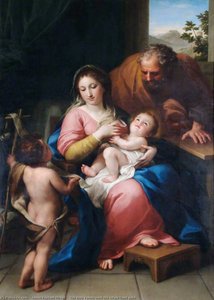
The Holy Family with Saint Catherine of Alexandria
 Oil On Canvas
- WallArt
- Venetian Renaissance
 1581
1581 130.0 x 112.0 cm
 Лос-Анджелесский музей округа Лос-Анджелеса
 Читать далее
Масляная репродукция ручной работы
Картина маслом на холсте в выбранном вами размере и раме, написанная на заказ нашими художниками. ( Перейти к печати Перейти к цифровым изображениям)




P118B $10

P118H $10

P118W $10

P438Z $10

P508JH $12

P508YH $12

P805H $10

P805Z $10

P919BZ $10

P919G $10

P919XJ $10

P959ZH $10

P968JZ $12

W106C $8

W218G $10

W218JH $8

W218Y $10

W307PJ $10

W316G $10

W316PJ $8

W316Y $10

W398PJ $8

W4111J $10

W500HY $15

W500JH $15

W692G $12

W849H $8

W940BG $15

W953PJ $8




Выберите один из наших стандартных размеров, соответствующих оригинальным пропорциям произведения искусства.

Вы можете указать собственные размеры, чтобы картина идеально вписалась в выбранную раму или пространство. Если выбранный вами размер не соответствует пропорциям оригинала, мы либо обрежем полотно, либо расширим его за счет дополнительных элементов, написанных вручную. Цифровой макет будет отправлен вам на утверждение перед началом производства.
Обратите внимание, что предварительный просмотр на экране не отражает фактическую обрезку или расширение. Только макет точно покажет окончательную композицию.
Хотя доступны индивидуальные размеры, мы рекомендуем выбирать вариант из предопределенного списка, чтобы сохранить исходные пропорции.
После оформления заказа команда ArtsDot.com свяжется с клиентом по электронной почте для уточнения деталей и предоставит предварительный макет
Доставка по всему миру () за 3–4 недели вместо стандартных 5 недель. (15 Сентябрь). Без компромиссов в качестве.

Бесплатная экспресс-доставка по всему миру

Высококачественный льняной холст

Полное страхование доставки

Гарантия возмещения таможенных пошлин

Гарантия точного соответствия цветов

100-дневная политика возврата (только при обнаружении дефектов)

Гарантия возврата 100% средств

Предложение оптовых скидок
 Вариант со стеклом доступен только для размеров менее 110 см

The Holy Family with Saint Catherine of Alexandria
Техника репродукции
Размер репродукции
-


Итоговая стоимость
$ 313
Lavinia Fontana’s Venetian Renaissance Masterpiece: The Holy Family with Saint Catherine of Alexandria
Within the hallowed halls of the Los Angeles County Museum of Art resides a painting that whispers tales of resilience, artistic innovation, and profound devotion – Lavinia Fontana's “The Holy Family with Saint Catherine of Alexandria,” completed in 1581. More than just a depiction of Mary, Jesus, and Joseph, this work stands as a testament to the extraordinary journey of one of Europe’s first professional female artists, a woman who defied societal constraints and carved her own path within the fiercely competitive world of Renaissance art. The painting immediately draws the eye with its rich palette – deep reds, blues, and golds—a hallmark of Venetian artistic style, where luminosity and vibrant color were prized above all else. Yet, it’s not merely a feast for the eyes; Fontana masterfully employs chiaroscuro lighting, dramatically contrasting areas of light and shadow to sculpt the figures and imbue the scene with an almost palpable sense of intimacy and serenity.
Fontana's composition is rooted in classical principles, notably the pyramidal structure—a technique borrowed from Raphael and Correggio—that lends stability and harmony to the arrangement. Mary, positioned at the apex, cradles the infant Jesus, while Joseph stands protectively beside them. The inclusion of Saint Catherine of Alexandria, a prominent early Christian martyr known for her wisdom and virtue, adds another layer of symbolic depth. Catherine’s presence elevates the scene beyond a simple domestic portrait, transforming it into a meditation on faith, family, and divine grace. The architectural setting, though somewhat flattened in perspective—a characteristic of Renaissance painting—suggests a richly decorated interior space, hinting at the sanctity and importance of the family within.
A Pioneer’s Path: Lavinia Fontana and the Counter-Reformation
Understanding “The Holy Family” requires acknowledging the remarkable circumstances surrounding its creation. Lavinia Fontana was not simply an artist; she was a trailblazer in a period when women were largely excluded from formal artistic training and professional opportunities. Born into a family of artists in Bologna, Italy, she received her initial education from her father, Prospero Fontana, a respected painter known for his Mannerist style. However, it was through her marriage to Gian Paolo Zappi, one of her father’s pupils, that Fontana secured the freedom and resources necessary to pursue her artistic career with genuine dedication. This unique arrangement—a husband who supported her work rather than hindering it—was unprecedented at the time, allowing her to establish herself as a professional artist.
Fontana's work during this period was deeply influenced by the Counter-Reformation, the Catholic Church’s response to the Protestant Reformation. Cardinal Gabriele Paleotti, a key figure in shaping artistic theory during this era, advocated for art that would inspire piety and emotional engagement. Fontana embraced these principles, striving to create images that moved viewers spiritually rather than merely depicting religious subjects with detached accuracy. Her attention to detail, particularly in rendering the expressions of the figures—a subtle hint of tenderness in Mary’s gaze, a protective warmth in Joseph's posture—reflects this commitment to conveying emotion and fostering a connection between the viewer and the sacred narrative.
Technique and Materials: A Masterful Oil Painting
The painting itself is executed with meticulous skill using oil paints on canvas – a technique that allowed for layering, glazing, and subtle tonal variations, creating an astonishingly rich and luminous surface. Fontana’s brushwork is remarkably refined, particularly in the rendering of drapery, which flows with graceful curves and folds, adding depth and texture to the scene. The smooth surfaces of the figures' faces contrast subtly with the tactile quality of the fabric, further enhancing the sense of realism. Close examination reveals a careful attention to detail—the delicate folds of Mary’s robes, the intricate patterns on the architectural elements, and the subtle nuances in the expressions of each figure.
The use of color is particularly noteworthy. Fontana employs a vibrant palette of reds, blues, and golds, creating a sense of warmth and opulence that reflects the Venetian artistic tradition. The lighting—a dramatic chiaroscuro effect—casts strong shadows, highlighting the forms of the figures and adding depth to the composition. This masterful manipulation of light and shadow not only enhances the visual impact of the painting but also contributes to its emotional resonance.
A Legacy of Innovation: Beyond the Canvas
Lavinia Fontana’s “The Holy Family with Saint Catherine of Alexandria” is more than just a beautiful artwork; it's a symbol of artistic courage and perseverance. It represents the triumph of talent over adversity, the breaking down of societal barriers, and the assertion of a woman’s right to pursue her creative passions. Her story continues to inspire artists and art lovers alike, reminding us that innovation often emerges from unexpected places and that true artistry knows no gender.
Похожие произведения
Биография художника
A Bolognese Trailblazer: The Life and Art of Lavinia Fontana
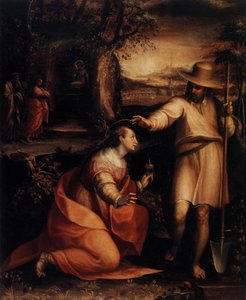
Lavinia Fontana, born in Bologna in 1552, stands as a truly remarkable figure in the history of art – a Renaissance woman who defied expectations and carved out an extraordinary career for herself as a painter. In an era when artistic pursuits were largely confined to men, Fontana not only mastered her craft but also became one of the first professional female artists, operating independently within the established art world—outside the confines of a court or convent. Her story is one of exceptional talent nurtured by a supportive family, unwavering dedication, and a remarkable ability to overcome societal barriers, ultimately leaving behind a legacy that continues to inspire. Fontana’s artistic journey began under the tutelage of her father, Prospero Fontana, a respected painter in his own right who had worked alongside renowned masters like Taddeo Zuccari and Giorgio Vasari. Bologna at this time was a vibrant center for art, brimming with influences from the School of Fontainebleau and the Carracci family. Lavinia’s early years were marked by an immersion in the artistic traditions of her city – she studied diligently, absorbing techniques and styles from the works that adorned the private collections and public spaces of Bologna. Crucially, she had access to some of the most significant paintings of the time: Raphael's *Vision of Ezekiel* and Correggio’s *Noli me tangere*, providing a direct connection to the artistic giants who shaped the Renaissance. This early exposure instilled in her a deep appreciation for classical beauty and a keen eye for detail, elements that would become hallmarks of her distinctive style.Elegance, Innovation, and the Bolognese Style
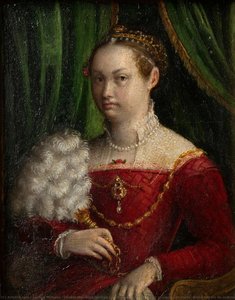
Fontana’s artistic style evolved over time, initially mirroring the traditions of her father – a blend of Mannerist elegance and refined technique. However, she quickly absorbed influences from other prominent artists, notably Denis Calvaert, whose school in Bologna was a hub of innovation during the late 16th century. This exposure led to a significant shift in her work, incorporating elements of the Carracciesque style – characterized by its dramatic compositions, vibrant colors, and a heightened sense of realism. She skillfully blended these influences with a distinctly Venetian richness—a luminous quality that added depth and luminosity to her paintings. Fontana’s portraits, in particular, became renowned for their captivating beauty and psychological insight. She possessed an exceptional ability to capture not only the physical appearance of her subjects but also their inner character, creating images that were both strikingly realistic and deeply engaging. Her portraits of noblewomen, often accompanied by their beloved lapdogs, offered a glimpse into the opulent lifestyles and social customs of 16th-century Bologna.Breaking Barriers: A Career Forged Against the Grain
Lavinia Fontana’s achievements extended far beyond her artistic skill; she was a true trailblazer, widely regarded as the first woman artist to operate independently within the established art world—outside the confines of a court or convent. This was an extraordinary feat in an era when women were largely excluded from professional life and often relegated to domestic roles. Her success wasn’t simply about talent; it was also about shrewd business acumen, strategic networking, and the unwavering support of her husband, Paolo Zappi, who served as her agent and managed their growing family—they had eleven children together. The marriage agreement itself was remarkably progressive – acknowledging Lavinia’s potential for earning income through her art and negating the need for a traditional dowry. This innovative arrangement allowed her to pursue her career with greater freedom and independence. Her rising reputation quickly attracted the attention of powerful patrons, including Pope Gregory XIII and his family, leading to commissions for portraits of prominent individuals – cardinals, dukes, and even foreign dignitaries. These prestigious commissions propelled her career to new heights, culminating in her move to Rome in 1604 where she became a sought-after portraitist at the papal court. In 1611, she received further recognition with a bronze portrait medallion cast by Felice Antonio Casoni, and was elected into the Accademia di San Luca—an honor rarely bestowed upon women artists of the time, signifying her acceptance as a respected member of the Roman artistic community.Major Works and Artistic Themes
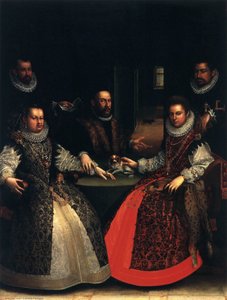
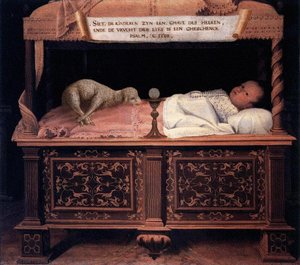
Fontana’s oeuvre encompasses a diverse range of subjects, reflecting both her technical skill and her artistic versatility. She produced numerous religious paintings – altarpieces for churches, devotional panels, and small-scale works depicting biblical scenes. Notable examples include *Martyrdom of St. Stephen* (1604), a monumental altarpiece commissioned for San Paolo Fuori le Mura in Rome—a testament to her ambition and artistic prowess; *Visit of the Queen of Sheba to Solomon* (c. 1598-1600), a complex narrative scene demonstrating her ability to manage large-scale compositions; and *Holy Family with Saints Margaret and Francis* (1578), showcasing her mastery of Renaissance iconography. Her portraits, such as *Double Marriage Portrait* (1584) and *Venus and Cupid* (1592), are particularly celebrated for their elegance, psychological depth, and meticulous attention to detail—capturing the beauty and status of their subjects with remarkable skill. Her work also includes captivating depictions of newborns, reflecting a fascination with motherhood and domestic life.A Lasting Legacy
Lavinia Fontana’s legacy extends far beyond her individual paintings; she remains an icon of female empowerment in the art world. She not only demonstrated that women could achieve artistic excellence on par with their male counterparts but also paved the way for future generations of female artists to pursue their passions without societal constraints. Her story is a powerful reminder that talent knows no gender and that perseverance can overcome even the most formidable obstacles. Fontana’s ability to balance a thriving artistic career with the demands of motherhood—raising eleven children while maintaining a rigorous painting schedule—is a testament to her resilience, dedication, and unwavering commitment to her craft. Her work continues to be studied and admired today, solidifying her place as one of the most important and influential artists of the Italian Renaissance. Lavinia Fontana’s impact extends beyond her paintings; she remains an icon of female empowerment in the art world.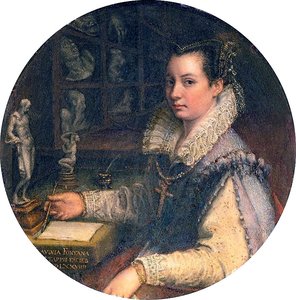
Лавния Фонтана
1552 - 1614 , Италия
Основные сведения
- Artistic Movement Or Style: Маньеризм, Барокко
- Artists Who Influenced This Artist:
- Просперо Фонтана
- Денис Кавальерто
- Date Of Birth: 24 августа 1552 г.
- Date Of Death: 11 августа 1614 г.
- Full Name: Лавния Фонтана
- Nationality: Итальянская
- Notable Artworks:
- Портрет двойного брака
- Венера и Купидон
- Новорожденный ребенок в колыбели
- Юдифь с Олоферном
- Place Of Birth: Болонья, Италия
Похожие статьи
Семейный портрет как отражение эпохи: создайте личное наследие с ArtsDot
Создайте уникальный семейный портрет ручной работы с ArtsDot! Профессиональные художники, высокое качество, индивидуальный подход и сохранение вашей истории на века. Закажите сейчас!

The Enduring Power of Painting: A Historical & Contemporary Exploration of Form and Emotion
Explore the rich history & enduring techniques of oil painting with ArtsDot. Discover masterpieces, learn about art collecting, and find authentic handmade reproductions crafted by skilled artists.

Oil on Canvas: A Historical & Technical Exploration of a Timeless Artistic Medium
Explore the rich history & enduring techniques of oil painting on canvas. Discover the science behind its longevity, conservation practices, and contemporary relevance. Expert insights for art enthusiasts.

The Enduring Legacy of Oil on Canvas: Technique, History & Aesthetic Impact
Explore the rich history & techniques of oil painting – from Renaissance masters to Impressionism. Discover pigments, layering methods, and why this timeless medium endures. Expert insights for artists & art enthusiasts.
The Golden Light of Innovation: Exploring the Venetian Renaissance Art Movement (1430–1580)
Explore the Golden Age of Venetian art (1430–1580). Discover Giorgione, Titian & Tintoretto's techniques, the 'colorito' revolution, and lasting influence. Expert insights for collectors & enthusiasts.