 Предпросмотр
 Поделиться
 Поделиться
 Детали произведения

 Скачать
 Похожие работы
 Рентгенография
 Слайд-шоу
 Статистика
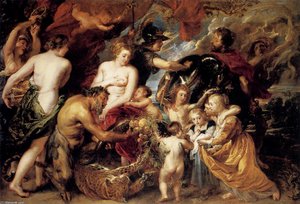
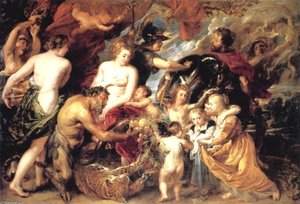
LA PAIX RAMENANT L'ABONDANCE


 Читать далее
Масляная репродукция ручной работы
Картина маслом на холсте в выбранном вами размере и раме, написанная на заказ нашими художниками. ( Перейти к печати Перейти к цифровым изображениям)




P118B $10

P118H $10

P118W $10

P438Z $10

P508JH $12

P508YH $12

P805H $10

P805Z $10

P919BZ $10

P919G $10

P919XJ $10

P959ZH $10

P968JZ $12

W106C $8

W218G $10

W218JH $8

W218Y $10

W307PJ $10

W316G $10

W316PJ $8

W316Y $10

W398PJ $8

W4111J $10

W500HY $15

W500JH $15

W692G $12

W849H $8

W940BG $15

W953PJ $8




Выберите один из наших стандартных размеров, соответствующих оригинальным пропорциям произведения искусства.

Вы можете указать собственные размеры, чтобы картина идеально вписалась в выбранную раму или пространство. Если выбранный вами размер не соответствует пропорциям оригинала, мы либо обрежем полотно, либо расширим его за счет дополнительных элементов, написанных вручную. Цифровой макет будет отправлен вам на утверждение перед началом производства.
Обратите внимание, что предварительный просмотр на экране не отражает фактическую обрезку или расширение. Только макет точно покажет окончательную композицию.
Хотя доступны индивидуальные размеры, мы рекомендуем выбирать вариант из предопределенного списка, чтобы сохранить исходные пропорции.
После оформления заказа команда ArtsDot.com свяжется с клиентом по электронной почте для уточнения деталей и предоставит предварительный макет
Доставка по всему миру () за 3–4 недели вместо стандартных 5 недель. (12 Сентябрь). Без компромиссов в качестве.

Бесплатная экспресс-доставка по всему миру

Высококачественный льняной холст

Полное страхование доставки

Гарантия возмещения таможенных пошлин

Гарантия точного соответствия цветов

100-дневная политика возврата (только при обнаружении дефектов)

Гарантия возврата 100% средств

Предложение оптовых скидок
 Вариант со стеклом доступен только для размеров менее 110 см

LA PAIX RAMENANT L'ABONDANCE
Техника репродукции
Размер репродукции
-


Итоговая стоимость
$ 288
LA PAIX RAMENANT L'ABONDANCE – A Symphony of Grace and Fertility
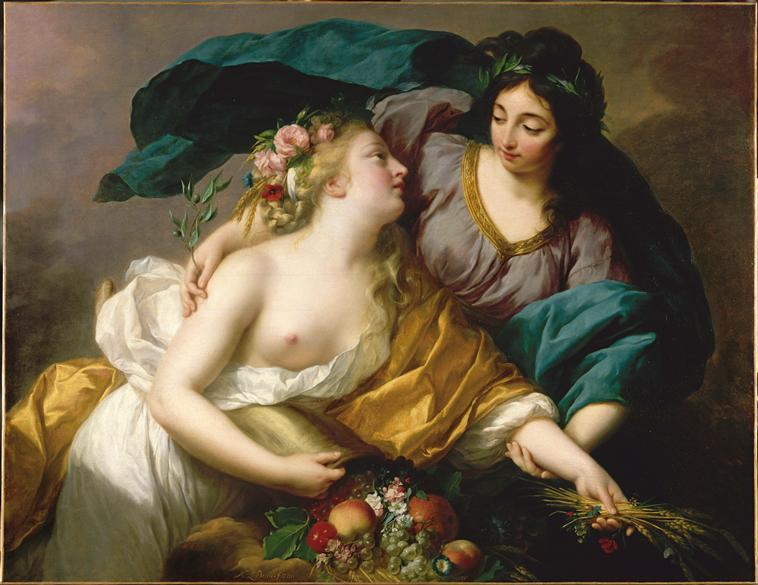
Louise Élisabeth Vigée Le Brun’s “LA PAIX RAMENANT L'ABONDANCE” transcends mere portraiture; it embodies the opulent spirit of Rococo art, capturing a moment of serene beauty infused with profound symbolic meaning. Executed around 1783, this masterpiece resides within the esteemed collection of the Académie royale de Peinture et de Sculpture, offering viewers an unparalleled glimpse into the artistic sensibilities of its time. The painting depicts two female figures—a reclining woman and a standing woman—engaged in an intimate embrace that speaks volumes about harmony and prosperity.Composition & Technique: Rococo Elegance Embodied
The artist skillfully employs a balanced composition, prioritizing visual equilibrium while simultaneously conveying dynamism. Vigée Le Brun’s masterful technique showcases the hallmarks of Rococo painting – layering and glazing techniques meticulously applied to create subtle tonal gradations and luminous textures. Oil on canvas dominates, allowing for exceptional detail and capturing the ethereal quality characteristic of the era. The soft brushstrokes contribute to an overall sense of fluidity, mirroring the graceful movement of drapery and hair—elements crucial to conveying elegance and refinement. Atmospheric blurring in the background enhances depth perception, guiding the eye towards the central figures and emphasizing their importance within the scene. Careful consideration is given to perspective, subtly manipulating scale to reinforce spatial relationships.Symbolism: Flowers, Laurel Wreath & The Embrace
“LA PAIX RAMENANT L’ABONDANCE” is rich in symbolic representations reflecting the prevailing philosophical currents of Enlightenment France. Lush foliage and abundant blossoms—wheat stalks, lilies, roses—serve as emblems of fertility and prosperity, mirroring the painting's title itself. The reclining woman is adorned with flowers in her hair, symbolizing beauty and femininity, while the laurel wreath worn by one figure represents victory and honor – a testament to noble ideals prevalent during the period. Most powerfully, the embrace between the two women embodies reconciliation and nurturing—a visual metaphor for peace and maternal care. This gesture underscores the painting’s core message: an affirmation of harmonious relationships and the promise of future flourishing.Historical Context & Artistic Influence
Painted during Marie Antoinette's reign, “LA PAIX RAMENANT L’ABONDANCE” reflects the aristocratic tastes of the French court and aligns with Vigée Le Brun’s reputation as a portraitist favored by royalty. Her work exemplifies the Rococo style’s preoccupation with decorative splendor and idealized beauty—a reaction against the austerity of Neoclassical art that preceded it. Vigée Le Brun's meticulous attention to detail, combined with her ability to capture psychological nuance, established her as a pioneer in portraying inner life alongside outward appearance – influencing subsequent generations of artists.Emotional Impact: Tranquility & Radiant Beauty
Ultimately, “LA PAIX RAMENANT L’ABONDANCE” evokes feelings of serenity and radiant beauty. The warm color palette—dominated by golds, creams, and flesh tones—creates an atmosphere of warmth and intimacy. Vigée Le Brun's masterful use of light illuminates the figures with a diffused glow, enhancing their form and conveying a sense of ethereal grace. The painting’s harmonious composition and delicate textures invite contemplation, transporting viewers to a realm of idealized elegance and timeless beauty. It remains a captivating testament to artistic skill and the enduring power of visual symbolism.Похожие произведения
Биография художника
Louise Élisabeth Vigée Le Brun: A Life Painted in Light and Grace
Louise Élisabeth Vigée Le Brun, a name that echoes through the halls of 18th-century French art, was more than simply a painter; she was a chronicler of an era, a master of capturing not just likeness but also the very essence of her subjects – their spirit, their status, and their fleeting beauty. Born in Paris in 1755, into a family subtly intertwined with the artistic world, her journey from a young girl sketching on schoolbooks to becoming the official portraitist of Marie Antoinette is a testament to talent, resilience, and an uncanny ability to connect with those she depicted. Her life unfolded against the backdrop of dramatic social shifts, culminating in exile and ultimately, enduring recognition as one of France’s most celebrated artists.Early Years and Artistic Foundations
Vigée Le Brun's artistic roots were deeply embedded within her family. Her father, Louis Vigée, was a respected pastel portraitist, a member of the prestigious Académie de Saint-Luc, and instilled in his daughter an early appreciation for art and technique. This familial connection provided a crucial foundation – not just access to materials and instruction, but also a sense of belonging within the artistic community. Her mother, Jeanne Maissin, though not formally trained as an artist, recognized her daughter’s exceptional gift and actively encouraged her talent, providing her with opportunities to study under established masters like Blaise Bocquet, Pierre Davesne, and Gabriel Briard. These early influences shaped her understanding of composition, color theory, and the nuances of capturing light – skills that would later define her distinctive style. Notably, she spent considerable time studying at the royal collections, absorbing the influence of classical sculpture and the elegance of Neoclassical painting.Royal Patronage and Artistic Flourishing
The pivotal moment in Vigée Le Brun’s career arrived with her commission to paint Marie Antoinette in 1778. This wasn't merely a portrait; it was an invitation into the heart of French society, a world of glittering courts and intricate social dynamics. The Queen, initially somewhat hesitant about sitting for a painter, quickly recognized Vigée Le Brun’s ability to portray her with both dignity and approachability – a delicate balance that few artists could achieve. This initial success propelled her onto a path of unparalleled renown. She became the official portraitist to Marie Antoinette, a position she held for nearly two decades, producing over thirty stunning portraits that captured the Queen's grace, intelligence, and evolving moods. Her studio transformed into a vibrant hub for the aristocracy, attracting nobles, actors, and writers eager to immortalize themselves on canvas. Vigée Le Brun’s success stemmed not only from her artistic skill but also from her astute understanding of courtly etiquette and her ability to forge genuine connections with her subjects.A Style Defined by Light, Emotion, and Grace
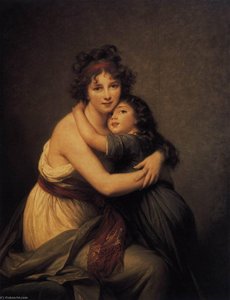
Vigée Le Brun's artistic style was characterized by a remarkable sensitivity to light, color, and the emotional lives of her sitters. She moved away from the stiff formality prevalent in earlier portraiture, favoring more natural poses and expressions that conveyed genuine feeling. Her brushwork was fluid and delicate, creating a sense of softness and luminosity – a hallmark of her distinctive style. She paid meticulous attention to detail, particularly in rendering fabrics, jewelry, and hairstyles, elements that subtly communicated status and refinement. While influenced by the Rococo’s emphasis on pastel shades and decorative flourishes, she skillfully integrated Neoclassical principles of clarity and balance, resulting in portraits that were both fashionable and timeless. Works like *Self-Portrait with Her Daughter, Julie*, reveal her ability to capture intimate moments and convey profound maternal affection. Her portraits weren't simply representations; they were windows into the souls of her subjects.Exile and Enduring Legacy
The French Revolution dramatically altered the course of Vigée Le Brun’s life. As a close associate of the royal family, she faced increasing scrutiny and ultimately fled France in 1789 to avoid persecution. This marked the beginning of a decade-long exile that took her across Europe – to Russia, Italy, England, Switzerland, and beyond. Despite the upheaval, she continued to paint, finding patronage among European aristocrats and establishing herself as an internationally renowned artist. Her travels broadened her artistic horizons, exposing her to diverse styles and techniques, which subtly influenced her later work. Upon returning to France in 1809, she resumed her career, though the political landscape had shifted dramatically. She published her memoirs, *Souvenirs*, offering a fascinating and often poignant account of her life, her art, and the tumultuous events that shaped her world. Vigée Le Brun’s legacy extends far beyond her technical skill; she remains a pioneering figure in the history of women artists, having achieved remarkable success in a field historically dominated by men. Her paintings continue to be celebrated for their beauty, elegance, and historical significance, offering a captivating glimpse into the world of 18th-century France and solidifying her place as one of its most accomplished portraitists. Her ability to capture not just appearances but also the inner lives of her sitters ensures that her work continues to resonate with audiences today.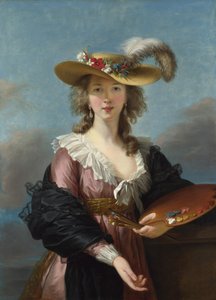
Луиза Элизабет Виге де Ла Брю
1755 - 1842 , Франция
Основные сведения
- Artistic Movement Or Style: Рококо и неоклассицизм
- Artists Or Movements Influenced By This Artist: ['Неоклассицизм']
- Artists Who Influenced This Artist:
- Рубенс
- Ван Дейк
- Date Of Birth: 16 апреля 1755 г.
- Date Of Death: 30 марта 1842 г.
- Full Name: Louise Élisabeth Vigée Le Brun
- Nationality: Французская
- Notable Artworks:
- Портрет Марии Антуанетты
- Селфи с дочерью
- Place Of Birth: Париж, Франция
Похожие статьи

The Rococo Aesthetic: Opulence, Rebellion & the Pursuit of Pleasure in 18th-Century Art
Explore the opulent world of Rococo art! Discover its origins, key artists like Watteau & Boucher, and lasting influence on design. Expert insights for collectors & enthusiasts.

Топ-10 шедевров рококо: искусство, изменившее интерьеры | ArtsDot.com
Погрузитесь в мир рококо! Откройте для себя 10 шедевров искусства от Watteau, Boucher и Fragonard. Узнайте историю создания культовых картин и вдохновитесь для декора интерьера. Репродукции высокого качества на ArtsDot.com.

Золотой век Голландии: 10 шедевров, изменивших искусство | ArtsDot.com
Погрузитесь в эпоху Золотого века Нидерландов! 10 шедевров Рембрандта, Вермеера и других мастеров. Узнайте истории создания культовых картин и вдохновитесь для интерьера. Репродукции музейного качества на ArtsDot.com.
The Rococo Style: Aristocratic Leisure & the Pursuit of Delight in 18th-Century Art
Explore the opulent world of Rococo art! Discover Watteau, Boucher & Nattier's masterpieces. Expert insights for collectors seeking museum-quality reproductions and custom portraits at ArtsDot.
The Allure of Elegance in Art: A Historical & Aesthetic Exploration of Refinement & Grace
Explore the exquisite world of Rococo art! Discover its history, masters (Watteau, Boucher & more), and defining elegance. Expert insights for collectors seeking museum-quality reproductions & custom portraits.