

![[map Of Poland – Germany] Tabula Moderna Germanie — Martin Waldseemüller](/media/artworks/images-full/3a/8a/3a8a6a0df8f6e76a6d308501cc7533e7.jpg)
 Предпросмотр
 Поделиться
 Поделиться
 Детали произведения

 Скачать
 Похожие работы
 Рентгенография
 Слайд-шоу
 Статистика
[Map of Poland – Germany] Tabula Moderna Germanie
 Woodcut
- Renaissance
 1520
1520- Renaissance
 37.0 x 54.0 cm
 Nicolaus Copernicus Museum
 Читать далее
Приобретите цифровое изображение высокого разрешения в улучшенном качестве, которое значительно превосходит онлайн-превью.
Каждый файл тщательно подготавливается нашими специалистами с использованием передовых инструментов и экспертной ручной ретуши. Мы гарантируем исключительную четкость, точную цветопередачу и детальную проработку каждого изображения.
Финальный файл доставляется по электронной почте в течение 72 часов и оптимизирован для немедленного использования в профессиональной среде, при верстке и печати. Это тот же уровень качества, которому доверяют ведущие дизайнерские студии, издательства и галереи.
Цифровое изображение
Скачайте файл высокого разрешения для личного использования, печати и творческих проектов. ( Перейти к печати Купить картину ручной работы)
Включено в каждый заказ цифровых изображений
Гарантия экспертной цифровой доставки
Выбирая ArtsDot.com, вы получаете не просто изображение — вы приобретаете профессионально обработанное цифровое произведение искусства, созданное с безупречной точностью и под защитой гарантии качества. Вот всё, что автоматически входит в ваш заказ:

Мгновенная доставка по e-mail
Ваш цифровой файл в высоком разрешении будет отправлен вам по электронной почте в течение 72 часов после оформления заказа — и сразу станет доступен для использования.

Цифровой файл с ИИ-улучшением
Ваше произведение искусства проходит профессиональную оптимизацию с использованием передовых инструментов ИИ и ручной обработки, что гарантирует максимальную детализацию, четкость и точность цветопередачи.

Бессрочная бесплатная повторная доставка
Случайно удалили или потеряли файл? Не беспокойтесь — мы отправим его вам повторно в любое время и совершенно бесплатно.

Без импортных пошлин — навсегда
Наслаждайтесь вашим произведением искусства мгновенно без таможенных пошлин, сборов или затрат на доставку — цифровые загрузки всегда не облагаются налогом.

Гарантия точности цветопередачи
Мы гарантируем, что ваше цифровое изображение максимально точно передает оригинальные цвета благодаря использованию профессиональных инструментов и систем управления цветом.

Гарантия удовлетворенности 100 дней
Если вы не будете удовлетворены своим цифровым изображением, мы внесем правки или вернем 100% стоимости в течение 100 дней — без лишних вопросов.

100% Гарантия возврата средств
Не удовлетворены покупкой? Получите полный возврат средств в течение 100 дней после получения цифрового файла — без лишних вопросов.

Скидки на оптовые заказы
Купите 3 изображения, сэкономьте 10% — Купите 5, сэкономьте 15% — Купите 10+, сэкономьте 20%. Отличное решение для творческих проектов, галерей и агентств.
A Window into the Renaissance World
To gaze upon the Tabula Moderna Germanie is to embark on a profound journey through the intellectual awakening of the sixteenth century. Created in 1520 by the legendary cartographer Martin Waldseemüller, this exquisite woodcut print serves as much more than a mere geographical record; it is a breathtaking testament to the era of humanism and the dawn of modern scientific inquiry. The map captures a moment in time when the boundaries of the known world were expanding through exploration and meticulous observation. Spanning from the lush landscapes of the Netherlands in the west to the shifting frontiers of what we now recognize as Poland, the work breathes life into the rugged terrain of Central Europe, presenting a vision of the continent that is both scholarly and deeply evocative.
The artistry of this piece lies in its intricate detail and the delicate precision of the woodcut technique. Every line etched into the paper tells a story of discovery. The winding paths of the Rhine and other great rivers act as silver veins across the landscape, while the majestic silhouettes of the Alps provide a sense of structural grandeur. Waldseemüller’s mastery is evident in how he utilizes varied symbols to denote the dense forests, bustling towns, and vital bodies of water that defined the European consciousness at the time. The use of Latin text adds an air of classical authority and timelessness, inviting the viewer to decode the names of ancient cities like Cologne and Hamburg, effectively bridging the gap between the medieval past and the burgeoning modern age.
A Masterpiece of Historical Elegance
For the discerning collector or interior designer, this reproduction offers an unparalleled opportunity to introduce a sense of historical gravity and intellectual sophistication into a living space. The Tabula Moderna Germanie possesses a unique aesthetic versatility; its muted, earthy tones and complex textures harmonize beautifully with both classical period rooms and contemporary minimalist settings. As a piece of decor, it functions as a conversation starter, evoking the spirit of the Age of Discovery and the scholarly rigor of the Renaissance. It is not merely an object to be hung on a wall, but a window into a lost era of wonder.
Beyond its decorative appeal, the map carries a profound emotional resonance. There is a certain nostalgia found in its weathered appearance—a longing for a time when every new map was a revelation and every coastline a mystery waiting to be solved. Owning a high-quality reproduction of this work allows one to surround themselves with the legacy of Waldseemüller, a man whose name is forever etched into the annals of cartographic history. Whether placed in a private library, a study, or an elegant gallery, this map serves as a constant reminder of humanity's eternal quest for knowledge and our enduring fascination with the world we inhabit.
Похожие произведения
Биография художника
Martin Waldseemüller: The Pioneer of Modern Cartography
Martin Waldseemüller (c. 1470 – 16 march 1520) stands as a monumental figure in the history of European scholarship and cartography, largely unrecognized for centuries until recent scholarly rediscovery breathed new life into his legacy. Born near Freiburg im Breisgau, Germany, he emerged from humble beginnings to become one of the foremost humanist thinkers and mapmakers of his era—a man whose meticulous observations and innovative techniques fundamentally reshaped our understanding of the world.- Early Life & Education: Waldseemüller’s formative years were steeped in the intellectual fervor of Freiburg University, where he studied under Gregor Reisch, a pivotal figure in disseminating Ptolemaic knowledge. Reisch's Margarita Philosophica, published in 1503, profoundly impacted Waldseemüller’s worldview and instilled within him a dedication to synthesizing classical learning with contemporary scientific inquiry.
- Basel & The Gymnasium Vosagense: Around 1490, Waldseemüller relocated to Basel, Switzerland, immersing himself in the vibrant humanist community centered around Johann Amerbach's printing press. This association fostered collaboration with Matthias Ringmann and Jean Basin de Saundacourt—the Gymnasium Vosagense—a group committed to reviving Ptolemy’s Geographia and advancing geographical understanding.
The Cosmographiae & The Birth of America
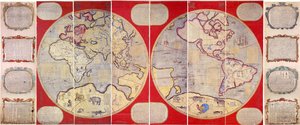
The Gymnasium's ambitious undertaking culminated in the publication of Cosmographiae Introductio (1507) alongside a monumental atlas—the Universalis Cosmographia—representing an unprecedented feat of cartographic artistry. This atlas, comprising twelve meticulously crafted sheets, incorporated both Ptolemaic maps and newly discovered charts documenting voyages by explorers like Amerigo Vespucci. Waldseemüller’s genius lay in recognizing Vespucci's observations as evidence for a fourth continent – America – distinct from Asia—a bold assertion that challenged prevailing cosmological beliefs. The atlas’s geometric precision and innovative printing techniques established it as the first modern atlas, marking a decisive break from medieval mappa mundi traditions.A Legacy Forged in Ptolemy & Vespucci
Waldseemüller's intellectual debt to Ptolemy was undeniable; he painstakingly recreated Ptolemaic maps based on ancient texts, demonstrating an unwavering commitment to scholarly rigor. However, his collaboration with Ringmann and Vespucci ignited a spark of innovation—the conscious adoption of Vespucci’s discoveries as foundational for reconstructing the world map. This decision cemented Waldseemüller's place in history as the originator of the term “America,” honoring Vespucci’s pioneering explorations and signaling the dawn of a new era in geographical thought.The Uppsala Codex Argenteus & The First Printed Globe
Waldseemüller’s contribution extended beyond mapmaking; he was credited with producing the first printed globe—a remarkable achievement considering the technological limitations of his time. This globe, housed within the Uppsala University Library (Sweden), exemplifies Waldseemüller's mastery of visual representation and underscores his role as a visionary innovator. Furthermore, his maps served as invaluable resources for scholars and navigators alike, shaping the intellectual landscape of the Renaissance and influencing subsequent explorations.Historical Significance & Enduring Influence
Martin Waldseemüller’s legacy transcends mere cartographic accomplishment; he embodies the spirit of humanist inquiry—a relentless pursuit of knowledge grounded in classical tradition yet propelled by empirical observation. His Universalis Cosmographia remains a cornerstone of geographical history, demonstrating the transformative power of intellectual collaboration and artistic ingenuity. Today, Waldseemüller's maps continue to inspire awe and fascination, serving as tangible reminders of a pivotal moment in human understanding—the genesis of our conception of America and the birth of modern atlasmaking.
martin waldseemüller
1520 , Germany
Основные сведения
- Artistic Movement Or Style: Renaissance Cartography
- Artists Or Movements Influenced By This Artist: ['Early Printing']
- Artists Who Influenced This Artist:
- Ptolemy
- Gregor Reisch
- Date Of Death: 1520
- Full Name: Martin Waldseemüller
- Nationality: German
- Notable Artworks:
- Tabula Moderna Germanie
- Mapa Mundi
- Place Of Birth: Germany