

 Предпросмотр
 Поделиться
 Поделиться
 Детали произведения

 Скачать
 Похожие работы
 Рентгенография
 Слайд-шоу
 Статистика
Flowers (9)


 Читать далее
Приобретите цифровое изображение высокого разрешения в улучшенном качестве, которое значительно превосходит онлайн-превью.
Каждый файл тщательно подготавливается нашими специалистами с использованием передовых инструментов и экспертной ручной ретуши. Мы гарантируем исключительную четкость, точную цветопередачу и детальную проработку каждого изображения.
Финальный файл доставляется по электронной почте в течение 72 часов и оптимизирован для немедленного использования в профессиональной среде, при верстке и печати. Это тот же уровень качества, которому доверяют ведущие дизайнерские студии, издательства и галереи.
Цифровое изображение
Скачайте файл высокого разрешения для личного использования, печати и творческих проектов. ( Перейти к печати Купить картину ручной работы)
Включено в каждый заказ цифровых изображений
Гарантия экспертной цифровой доставки
Выбирая ArtsDot.com, вы получаете не просто изображение — вы приобретаете профессионально обработанное цифровое произведение искусства, созданное с безупречной точностью и под защитой гарантии качества. Вот всё, что автоматически входит в ваш заказ:

Мгновенная доставка по e-mail
Ваш цифровой файл в высоком разрешении будет отправлен вам по электронной почте в течение 72 часов после оформления заказа — и сразу станет доступен для использования.

Цифровой файл с ИИ-улучшением
Ваше произведение искусства проходит профессиональную оптимизацию с использованием передовых инструментов ИИ и ручной обработки, что гарантирует максимальную детализацию, четкость и точность цветопередачи.

Бессрочная бесплатная повторная доставка
Случайно удалили или потеряли файл? Не беспокойтесь — мы отправим его вам повторно в любое время и совершенно бесплатно.

Без импортных пошлин — навсегда
Наслаждайтесь вашим произведением искусства мгновенно без таможенных пошлин, сборов или затрат на доставку — цифровые загрузки всегда не облагаются налогом.

Гарантия точности цветопередачи
Мы гарантируем, что ваше цифровое изображение максимально точно передает оригинальные цвета благодаря использованию профессиональных инструментов и систем управления цветом.

Гарантия удовлетворенности 100 дней
Если вы не будете удовлетворены своим цифровым изображением, мы внесем правки или вернем 100% стоимости в течение 100 дней — без лишних вопросов.

100% Гарантия возврата средств
Не удовлетворены покупкой? Получите полный возврат средств в течение 100 дней после получения цифрового файла — без лишних вопросов.

Скидки на оптовые заказы
Купите 3 изображения, сэкономьте 10% — Купите 5, сэкономьте 15% — Купите 10+, сэкономьте 20%. Отличное решение для творческих проектов, галерей и агентств.
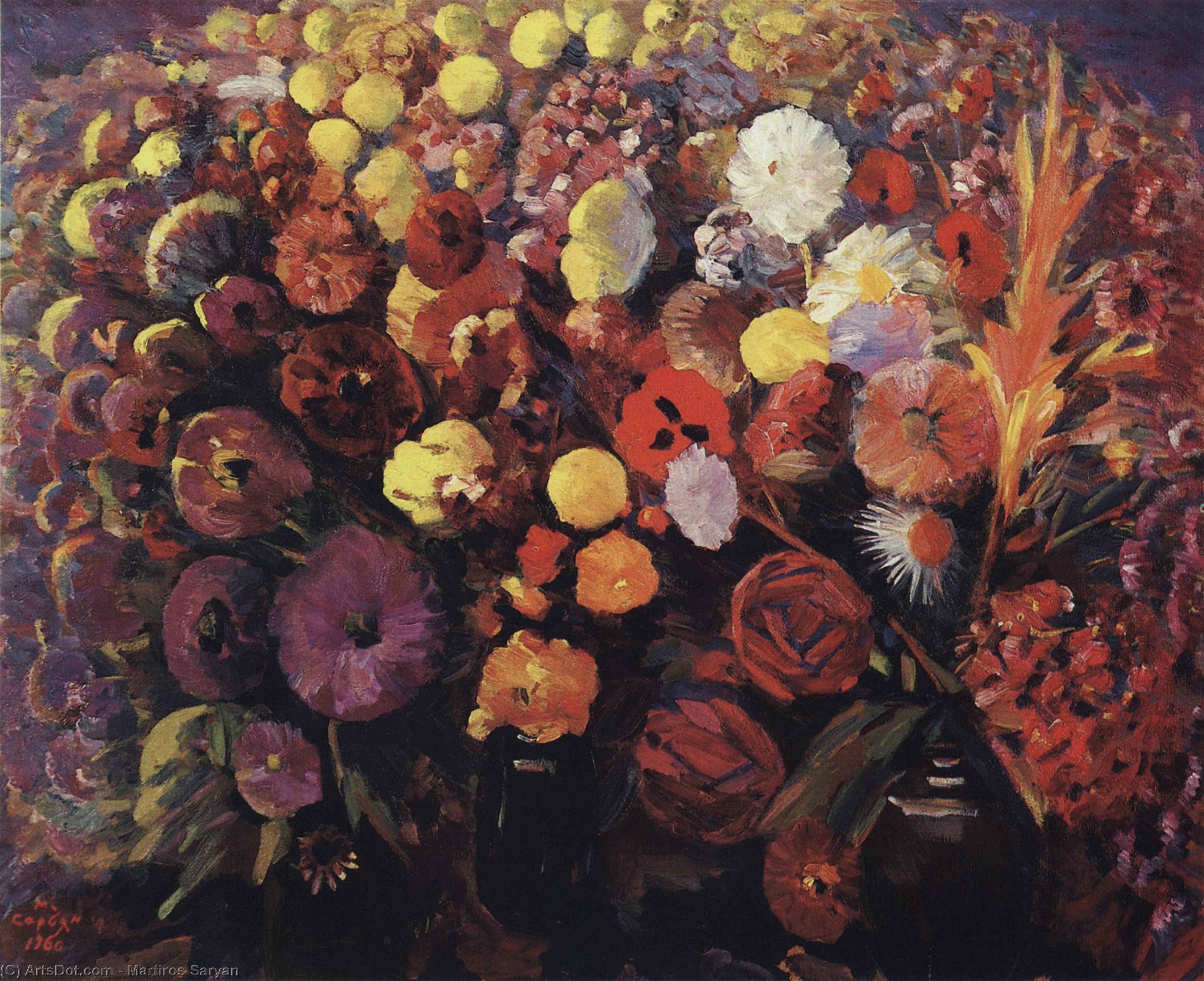
An Explosion of Color: Exploring Martiros Saryan's Floral Abundance
To stand before this vibrant depiction of flowers is to be enveloped in a sudden, joyous burst of life. It is not merely a still life; it is an exuberant celebration rendered with the passionate hand of Martiros Saryan. The composition overwhelms the viewer in the most delightful way possible—a dense tapestry woven from blossoms in fiery reds, sunlit yellows, deep purples, and warm oranges. One feels the very breath of the garden captured on canvas, a moment so rich it seems impossible to contain.
Technique and the Brushstroke's Song
Saryan’s mastery is evident in his handling of paint. The technique employed here speaks volumes about the artist's physical connection to his materials. Notice how the paint has been applied with a visible, almost urgent energy; these are not smooth, polished surfaces but thick, impastoed layers that give every petal and leaf a palpable texture. This approach moves beyond mere representation; it is an act of sensation. The brushstrokes themselves become part of the subject matter, guiding the eye through the riotous arrangement while simultaneously suggesting movement—as if the bouquet itself were swaying in a warm breeze.
The Spirit Behind the Bloom: Style and Context
While the subject matter anchors it firmly in the tradition of floral still life, the execution pulls it toward the expressive realms of Post-Impressionism. Saryan eschews rigid academic perspective for something far more immediate and emotional. The flowers seem to exist in a flattened, abundant space, emphasizing their sheer volume and chromatic power over any illusion of deep recession. This style choice allows the color—the pure, unadulterated joy of red meeting the brilliance of yellow—to take center stage, echoing the vibrant spirit that defined much of his work documenting Armenian life.
Symbolism of Life's Cycle
The sheer abundance captured here invites contemplation. Flowers, in art across cultures, are potent symbols. Here, their overflowing nature speaks powerfully of vitality and beauty at its zenith. Yet, within this glorious display lies the subtle acknowledgment of transience; every perfect bloom hints at the inevitable passing of time. It is a beautiful meditation on life itself—a moment of peak perfection captured forever by the artist’s unwavering gaze.
Bringing the Garden Home
For those who seek to infuse a space with artistic warmth and narrative depth, this piece offers unparalleled emotional resonance. Whether displayed in a grand hall or a sunlit drawing-room, its energy is undeniable. Owning a reproduction of this work means inviting not just a painting, but a feeling—a vibrant echo of Saryan’s deep connection to the earth and the enduring, passionate spirit of life itself.
Похожие произведения
Биография художника
Martiros Saryan: The Soul of Armenia Painted
Martiros Saryan, a name now inextricably linked to the vibrant heart and enduring beauty of Armenian landscape and portraiture, was far more than simply an artist; he was a profound conduit for his nation’s identity, its spirit, and its memories. Born in 1880 in Nakhichevan-on-Don – a region that today resides within Russia – Saryan's life unfolded as a remarkable odyssey of artistic training, international exploration, and ultimately, an unwavering commitment to capturing the very essence of Armenia through his brush. His work stands not merely as depictions of scenery, but as deeply felt expressions of Armenian culture, resilience, and the profound connection between artist and homeland.
Saryan’s early years were shaped by a unique upbringing rooted in rural simplicity. Raised within a small village community, he received his initial artistic guidance from his elder brother, Hovhannes Saryan – a skilled teacher who instilled within him not just technical proficiency but also an abiding love for drawing and painting. This foundational training, supplemented by formal studies at the prestigious Moscow School of Arts – including invaluable workshops led by the esteemed Valentin Serov and Konstantin Korovin – provided him with a robust artistic base while simultaneously exposing him to the burgeoning currents of Post-Impressionism. The evocative styles of Paul Gauguin and Henri Matisse proved particularly influential, shaping his approach to color palettes, compositional dynamics, and the expressive potential inherent within brushwork itself. These encounters weren’t merely academic; they ignited a desire to translate the emotional resonance of these movements into the specific context of Armenian art.
A pivotal moment in Saryan's artistic trajectory arrived in 1901 with his first journey to Armenia – a visit that would irrevocably alter the course of his life and work. This initial encounter sparked within him an unshakeable dedication to portraying his homeland with unparalleled honesty and passion. He spent countless hours traversing the diverse landscapes of Armenia, from the rugged, imposing peaks of Lori to the fertile plains of Shirak, the ancient monasteries nestled along the banks of Lake Sevan, and the historic cities steeped in centuries of tradition. These travels weren’t simply sightseeing expeditions; they were immersive experiences that fueled his artistic vision, inspiring him to meticulously document the beauty and character of each region through a series of breathtaking landscapes. Works such as “Makravank” (1902), “Aragats” (1902), and “Buffalo at Sevan” (1903) quickly garnered critical acclaim in Moscow, not just for their technical skill but also for the palpable sense of place they conveyed – a feeling that Saryan had truly captured the soul of Armenia.
Following his initial visit, Saryan embarked on a period of extensive travel throughout Turkey, Egypt, and Iran during the early years of the 20th century. These journeys broadened his artistic horizons, exposing him to diverse cultural influences and enriching his palette with new colors and techniques. However, it was his return to Armenia in 1915 – a time marked by immense suffering and displacement due to the Armenian Genocide – that proved to be a transformative moment. Witnessing firsthand the devastation inflicted upon his people ignited within him an even greater urgency to document and preserve the memory of Armenia through his art. He dedicated himself to assisting refugees, providing solace and hope through his paintings, and creating works that served as poignant reminders of their lost homeland and its enduring spirit. This period yielded some of his most profoundly moving creations – pieces like “Burning Heat with a Dog Running” (1916), which powerfully captures the raw emotion of displacement and resilience, and “Evening in the Garden” (1903), a serene depiction of an Armenian village bathed in the golden light of dusk. These works are not simply landscapes; they are windows into the heart of Armenian experience.
The tumultuous years following World War I presented significant challenges for Saryan, but he remained steadfast in his artistic pursuits. He navigated the complexities of Soviet Armenia, continuing to paint landscapes, portraits, and scenes from everyday Armenian life. He played a crucial role in establishing the Society of Armenian Artists in Tiflis (now Tbilisi), fostering a new generation of artists and promoting Armenian art on an international stage. His design work for the elaborate curtain designs used in the Armenian State Theatre stands as a testament to his versatility and artistic vision, demonstrating his ability to seamlessly blend landscape painting with theatrical artistry. Throughout his career, Saryan consistently sought inspiration in nature, employing vibrant colors, dynamic brushstrokes, and a distinctive use of light to capture the essence of Armenia’s diverse landscapes – from the towering mountains to the tranquil shores of Lake Sevan.
Key Characteristics & Artistic Style
Saryan's artistic style is immediately recognizable by its bold palette, energetic brushwork, and deeply expressive use of color. He drew heavily upon the principles of Post-Impressionism, particularly the work of Paul Gauguin and Henri Matisse, incorporating elements of Fauvism into his landscapes. His paintings are often imbued with a sense of movement and vitality – achieved through dynamic compositions and loose, gestural brushstrokes that seem to capture the very essence of life. He frequently depicted scenes from rural Armenian life – shepherds tending their flocks, villagers engaged in daily activities, and the majestic beauty of the Armenian countryside – not merely as visual representations but as imbued with a profound emotional resonance.
His portraits are equally compelling, revealing a remarkable sensitivity to human character. Saryan skillfully captured the essence of his subjects through expressive eyes, subtle gestures, and a masterful understanding of light and shadow. He wasn’t simply rendering likenesses; he was conveying inner lives, emotions, and personalities with remarkable depth and insight.
Major Works & Recognition
Among Saryan's most celebrated works are:
- “Makravank” (1902): A vibrant depiction of the Makravank monastery, showcasing his mastery of color and composition.
- “Aragats” (1902): An iconic image of Mount Aragats, Armenia’s highest peak, symbolizing strength and resilience.
- “Buffalo at Sevan” (1903): A dynamic landscape capturing the beauty of Lake Sevan and its surrounding scenery.
- “Evening in the Garden” (1903): A serene portrayal of an Armenian village garden bathed in the golden light of dusk.
- “In the Armenian Village” (1903): A charming depiction of daily life in a traditional Armenian village.
Saryan’s artistic achievements were widely recognized throughout his career. He was awarded the title of “People’s Artist of the USSR” in 1960 and received numerous accolades, including the Lenin Prize and the Order of Lenin – recognizing his significant contributions to Armenian art and culture.
Historical Significance & Legacy
Martiros Saryan's contribution to Armenian art is profound and multifaceted. He played a pivotal role in establishing a distinctly Armenian style of painting, moving beyond traditional academic approaches and embracing a more expressive and emotionally resonant form of artistic expression. His work served as a powerful symbol of national identity during a period of significant political and social upheaval, capturing the spirit of Armenia and its people.
His unwavering dedication to portraying the beauty of his homeland, particularly in the face of adversity, has cemented his place as an enduring icon of Armenian culture. The Saryan Museum in Yerevan stands as a testament to his legacy, offering visitors a chance to immerse themselves in his world and appreciate the depth and richness of his artistic vision. Saryan’s influence continues to be felt by artists today, inspiring them to explore their own cultural heritage and create works that reflect the beauty and complexity of their respective nations.
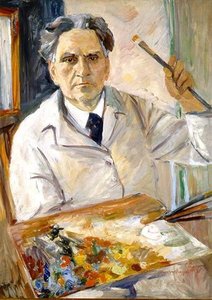
Мартирос Сарян
1880 - 1972 , Россия
Основные сведения
- Artistic Movement Or Style: Фовизм
- Artists Or Movements Influenced By This Artist: ['Голубая роза']
- Artists Who Influenced This Artist:
- Павел Гуггенхайм
- Антон Корвин
- Date Of Birth: 28 февраля 1880 г.
- Date Of Death: 5 мая 1972 г.
- Full Name: Martiros Saryan
- Nationality: Армянский
- Notable Artworks:
- Макраванк
- Арагац
- Бу falo
- Place Of Birth: Новая Нахичеван, Россия