

 Предпросмотр
 Поделиться
 Поделиться
 Детали произведения

 Скачать
 Похожие работы
 Рентгенография
 Слайд-шоу
 Статистика
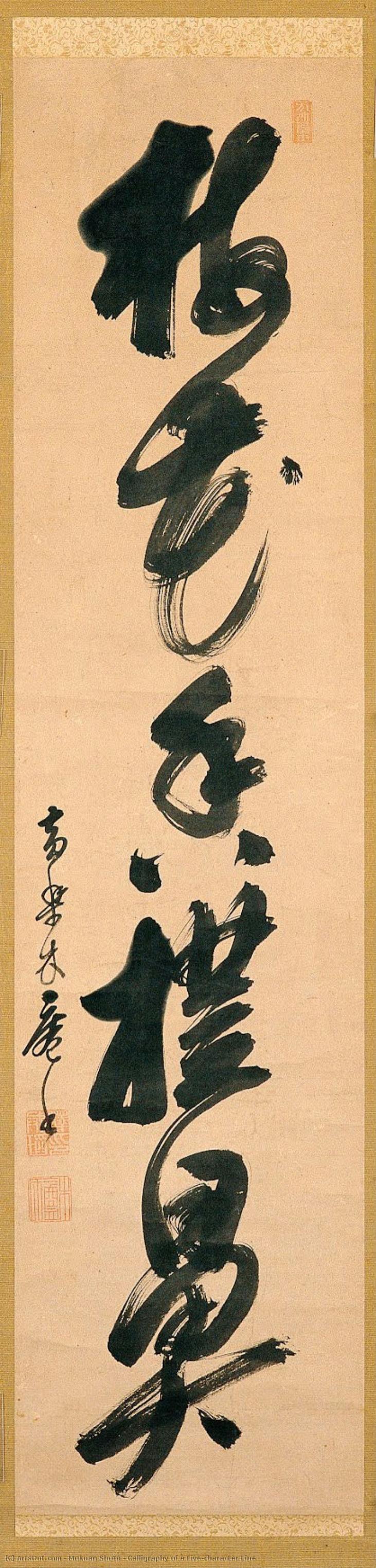
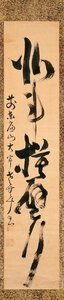
Calligraphy of a Five-character Line

 Читать далее
Приобретите цифровое изображение высокого разрешения в улучшенном качестве, которое значительно превосходит онлайн-превью.
Каждый файл тщательно подготавливается нашими специалистами с использованием передовых инструментов и экспертной ручной ретуши. Мы гарантируем исключительную четкость, точную цветопередачу и детальную проработку каждого изображения.
Финальный файл доставляется по электронной почте в течение 72 часов и оптимизирован для немедленного использования в профессиональной среде, при верстке и печати. Это тот же уровень качества, которому доверяют ведущие дизайнерские студии, издательства и галереи.
Цифровое изображение
Скачайте файл высокого разрешения для личного использования, печати и творческих проектов. ( Перейти к печати Купить картину ручной работы)
Включено в каждый заказ цифровых изображений
Гарантия экспертной цифровой доставки
Выбирая ArtsDot.com, вы получаете не просто изображение — вы приобретаете профессионально обработанное цифровое произведение искусства, созданное с безупречной точностью и под защитой гарантии качества. Вот всё, что автоматически входит в ваш заказ:

Мгновенная доставка по e-mail
Ваш цифровой файл в высоком разрешении будет отправлен вам по электронной почте в течение 72 часов после оформления заказа — и сразу станет доступен для использования.

Цифровой файл с ИИ-улучшением
Ваше произведение искусства проходит профессиональную оптимизацию с использованием передовых инструментов ИИ и ручной обработки, что гарантирует максимальную детализацию, четкость и точность цветопередачи.

Бессрочная бесплатная повторная доставка
Случайно удалили или потеряли файл? Не беспокойтесь — мы отправим его вам повторно в любое время и совершенно бесплатно.

Без импортных пошлин — навсегда
Наслаждайтесь вашим произведением искусства мгновенно без таможенных пошлин, сборов или затрат на доставку — цифровые загрузки всегда не облагаются налогом.

Гарантия точности цветопередачи
Мы гарантируем, что ваше цифровое изображение максимально точно передает оригинальные цвета благодаря использованию профессиональных инструментов и систем управления цветом.

Гарантия удовлетворенности 100 дней
Если вы не будете удовлетворены своим цифровым изображением, мы внесем правки или вернем 100% стоимости в течение 100 дней — без лишних вопросов.

100% Гарантия возврата средств
Не удовлетворены покупкой? Получите полный возврат средств в течение 100 дней после получения цифрового файла — без лишних вопросов.

Скидки на оптовые заказы
Купите 3 изображения, сэкономьте 10% — Купите 5, сэкономьте 15% — Купите 10+, сэкономьте 20%. Отличное решение для творческих проектов, галерей и агентств.
Похожие произведения

Биография художника
A Legacy Etched in Ink and Zen
The history of Japanese spiritual and artistic expression is profoundly marked by the arrival of Mokuan Shōtō, a figure whose life bridged the gap between the Ming Dynasty traditions of China and the burgeoning culture of the Edo Period in Japan. Born in 1611 in Fuzhou, China, his journey was one of profound movement—not merely across geographical borders, but through the deep, meditative landscapes of the soul. As a pivotal architect of the Ōbaku Zen lineage, Mokuan Shōtō did more than practice Buddhism; he helped transplant an entire aesthetic and spiritual ecosystem into Japanese soil, leaving behind a legacy that remains etched in the fluid, rhythmic strokes of his calligraphy.
His formative years were steeped in the rigorous monastic traditions of Fujian Province, a region renowned for its vibrant Chan heritage. Entering the monastic order at the tender age of nineteen, Mokuan began a period of intense scholarly and contemplative training under the guidance of masters such as Yongjue Yuanxian at Mt. Huangbo. This era of his life was defined by the pursuit of mindfulness, emptiness, and enlightenment—principles that would later manifest in the raw, uninhibited energy of his brushwork. Under the tutelage of luminaries like Feiyin Tongrong and Yinyuan Longqi at Wanfusi Monastery, he mastered the delicate balance between disciplined technique and the spontaneous expression of truth.
The Journey to Japan and the Birth of Ōbaku
In 1654, a transformative chapter began when Mokuan Shōtō embarked on a voyage to Japan alongside his master, Yinyuan Longqi. This migration was not merely a relocation of a monk, but the beginning of a cultural renaissance. Settling initially in Nagasaki at Fukusaiji Temple, he eventually moved to Mt. Obaku in Useless, where he played an instrumental role in the construction of Mampuku-ji. This temple would become the spiritual epicenter for the Ōbaku lineage, a sanctuary where Chinese-style Zen could flourish within the Japanese landscape. Upon the passing of his mentor, Mokuan ascended to the position of abbot in 1664, a role in which he became a bridge between two nations.
His influence extended far beyond the monastery walls, reaching into the highest echelons of Japanese society. He earned the profound trust of the fourth Shogun, Tokugawa Ietsuna, an achievement that provided the political stability necessary for the Ōbaku lineage to thrive. Through his leadership, he championed monastic discipline and oversaw the education of a new generation of practitioners, ensuring that the intellectual and spiritual vitality of the Ming tradition would continue to pulse through the heart of Japan for centuries to come.
The Spirit of the Three Brushes
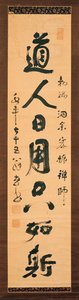
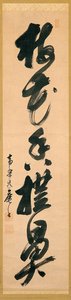
To look upon the work of Mokuan Shōtō is to witness the intersection of calligraphy and cosmic truth. He was celebrated as one of the Obaku no Sanpitsu, or the "Three Brushes of Ōbaku," a title reserved for calligraphers whose mastery of the brush was considered unparalleled. His style was characterized by a rapidly flowing semi-cursive script, a technique that demanded both immense physical control and a complete surrender to the moment. In his hands, ink was not merely pigment on paper; it was a living entity, capturing the breath and spirit of the practitioner.
His artistic achievements often centered on profound Zen concepts, such as the "large circle," which symbolizes the heavens, reality, and the Buddha-nature. When he executed these characters across broad expanses of paper, the movement was dynamic and uninhibited, mirroring the very essence of enlightenment—a sudden, sweeping realization of truth. His work remains a testament to the idea that art is an extension of meditation, where every stroke serves as a record of a mind in perfect harmony with the universe.
mokuan shōtō
1611 - 1684 , China
Основные сведения
- Artistic Movement Or Style: Ōbaku Zen calligraphy
- Artists Or Movements Influenced By This Artist: ['Linji School']
- Artists Who Influenced This Artist: ['Yinyuan Longqi']
- Date Of Birth: 1611
- Date Of Death: 1684
- Full Name: Mokuan Shōtō
- Nationality: Chinese
- Notable Artworks: ['Two Large Characters by Muan (Muang) Xingtao']
- Place Of Birth: Fuzhou, China