


 Предпросмотр
 Поделиться
 Поделиться
 Детали произведения

 Скачать
 Похожие работы
 Рентгенография
 Слайд-шоу
 Статистика
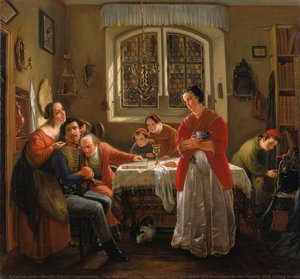
The Return of the Volunteer from the Wars of Liberation to His Family Still Living in Accordance with Old Customs (Die Heimkehr des Freiwilligen aus den Befreiungskriegen zu den nach alter Sitte lebenden Seinen)
 Oil On Canvas
- WallArt
- Realism
 1833
1833- 19th Century
 86.0 x 94.0 cm
 Музей еврейской культуры
 Читать далее
Приобретите цифровое изображение высокого разрешения в улучшенном качестве, которое значительно превосходит онлайн-превью.
Каждый файл тщательно подготавливается нашими специалистами с использованием передовых инструментов и экспертной ручной ретуши. Мы гарантируем исключительную четкость, точную цветопередачу и детальную проработку каждого изображения.
Финальный файл доставляется по электронной почте в течение 72 часов и оптимизирован для немедленного использования в профессиональной среде, при верстке и печати. Это тот же уровень качества, которому доверяют ведущие дизайнерские студии, издательства и галереи.
Цифровое изображение
Скачайте файл высокого разрешения для личного использования, печати и творческих проектов. ( Перейти к печати Купить картину ручной работы)
Включено в каждый заказ цифровых изображений
Гарантия экспертной цифровой доставки
Выбирая ArtsDot.com, вы получаете не просто изображение — вы приобретаете профессионально обработанное цифровое произведение искусства, созданное с безупречной точностью и под защитой гарантии качества. Вот всё, что автоматически входит в ваш заказ:

Мгновенная доставка по e-mail
Ваш цифровой файл в высоком разрешении будет отправлен вам по электронной почте в течение 72 часов после оформления заказа — и сразу станет доступен для использования.

Цифровой файл с ИИ-улучшением
Ваше произведение искусства проходит профессиональную оптимизацию с использованием передовых инструментов ИИ и ручной обработки, что гарантирует максимальную детализацию, четкость и точность цветопередачи.

Бессрочная бесплатная повторная доставка
Случайно удалили или потеряли файл? Не беспокойтесь — мы отправим его вам повторно в любое время и совершенно бесплатно.

Без импортных пошлин — навсегда
Наслаждайтесь вашим произведением искусства мгновенно без таможенных пошлин, сборов или затрат на доставку — цифровые загрузки всегда не облагаются налогом.

Гарантия точности цветопередачи
Мы гарантируем, что ваше цифровое изображение максимально точно передает оригинальные цвета благодаря использованию профессиональных инструментов и систем управления цветом.

Гарантия удовлетворенности 100 дней
Если вы не будете удовлетворены своим цифровым изображением, мы внесем правки или вернем 100% стоимости в течение 100 дней — без лишних вопросов.

100% Гарантия возврата средств
Не удовлетворены покупкой? Получите полный возврат средств в течение 100 дней после получения цифрового файла — без лишних вопросов.

Скидки на оптовые заказы
Купите 3 изображения, сэкономьте 10% — Купите 5, сэкономьте 15% — Купите 10+, сэкономьте 20%. Отличное решение для творческих проектов, галерей и агентств.
The Return of the Volunteer: A Window into 19th-Century Jewish Life
Moritz Daniel Oppenheim’s “The Return of the Volunteer from the Wars of Liberation to His Family Still Living in Accordance with Old Customs” (Die Heimkehr des Freiwilligen aus den Befreiungskriegen zu den nach alter Sitte lebenden Seinen), painted in 1833, is more than just a depiction of a family reunion; it’s a poignant snapshot of a pivotal moment in Jewish history – the burgeoning emancipation movement and its impact on traditional communities. Born in Hanau, Germany, Oppenheim's life mirrored this transformation: an observant Jew who, through diligent study and artistic talent nurtured under Conrad Westermayr, achieved remarkable success within the predominantly secular art world of his time. This painting, now housed at the Jewish Museum in New York, stands as a testament to his skill and a valuable record of a community navigating rapid change with both resilience and a deep-seated desire to preserve its heritage.
- Subject Matter: The scene unfolds within a domestic interior, meticulously rendered to capture the essence of family life. A recently returned soldier, dressed in the blue uniform of his era – complete with gold epaulettes signifying his service – is at the heart of the composition. His posture exudes both pride and weariness, reflecting the sacrifices made during the Wars of Liberation.
- Composition & Technique: Oppenheim’s masterful use of oil on canvas creates a remarkably realistic portrayal, employing soft brushstrokes to build depth and texture within the room. The balanced arrangement of figures – the soldier at the center, his wife offering comfort, children mimicking their father's actions – establishes a clear narrative flow, guiding the viewer’s eye through the scene with effortless grace.
Symbolism and Narrative
The painting is rich in symbolic detail, reflecting the complex social and emotional landscape of the time. The soldier’s attire, while representing his military service, also subtly acknowledges his return to a life rooted in tradition. His wife's gesture – gently placing her hands on his shoulders – speaks volumes about domestic harmony and familial support. The children, engaged in playful activities, embody the hope for future generations and the continuation of family values. Notably, the inclusion of objects within the interior—paintings adorning the walls, books lining shelves, vases and mirrors—are not merely decorative; they represent the soldier’s reintegration into a world that was increasingly influenced by Enlightenment ideals, yet still valued intellectual pursuits and domestic comfort.
- The Soldier's Sword & Hat: These symbols are central to the narrative, representing both his military service and his return to civilian life.
- The Woman’s Gesture: Her compassionate touch underscores the importance of family bonds in a time of upheaval.
- The Children’s Play: Represents hope for the future and the preservation of tradition.
Historical Context & Artistic Significance
Painted in 1833, “The Return of the Volunteer” offers a crucial glimpse into a period of profound social change within Jewish communities across Europe. The emancipation movement, driven by Enlightenment ideals, was beginning to dismantle centuries-old restrictions, allowing Jews access to professions previously closed to them. Oppenheim’s work is therefore not simply a sentimental family portrait; it's a visual document of this transformative era, capturing the anxieties and aspirations of a community grappling with modernity while striving to maintain its cultural identity. Oppenheim’s success as an artist – a testament to his talent and perseverance – paved the way for future generations of Jewish artists, demonstrating that artistic expression could be both deeply personal and socially significant.
Size:** 86 x 94 cm Date:** 1833 Artist:** Moritz Daniel Oppenheim (1800-1882)Похожие произведения


Биография художника
A Visionary of Jewish Identity
Moritz Daniel Oppenheim (1800-1882) stands as a singular figure in the annals of German art history, serving as a profound pioneer of Jewish artistic representation. Born in Hanau, Germany, his life and work were deeply rooted in a commitment to documenting and celebrating the nuances of Jewish life and culture during the transformative nineteenth century. He was often hailed as the first Jewish painter to achieve widespread recognition within the mainstream artistic landscape, moving beyond mere biographical detail to create an oeuvre that embodies a vital visual record of a community navigating the complexities of modernization while striving to preserve its sacred traditions.
Oppenheim's artistic journey began with foundational training under Conrad Westermayr in his birthplace, where he first absorbed the principles of German Romantic painting. However, his true professional ascent was catalyzed by his enrollment at the Munich Academy of Arts at the age of seventeen. It was within these prestigious halls that he honed his technical mastery alongside contemporaries such as Wilhelm Leibl and Johann Baptist Eberhard Krauss. Seeking to expand his horizons, Oppenheim embarked on a transformative period of study abroad, traveling to Paris to study under Jean-Baptiste Regnault and later to Rome. In Italy, mentored by luminaries like Bertel Thorwaldsen and the Nazarene painter Johann Friedrich Overbeck, his style evolved into a sophisticated blend of meticulous observation and classical influence. This Roman period was particularly pivotal, as it infused his work with a sense of historical gravity that would later inform his depictions of Jewish rituals and daily life.
The Art of Intimacy and Tradition
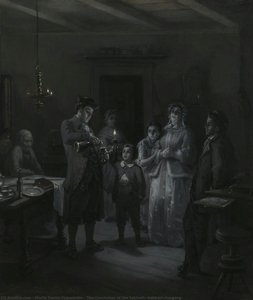
The heart of Oppenheim’s contribution to art lies in his ability to transform the domestic sphere into a stage for profound cultural narrative. His paintings often focus on intimate scenes of Jewish family life, capturing the quiet dignity of ritual and the warmth of communal bonds. Through his brush, the mundane becomes monumental. In works such as The Conclusion of the Sabbath (Sabbath-Ausgang), he employs masterful realism and subtle symbolism to depict the poignant transition from the sacred rest of the Sabbath back into the temporal world, inviting the viewer to witness the sanctity of family ritual.
His ability to weave historical context with personal emotion is perhaps most evident in his genre paintings that document specific cultural milestones. For instance:
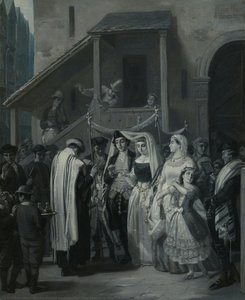
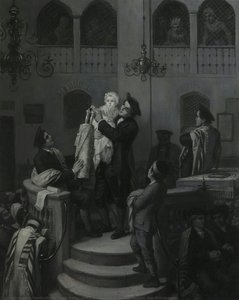
- The Wedding (Die Trauung): A breathtakingly detailed depiction of a 1866 Jewish wedding within the Frankfurt ghetto, where Oppenheim captures the splendor of traditional attire and the solemnity of the marriage canopy, offering a rare, preserved glimpse into a vanishing way of life.
- The Return of the Volunteer: In this stunning oil painting from 1834, he explores the intersection of Jewish heritage and broader European history, portraying a soldier returning from the Wars of Liberation to a family still living according to ancient customs, effectively illustrating the tension between Napoleonic-era political shifts and enduring religious identity.
Legacy and Historical Significance
Beyond his technical skill, Oppenheim’s work is inextricably linked to the Wissenschaft des Judentums movement—a scholarly effort to establish Jewish history and culture as a respected academic field. His paintings functioned as visual scholarship, providing a dignified and authentic representation of a community that was often marginalized in the broader European art canon. By portraying Jewish subjects with the same level of detail, dignity, and Romantic grandeur typically reserved for aristocratic or mythological themes, he challenged existing prejudices and asserted the importance of Jewish identity within the German cultural fabric.
Ultimately, the legacy of Moritz Daniel Oppenheim is one of resilience and visibility. He did not merely paint scenes; he constructed a visual language for an era of transition. His ability to capture the delicate balance between the old world and the new ensures that his work remains a vital touchstone for understanding the nineteenth-century Jewish experience, making him an indispensable figure in the history of both German Romanticism and the global narrative of Jewish art.
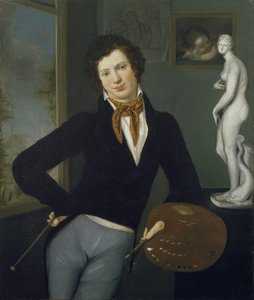
Moritz Daniel Oppenheim
1800 - 1882