

 Предпросмотр
 Поделиться
 Поделиться
 Детали произведения

 Скачать
 Похожие работы
 Рентгенография
 Слайд-шоу
 Статистика
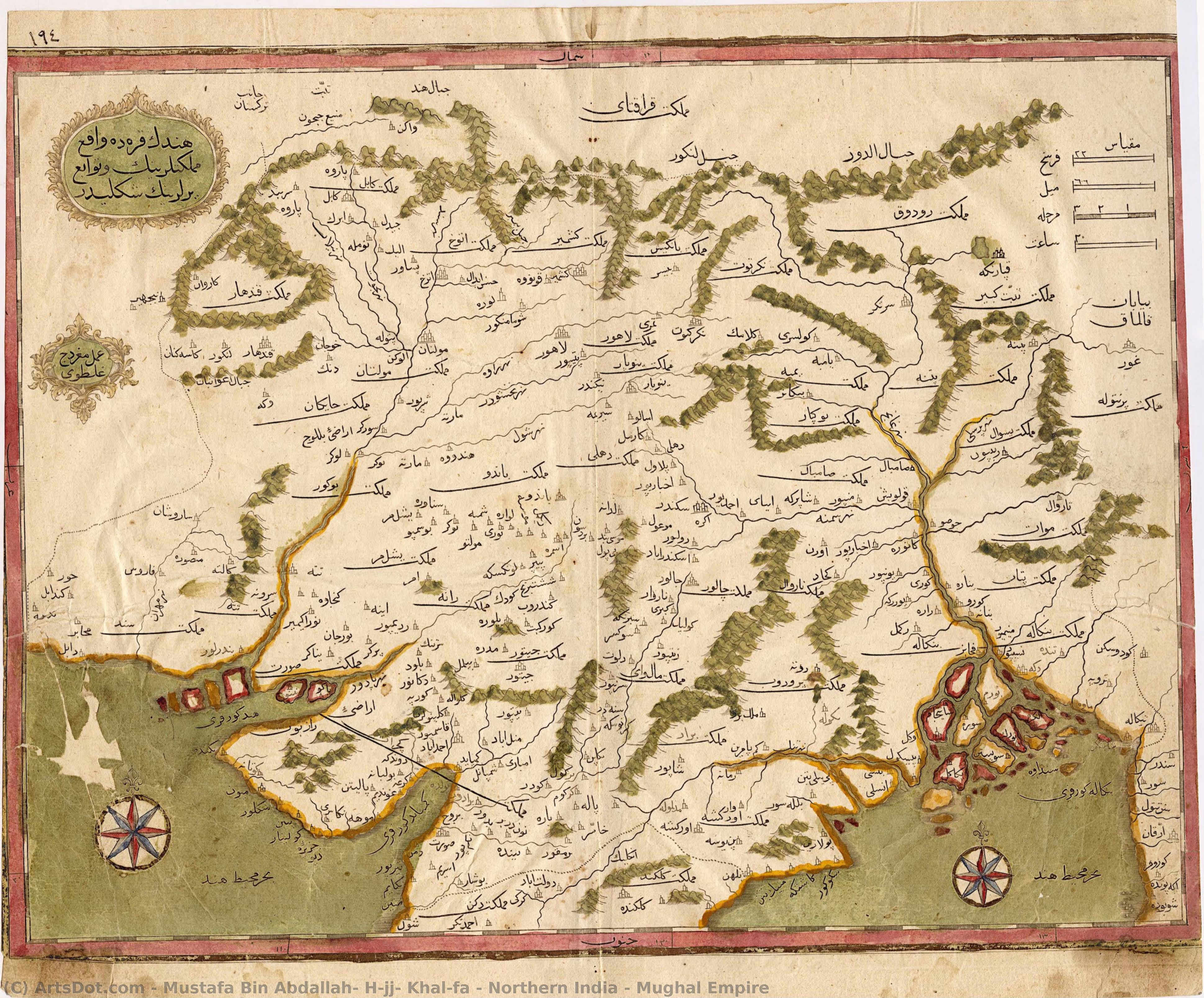
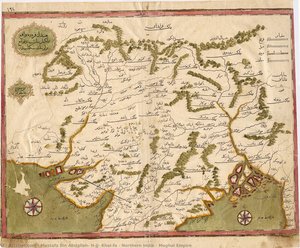
Northern India – Mughal Empire
 Painting
- Ottoman Period Art
 Early Modern
 26.0 x 35.0 cm
 Kalakriti Archives
 Читать далее
Жикле / Арт-принт
Печать (жикле) или холст музейного качества с быстрыми сроками изготовления и широким выбором вариантов отделки. ( Купить картину ручной работы Перейти к цифровым изображениям)




P118B $10

P118H $10

P118W $10

P438Z $10

P508JH $12

P508YH $12

P805H $10

P805Z $10

P919BZ $10

P919G $10

P919XJ $10

P959ZH $10

P968JZ $12

W106C $8

W218G $10

W218JH $8

W218Y $10

W307PJ $10

W316G $10

W316PJ $8

W316Y $10

W398PJ $8

W4111J $10

W500HY $15

W500JH $15

W692G $12

W849H $8

W940BG $15

W953PJ $8




Выберите один из наших стандартных размеров, соответствующих оригинальным пропорциям произведения искусства.

Вы можете указать свои собственные размеры, чтобы репродукция идеально подошла под конкретную раму или пространство. Если выбранный вами размер не будет соответствовать пропорциям оригинала, мы либо обрежем произведение, либо дополним изображение зеркальным отражением краев или однотонной заливкой. Перед началом производства вам будет отправлен цифровой макет для утверждения.
Пожалуйста, обратите внимание, что предварительный просмотр на экране не отображает фактическую обрезку или расширение изображения. Только макет точно покажет финальную композицию.
Несмотря на возможность заказа индивидуальных размеров, мы рекомендуем выбирать размер из предопределенного списка, чтобы сохранить оригинальные пропорции.
Доставка по всему миру () за 2 недели вместо стандартных 4/5 недель. (12 Сентябрь)

Бесплатная экспресс-доставка по всему миру

Высококачественный льняной холст

Полное страхование доставки

Гарантия возмещения таможенных пошлин

Гарантия точного соответствия цветов

100-дневная политика возврата (только при обнаружении дефектов)

Гарантия возврата 100% средств

Предложение оптовых скидок
 Вариант со стеклом доступен только для размеров менее 110 см

Northern India – Mughal Empire
Жикле / Арт-принт
Размер репродукции
-


Итоговая стоимость
$ 62
Похожие произведения
Биография художника
The Renaissance of the Ottoman Mind
In the vibrant, bustling heart of seventeenth-century Constantinople, a figure emerged whose intellect would bridge the gap between the scientific and the sublime. Mustafa bin Abdallah, known to history by the evocative names Kâtib Çelebi and Hajji Khalifa, was far more than a mere administrator or diplomat; he was a true polymath of the Ottoman era.Born in 1609, his life unfolded during a period of profound cultural synthesis, where the boundaries between geography, theology, and art were beautifully blurred. His existence was a testament to the burgeoning Ottoman Period Art Movement, an era that sought to refine a visual language distinct from European influence by drawing deeply from Islamic geometric principles and the opulent traditions of Persian and Mughal aesthetics.
Cartography as High Art
To gaze upon the works of Kâtib Çelebi is to witness the world through a lens of exquisite precision and decorative grace. His most enduring legacy lies in his groundbreaking cartographic achievements, particularly within his atlas, the Cihannüma. This was not merely a collection of navigational tools but a masterpiece of visual storytelling.His maps, such as the celebrated depiction of Northern India, served as a bridge between the Ottoman and Mughal empires. These works utilized the elegant flow of Nesih Arabic typography and a palette that captured the richness of the Indian subcontinent. Through his meticulous documentation of rivers, cities, and even the legendary Mughal Trunk Road, he transformed the raw data of geography into an aesthetic experience, where every line and cartouche whispered of imperial grandeur and scientific discovery.
An Encyclopedic Legacy
The true breadth of his genius is perhaps best captured in his monumental literary endeavors, which sought to catalogue the very essence of human knowledge. His magnum opus, Kaşf az-Zunūn, stands as a towering achievement of scholarship, an ambitious attempt to encompass the vast reaches of mathematics, astronomy, medicine, and philosophy.This drive for universal understanding was mirrored in his artistic sensibilities; he saw no distinction between the logic of a geometric pattern and the complexity of a theological treatise. His life’s work remains a cornerstone of Islamic intellectual history, reminding us that true mastery lies in the ability to see the interconnectedness of all things—from the precise arc of a map's border to the infinite depth of a scholar's thought.
mustafa bin abdallah, hājjī khalīfa
1609 - 1657 , Turkey
Основные сведения
- Artistic Movement Or Style: Ottoman Art Movement
- Artists Or Movements Influenced By This Artist: ['Islamic Geometric Designs']
- Artists Who Influenced This Artist: ['Franz Babinger']
- Date Of Birth: Istanbul, Turkey (1609)
- Date Of Death: Istanbul, Turkey (1657)
- Full Name: Mustafa bin Abdullah (Hajji Khalifa)
- Nationality: Ottoman
- Notable Artworks: ['Maps of India']
- Place Of Birth: Constantinople
Похожие статьи
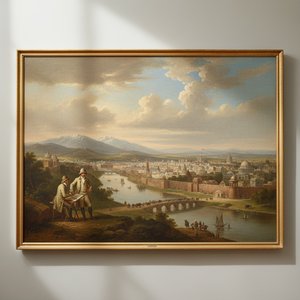
Panoramic Visions of Empire: The Daniells’ Artistic Collaboration & Legacy
Explore the captivating 'Oriental Scenery' by Thomas & William Daniell. Discover their pioneering aquatint prints of India, imperial context, artistic collaboration, and lasting legacy. A deep dive for history lovers.
Framing the Past: Art as a Window into Human History – A Cultural Chronicle of Empires, Revolutions, and Social Transformations
Explore art history's profound stories! Discover how masterpieces reflect empires, revolutions & culture. Expert analysis, collecting guides & bespoke reproductions at ArtsDot.
Frank Brangwyn: A Life Immersed in Colour, Craft & the Spirit of Modern British Art
Explore the vibrant life & prolific work of Frank Brangwyn, a master of British art. Discover his stunning paintings, designs, and monumental Empire Panels – a celebration of colour, craft, and artistic innovation.
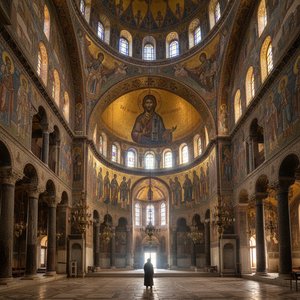
Illuminating Eternity: A Comprehensive Exploration of Byzantine Art's Legacy
Explore the rich history & stunning artistry of the Byzantine Empire! Discover iconic mosaics, profound symbolism, and lasting influence on Western art. A comprehensive guide for history lovers.
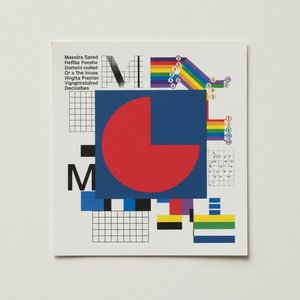
Massimo Vignelli: A Legacy of Modernist Clarity in Graphic Design & Visual Communication
Explore the enduring impact of Massimo Vignelli's modernist design philosophy. Discover his iconic works, key principles, and lasting legacy in graphic design & corporate identity. Learn from a true master.