

 Поделиться
 Поделиться
 Детали произведения

 Скачать
 Похожие работы
 Слайд-шоу
 Статистика
Esaias


 Читать далее
Масляная репродукция ручной работы
Картина маслом на холсте в выбранном вами размере и раме, написанная на заказ нашими художниками. ( Перейти к печати Перейти к цифровым изображениям)




































Выберите один из наших стандартных размеров, соответствующих оригинальным пропорциям произведения искусства.

Вы можете указать собственные размеры, чтобы картина идеально вписалась в выбранную раму или пространство. Если выбранный вами размер не соответствует пропорциям оригинала, мы либо обрежем полотно, либо расширим его за счет дополнительных элементов, написанных вручную. Цифровой макет будет отправлен вам на утверждение перед началом производства.
Обратите внимание, что предварительный просмотр на экране не отражает фактическую обрезку или расширение. Только макет точно покажет окончательную композицию.
Хотя доступны индивидуальные размеры, мы рекомендуем выбирать вариант из предопределенного списка, чтобы сохранить исходные пропорции.
После оформления заказа команда ArtsDot.com свяжется с клиентом по электронной почте для уточнения деталей и предоставит предварительный макет
Доставка по всему миру () за 3–4 недели вместо стандартных 5 недель. (11 Сентябрь). Без компромиссов в качестве.

Бесплатная экспресс-доставка по всему миру

Высококачественный льняной холст

Полное страхование доставки

Гарантия возмещения таможенных пошлин

Гарантия точного соответствия цветов

100-дневная политика возврата (только при обнаружении дефектов)

Гарантия возврата 100% средств

Предложение оптовых скидок
 Вариант со стеклом доступен только для размеров менее 110 см

Esaias
Техника репродукции
Размер репродукции
-


Итоговая стоимость
$ 263
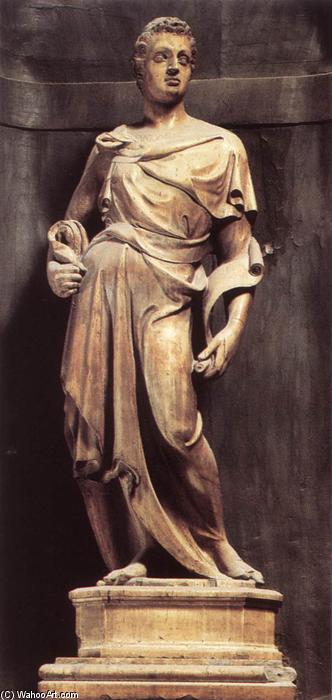
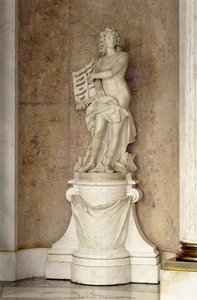
The Silent Prophet: Nanni di Banco’s Esaias
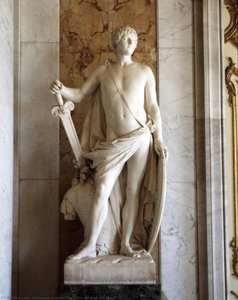
Within the heart of Florence's Duomo, nestled amongst the grandeur of its soaring façade, resides a sculpture that speaks volumes without uttering a single word – Nanni di Banco’s “Esaias,” or Isaiah. Completed around 1408, this marble figure transcends mere representation; it embodies the nascent spirit of the Renaissance, capturing both the solemnity of biblical prophecy and the burgeoning humanist ideals reshaping Florentine art. More than just a portrait of a prophet, Esaias is a testament to a pivotal moment in artistic history – a bridge between the weighty traditions of the Gothic era and the innovative explorations of a new age.
Nanni di Banco’s genius lay not in revolutionary departures, but in his masterful synthesis. He inherited a rich legacy from his father, Antonio di Banco, a stonemason deeply involved in the construction of Florence Cathedral. This grounding in traditional craftsmanship provided a solid foundation upon which he built his distinctive style. Yet, unlike his predecessors, Nanni embraced the emerging humanist focus on human form and emotion, subtly infusing them into his work while retaining elements of Gothic elegance. The sculpture’s posture – standing upright with one hand resting confidently on the hip and the other holding a scroll or document – immediately conveys authority and wisdom, qualities traditionally associated with prophetic figures.
A Study in Marble: Technique and Detail
The sheer quality of the marble itself is remarkable. Nanni di Banco skillfully exploited the inherent textures and colors of the stone, creating a surface that appears both polished and subtly weathered. Close examination reveals delicate veins running through the marble, adding depth and realism to the figure’s form. The folds of his drapery are rendered with meticulous detail, suggesting movement and volume despite the static nature of the sculpture. Notice particularly the subtle shading around the face – a technique indicative of his growing understanding of chiaroscuro, foreshadowing the dramatic lighting favored by later Renaissance masters.
The pose is deliberately balanced, reflecting the classical ideals that were beginning to influence Florentine art. The figure’s stance exudes stability and dignity, while the slight tilt of the head suggests contemplation and a connection to something beyond the earthly realm. The sculptor's attention to anatomical accuracy, though not yet achieving the idealized perfection of Donatello, demonstrates a significant step forward in representing the human form with greater realism.
Symbolism and Spiritual Resonance
Isaiah’s role as a prophet is central to understanding the sculpture’s significance. In the Hebrew Bible, Isaiah delivers God's warnings and promises to the people of Judah, urging them to repent and embrace righteousness. Nanni di Banco captures this essence through his figure’s solemn expression and outstretched hand – a gesture that can be interpreted as both a call to action and an offering of divine guidance. The scroll he holds represents the word of God, emphasizing the importance of faith and obedience.
Beyond its religious symbolism, Esaias embodies broader humanist themes. The prophet’s contemplative gaze reflects a growing interest in philosophical inquiry and moral reflection – hallmarks of the Renaissance spirit. He is not merely a figure from scripture; he represents humanity's potential for wisdom, virtue, and connection to the divine.
A Legacy in Stone: Context and Influence
Created during a period of intense artistic experimentation, Esaias stands as a crucial link between the Gothic and Renaissance traditions. It was originally intended to accompany Donatello’s iconic David, demonstrating Nanni di Banco's awareness of contemporary trends and his desire to engage with the most prominent artists of his time. The sculpture’s placement on the exterior buttress of the Duomo further underscores its role as a public statement – a visible reminder of Florence’s commitment to both religious faith and artistic excellence.
Today, Esaias continues to captivate viewers with its quiet power and enduring beauty. It serves as a poignant reminder of Nanni di Banco's pivotal contribution to the Florentine Renaissance and his ability to capture the spirit of an era in stone. Reproductions offer a remarkable opportunity to bring this timeless masterpiece into your home or office, allowing you to experience firsthand the profound impact of this silent prophet.
Похожие произведения
Биография художника
A Florentine Bridge Between Worlds
Nanni di Banco, born in Florence around 1380, occupies a fascinating and pivotal position within the early Italian Renaissance. He wasn’t a revolutionary like Donatello, nor did he possess the dazzling technical virtuosity of Ghiberti, but his importance lies in his ability to synthesize the waning Gothic traditions with the burgeoning humanist ideals that were reshaping Florentine art. Details surrounding his early life remain somewhat elusive; however, it's clear he benefited from the vibrant artistic atmosphere of Florence and likely received his initial training within a local workshop, absorbing the prevailing stylistic conventions while simultaneously witnessing the stirrings of a new era. His father, Antonio di Banco, was himself a respected sculptor and stonemason involved in the construction of the Florence Cathedral, providing Nanni with both familial guidance and access to the heart of Florentine artistic production. This grounding in traditional craftsmanship would prove crucial as he navigated the transition towards a more classical aesthetic.The Sculptural Language of Transition
Di Banco’s style represents a delicate balance between the elegance of late Gothic sculpture and the emerging naturalism that characterized the Renaissance. While influenced by the International Gothic style—evident in his refined drapery and attention to detail—he increasingly incorporated elements drawn from classical antiquity. This wasn't merely an imitation of ancient forms, but rather a thoughtful integration of classical principles into his work, striving for greater anatomical accuracy and a more convincing sense of three-dimensionality. He observed the Roman sculptures that were being rediscovered at the time, absorbing their emphasis on proportion, balance, and dignified composure. Unlike Donatello, who often imbued his figures with intense emotionality and dramatic expression, Di Banco favored a more restrained classicism. His figures possess a quiet dignity and serenity, reflecting a humanist ideal of rational order and harmonious beauty. This is not to say his work lacks individuality; on the contrary, he demonstrated a remarkable ability to imbue each figure with a distinct personality and character.Orsanmichele and Enduring Legacy
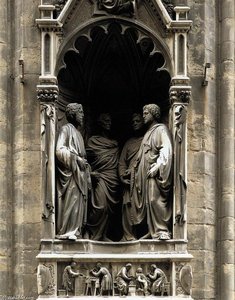
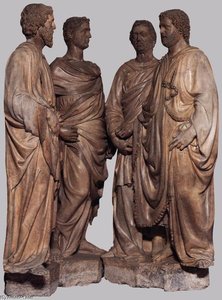
Nanni di Banco’s most celebrated achievement is undoubtedly the *Quattro Santi Coronati* (Four Crowned Martyrs), commissioned between 1412 and 1415 for the Orsanmichele church in Florence. This sculptural group, created for the stone carvers and woodworkers guild, stands as a testament to his skill and artistic vision. Each of the four figures – Saints Crispin, Crispianus, Dionysius, and Eustachius – possesses a unique personality and bears the marks of individual experience. The composition is remarkable not only for its naturalism but also for its complex construction as a unified ensemble; the saints are arranged in a harmonious grouping that conveys a sense of collective strength and spiritual conviction. Beyond Orsanmichele, Di Banco contributed to the *Porta della Mandorla* at the Florence Baptistery, working alongside other sculptors on this ambitious project. His panels depict scenes from the life of the Virgin Mary, showcasing his ability to narrate biblical stories with clarity and grace. Other notable works include sculptures of Saint Luke and Esaias, further demonstrating his mastery of form and expression.A Quiet Revolution
Nanni di Banco’s historical significance lies in his role as a crucial link between the Gothic past and the Renaissance future. He helped pave the way for later masters like Donatello and Michelangelo by establishing new standards for sculptural representation. His emphasis on naturalism, anatomical accuracy, and individualized portraiture challenged the conventions of medieval sculpture and anticipated the artistic achievements of the High Renaissance. Giorgio Vasari, in his seminal *Lives of the Most Excellent Painters, Sculptors, and Architects*, acknowledged Di Banco’s importance within the Florentine artistic tradition, recognizing his contribution to the evolving aesthetic landscape of the era. Though perhaps less celebrated than some of his contemporaries, Nanni di Banco remains a significant figure in Early Renaissance art—a sculptor who quietly but profoundly shaped the course of Western art history. His work embodies a spirit of thoughtful innovation and enduring beauty, continuing to inspire and captivate audiences centuries after its creation.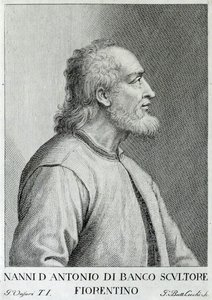
nanni d antonio di banco
1380 - 1421 , Italy
Основные сведения
- Artistic Movement Or Style: Early Renaissance
- Artists Or Movements Influenced By This Artist:
- Donatello
- Michelangelo
- Artists Who Influenced This Artist: ['International Gothic style']
- Date Of Birth: c. 1380
- Date Of Death: 1421
- Full Name: Nanni d'Antonio di Banco
- Nationality: Italian
- Notable Artworks:
- Quattro Santi Coronati
- Porta della Mandorla
- St. Luke
- Assumption of the Virgin
- Place Of Birth: Florence, Italy
Похожие статьи

Джотто ди Бондоне: 25 шедевров великого флорентийского мастера | ArtsDot
Погрузитесь в мир Джотто ди Бондоне! 25 величайших шедевров флорентийского мастера – фрески, картины, религиозная живопись. Узнайте историю создания и значение каждой работы. Репродукции картин высокого качества для вашего интерьера на ArtsDot.com
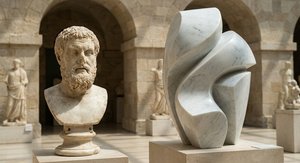
The Enduring Allure of Marble in Art History: From Classical Sculpture to Modern Abstraction
Explore the captivating history of marble sculpture from ancient Greece to modern art. Discover renowned artists like Canova & Michelangelo, carving techniques, and investment insights at ArtsDot.

10 легендарных бронзовых шедевров, изменивших искусство | ArtsDot
Погрузитесь в мир великих бронзовых шедевров! От Давида Донателло до Мыслителя Родена – узнайте историю создания, технику и значение легендарных скульптур. Вдохновение для интерьера и музейное качество репродукций на ArtsDot.com.

10 легендарных бронзовых скульптур, изменивших искусство навсегда | ArtsDot
Погрузитесь в мир великих бронзовых скульптур! От Давида Микеланджело до работ Родена – история искусства, техники и вдохновения. Купите репродукции шедевров для вашего интерьера на ArtsDot.com

The Enduring Form: Exploring Themes & Techniques in Sculpture Across Historical Periods
Explore the rich history of sculpture from ancient masterpieces to contemporary innovations. Discover key techniques, influential artists & investment potential for discerning art collectors.