

 Предпросмотр
 Поделиться
 Поделиться
 Детали произведения

 Скачать
 Похожие работы
 Рентгенография
 Слайд-шоу
 Статистика
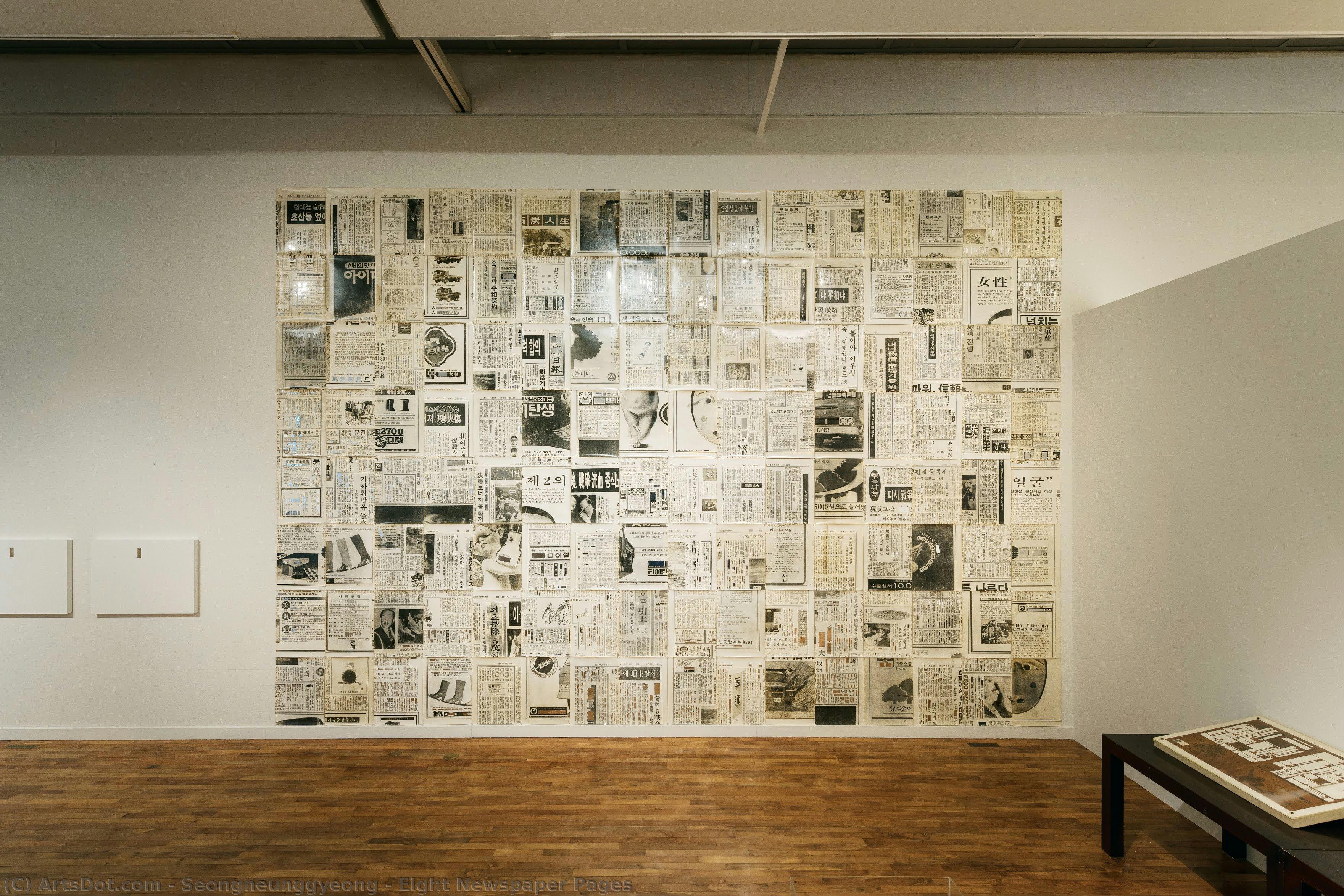
Eight Newspaper Pages

 Читать далее
Масляная репродукция ручной работы
Картина маслом на холсте в выбранном вами размере и раме, написанная на заказ нашими художниками. ( Перейти к печати Перейти к цифровым изображениям)




































Выберите один из наших стандартных размеров, соответствующих оригинальным пропорциям произведения искусства.

Вы можете указать собственные размеры, чтобы картина идеально вписалась в выбранную раму или пространство. Если выбранный вами размер не соответствует пропорциям оригинала, мы либо обрежем полотно, либо расширим его за счет дополнительных элементов, написанных вручную. Цифровой макет будет отправлен вам на утверждение перед началом производства.
Обратите внимание, что предварительный просмотр на экране не отражает фактическую обрезку или расширение. Только макет точно покажет окончательную композицию.
Хотя доступны индивидуальные размеры, мы рекомендуем выбирать вариант из предопределенного списка, чтобы сохранить исходные пропорции.
После оформления заказа команда ArtsDot.com свяжется с клиентом по электронной почте для уточнения деталей и предоставит предварительный макет
Доставка по всему миру () за 3–4 недели вместо стандартных 5 недель. (12 Сентябрь). Без компромиссов в качестве.

Бесплатная экспресс-доставка по всему миру

Высококачественный льняной холст

Полное страхование доставки

Гарантия возмещения таможенных пошлин

Гарантия точного соответствия цветов

100-дневная политика возврата (только при обнаружении дефектов)

Гарантия возврата 100% средств

Предложение оптовых скидок
 Вариант со стеклом доступен только для размеров менее 110 см

Eight Newspaper Pages
Техника репродукции
Размер репродукции
-


Итоговая стоимость
$ 263
Похожие произведения









Биография художника
A Life Interwoven with Korean History: The Art of Sung Neung-Kyung
Born in Yesan, South Korea, in 1944, Sung Neung-Kyung’s life has been inextricably linked to the tumultuous currents of his nation's history. His early years were shadowed by the Korean War, a conflict that indelibly marked a generation and instilled within him a profound awareness of political instability and societal fracture. This formative experience wouldn’t directly manifest as overt protest in his art initially, but rather as a subtle undercurrent of questioning—a persistent examination of power structures and modes of communication. The war years fostered an early sense of displacement and the fragility of established narratives, themes that would later become central to his groundbreaking work. His cousin, Sung Chan Kyung, a professor of English literature, introduced him to the poetry of Dylan Thomas and William Blake, igniting a passion for language and its potential for both expression and manipulation—a crucial seed in the development of his conceptual approach.The Avant-Garde Spark: Space & Time and Conceptual Beginnings
Sung Neung-Kyung’s artistic journey truly began in the 1970s, a period of intense political repression under Park Chung-hee's authoritarian regime. He joined the avant-garde art collective *Space & Time* (ST), a group united by a shared desire to challenge conventional artistic norms and engage with international theoretical discourse—particularly Conceptualism. While overt political expression was dangerous, ST provided a space for intellectual exchange and experimentation. The group’s readings of Joseph Kosuth's work proved particularly influential, pushing Sung towards dematerialization and an exploration of the very *idea* of art rather than its physical manifestation. This marked a turning point; he began to question the traditional boundaries of artistic media and sought ways to intervene in systems of representation. His early works reflected this shift, though initially feeling imitative, they were crucial steps toward finding his unique voice.“Botched Art” and the Deconstruction of Communication
Sung Neung-Kyung is perhaps best known for his “botched art” pieces—a series of interventions that directly confront the processes of communication and dissemination. His seminal *Newspapers: from June 1, 1974, on* exemplifies this approach. He meticulously removed blocks of text from Korean newspapers with scissors, displaying both the excised fragments and the mangled remains of the papers themselves. This wasn’t simply an act of destruction; it was a deliberate disruption of information flow, a critique of government censorship, and a questioning of the authority of the press. The subsequent performance *Reading newspaper* further amplified this message—a performative “reading” of the fragmented newspapers, rearranging text to suggest alternative meanings and expose the inherent instability of language. These works weren’t about creating beautiful objects; they were about exposing the constructed nature of reality and challenging viewers to question what they perceive as truth. He embraced nontraditional mediums like newspaper, photography, and performance not as ends in themselves, but as tools for dismantling established systems.Performance, Ephemerality, and Institutional Critique
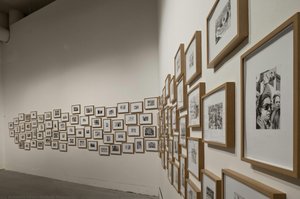
Throughout his decades-long career, Sung Neung-Kyung has consistently expanded the boundaries of performance art. His practice is intrinsically process-oriented, often involving one-off events that are then documented through photography or archival materials—a deliberate embrace of ephemerality. He frequently engages his own body as an artistic medium, sometimes in deliberately chaotic and disruptive ways. Performances like *M.V.G.W* (1998), where he rubs surfaces with shaving cream while chanting ancestral prayers, and *Aluminum-Foil Man* (2001), featuring portraits of himself wrapped in aluminum foil, challenge the conventions of artistic creation and presentation. These actions often operate as a form of institutional critique, disrupting the pristine white cube space and questioning the very nature of art’s value within established systems. He doesn't seek to create polished masterpieces but rather to expose the messy, chaotic reality behind them.Legacy and Contemporary Resonance
Sung Neung-Kyung’s work has gained increasing international recognition in recent years, culminating in major group exhibitions like *Only the Young: Experimental Art in South Korea, 1960s–1970s* at the Guggenheim Museum. His pioneering spirit and unwavering commitment to challenging established norms have cemented his position as a key figure in Korean contemporary art. He is not merely an artist; he is a cultural investigator, a disruptor of communication, and a persistent voice questioning power structures. His influence extends beyond the realm of visual art, resonating with scholars and artists across disciplines who grapple with themes of representation, knowledge production, and political resistance. Sung Neung-Kyung’s legacy lies not in creating definitive answers but in persistently asking difficult questions—questions that remain profoundly relevant in a world saturated with information and increasingly complex power dynamics.
seongneunggyeong
1944 - , South Korea
Основные сведения
- Artistic Movement Or Style: Experimental art, Conceptualism
- Artists Who Influenced This Artist: ['Joseph Kosuth']
- Date Of Birth: 1944
- Date Of Death: Living
- Full Name: Sung Neung-Kyung
- Nationality: Korean
- Notable Artworks: ['Eight Newspaper Pages']
- Place Of Birth: Yesan, South Korea