

 Предпросмотр
 Поделиться
 Поделиться
 Детали произведения

 Скачать
 Похожие работы
 Рентгенография
 Слайд-шоу
 Статистика
Diwan of Jami


 Читать далее
Приобретите цифровое изображение высокого разрешения в улучшенном качестве, которое значительно превосходит онлайн-превью.
Каждый файл тщательно подготавливается нашими специалистами с использованием передовых инструментов и экспертной ручной ретуши. Мы гарантируем исключительную четкость, точную цветопередачу и детальную проработку каждого изображения.
Финальный файл доставляется по электронной почте в течение 72 часов и оптимизирован для немедленного использования в профессиональной среде, при верстке и печати. Это тот же уровень качества, которому доверяют ведущие дизайнерские студии, издательства и галереи.
Цифровое изображение
Скачайте файл высокого разрешения для личного использования, печати и творческих проектов. ( Перейти к печати Купить картину ручной работы)
Включено в каждый заказ цифровых изображений
Гарантия экспертной цифровой доставки
Выбирая ArtsDot.com, вы получаете не просто изображение — вы приобретаете профессионально обработанное цифровое произведение искусства, созданное с безупречной точностью и под защитой гарантии качества. Вот всё, что автоматически входит в ваш заказ:

Мгновенная доставка по e-mail
Ваш цифровой файл в высоком разрешении будет отправлен вам по электронной почте в течение 72 часов после оформления заказа — и сразу станет доступен для использования.

Цифровой файл с ИИ-улучшением
Ваше произведение искусства проходит профессиональную оптимизацию с использованием передовых инструментов ИИ и ручной обработки, что гарантирует максимальную детализацию, четкость и точность цветопередачи.

Бессрочная бесплатная повторная доставка
Случайно удалили или потеряли файл? Не беспокойтесь — мы отправим его вам повторно в любое время и совершенно бесплатно.

Без импортных пошлин — навсегда
Наслаждайтесь вашим произведением искусства мгновенно без таможенных пошлин, сборов или затрат на доставку — цифровые загрузки всегда не облагаются налогом.

Гарантия точности цветопередачи
Мы гарантируем, что ваше цифровое изображение максимально точно передает оригинальные цвета благодаря использованию профессиональных инструментов и систем управления цветом.

Гарантия удовлетворенности 100 дней
Если вы не будете удовлетворены своим цифровым изображением, мы внесем правки или вернем 100% стоимости в течение 100 дней — без лишних вопросов.

100% Гарантия возврата средств
Не удовлетворены покупкой? Получите полный возврат средств в течение 100 дней после получения цифрового файла — без лишних вопросов.

Скидки на оптовые заказы
Купите 3 изображения, сэкономьте 10% — Купите 5, сэкономьте 15% — Купите 10+, сэкономьте 20%. Отличное решение для творческих проектов, галерей и агентств.
A Journey Captured on Paper: The Splendor of the Diwan of Jami
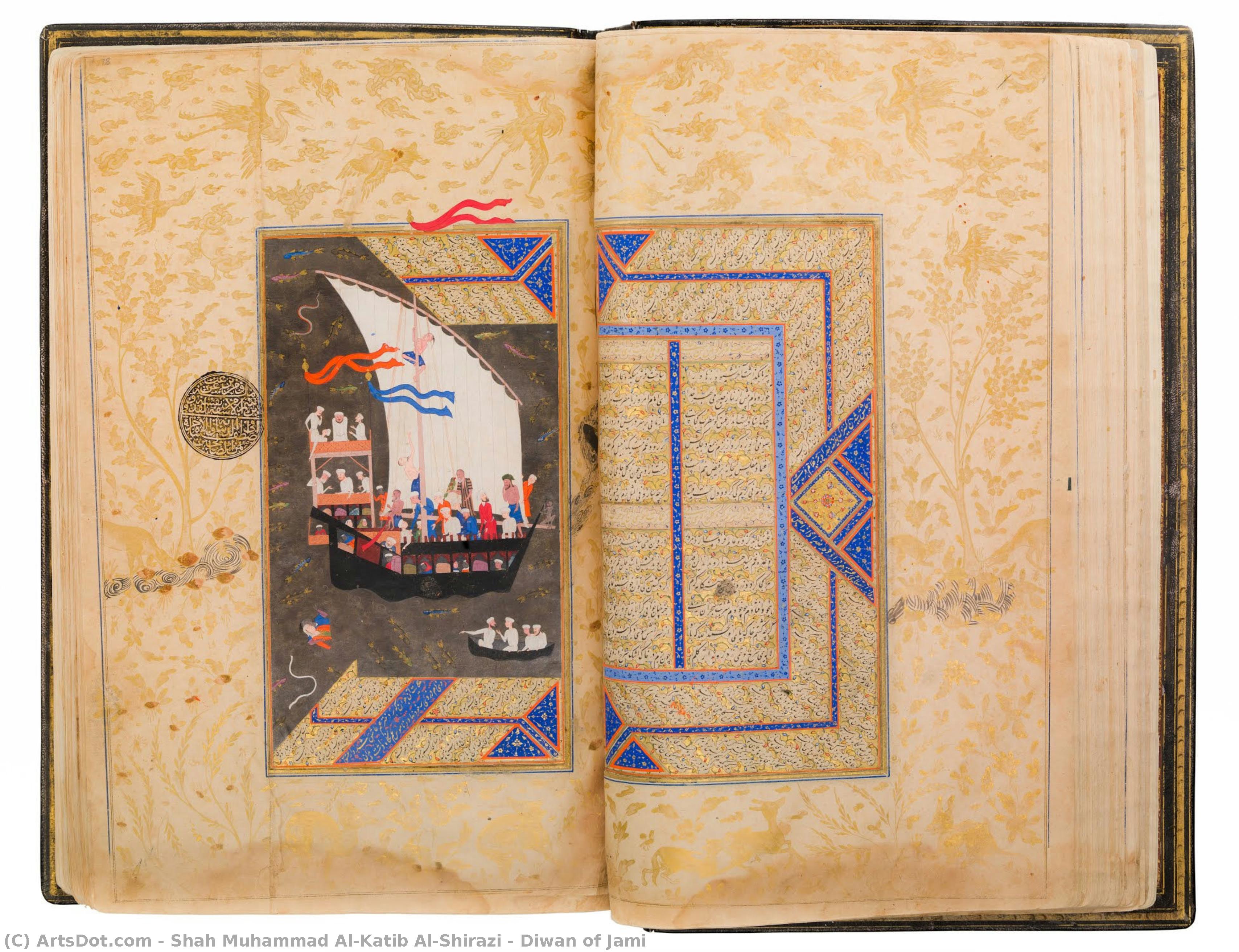
To gaze upon this exquisite folio from the Diwan of Jami is to step across the threshold of time and into a world painted with meticulous devotion. This manuscript, far more than just an illuminated book, served as a portable testament to culture, wealth, and intellectual exchange among the Muslim elite. The scene depicted—a gathering of figures navigating life upon a boat or ferry—is rendered with a vibrant energy that seems to carry the viewer along with the current. It speaks volumes about the cosmopolitan nature of its creation, suggesting moments of passage, connection, and shared human experience.
Mastery in Watercolor and Narrative Detail
The technical brilliance evident in this piece is breathtaking. The use of watercolor allows the artist to achieve a depth and luminosity that elevates the scene from mere illustration to immersive tableau. Observe the careful placement of at least twelve figures, each occupying a distinct space within the vessel. Some are caught in the foreground, their forms detailed and immediate, while others recede into the composition, adding layers of visual mystery. The artist, Shah Muhammad al-Katib al-Shirazi, working around 1564, demonstrates an unparalleled command over depicting human interaction within a confined space. It is a study in controlled chaos, where every fold of drapery and gesture contributes to the overall narrative flow.
Historical Echoes: The Life of Luxury Manuscripts
These illustrated manuscripts were once coveted possessions, objects exchanged as tokens of profound regard or markers of royal patronage across vast distances. This particular copy, likely originating in Shiraz, whispers tales of its journey—from an affluent patron's private study to the grand halls of a royal library. Owning a reproduction allows one to connect with that history; it is not simply art on paper, but a tangible echo of courtly life and scholarly pursuit during the early modern Islamic world. The very act of possessing such a book signified status and deep cultural appreciation.
Symbolism of Passage and Community
The motif of travel itself carries potent symbolism. A boat journey often represents a passage through life's challenges, a transition from one state of being to another. Here, the group dynamic suggests community—a shared destiny navigated together against the backdrop of water. The figures, clustered yet individually defined, evoke themes of human connection and collective experience. For the modern collector or designer, this piece offers an emotional resonance: it speaks to journeys undertaken, memories shared, and the enduring bonds that see us through life's currents.
Bringing the Exotic Narrative Home
For those seeking to infuse a space with the romance of history and the vibrancy of global artistry, this reproduction serves as a magnificent focal point. Its rich palette and complex narrative structure draw the eye inward, inviting contemplation. It is an artwork that rewards close looking, offering endless moments for interpretation—a window into a sophisticated past, beautifully preserved for contemporary admiration.
Похожие произведения
Биография художника
Gaudenzio Ferrari: A Florentine Master of the Renaissance
Born around 1471 in Valduggia, a small village nestled within the Italian Alps near present-day Vercelli, Gaudenzio Ferrari’s life and career unfolded primarily during the vibrant heart of the Italian Renaissance. While his early training remains somewhat shrouded in the mists of time – documented primarily through connections to other artists – it's clear that he emerged as a significant painter and sculptor, leaving behind a legacy marked by both classical influence and a distinctly Northern Mannerist sensibility. His work reflects a fascinating interplay between the artistic currents flowing from Florence and Milan, ultimately establishing him as a key figure in the regional art scene of Piedmont.
Ferrari’s formative years were likely spent under the tutelage of Gerolamo Giovenone in Vercelli, an artist known for his meticulous attention to detail and his ability to capture the nuances of human expression. This early exposure undoubtedly instilled in Ferrari a deep appreciation for realism and a commitment to portraying subjects with remarkable accuracy. However, it was his subsequent journey south, possibly to Varallo or perhaps even Florence itself, that truly shaped his artistic development. During this period, he encountered and absorbed the stylistic innovations of masters like Pietro Perugino and Bernardino Zenale – artists whose influence is readily apparent in his early works, particularly the poignant “Angel of the Annunciation” housed in Vercelli’s Museo Civico Pietro Calderini.
Ferrari's artistic output spanned a considerable period, encompassing a diverse range of subjects and styles. He produced altarpieces, frescoes, panel paintings, and sculptures, demonstrating versatility and a willingness to experiment with different techniques. His “Holy Family with Saint Michael” (Turin, Galleria Sabauda) exemplifies his mastery of composition and his ability to imbue religious scenes with a sense of serene beauty. Similarly, the series of *Passion* frescoes he executed in Santa Maria delle Grazie, Varallo, showcase his technical skill and his engagement with the prevailing artistic trends of the time. These works are particularly noteworthy for their dynamic energy and expressive gestures, reflecting the influence of artists like Giovanni Martino Spanzotti who had previously tackled similar projects.
The Farnese Hercules and a Palace Transformation
Perhaps the most enduring testament to Gaudenzio Ferrari’s artistic prowess is his involvement in the relocation of the monumental “Farnese Hercules” sculpture from the ancient Baths of Caracalla in Rome to the Palazzo Farnese in Florence. Commissioned by Cardinal Alessandro Farnese, a prominent figure in the Papal court, this ambitious undertaking required not only transporting the colossal statue but also integrating it into the palace’s architectural design. Ferrari played a crucial role in overseeing the logistics and ensuring that the sculpture was displayed with appropriate grandeur and reverence. This project highlights his understanding of both artistic principles and practical considerations – a testament to his multifaceted skill set.
The placement of the “Farnese Hercules” within the Palazzo Farnese, designed by Giuliano da Sangallo and later embellished by Giulio Romano, underscores Ferrari’s contribution to the palace's evolving aesthetic. The sculpture’s imposing presence served as a focal point, reinforcing the palace’s status as a symbol of papal power and wealth. It is a remarkable example of how an artist could contribute significantly to the overall design and atmosphere of a major architectural undertaking.
Influences and Legacy
Ferrari's artistic style can be characterized by a synthesis of classical ideals and Northern Mannerist tendencies. He inherited from his early influences a commitment to realism and anatomical accuracy, while simultaneously embracing the dramatic compositions, elongated figures, and expressive gestures that defined the later stages of the Renaissance. His work reflects a deep engagement with both Italian and Northern European artistic traditions, resulting in a unique and compelling visual language.
While Ferrari’s individual fame may not rival that of some of his contemporaries – such as Michelangelo or Raphael – his contributions to the art of Piedmont are undeniable. He served as a vital link between the Florentine Renaissance and the emerging artistic currents of Northern Italy, shaping the regional art scene and leaving behind a body of work that continues to be studied and admired today. Gaudenzio Ferrari’s legacy resides not only in his individual creations but also in his role as a facilitator of artistic exchange and innovation.
A Life Cut Short
Gaudenzio Ferrari met an untimely end on January 11, 1546, at the age of 74 or 75. His death marked the loss of a talented artist who had made significant contributions to the cultural landscape of Piedmont. Despite his relatively short career, Gaudenzio Ferrari left behind a substantial body of work that reflects his artistic versatility and his deep engagement with the major trends of his time. His legacy endures as a testament to the enduring power of art to transcend geographical boundaries and connect artists across generations.
shah muhammad al-katib al-shirazi
1546 - 1615