

 Предпросмотр
 Поделиться
 Поделиться
 Детали произведения

 Скачать
 Похожие работы
 Рентгенография
 Слайд-шоу
 Статистика
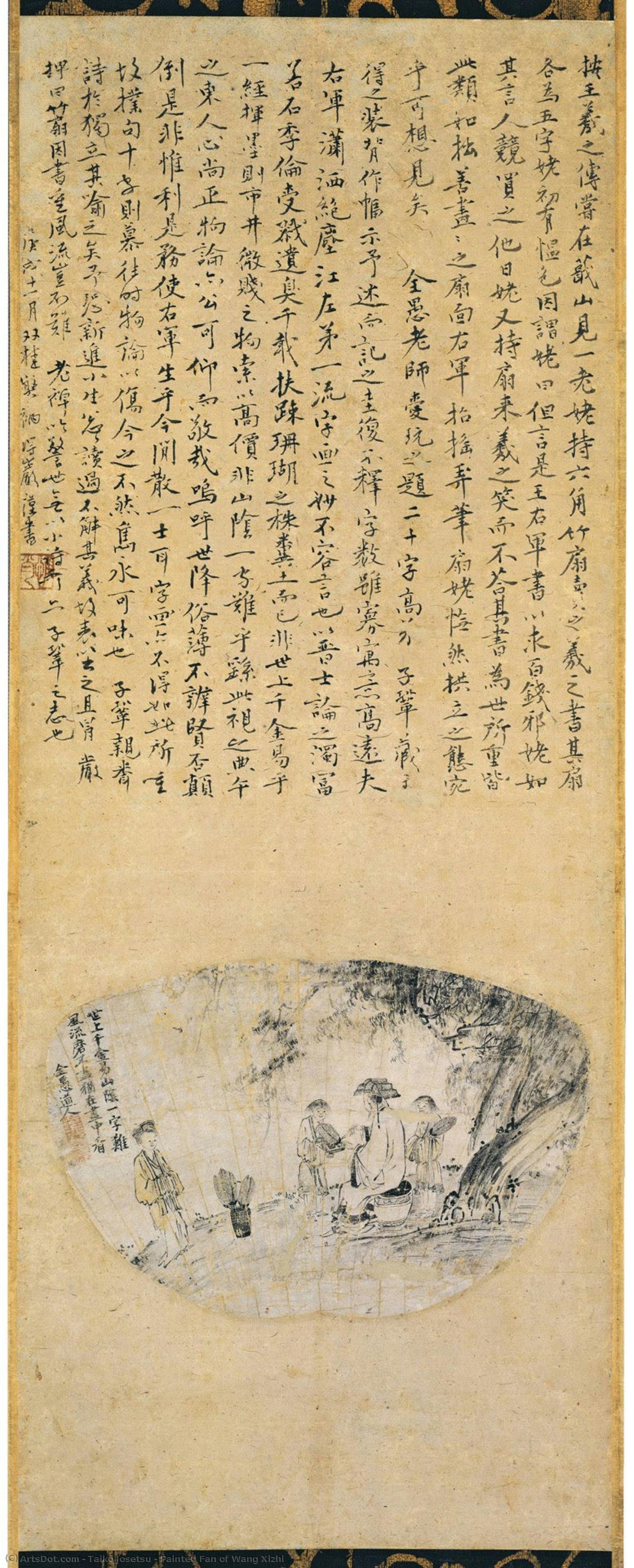
Painted Fan of Wang Xizhi

 Читать далее
Масляная репродукция ручной работы
Картина маслом на холсте в выбранном вами размере и раме, написанная на заказ нашими художниками. ( Перейти к печати Перейти к цифровым изображениям)




































Выберите один из наших стандартных размеров, соответствующих оригинальным пропорциям произведения искусства.

Вы можете указать собственные размеры, чтобы картина идеально вписалась в выбранную раму или пространство. Если выбранный вами размер не соответствует пропорциям оригинала, мы либо обрежем полотно, либо расширим его за счет дополнительных элементов, написанных вручную. Цифровой макет будет отправлен вам на утверждение перед началом производства.
Обратите внимание, что предварительный просмотр на экране не отражает фактическую обрезку или расширение. Только макет точно покажет окончательную композицию.
Хотя доступны индивидуальные размеры, мы рекомендуем выбирать вариант из предопределенного списка, чтобы сохранить исходные пропорции.
После оформления заказа команда ArtsDot.com свяжется с клиентом по электронной почте для уточнения деталей и предоставит предварительный макет
Доставка по всему миру () за 3–4 недели вместо стандартных 5 недель. (13 Сентябрь). Без компромиссов в качестве.

Бесплатная экспресс-доставка по всему миру

Высококачественный льняной холст

Полное страхование доставки

Гарантия возмещения таможенных пошлин

Гарантия точного соответствия цветов

100-дневная политика возврата (только при обнаружении дефектов)

Гарантия возврата 100% средств

Предложение оптовых скидок
 Вариант со стеклом доступен только для размеров менее 110 см

Painted Fan of Wang Xizhi
Техника репродукции
Размер репродукции
-


Итоговая стоимость
$ 313
Похожие произведения
Биография художника
The Architect of Silence: The Legacy of Taikō Josetsu
In the quiet, mist-shrouded landscapes of 15th-century Japan, a revolutionary aesthetic was quietly taking root, far removed from the vibrant, polychrome traditions of the past. At the heart of this transformation stood Taikō Josetsu, a painter-priest whose brushstrokes would forever alter the course of Japanese art. As a figure operating within the Muromachi period, Josetsu did not merely paint; he translated the profound, often paradoxical mysteries of Zen Buddhism into a visual language of monochrome ink. He is widely revered as the progenitor of the suiboku style—the monochromatic ink wash technique—a method that prioritized the spiritual essence of a subject over its literal, colorful representation.
Though much of his personal history remains veiled by the passage of centuries, we know that Josetsu was deeply embedded in the religious and intellectual life of Kyoto. Active at the Shōkoku-ji Temple under the patronage of the Ashikaga shoguns, he lived a life where art and meditation were inseparable. His training, likely influenced by the intensive artistic traditions of China, provided him with a mastery of calligraphy and ink wash that allowed him to explore the concept of mu, or emptiness. This pursuit of simplicity was not an absence of skill, but rather a disciplined refinement, where every subtle tonal variation in black ink served to evoke the infinite depth of the natural world.
A Visual Koan: The Mastery of Ink
The zenith of Josetsu’s creative output is perhaps best embodied in his most celebrated masterpiece, "Catching a Catfish with a Gourd." Created around 1413 by the decree of the Ashikaga shogun Yoshimochi, this work serves as more than just a landscape; it is a visual koan—a Zen riddle designed to provoke sudden enlightenment. The painting depicts a comical figure attempting an impossible task, set against a backdrop of winding rivers and bamboo groves. Through the use of minimal lines and delicate washes, Josetsu captures a sense of profound mystery, inviting the viewer to look beyond the physical impossibility of the act to find a deeper, spiritual truth.
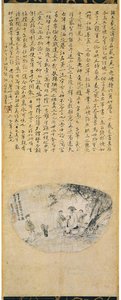
This ability to blend humor with high philosophy became a hallmark of his approach. His technique relied on the jianbi method—an abbreviated brush drawing style—which demanded immense precision and a command over thin, decisive strokes. In works such as his "Painted Fan of Wang Xizhi," Josetsu demonstrated how he could weave historical anecdotes with delicate artistry, using the fluidity of ink to narrate tales of legendary calligraphers and the transient nature of fortune. His work was never static; it was a living dialogue between the artist's breath, the ink's flow, and the paper's void.
The Foundation of a Tradition
The historical significance of Taikō Josetsu cannot be overstated. By championing a purely black and white aesthetic, he provided the foundation upon which generations of Japanese masters would build. He was not only a pioneer but also a mentor, likely serving as a teacher to Tenshō Shūbun, another titan of the ink wash tradition. His influence ensured that the suiboku style would become the dominant language of Zen-influenced art for centuries to come, shaping the very soul of Japanese landscape painting.
To look upon a work by Josetsu is to enter a space of contemplation. He taught the eye to find beauty in the shadow, meaning in the mist, and a universe within a single drop of ink. His legacy remains etched in the history of the Muromachi period, standing as a testament to the power of restraint and the enduring resonance of the monochrome spirit.
taikō josetsu
1496 , Japan
Основные сведения
- Artistic Movement Or Style: Ink Wash Painting (Suiboku)
- Artists Or Movements Influenced By This Artist: ['Zen']
- Artists Who Influenced This Artist: ['Wang Xizhi']
- Date Of Death: 1496
- Full Name: Taikō Josetsu
- Nationality: Japanese
- Notable Artworks: ['Catching a Catfish with a Gourd']
- Place Of Birth: Kyoto, Japan
Похожие статьи
Serenity on Canvas: A Guide to the Timeless Beauty of Japanese Landscape Painting
Discover the serene beauty of Japanese landscape painting. From Hokusai's iconic woodblock prints to meditative sumi-e ink washes, explore a visual journey through the 'floating world' and learn how to bring this timeless Zen aesthetic into your modern home decor.
Ephemeral Lines: Exploring Emotional Resonance in Ink Sketching Traditions
Explore the profound art of ink sketching! Discover techniques to express emotion, master line work, and cultivate artistic sensitivity. Learn from historical masters & unlock your creative potential.
The Beauty of Ink Wash: Discover Serene & Soulful Art for Your Home
Discover the tranquil beauty of ink wash painting. Explore how Sumi-e and monochrome landscapes bring Zen-inspired serenity and soulful elegance to your home decor through expert curation and timeless East Asian aesthetics.
Ephemeral Expressions: Exploring the Nuances of Ink on Paper Through History & Contemporary Art
Explore the captivating world of ink wash painting – from its ancient origins to contemporary masters. Discover techniques, symbolism & conservation insights with ArtsDot.com.

Топ-25 шедевров Кацусики Хокусая: Искусство Японии для вашего интерьера
Погрузитесь в мир гения Кацусики Хокусая! 25 легендарных гравюр укиё-э, включая "Великую волну". История искусства Японии и вдохновение для вашего интерьера. Репродукции высокого качества на ArtsDot.com.