

 Предпросмотр
 Поделиться
 Поделиться
 Детали произведения

 Скачать
 Похожие работы
 Рентгенография
 Слайд-шоу
 Статистика
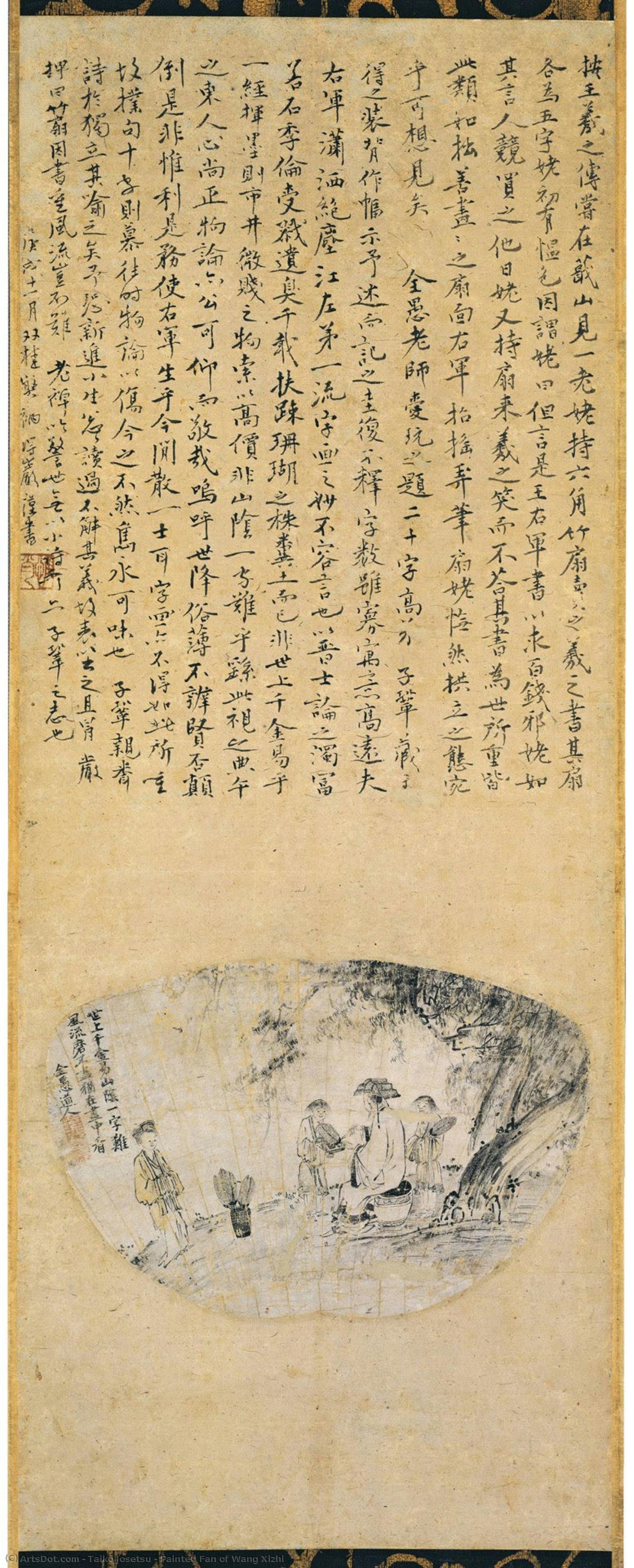
Painted Fan of Wang Xizhi

 Читать далее
Приобретите цифровое изображение высокого разрешения в улучшенном качестве, которое значительно превосходит онлайн-превью.
Каждый файл тщательно подготавливается нашими специалистами с использованием передовых инструментов и экспертной ручной ретуши. Мы гарантируем исключительную четкость, точную цветопередачу и детальную проработку каждого изображения.
Финальный файл доставляется по электронной почте в течение 72 часов и оптимизирован для немедленного использования в профессиональной среде, при верстке и печати. Это тот же уровень качества, которому доверяют ведущие дизайнерские студии, издательства и галереи.
Цифровое изображение
Скачайте файл высокого разрешения для личного использования, печати и творческих проектов. ( Перейти к печати Купить картину ручной работы)
Включено в каждый заказ цифровых изображений
Гарантия экспертной цифровой доставки
Выбирая ArtsDot.com, вы получаете не просто изображение — вы приобретаете профессионально обработанное цифровое произведение искусства, созданное с безупречной точностью и под защитой гарантии качества. Вот всё, что автоматически входит в ваш заказ:

Мгновенная доставка по e-mail
Ваш цифровой файл в высоком разрешении будет отправлен вам по электронной почте в течение 72 часов после оформления заказа — и сразу станет доступен для использования.

Цифровой файл с ИИ-улучшением
Ваше произведение искусства проходит профессиональную оптимизацию с использованием передовых инструментов ИИ и ручной обработки, что гарантирует максимальную детализацию, четкость и точность цветопередачи.

Бессрочная бесплатная повторная доставка
Случайно удалили или потеряли файл? Не беспокойтесь — мы отправим его вам повторно в любое время и совершенно бесплатно.

Без импортных пошлин — навсегда
Наслаждайтесь вашим произведением искусства мгновенно без таможенных пошлин, сборов или затрат на доставку — цифровые загрузки всегда не облагаются налогом.

Гарантия точности цветопередачи
Мы гарантируем, что ваше цифровое изображение максимально точно передает оригинальные цвета благодаря использованию профессиональных инструментов и систем управления цветом.

Гарантия удовлетворенности 100 дней
Если вы не будете удовлетворены своим цифровым изображением, мы внесем правки или вернем 100% стоимости в течение 100 дней — без лишних вопросов.

100% Гарантия возврата средств
Не удовлетворены покупкой? Получите полный возврат средств в течение 100 дней после получения цифрового файла — без лишних вопросов.

Скидки на оптовые заказы
Купите 3 изображения, сэкономьте 10% — Купите 5, сэкономьте 15% — Купите 10+, сэкономьте 20%. Отличное решение для творческих проектов, галерей и агентств.
Похожие произведения
Биография художника
The Architect of Silence: The Legacy of Taikō Josetsu
In the quiet, mist-shrouded landscapes of 15th-century Japan, a revolutionary aesthetic was quietly taking root, far removed from the vibrant, polychrome traditions of the past. At the heart of this transformation stood Taikō Josetsu, a painter-priest whose brushstrokes would forever alter the course of Japanese art. As a figure operating within the Muromachi period, Josetsu did not merely paint; he translated the profound, often paradoxical mysteries of Zen Buddhism into a visual language of monochrome ink. He is widely revered as the progenitor of the suiboku style—the monochromatic ink wash technique—a method that prioritized the spiritual essence of a subject over its literal, colorful representation.
Though much of his personal history remains veiled by the passage of centuries, we know that Josetsu was deeply embedded in the religious and intellectual life of Kyoto. Active at the Shōkoku-ji Temple under the patronage of the Ashikaga shoguns, he lived a life where art and meditation were inseparable. His training, likely influenced by the intensive artistic traditions of China, provided him with a mastery of calligraphy and ink wash that allowed him to explore the concept of mu, or emptiness. This pursuit of simplicity was not an absence of skill, but rather a disciplined refinement, where every subtle tonal variation in black ink served to evoke the infinite depth of the natural world.
A Visual Koan: The Mastery of Ink
The zenith of Josetsu’s creative output is perhaps best embodied in his most celebrated masterpiece, "Catching a Catfish with a Gourd." Created around 1413 by the decree of the Ashikaga shogun Yoshimochi, this work serves as more than just a landscape; it is a visual koan—a Zen riddle designed to provoke sudden enlightenment. The painting depicts a comical figure attempting an impossible task, set against a backdrop of winding rivers and bamboo groves. Through the use of minimal lines and delicate washes, Josetsu captures a sense of profound mystery, inviting the viewer to look beyond the physical impossibility of the act to find a deeper, spiritual truth.
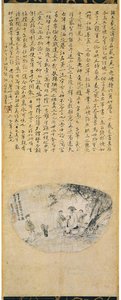
This ability to blend humor with high philosophy became a hallmark of his approach. His technique relied on the jianbi method—an abbreviated brush drawing style—which demanded immense precision and a command over thin, decisive strokes. In works such as his "Painted Fan of Wang Xizhi," Josetsu demonstrated how he could weave historical anecdotes with delicate artistry, using the fluidity of ink to narrate tales of legendary calligraphers and the transient nature of fortune. His work was never static; it was a living dialogue between the artist's breath, the ink's flow, and the paper's void.
The Foundation of a Tradition
The historical significance of Taikō Josetsu cannot be overstated. By championing a purely black and white aesthetic, he provided the foundation upon which generations of Japanese masters would build. He was not only a pioneer but also a mentor, likely serving as a teacher to Tenshō Shūbun, another titan of the ink wash tradition. His influence ensured that the suiboku style would become the dominant language of Zen-influenced art for centuries to come, shaping the very soul of Japanese landscape painting.
To look upon a work by Josetsu is to enter a space of contemplation. He taught the eye to find beauty in the shadow, meaning in the mist, and a universe within a single drop of ink. His legacy remains etched in the history of the Muromachi period, standing as a testament to the power of restraint and the enduring resonance of the monochrome spirit.
taikō josetsu
1496 , Japan
Основные сведения
- Artistic Movement Or Style: Ink Wash Painting (Suiboku)
- Artists Or Movements Influenced By This Artist: ['Zen']
- Artists Who Influenced This Artist: ['Wang Xizhi']
- Date Of Death: 1496
- Full Name: Taikō Josetsu
- Nationality: Japanese
- Notable Artworks: ['Catching a Catfish with a Gourd']
- Place Of Birth: Kyoto, Japan