Меню
ПредпросмотрПредпросмотр Предпросмотр в ARПредпросмотр в AR Перейти к печати Перейти к печатиПерейти к цифровым изображениям Перейти к цифровым изображениям ПоделитьсяПоделиться
Детали произведенияДетали произведения Добавить в избранное Добавить в избранное СкачатьСкачать Похожие работыПохожие работы РентгенографияРентгенография Слайд-шоуСлайд-шоу СтатистикаСтатистика

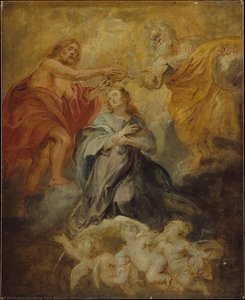
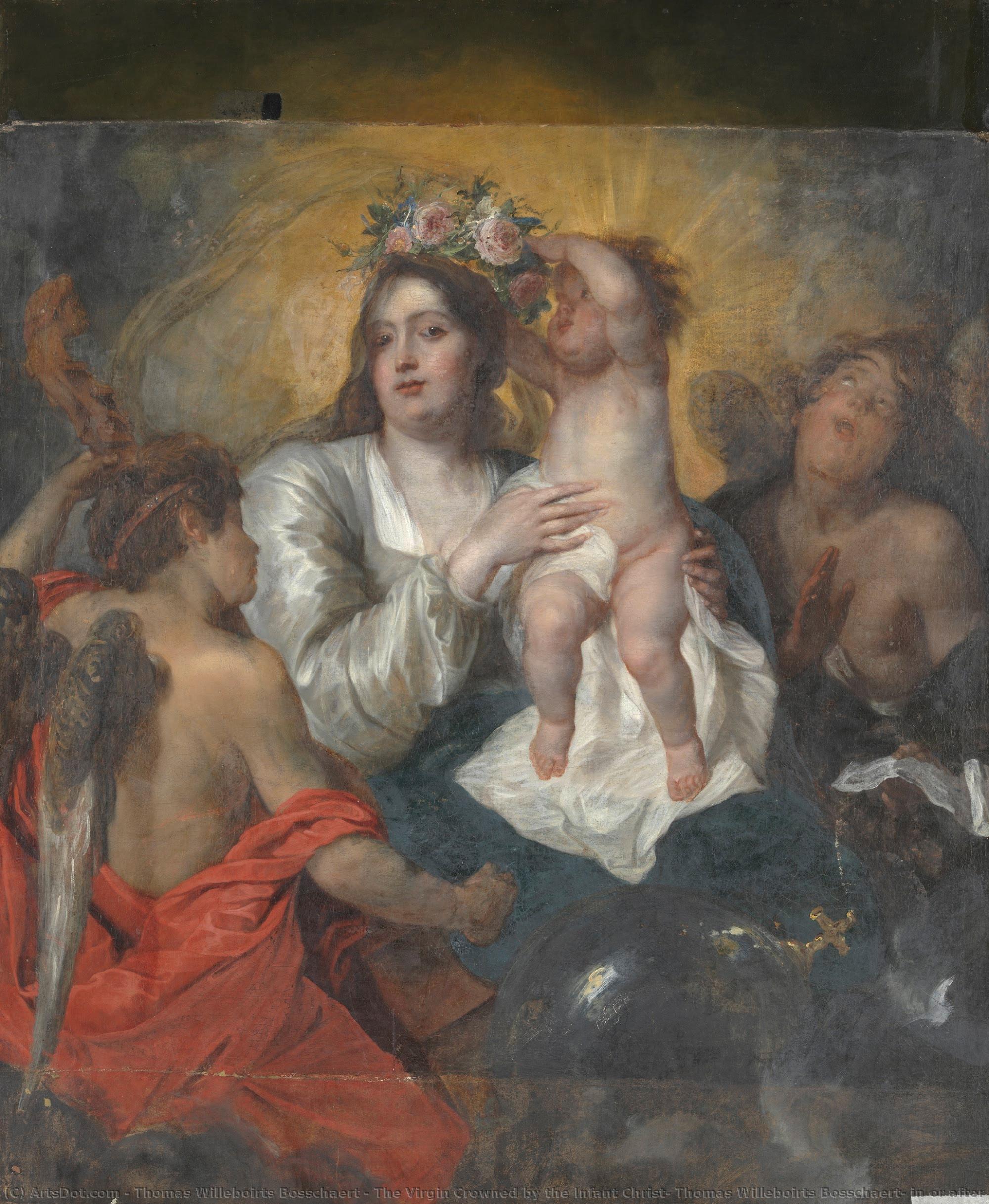
The Virgin Crowned by the Infant Christ, Thomas Willeboirts Bosschaert, in or after c. 1646

  • Дата создания1646
  • Размеры138.0 x 113.0 cm

Discover Thomas Willeboirts Bosschaert (1613-1654), a Flemish Baroque painter of the Dutch Golden Age. Influenced by Van Dyck & Rubens, he created history paintings and portraits for prominent patrons like Frederik Hendrik.

Масляная репродукция ручной работы

Картина маслом на холсте в выбранном вами размере и раме, написанная на заказ нашими художниками. (Перейти к печати Перейти к печатиПерейти к цифровым изображениям Перейти к цифровым изображениям)

Стандартный размер
на заказ
CM
INCH

Выберите один из наших стандартных размеров, соответствующих оригинальным пропорциям произведения искусства.

ширина
высота

Вы можете указать собственные размеры, чтобы картина идеально вписалась в выбранную раму или пространство. Если выбранный вами размер не соответствует пропорциям оригинала, мы либо обрежем полотно, либо расширим его за счет дополнительных элементов, написанных вручную. Цифровой макет будет отправлен вам на утверждение перед началом производства.
Обратите внимание, что предварительный просмотр на экране не отражает фактическую обрезку или расширение. Только макет точно покажет окончательную композицию.
Хотя доступны индивидуальные размеры, мы рекомендуем выбирать вариант из предопределенного списка, чтобы сохранить исходные пропорции.

Примеры того, что можно изменить: заменить лицо на фото клиента; добавить домашнее животное (например, заменить кошку на собаку); добавить скрытое послание на фон; изменить пейзаж или детали фона.
После оформления заказа команда ArtsDot.com свяжется с клиентом по электронной почте для уточнения деталей и предоставит предварительный макет

Доставка по всему миру () за 3–4 недели вместо стандартных 5 недель. (13 Сентябрь). Без компромиссов в качестве.

why_choose_icon
Бесплатная экспресс-доставка по всему миру
why_choose_icon
Высококачественный льняной холст
why_choose_icon
Полное страхование доставки
why_choose_icon
Гарантия возмещения таможенных пошлин
why_choose_icon
Гарантия точного соответствия цветов
why_choose_icon
100-дневная политика возврата (только при обнаружении дефектов)
why_choose_icon
Гарантия возврата 100% средств
why_choose_icon
Предложение оптовых скидок

Общая стоимость

$ 263

reproduction

The Virgin Crowned by the Infant Christ, Thomas Willeboirts Bosschaert, in or after c. 1646

Техника репродукции

Размер репродукции

-

Итоговая стоимость

$ 263

The wax-lined support of this painting is made up of three horizontally joined strips of canvas of different weaves. The strip at the top is made up of two pieces vertically joined, measuring 14.5-15.0 cm in height. They are joined together and to the main, middle canvas by lining. The central canvas is a near square, 105.7-107 cm high. The tacking edges at the left, right and bottom have been cut away. It is stitched to the bottom strip, which is 14-15.5 cm high. The central canvas has a double ground of a layer of chalk, and above, one of lead white mixed with black and earth pigments. The upper piece has a single ground of a layer of chalk. There is cusping towards all the edges of the central canvas apart from at the top. The imprint of the original strainer, about 6-8 cm wide, is evident at all its edges except the top where it is only 3-4.5 cm wide, indicating that the canvas has been reduced by 2-3 cm. No underdrawing has been detected. Dilute, brown undermodelling is present beneath the sleeve of the Virgin with sketchy, white brushstrokes to indicate the folds. The composition was built up working from the back using reserves. The paint surface is smooth and opaque, yet applied thinly with passages of wet-in-wet blending. There are a good many pentiments discernible in infrared reflectography; most likely these were not all made during the same campaign. A) Pentiments made during the initial campaign: the Virgin’s forehead was enlarged; the cloth on which the Christ Child stands was extended at its base; the instrument-playing angel’s profile, proper left arm and right shoulder have been adjusted, and the foreshortening of his proper right arm has been reduced; the fall of drapery on his back was lowered. B) Pentiments made at a subsequent stage: the fall of the Virgin’s veil was reduced; her lowered look to the left was altered to a frontal gaze; more of her chest and bosom was displayed; the fingers of her proper right hand were extended, where more of the white cloth was first depicted; the extent of Christ’s hair and that of the instrument-playing angel was enlarged. The red drapery below and to the left of the viola da gamba was overpainted when the lower strip of canvas was added, at which point, too, the clouds were expanded without reserves.5 Three main issues concerning the present painting have been the cause of confusion, and clarification is set out in the following order. The iconography unusually combines at least two separate aspects of Christian belief. The attribution of the work, which has been in the Rijksmuseum collection since the early nineteenth century, has only been settled in recent decades. Conservation has exposed the problematic character of its composition due to old interventions; however, this does not jeopardize the essential integrity of this physically complex work inspired as it most probably was by a lost painting by Anthony van Dyck (1599-1641). The description in the 1818 sale catalogue confined itself to an account of the image, and in the early years at the museum, the painting was described as the Holy Family. From 1858, the subject was given as the Glorification of Mary, although there is no such subject derived from the Bible or scriptural exegesis.6 The 1976 museum catalogue described it as the Apothesis [sic] of the Virgin. The key to the main intended meaning lies in the rubric to Schelte Adamsz Bolswert’s (1584/88-1659) engraving after a lost painting by Peter Paul Rubens (1577-1640).7 This engraving shows the crowned Virgin with her Child in her arms, trampling on a serpent coiled round the globe of the world. Christ points down to the serpent. The rubric to the print reads ‘Ipsa conteret caput tuum. genesis 3’, this is a reference to the sentence (in the Vulgate) in Genesis 3:15, in which God admonishes the serpent for beguiling Eve to eat the fruit of the tree of knowledge of good and evil and states that ‘she will bruise your head’. As Mâle relates, the gender of the pronoun was disputed between Catholics and Protestants. The former favoured the feminine reading, which was taken to refer to the ‘new Eve’, the Virgin, whereas Protestants opted for the masculine, which was understood to allude to Christ.8 Rubens’s interpretation depended on the feminine reading, while Van Dyck opted for the alternative.9 In the museum picture the now faint serpent on the globe is not actually suppressed. But it may be understood that the Virgin and Child participate in subduing it, though not, for instance, as deliberately and specifically as is shown in Caravaggio’s Palafrenieri altarpiece (Galleria Borghese), in which the serpent is trampled on.10 In the Rijksmuseum painting it may seem that as much emphasis, if not more, is placed on the second intended meaning conveyed by the Christ Child crowning the Virgin with a wreath of white and red roses. In Rubens’s paintings of the Assumption of the Virgin,11 angels offer her wreaths, and in the unused modello at St P../..

Биография художника

early life and training

thomas willeboirts bosschaert, a prominent figure in the dutch golden age, was born in bergen op zoom in 1613. his family, of catholic origin, had relocated to this region in the late sixteenth century. in 1628, bosschaert moved to antwerp, where he entered the studio of gerard seghers for an extensive eight-year apprenticeship. this formative period laid the groundwork for his future artistic endeavors.

artistic career and affiliations

in 1636 or 1637, bosschaert became a citizen of antwerp and joined the prestigious guild of st. luke, a significant milestone in his career. this affiliation not only underscored his commitment to his craft but also granted him access to a broader network of artists and patrons.

notable works and style

though specific details about his works are scarce, it is evident that bosschaert's artistry was deeply influenced by the prevailing styles of his time. his paintings, characterized by intricate details and masterful use of light, reflect the dutch golden age's emphasis on realism and aesthetic appeal.

museological significance and legacy

bosschaert's legacy, though not as extensively documented as some of his contemporaries, is preserved in part through the museum boijmans van beuningen rotterdam, netherlands, which houses a collection of fine and decorative arts from various periods, including the dutch golden age. [https://ArtsDot.com/@@/a@d3arrk-museum-boijmans-van-beuningen-rotterdam-netherlands](museum boijmans van beuningen rotterdam, netherlands at ArtsDot.com)

conclusion

thomas willeboirts bosschaert's life and work, though shrouded in mystery, contribute to the rich tapestry of dutch art during the 17th century. his association with prominent artists and his adherence to the artistic standards of his time underscore his significance within the era.
  • view thomas willeboirts bosschaert's artworks at [https://ArtsDot.com/@/thomas-willeboirts-bosschaert](thomas willeboirts bosschaert | ArtsDot.com)
  • explore the museum boijmans van beuningen rotterdam, netherlands collection at [https://ArtsDot.com/@@/a@d3arrk-museum-boijmans-van-beuningen-rotterdam-netherlands](museum boijmans van beuningen rotterdam, netherlands | ArtsDot.com)
  • discover more about the dutch golden age and its notable artists at [https://ArtsDot.com/all-popular-artists](the greatest artists painters of all time | ArtsDot.com)
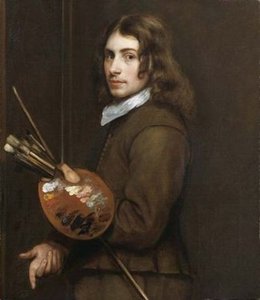
thomas willeboirts bosschaert's enigmatic life serves as a reminder of the enduring impact of dutch art on the world's cultural landscape.
thomas willeboirts bosschaert

thomas willeboirts bosschaert

1613 - 1654 , Netherlands

Основные сведения

  • Artistic Movement Or Style: Dutch Golden Age, Baroque painting
  • Artists Or Movements Influenced By This Artist: Van Dyck
  • Artists Who Influenced This Artist: Gerard Seghers
  • Date Of Birth: 1613
  • Full Name: Thomas Willeboirts Bosschaert
  • Nationality: Flemish
  • Notable Artworks: ['Venus Arming a Warrior']
  • Place Of Birth: Breda, Netherlands