Предпросмотр
 Поделиться
 Поделиться
 Детали произведения

 Скачать
 Похожие работы
 Рентгенография
 Слайд-шоу
 Статистика
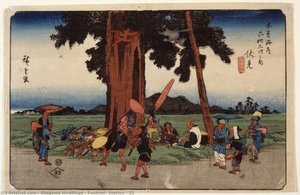
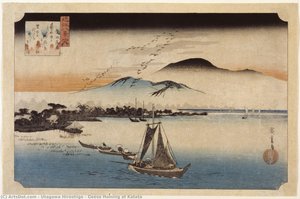
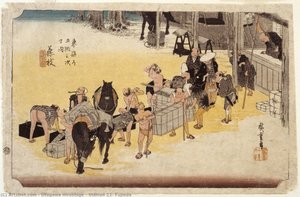
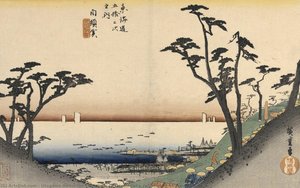
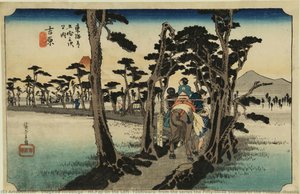
Station 36, Goyu; Kyoka Tokaido Series


 Читать далее
Масляная репродукция ручной работы
Картина маслом на холсте в выбранном вами размере и раме, написанная на заказ нашими художниками. ( Перейти к печати Перейти к цифровым изображениям)




P118B $10

P118H $10

P118W $10

P438Z $10

P508JH $12

P508YH $12

P805H $10

P805Z $10

P919BZ $10

P919G $10

P919XJ $10

P959ZH $10

P968JZ $12

W106C $8

W218G $10

W218JH $8

W218Y $10

W307PJ $10

W316G $10

W316PJ $8

W316Y $10

W398PJ $8

W4111J $10

W500HY $15

W500JH $15

W692G $12

W849H $8

W940BG $15

W953PJ $8




Выберите один из наших стандартных размеров, соответствующих оригинальным пропорциям произведения искусства.

Вы можете указать собственные размеры, чтобы картина идеально вписалась в выбранную раму или пространство. Если выбранный вами размер не соответствует пропорциям оригинала, мы либо обрежем полотно, либо расширим его за счет дополнительных элементов, написанных вручную. Цифровой макет будет отправлен вам на утверждение перед началом производства.
Обратите внимание, что предварительный просмотр на экране не отражает фактическую обрезку или расширение. Только макет точно покажет окончательную композицию.
Хотя доступны индивидуальные размеры, мы рекомендуем выбирать вариант из предопределенного списка, чтобы сохранить исходные пропорции.
После оформления заказа команда ArtsDot.com свяжется с клиентом по электронной почте для уточнения деталей и предоставит предварительный макет
Доставка по всему миру () за 3–4 недели вместо стандартных 5 недель. (14 Сентябрь). Без компромиссов в качестве.

Бесплатная экспресс-доставка по всему миру

Высококачественный льняной холст

Полное страхование доставки

Гарантия возмещения таможенных пошлин

Гарантия точного соответствия цветов

100-дневная политика возврата (только при обнаружении дефектов)

Гарантия возврата 100% средств

Предложение оптовых скидок
 Вариант со стеклом доступен только для размеров менее 110 см

Station 36, Goyu; Kyoka Tokaido Series
Техника репродукции
Размер репродукции
-


Итоговая стоимость
$ 313
Station 36, Goyu; Kyoka Tokaido Series: A Poetic Echo of Edo Japan
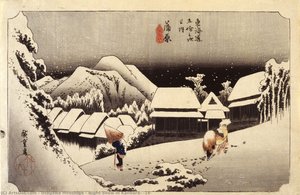
Utagawa Hiroshige’s “Station 36, Goyu; Kyoka Tokaido Series” transcends mere landscape depiction; it embodies a profound distillation of Edo-period sensibilities—a yearning for tranquility amidst the dynamism of daily life. Completed in 1855 during a pivotal moment of transition between feudal tradition and Western influence, this monumental woodblock print captures not just a visual scene but also an intangible mood that continues to resonate with viewers today. It’s more than just ink on paper; it's a window into the soul of Japan at its apex.- Subject Matter: The artwork portrays a serene pathway alongside water leading towards Mount Fuji, framed by lush foliage and distant buildings—a quintessential representation of the Tokaido Road, one of Japan’s major highways connecting Edo (Tokyo) to Kyoto. Hiroshige meticulously rendered the everyday activities of travelers along this route, subtly conveying a sense of movement and connection within the stillness of nature.
- Style: Hiroshige's approach firmly establishes him as a cornerstone of *ukiyo-e*, a genre celebrated for its vibrant colors and detailed compositions. However, unlike many contemporaries who prioritized spectacle, Hiroshige favored atmospheric perspective—a technique that skillfully diminishes color intensity and sharpness with distance—creating an illusion of depth and conveying the ethereal beauty of twilight.
- Technique: The print’s execution exemplifies the painstaking process of woodblock printing. Skilled artisans carved intricate designs into wooden blocks, applying ink in multiple layers to achieve nuanced tonal variations – a technique known as *bokashi*. These blocks were then pressed onto dampened washi paper, resulting in prints that possess a distinctive textured surface and remarkable clarity.
- Color Palette: Dominated by cool blues and greens—particularly the dominant hue of Mount Fuji—the palette evokes feelings of serenity and contemplation. Subtle hints of yellow illuminate buildings and clothing, adding warmth to the overall composition without disrupting its harmonious balance.
- Symbolism & Emotional Impact: The towering Mount Fuji serves as a powerful symbol of permanence and majesty, anchoring the scene in timeless grandeur. Simultaneously, Hiroshige’s depiction of travelers traversing the Tokaido Road speaks to themes of pilgrimage, resilience, and the human desire for connection with something larger than oneself. Viewing “Station 36” inspires reflection on beauty, solitude, and the enduring legacy of Edo Japan—a period remembered for its artistic achievements and philosophical depth.
Похожие произведения

Биография художника
A Poetic Vision of Edo Japan: The Life and Art of Utagawa Hiroshige
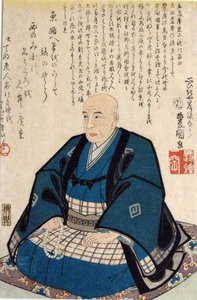
Utagawa Hiroshige, born Andō Tokutarō in 1797 in the bustling city of Edo (modern Tokyo), stands as a pivotal figure in the world of *ukiyo-e*, or “pictures of the floating world.” Though deeply rooted in the traditions of Japanese woodblock printing, Hiroshige transcended mere replication, imbuing his landscapes with a poetic sensibility that resonated profoundly both within Japan and, later, across the Western art world. His life unfolded during a period of relative peace and prosperity under the Tokugawa shogunate, yet also one marked by increasing social change and eventual westernization – forces that would ultimately contribute to the decline of *ukiyo-e* even as they amplified Hiroshige’s enduring legacy. Initially destined for a more conventional path within a samurai family—his father served as a fire warden—Hiroshige's artistic inclinations led him to apprenticeship under Utagawa Toyohiro, a master of the Utagawa school. This proved a crucial turning point, steering him away from the popular depictions of courtesans and actors favored by many *ukiyo-e* artists toward a focus on landscape, a genre he would ultimately redefine.Early Years and Artistic Training
Hiroshige’s early artistic development was shaped by his family background and formal training. Born into a samurai lineage—his grandfather had served as an archery instructor for the Tsugaru clan—he initially seemed destined for a life of bureaucratic service, but his innate talent for art quickly became apparent. At the age of twelve, following the tragic loss of both his parents, he entered the studio of Utagawa Toyohiro, a respected master of the Utagawa school known for his portraits and scenes from daily life. This apprenticeship provided him with a solid foundation in traditional *ukiyo-e* techniques, including woodblock carving, printing, and composition. However, it was during this period that Hiroshige began to develop his own distinctive style, moving beyond the conventional subjects of the school and gravitating towards the burgeoning interest in landscape prints—a genre still considered somewhat niche at the time. He initially adopted the *nom d’artiste* “Hiroshige,” a name that would become synonymous with his artistic identity.The Rise of Landscape Ukiyo-e
The late Edo period witnessed a shift in Japanese art, driven by factors such as increased travel and trade, and a growing appreciation for nature. While traditional *ukiyo-e* continued to thrive on depictions of courtesans, actors, and urban scenes, a new interest emerged in capturing the beauty of the natural world—mountains, rivers, forests, and seasonal landscapes. Hiroshige was at the forefront of this movement, skillfully blending Western artistic principles with Japanese aesthetics. He drew inspiration from Chinese landscape painting, particularly its emphasis on atmospheric perspective and the use of subtle color gradations to convey mood and atmosphere. His early works, such as *Famous Places in the Eastern Capital*, demonstrated his mastery of these techniques, creating images that were both visually stunning and emotionally evocative.Masterpieces: The Fifty-Three Stations and Beyond
Hiroshige’s most celebrated achievement is undoubtedly *The Fifty-three Stations of the Tōkaidō* (1833–1834). This monumental series documented a journey along the main road connecting Edo and Kyoto, not as a straightforward travelogue but as a collection of carefully crafted vignettes—each print capturing a specific moment in time and place. Hiroshige’s approach was revolutionary; he didn't simply depict the stations themselves, but rather the atmosphere surrounding them – rain-swept roads, misty mountains, bustling marketplaces. His use of *bokashi*, or multiple blocks for a single color, created subtle gradations of tone that enhanced the sense of depth and realism. Similarly, his series *One Hundred Famous Views of Edo* (1856–1858) offered intimate glimpses into the life and landscapes of his beloved city, showcasing his ability to capture both the grandeur and the everyday details of Edo’s urban environment. These works are not merely representations of places; they are poetic evocations of mood, atmosphere, and time.Influence and Legacy
Despite the decline of *ukiyo-e* following Hiroshige's death in 1858, his influence on Western art was profound. During the late 19th century, Japanese prints flooded Europe, sparking a phenomenon known as *Japonisme*. Artists such as Édouard Manet, Claude Monet, and Edgar Degas were captivated by the bold compositions, flattened perspectives, and unconventional color schemes of *ukiyo-e*, incorporating these elements into their own work. Vincent van Gogh was particularly enthralled with Hiroshige’s prints, creating copies of several, including “Flowering Plum Tree after Hiroshige,” demonstrating his deep admiration for the Japanese master's use of color and composition. Hiroshige’s legacy extends far beyond painting; it can be seen in architecture, design, and even literature. His serene landscapes continue to inspire awe and contemplation, reminding us of the beauty and transience of the natural world. He remains a pivotal figure in the history of art, bridging East and West through his poetic vision of Japan.Notable Works
- The Fifty-three Stations of the Tōkaidō: Hiroshige’s most famous series, documenting a journey along the main road between Edo and Kyoto.
- One Hundred Famous Views of Edo: A captivating portrayal of life and landscapes in his beloved city.
- Influence on Vincent van Gogh's Japonaiserie Series: Including “Flowering Plum Tree after Hiroshige,” demonstrating Van Gogh’s deep admiration for the Japanese master.
Утагава Хиросиге
1797 - 1858 , Япония
Основные сведения
- Artistic Movement Or Style: *Ukiyo-e*
- Artists Or Movements Influenced By This Artist:
- Manet
- Monet
- Van Gogh
- Artists Who Influenced This Artist: ['Hokusai']
- Date Of Birth: 1797
- Date Of Death: 1858
- Full Name: Utagawa Hiroshige
- Nationality: Японский
- Notable Artworks:
- Пятьдесят три станции Тōkaidō
- Сто знаменитых видов Эдо
- Place Of Birth: Токио, Япония
Похожие статьи

Топ-25 шедевров Кацусики Хокусая: Искусство Японии для вашего интерьера
Погрузитесь в мир гения Кацусики Хокусая! 25 легендарных гравюр укиё-э, включая "Великую волну". История искусства Японии и вдохновение для вашего интерьера. Репродукции высокого качества на ArtsDot.com.
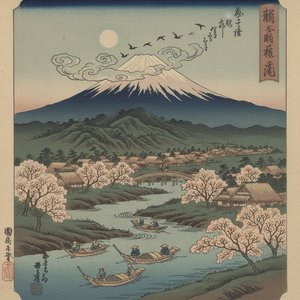
Ukiyo-e's Poetic Visionary: Hiroshige Ando & the Transformation of Landscape in 19th-Century Japan
Explore the life & art of Ando Hiroshige, Japan's last great ukiyo-e master. Discover his iconic landscapes, poetic style, and profound influence on Western Impressionism. Learn about The Fifty-Three Stations & more!
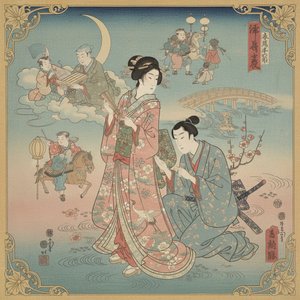
Suzuki Harunobu: Pioneering Ukiyo-e & the Refinement of Edo Period Printmaking
Discover the revolutionary world of Suzuki Harunobu, a pioneer of ukiyo-e printmaking. Explore his exquisite nishiki-e techniques, diverse subjects & lasting impact on Japanese art history. Learn more at ArtsDot.
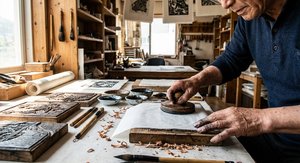
The Enduring Legacy of Woodblock Printmaking: Technique, History & Artistic Expression
Explore the rich history of woodblock printmaking – from ancient techniques to Ukiyo-e masterpieces. Discover expert insights on collecting, preserving & appreciating this enduring art form.
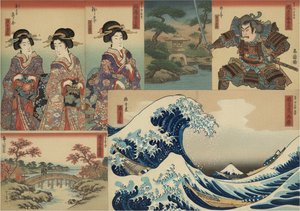
Ukiyo-e: Exploring Japan's Floating World & Enduring Artistic Legacy
Explore the captivating world of Ukiyo-e – Japan's iconic woodblock prints! Discover masters like Hokusai & Hiroshige, learn about Edo period culture, and find expert art collecting guidance at ArtsDot.