

 Предпросмотр
 Поделиться
 Поделиться
 Детали произведения

 Скачать
 Похожие работы
 Рентгенография
 Слайд-шоу
 Статистика
The Pear


 Читать далее
Приобретите цифровое изображение высокого разрешения в улучшенном качестве, которое значительно превосходит онлайн-превью.
Каждый файл тщательно подготавливается нашими специалистами с использованием передовых инструментов и экспертной ручной ретуши. Мы гарантируем исключительную четкость, точную цветопередачу и детальную проработку каждого изображения.
Финальный файл доставляется по электронной почте в течение 72 часов и оптимизирован для немедленного использования в профессиональной среде, при верстке и печати. Это тот же уровень качества, которому доверяют ведущие дизайнерские студии, издательства и галереи.
Цифровое изображение
Скачайте файл высокого разрешения для личного использования, печати и творческих проектов. ( Перейти к печати Купить картину ручной работы)
Включено в каждый заказ цифровых изображений
Гарантия экспертной цифровой доставки
Выбирая ArtsDot.com, вы получаете не просто изображение — вы приобретаете профессионально обработанное цифровое произведение искусства, созданное с безупречной точностью и под защитой гарантии качества. Вот всё, что автоматически входит в ваш заказ:

Мгновенная доставка по e-mail
Ваш цифровой файл в высоком разрешении будет отправлен вам по электронной почте в течение 72 часов после оформления заказа — и сразу станет доступен для использования.

Цифровой файл с ИИ-улучшением
Ваше произведение искусства проходит профессиональную оптимизацию с использованием передовых инструментов ИИ и ручной обработки, что гарантирует максимальную детализацию, четкость и точность цветопередачи.

Бессрочная бесплатная повторная доставка
Случайно удалили или потеряли файл? Не беспокойтесь — мы отправим его вам повторно в любое время и совершенно бесплатно.

Без импортных пошлин — навсегда
Наслаждайтесь вашим произведением искусства мгновенно без таможенных пошлин, сборов или затрат на доставку — цифровые загрузки всегда не облагаются налогом.

Гарантия точности цветопередачи
Мы гарантируем, что ваше цифровое изображение максимально точно передает оригинальные цвета благодаря использованию профессиональных инструментов и систем управления цветом.

Гарантия удовлетворенности 100 дней
Если вы не будете удовлетворены своим цифровым изображением, мы внесем правки или вернем 100% стоимости в течение 100 дней — без лишних вопросов.

100% Гарантия возврата средств
Не удовлетворены покупкой? Получите полный возврат средств в течение 100 дней после получения цифрового файла — без лишних вопросов.

Скидки на оптовые заказы
Купите 3 изображения, сэкономьте 10% — Купите 5, сэкономьте 15% — Купите 10+, сэкономьте 20%. Отличное решение для творческих проектов, галерей и агентств.
A Silent Conversation: Viktor Suzarev’s “The Pear”
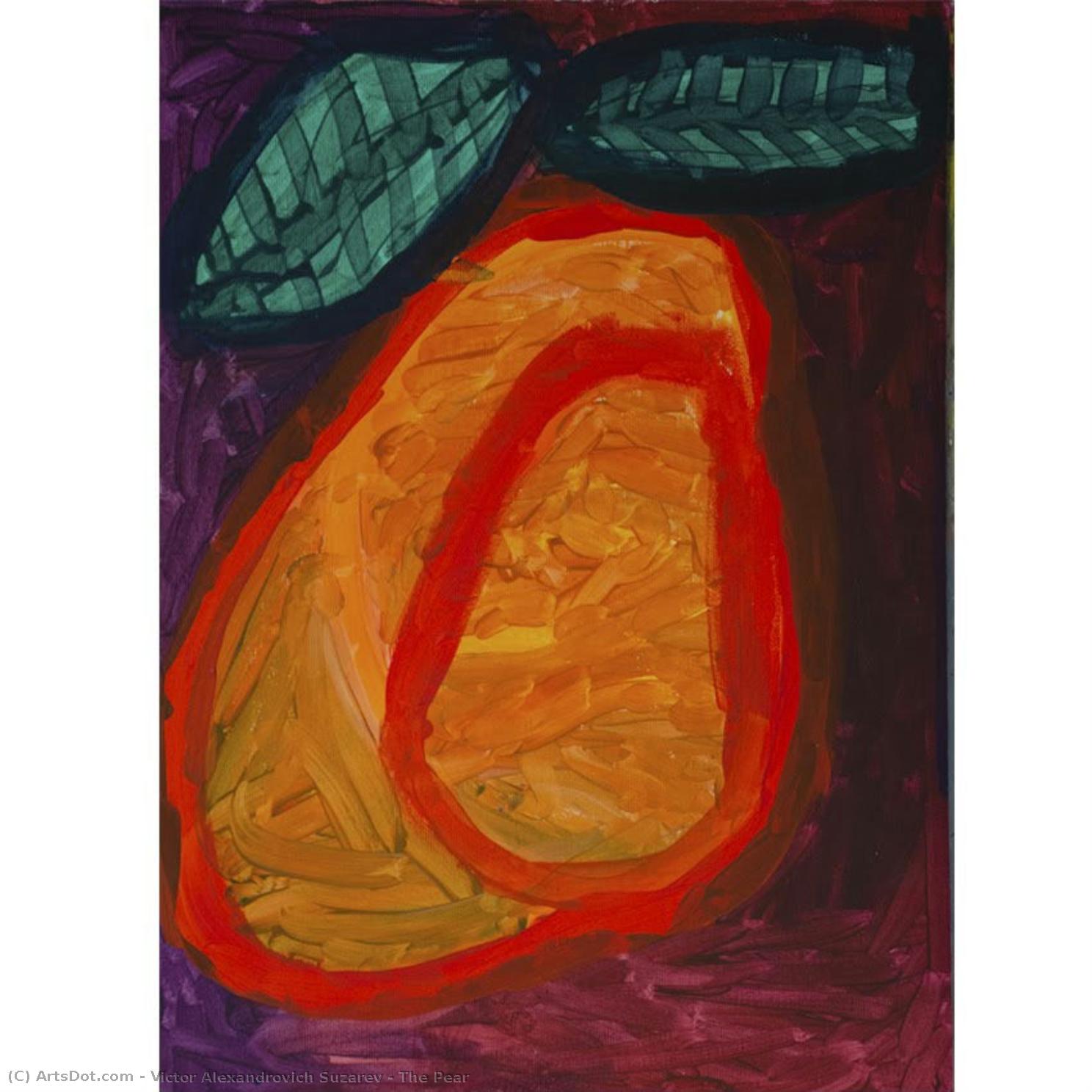
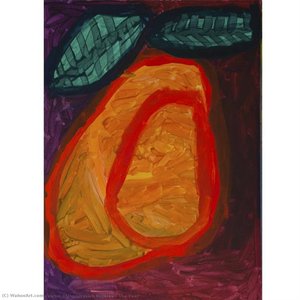
Viktor Alexandrovich Suzarev's "The Pear" isn’t merely a still life; it’s an intimate tableau, a quiet meditation on loneliness and connection rendered in thick, luminous strokes. Painted in 2020, this work immediately draws the eye with its bold simplicity – two pears dominating the canvas against a vibrant, almost aggressively red background. Yet, beneath this initial impact lies a complex layering of meaning, hinting at themes of isolation, companionship, and the artist’s own internal landscape.
Suzarev's style is distinctly expressive, leaning heavily into the traditions of Russian avant-garde painting while simultaneously forging his own unique voice. He employs an impasto technique – applying paint thickly with visible brushstrokes – that imbues the canvas with a remarkable tactile quality. The red isn’t just color; it’s energy, a pulsating force that seems to emanate from the fruit itself, demanding attention and creating a dramatic contrast with the pear's pale flesh. This deliberate use of color speaks to a desire to capture not just appearance but also feeling – the raw emotion embedded within each object.
The Weight of Solitude
The subject matter—two pears—is deceptively profound. In his biography, Kerry James Marshall’s influence is noted, suggesting an awareness of representation and the often-overlooked narratives within everyday scenes. Here, however, the pears aren't presented as subjects for observation but rather as silent witnesses to a solitary existence. The arrangement feels deliberately unbalanced, mirroring the emotional state of the artist – perhaps a yearning for connection amidst a pervasive sense of isolation.
Suzarev’s background in Moscow further informs this interpretation. Russian art history is rich with depictions of loneliness and introspection, particularly during periods of political and social upheaval. The painting subtly echoes these themes, inviting viewers to contemplate the quiet moments of reflection that often define human experience. It's a poignant reminder that even within the most familiar objects—a simple fruit—lies the potential for profound emotional resonance.
A Glimmer of Shared Existence
Interestingly, Suzarev’s process reveals an element of serendipity. The artist recounts how one pear seemingly appeared on the canvas “by itself,” suggesting a spontaneous creation born from intuition and perhaps even a subconscious desire for duality. This anecdote adds another layer to the work's meaning – a suggestion that connection can emerge unexpectedly, transforming solitude into something resembling companionship.
The thick application of paint, almost glassy in its sheen, contributes significantly to this sense of shared existence. It’s as if the artist has poured his very essence onto the canvas, creating a tangible link between himself and the subject matter. The light seems to *overflow* from the painting, suggesting an abundance of feeling and a willingness to share that emotion with the viewer.
Collecting the Moment
"The Pear" is more than just a beautiful image; it’s a carefully constructed meditation on human experience. Suzarev's masterful use of color, texture, and composition invites viewers to contemplate themes of loneliness, connection, and the quiet beauty found in everyday objects. This piece would be an exceptional addition to any collection, offering both aesthetic pleasure and intellectual stimulation – a timeless reminder that even in silence, there is always something to say.
Consider commissioning a high-quality reproduction to bring this evocative artwork into your home or office. It’s a powerful statement of artistic vision, guaranteed to spark conversation and inspire reflection.
Похожие произведения
Биография художника
Kerry James Marshall: A Voice of the Unseen
Born in Birmingham, Alabama, on October 17, 1955, Kerry James Marshall’s life and artistic journey are inextricably linked to the experiences of being Black in America – specifically, the legacy of the Great Migration and the realities of urban life in the mid-20th century. Raised in Los Angeles's South Central neighborhood and later residing in Chicago, Marshall’s work emerged from a profound engagement with history, representation, and the persistent invisibility of African American figures within Western art traditions. His career, spanning decades, has been marked by a deliberate challenge to established norms, a commitment to portraying Black subjects with dignity and complexity, and an ongoing exploration of the power of image.
Marshall’s early artistic influences were shaped by several key factors. He began his training under Charles White, a prominent social realist painter who instilled in him a deep appreciation for figurative representation and a sense of social responsibility. This mentorship, coupled with his childhood experiences witnessing the Black Panther Party's activities in Los Angeles, fueled a desire to confront issues of race, identity, and power within his art. He studied at the Otis Art Institute of Los Angeles County, where he honed his skills in painting, ultimately earning a BFA in 1978. It was during this period that Marshall began to develop his distinctive style – large-scale paintings characterized by meticulous detail, bold colors, and a deliberate invocation of historical art conventions.
The Language of Painting
Marshall’s artistic language is instantly recognizable. He frequently references the traditions of European painting—particularly Renaissance portraiture and history painting—but subverts these established forms to depict Black subjects in ways that were historically absent. His figures are often posed with a formal dignity, reminiscent of classical sculptures or portraits, yet they are firmly rooted in contemporary African American life. He meticulously recreates the compositional elements of traditional paintings – elaborate backgrounds, dramatic lighting, and carefully constructed narratives – but fills them with scenes of Black families, workers, and everyday activities. This juxtaposition creates a powerful tension between the familiar and the unfamiliar, forcing viewers to confront their own assumptions about representation and history.
A key element of Marshall’s work is his use of color. He employs vibrant hues – reds, yellows, blues – with an almost operatic intensity, drawing inspiration from the traditions of African textiles and the visual culture of Black communities. These colors are not merely decorative; they carry symbolic weight, conveying emotion, history, and cultural significance. Furthermore, Marshall’s meticulous attention to detail—from the texture of clothing to the expressions on his subjects' faces—creates a sense of realism that is both captivating and unsettling.
Themes and Historical Context
Marshall’s work consistently grapples with themes of identity, representation, and social justice. He directly addresses the historical exclusion of Black people from the canon of Western art, challenging the notion that European aesthetics represent universal standards of beauty or truth. His paintings are not simply portraits; they are acts of reclamation—a deliberate effort to bring Black subjects into the narrative of art history. The influence of the Great Migration and the experiences of urban Black communities in Chicago are central to his work, as he depicts scenes of daily life – from family gatherings to industrial labor – with a keen eye for detail and social commentary.
In 1987, Marshall famously wrote “Looking at Pictures,” an essay published in *Artforum*, where he articulated his artistic philosophy. He argued that the absence of Black figures in art history was not merely a matter of oversight but a reflection of systemic racism and cultural bias. Marshall’s work can be seen as a direct response to this critique, a deliberate attempt to fill the void left by centuries of exclusion.
Major Achievements and Legacy
Kerry James Marshall's career has been marked by numerous significant achievements. He has held solo exhibitions at major museums around the world, including the Museum of Contemporary Art Chicago, The Metropolitan Museum of Art, and the Royal Academy of Arts in London. His work is included in prominent collections such as those of the Smithsonian American Art Museum, the Whitney Museum of American Art, and the National Gallery of Art. In 2017, he was recognized as one of *Time* magazine’s 100 most influential people in the world, a testament to his profound impact on contemporary art and culture.
Marshall's legacy extends far beyond his individual artworks. He has inspired generations of artists—particularly Black artists—to explore themes of identity, representation, and social justice. His work continues to provoke critical dialogue about the role of art in shaping our understanding of history and society. He remains a vital voice in contemporary art, reminding us of the importance of confronting uncomfortable truths and celebrating the richness and complexity of human experience.
victor alexandrovich suzarev
1955 -