The Soul of Gestural Abstraction: The Life and Legacy of Bertram Graf zu Castell-Rüdenhausen
In the landscape of postwar European art, few voices capture the delicate tension between classical discipline and the raw, unbridled energy of abstraction as poignantly as Bertram Graf zu Castell-Rüdenhausen. Born in Berlin in 1932, his life began in the shadow of a world being rebuilt, a period that would profoundly influence his perception of form, color, and the very necessity of artistic expression. His journey is not merely one of technical mastery, but a profound exploration of how the human hand can translate deep-seated philosophical inquiries onto the canvas.
The foundation of his artistry was laid within the hallowed halls of the Akademie der bildenden Künste Wien. Under the mentorship of the esteemed Professor Herbert Boeckl, Castell-Ruldenhausen underwent a transformative education that bridged the gap between tradition and innovation. Boeckl did more than teach the mechanics of paint; he instilled a humanist perspective that viewed art as a vital dialogue with the world's most profound questions. This rigorous training in traditional techniques provided the essential scaffolding upon which the artist would later build his experiments in gestural abstraction, allowing him to manipulate color and texture with both precision and passion.
A Journey Through Color and Form
Upon graduating in 1965, Castell-Rüdenhausen stepped into the world as a freelance practitioner, driven by an insatiable desire to explore uncharted territories of visual language. His decision to join the Künstlerzentrum Parz—a collaborative collective dedicated to challenging conventional norms—marked a significant milestone in his career. It was within this environment of experimentation that his style truly began to coalesce, moving away from mere representation toward a more visceral, emotive form of expression. His work became a playground for light and movement, where the boundaries between subject and atmosphere often dissolved into breathtaking compositions.
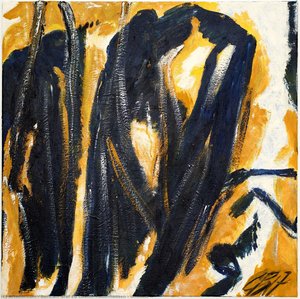
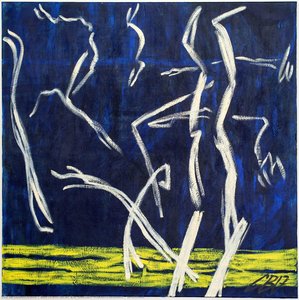
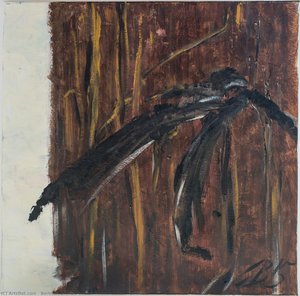
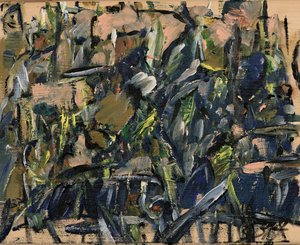
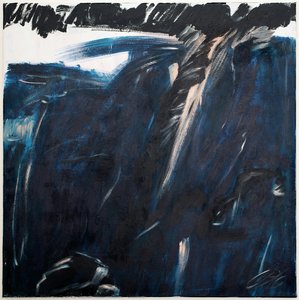
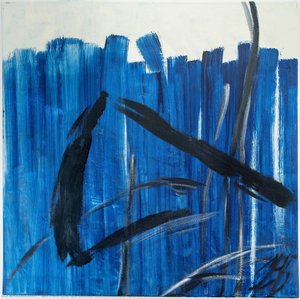
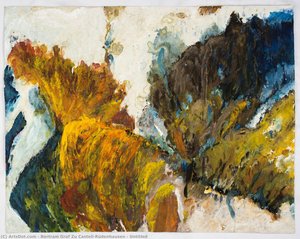
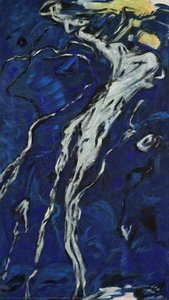
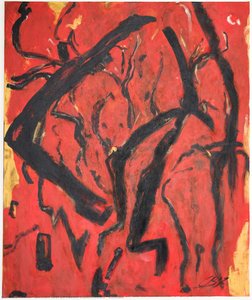
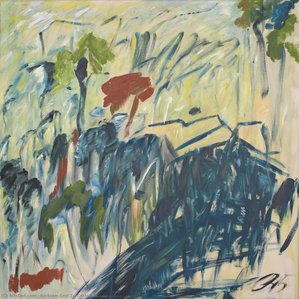
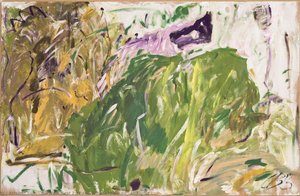
The essence of his technique lies in the deliberate use of color and the rhythmic application of paint. To observe a Castell-Rüdenhausen canvas is to witness a dance of intention; there is a meticulous attention to detail that anchors the viewer, even as bold, sweeping strokes suggest a sense of spontaneous creation. His paintings often evoke a sense of depth that transcends the two-dimensional surface, inviting the observer into a space where emotion and intellect converge. This mastery of gestural abstraction allows him to convey not just the visual reality of a scene, but the underlying psychological resonance of the moment.
Historical Significance and Artistic Endurance
Since 1966, Castell-Rüdenhausen has maintained an extensive exhibition record throughout Europe, earning critical acclaim that solidified his place within the contemporary German art movement. His contribution to the art world is characterized by a refusal to remain static; he has consistently pushed against the limits of his medium, ensuring that his work remains as relevant today as it was during the height of the postwar era. His legacy is defined by several key elements:
- The Synthesis of Eras: The seamless integration of classical Viennese training with the avant-garde spirit of modern abstraction.
- Humanist Expression: A commitment to using art as a vehicle for philosophical and emotional exploration rather than mere decoration.
- Collaborative Spirit: His role in the Künstlerzentrum Parz, which helped foster a culture of experimentation in the German art scene.
- Visual Poetics: The ability to use color and form to create works that resonate with both intellectual depth and sensory beauty.
Today, the works of Bertram Graf zu Castell-Rüdenhausen stand as enduring testaments to the power of the individual spirit. He remains a pivotal figure for those seeking to understand the evolution of European abstraction, reminding us that even in the most abstract of gestures, there lies a profound connection to our shared human experience.