Early Life & Artistic Foundations: From Apprenticeship to Academy
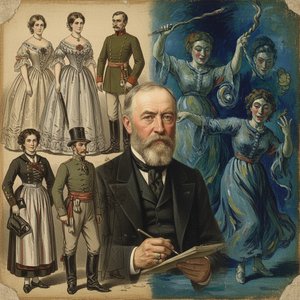
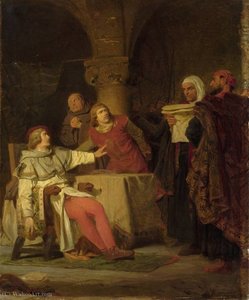
Anton Alexander von Werner’s trajectory from the modest beginnings of a carpenter’s son in Frankfurt (Oder) to becoming the favored painter of three German Emperors is a testament to both his prodigious talent and the shifting cultural landscape of 19th-century Prussia. Born in 1843, Werner’s lineage, though ennobled centuries prior, did not initially promise a path paved with artistic renown. His early training as a decorative painter provided a foundational skill set, but it was his subsequent enrollment at both the Berlin Academy and, crucially, the Karlsruhe Academy that truly ignited his potential. Karlsruhe proved pivotal; under masters like Johann Wilhelm Schirmer and Adolf Schroedter, Werner honed his observational skills and began to develop a style rooted in realism – a nascent Naturalism that would become his hallmark. This period wasn’t solely focused on technique. Encounters with literary figures like Joseph Victor von Scheffel broadened his intellectual horizons, fostering an appreciation for narrative and historical context—elements that would profoundly shape his later work.
Chronicler of Conflict: Werner and the Franco-Prussian War
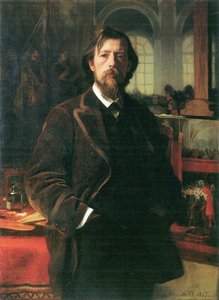 Anton von Werner
Explore the world of Anton von Werner (1843-1915), a leading German painter known for his dramatic history paintings depicting Prussian military events & the Franco-Prussian War. Discover his Naturalist style!
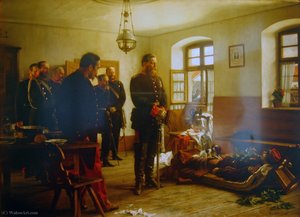
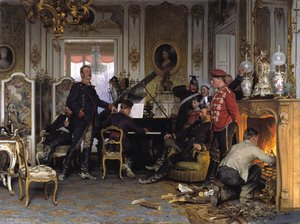
The outbreak of the Franco-Prussian War in 1870 irrevocably altered Werner’s artistic course. Commissioned to accompany Prince Frederick William’s Third Corps d'Armée, he wasn’t merely documenting events; he was embedded within them, experiencing firsthand the chaos and drama of battle. This proximity lent an unprecedented authenticity to his depictions of military life, a stark contrast to the often-idealized portrayals prevalent at the time. Werner’s ability to capture not just the grand strategies but also the gritty realities – the exhaustion, the tension, the sheer scale of human endeavor – quickly garnered attention. He wasn't simply painting *about* war; he was conveying its visceral impact, a quality that resonated deeply with a nation on the cusp of unification.
The Proclamation Painting: Symbolism, Politics, and Imperial Power
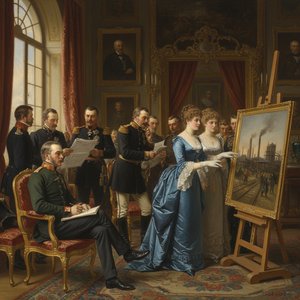
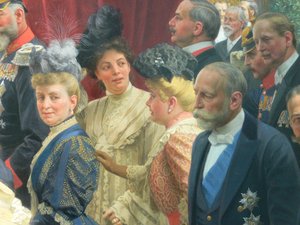
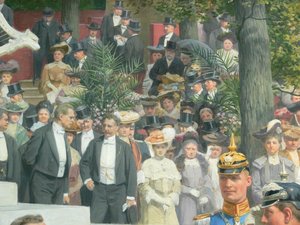 Enthüllung Wagner-Denkmal detail 05a
Explore Anton von Werner’s ‘Enthüllung Wagner-Denkmal’ detail – a monumental 19th-century painting of imperial Germany! Discover realism, historical figures & social context.
However, it was the commission to immortalize the proclamation of the German Empire in the Hall of Mirrors at Versailles in January 1871 that cemented Werner’s fame. This painting, existing in multiple versions, is far more than a historical record; it's a carefully constructed piece of political iconography. The composition itself is laden with symbolism: the assembled dignitaries representing the various German states, unified under Prussian leadership; the opulent setting of Versailles, deliberately chosen to evoke France’s humiliation; and the central figure of Wilhelm I, radiating authority. Werner masterfully captured the weight of the moment, but also subtly reinforced the narrative of Prussian dominance. The painting wasn't just *about* unification—it was actively shaping its perception, solidifying a new national identity through visual representation. The meticulous detail – from the uniforms to the facial expressions – lends an air of realism, yet it’s a realism deployed in service of a carefully curated message.
A Court Painter's Dilemma: Patronage, Style, and Shifting Tastes
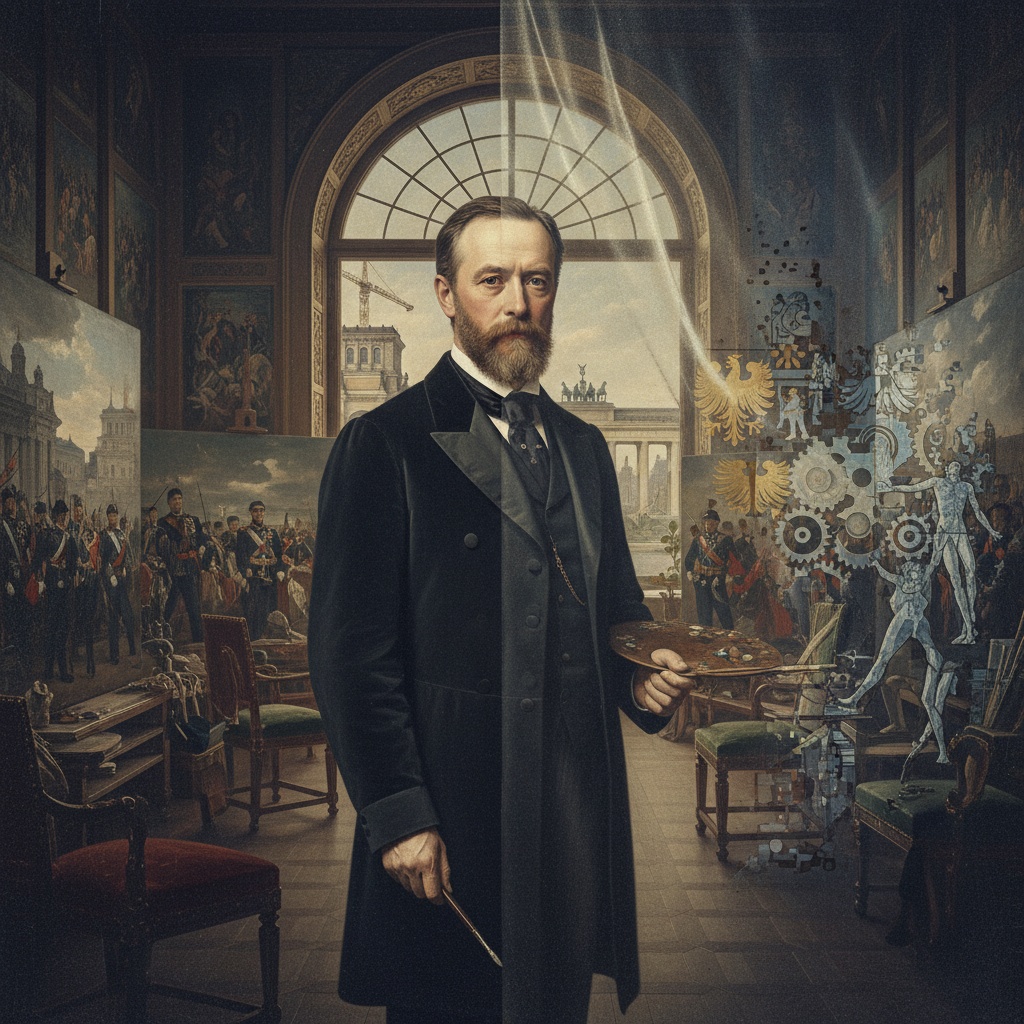
Werner’s subsequent career was inextricably linked to the imperial court. Favored by William I, Frederick III, and Wilhelm II, he became a prolific producer of historical paintings celebrating Prussian military victories and national achievements. This patronage brought him immense prestige and financial security, but it also presented a creative dilemma. His commitment to Naturalism, while initially lauded for its realism, increasingly clashed with the evolving artistic landscape. As movements like Impressionism gained traction, Werner’s style began to appear conservative, even academic. His unwavering loyalty to the emperors and his rejection of modern art alienated him from many in the avant-garde circles. He became a staunch defender of traditional values, a position that ultimately contributed to a decline in his critical reputation towards the end of his life.
Beyond the Battlefield: Werner’s Broader Historical Narratives
While best known for his war paintings, Werner's oeuvre extends beyond depictions of conflict. He tackled subjects ranging from religious scenes – such as “Christ and the Tribute Money” – to portraits of prominent figures and large-scale mural decorations like those adorning the Berlin Victory Column. These works reveal a broader ambition: to create a comprehensive visual history of Germany, one that emphasized its strength, unity, and cultural heritage. His involvement in organizing the German presentation at the 1878 World Exhibition in Paris further demonstrates his commitment to promoting German art and culture on an international stage. He championed artists like Adolph Menzel, recognizing their talent even as he remained firmly rooted in his own stylistic approach.
Legacy & Controversy: Assessing Werner’s Place in German Art History
Anton von Werner's legacy remains complex. He was undeniably a master craftsman, capable of capturing remarkable detail and conveying historical narratives with compelling power. However, his unwavering conservatism and close ties to the imperial court led to criticism both during his lifetime and after. While he enjoyed immense popularity in his own era, his work fell out of favor in the 20th century, often dismissed as overly academic and lacking in artistic depth. Today, a more nuanced assessment is emerging. Werner’s paintings are increasingly recognized not just for their aesthetic qualities but also for their historical significance – they offer invaluable insights into the political and social climate of Imperial Germany. His work serves as a powerful reminder of the ways in which art can be used to construct national identities and shape collective memory, prompting us to consider the complex relationship between artistic representation and political power.